


Foxtrot Fusion Floral Harmony (Tulipa ‘Foxtrot’ and ‘Foxy Foxtrot’)
- Quantity
- 12 units
- Exposure
- Full sun to partial shade
- Life cycle
- Bulbous perennial
- Hardiness
- Zones 3 to 8
Discover the plant
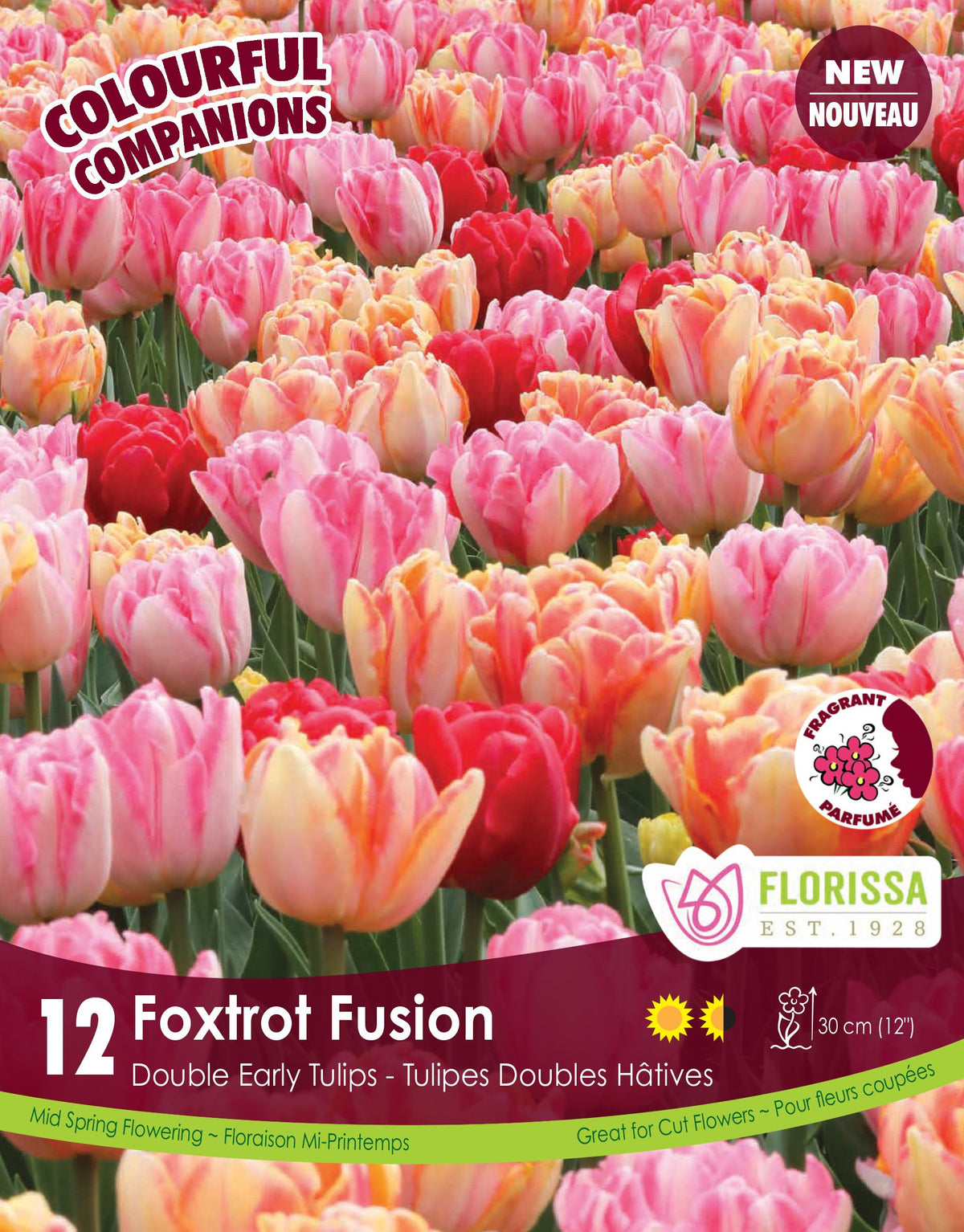
Foxtrot Fusion Floral Harmony (Tulipa ‘Foxtrot’ and ‘Foxy Foxtrot’) combines 12 double early tulip bulbs in a warm palette of pink, apricot, coral and soft red. Their densely petalled, rounded flowers resemble miniature peonies and create a rich mass of spring colour. Compact stems reach approximately 30 cm (12 in), giving the blend a balanced, substantial appearance that works especially well in borders and containers. Blue-green foliage surrounds the developing flowers before naturally declining later in the season. Cold-hardy, these tulips tolerate northern winters when planted at an appropriate depth in well-drained soil, making them suitable for Quebec and Canadian gardens.
Plant the bulbs in full sun or partial shade in light, fertile and especially well-drained soil. Planting is best done from September through November after the soil has cooled but before it freezes deeply. Set each bulb with the pointed end facing upward at a depth of 100 to 120 mm and space them approximately 10 cm (4 in) apart. Water lightly after planting, then maintain moderate moisture during active spring growth and flowering without saturating the soil. A light application of bulb fertilizer in early spring is generally sufficient. After flowering, remove spent blooms if desired and allow the foliage to yellow completely before cutting it back so the bulbs can replenish their reserves.
Foxtrot Fusion is especially effective in pastel beds, low borders, spring containers and plantings near entrances where its double flowers can be appreciated at close range. Group the bulbs together for a generous massed effect or combine them with white grape hyacinths, spring anemones and softly coloured pansies. The compact stems and richly doubled flowers also perform well in fresh bouquets, where their rounded form resembles miniature peonies. Blooms may receive visits from pollinating insects, although very double cultivars generally provide fewer accessible floral resources than single-flowered tulips. Tulips are not edible and may be toxic to household pets, with the bulbs presenting the greatest concern if chewed or ingested.

Planting guide
Plant well.Grow beautifully.
Spacing / density
Best planting time
Propagation
Growing method
Soil and care
The right care,at the right time.
Soil pH
Minimum temperature
Care level
Watering
Soil type
Fertilization
Seasonal care
Container growing
A garden,within reach.
Recommended pot size

Bloom and dimensions
Its place,in your garden.
Mature height
Width / spread
Flower color
Foliage color
Foliage type
Growth rate
Bloom period
Garden associations
In goodcompany.
Companion plants
Frequently asked questions
Your questions,answered.
Which tulips are included in Foxtrot Fusion?
When should Foxtrot Fusion tulip bulbs be planted in Quebec?
Is Foxtrot Fusion suitable for container growing?
Can Foxtrot Fusion tulips be used in bouquets?
Are Foxtrot Fusion tulips safe for household pets?
Wildlife and pets