Galanthus Elwesii

Galanthus elwesii

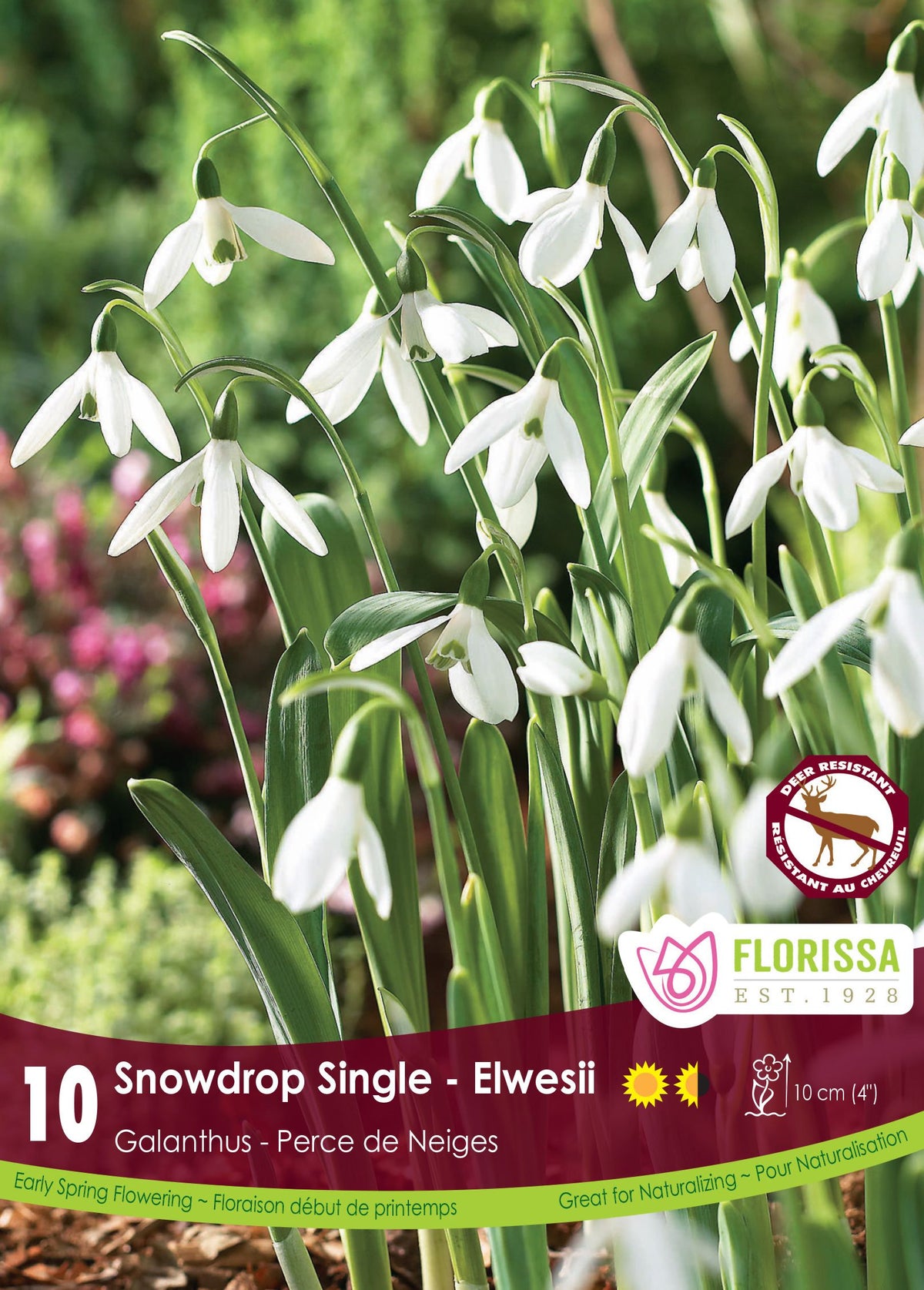
Giant snowdrop (Galanthus elwesii) announces the end of winter with its elegant, drooping white flowers, delicately marked with soft green inside. Borne above decorative bluish-green foliage, they can appear as early as February, sometimes while snow still covers parts of the garden. Larger and more robust than common snowdrops, this perennial reaches about 15 to 20 cm (6 to 8 in) in height and gradually forms charming, luminous colonies. Very hardy down to zone 3, it adapts admirably to Quebec winters and reliably returns each year when planted in well-drained soil. Choose a humus-rich, fertile, slightly acidic to neutral, and perfectly drained soil, then plant the bulbs about 8 cm (3 in) deep, spacing them 5 to 8 cm (2 to 3 in) apart.
9 99 $
Pay in 4 interest-free payments with Sezzle
Detailed plant guide
Advice adapted to Canada
Secure payment
Share
Quantity
10 bulbs
Exposure
Sun to partial shade
Life cycle
Hardy perennial
Hardiness
Zone 3

Discover the plant

Common nameGiant snowdrop
FamilyAmaryllidaceae
GenusGalanthus
TypeBulb
Botanical nameGalanthus elwesii
Reproducible seedsYes

?? Galanthus elwesii (10 bulbs) – Single-flowered giant snowdrop ? Submitted by Van Noort

First to emerge from the snow, the Galanthus elwesii , also called giant snowdrop , brings a note of purity and hope at the end of winter. ??
Its simple, pure white flowers , shaped like small, hanging bells , are borne on sturdy stems slightly larger than classic snowdrops.
It is ideal for naturalizing undergrowth , edging paths or adding a discreet charm to rockeries and lawns . Very hardy, reliable and easy to grow, it will return faithfully year after year .

?? Variety characteristics

?? Height: 15 to 20 cm (6" to 8")
?? Exposure: Spring sun or partial shade
?? Hardiness: Zone 2 and above
?? Deer resistance: Excellent
?? Ideal soil: Fresh, humus-rich, well-drained
?? Quantity: 10 bulbs

?? Planting and growing Galanthus elwesii

?? When to plant?
??? Period: From September to November, before the ground freezes.

?? Where to plant it?
?? In open ground: Perfect for light undergrowth, natural borders, lawns and partial shade beds.
?? In pots: Possible in small rustic containers, to be displayed outside from the end of winter.

?? How to plant?
1?? Depth: 7 to 10 cm
2?? Spacing: 5 to 8 cm
3?? Watering: Light after planting, then very moderate (fresh soil only)

?? Gardening tip: Plant them in dense groups or as a carpet for a natural effect. Combine them with crocuses, eranthis, or hellebores to create a poetic late-winter scene.

?? Galanthus elwesii care

?? Watering: Not necessary after planting if the soil is fresh
?? Fertilizer: A little compost or decomposed foliage in spring is enough
?? Pruning: Allow the leaves to yellow naturally before cutting.
?? Wintering: No care required – ultra hardy

?? Why choose Galanthus elwesii?

? Simple, elegant and very early white flower
? Perfect for naturalization , undergrowth, borders and rockeries
? Late winter flowering , as soon as the snow melts
? Very rustic, easy, faithful and maintenance-free

? Bring the magic of spring to life at the end of winter with Galanthus elwesii (Giant Snowdrop) , offered by Van Noort! ?

?? Combine with other early bulbs to create a vibrant garden before the snow melts. ??

Galanthus elwesii ( Galanthus ) : des perce-neige blancs retombants sur leurs tiges arquées. Le visuel Florissa présente la plante et son nom dans la partie inférieure de l’étiquette. La photographie occupe presque toute la surface, tandis que le bandeau du bas rassemble les indications du produit. Cette vue permet de reconnaître son apparence et de distinguer la variété présentée.

Planting guide

Plant well.Grow beautifully.

Planting depth

8 cm (3 in)

Best planting time

Autumn

Propagation

Divide clumps after several years when colonies become well established. Bulbs naturally produce new offsets.

Growing method

Plant bulbs in the fall in humus-rich, fertile, well-drained soil. Bury them about 8 cm (3 in.) deep, spacing them 5 to 8 cm (2 to 3 in.) apart. Water lightly after planting to promote good root development before winter. Choose a location with soft sun or light partial shade. Allow the foliage to yellow naturally after flowering. Avoid moving the bulbs to encourage naturalization. Very hardy down to zone 3, it adapts admirably to Quebec winters and returns faithfully every year when planted in well-drained soil. Plant bulbs in the fall in a cool location that receives spring sun or light partial shade under deciduous trees. Choose humus-rich, fertile, slightly acidic to neutral, well-drained soil, then bury the bulbs about 8 cm (3 in.) deep, spacing them 5 to 8 cm (2 to 3 in.) apart. Water lightly after planting to promote rooting before winter. Then keep the soil slightly moist during growth without waterlogging it. After flowering, let the foliage yellow naturally so that the bulbs can replenish their reserves, then stop watering when summer dormancy begins. The bulbs slowly produce new bulblets and, over the years, form beautiful, low-maintenance carpets.

Soil and care

The right care,at the right time.

Soil pH

Slightly acidic to neutral

Minimum temperature

-40 °C (-40 °F)

Care level

Easy

Watering

Keep the soil slightly moist during spring growth without overwatering. Watering becomes unnecessary when the plant enters dormancy. Water lightly after planting to encourage rooting before winter. Then, keep the soil slightly moist during growth without soaking it. After flowering, allow the foliage to yellow naturally so that the bulbs can replenish their reserves, then stop watering when summer dormancy begins. The bulbs slowly produce new bulblets and, over the years, form beautiful, low-maintenance carpets.

Soil type

Opt for humus-rich soil that retains moisture while allowing excess water to drain away. Check drainage after rain: water should be able to leave the root zone. Work the soil when it is dry to prevent compaction. Adapt amendments to its actual texture. In containers, use appropriate potting mix and a pot with drainage holes. Keep these openings clear and avoid any accumulation of water in the saucer.

Fertilization

An annual application of leaf compost or well-rotted organic matter is usually sufficient. No significant fertilizer is needed in rich soil. Follow the dosage instructions on your fertilizer package and measure the quantity before applying. Take into account any compost and other amendments already made to avoid over-fertilizing the same plant. Distribute the product according to its instructions; avoid any concentrated contact with roots or storage organs.

Seasonal care

Plant these bulbs in the autumn in loose soil that drains well. Choose a location suitable for their sun exposure, where young shoots can receive light in the spring. Distribute the bulbs in small groups rather than in a too-tight line, then respect the depth appropriate to their size. Water after planting if the soil is dry to encourage contact with the roots. Keep a discreet marker to find the groups during their dormant period. In an already planted flowerbed, work carefully between the roots of perennials and avoid cutting them unnecessarily. In spring, allow the flowers and foliage to develop without masking them under too thick a mulch. Water as needed during a dry spell, especially if the planting is recent or in a container. After flowering, keep all the leaves that are still green to allow the bulbs to replenish their reserves. Wait for them to yellow naturally before removing them. If the groups become too crowded, take advantage of the dormant period to carefully redistribute them, keeping the healthy bulbs. In pots, provide winter protection adapted to local conditions: the roots are more exposed to temperature variations than in the ground. Over the seasons, observe new shoots, soil moisture, and the condition of the stems. A durable label helps locate the planting during its dormant period. Clean tools after cutting diseased parts and remove debris that decomposes around the base.

Container growing

A garden,within reach.

Recommended pot size

8 in (20 cm)
Container cultivation requires anticipating the necessary volume for the roots and the plant's final height. Choose a stable pot with drainage holes and a substrate suitable for planting. Leave enough space to respect the recommended depth and spacing, rather than crowding the plants to fill the pot immediately. Place the container in the indicated exposure and regularly check the humidity, especially in hot or windy weather. A pot is more exposed to temperature variations than a plant in the ground. Therefore, from the outset, plan a wintering location compatible with the plant's needs and your region's climate. Plant these bulbs in the fall in loose soil that drains excess water well. Choose a location consistent with their exposure, where young shoots can receive light in the spring. Arrange the bulbs in small groups rather than in a too-tight line, then respect the depth appropriate for their size. Water after planting if the soil is dry to promote contact with the roots. Keep a discreet marker to find the groups during their dormancy. In an already planted flowerbed, work carefully among the perennial roots and avoid unnecessarily severing them. In winter, protect the container according to the plant's needs: its roots are more exposed to cold than in the ground.
Galanthus elwesii ( Galanthus ) : des perce-neige blancs retombants sur leurs tiges arquées. Le visuel Florissa présente la plante et son nom dans la partie inférieure de l’étiquette. La photographie occupe presque toute la surface, tandis que le bandeau du bas rassemble les indications du produit. Cette vue permet de reconnaître son apparence et de distinguer la variété présentée.

Bloom and dimensions

Its place,in your garden.

Mature height

6 to 8 inches (15 to 20 cm)

Width / spread

5 to 8 cm (2 to 3 in)

Flower color

White

Foliage color

Bluish green

Foliage type

Null and void

Growth rate

Moderate

Bloom period

Very early blooming of delicate white flowers marked with green between late winter and early spring. Giant Snowdrop (Galanthus elwesii) heralds the end of winter with its elegant, drooping white flowers, delicately marked with soft green inside. After flowering, allow the foliage to yellow naturally so that the bulbs can replenish their reserves, then stop watering when summer dormancy begins. Its white flowers harmonize wonderfully with crocuses, winter aconites, hellebores, dogtooth violets, and squills to create charming early-season displays.
Galanthus elwesii ( Galanthus ) : des perce-neige blancs retombants sur leurs tiges arquées. Le visuel Florissa présente la plante et son nom dans la partie inférieure de l’étiquette. La photographie occupe presque toute la surface, tandis que le bandeau du bas rassemble les indications du produit. Cette vue permet de reconnaître son apparence et de distinguer la variété présentée.

Garden associations

In goodcompany.

Companion plants

To accompany Galanthus elwesii, you might consider pansies, forget-me-nots, or daffodils. Choose neighboring varieties based on their height, flowering period, and the colors you wish to combine. Most importantly, ensure that their exposure and water needs are suitable for the same location. Leave enough space so that leaves do not obscure young shoots and to allow easy access to each plant for maintenance. These combinations serve to create the garden's aesthetic; they do not guarantee protection against pests or diseases. Adjust the arrangement after observing one growing season.

Frequently asked questions

Your questions,answered.

How to successfully plant Galanthus elwesii?
Plant these bulbs in the autumn in loose soil that drains well. Choose a location appropriate for their exposure, where the young shoots can receive light in the spring. Arrange the bulbs in small groups rather than in too tight a line, then respect the depth suitable for their size. Water after planting if the soil is dry to encourage contact with the roots. Keep a discreet marker to find the groups during their dormant period. In an already planted flowerbed, work carefully between the roots of perennials and avoid unnecessarily cutting them.
What kind of light does Galanthus elwesii need?
The recommended exposure is sun to partial shade. Observe the light in your chosen location in the morning and afternoon, as the shade from trees or buildings changes throughout the day. Also consider nearby plants: their foliage can obscure a young planting as it develops. For potted plants, place the pot where you can move it if conditions become too hot or too shady. Suitable exposure must go hand in hand with appropriate soil and watering. If you move a plant started indoors to the outdoors, gradually accustom it to garden conditions to avoid too abrupt a transition for young leaves.
How to adjust watering?
Water according to the actual soil moisture, taking into account rain, heat, and wind. Check below the surface before deciding on a new watering: soil that is dry on the surface may still be moist at root level. Direct the water to the base and allow it to penetrate, without keeping the plant in saturated soil. Containers generally require more frequent checks because they dry out faster. Make sure their drainage holes remain clear and empty any saucers that collect water. Also adapt care to the plant's cycle: active growth and a resting period do not require the same amount of water.
What to plan for container gardening?
Container gardening requires planning for the necessary root volume and the plant's final height. Choose a stable pot with drainage holes and a suitable planting medium. Leave enough space to respect the recommended planting depth and spacing, rather than crowding plants to fill the pot immediately. Place the container in the indicated exposure and regularly check the moisture level, especially in hot or windy weather. A pot is more susceptible to temperature variations than a plant in the ground. Therefore, from the outset, plan for a wintering location compatible with the plant's needs and your region's climate.
What care should be planned after the growing season?
In spring, allow flowers and foliage to develop without smothering them under an overly thick layer of mulch. Water as needed during dry spells, especially if plants are new or in containers. After flowering, keep all green leaves to allow the bulbs to replenish their reserves. Wait for them to yellow naturally before removing them. If clumps become too crowded, take advantage of the dormant period to carefully divide them, keeping only the healthy bulbs. For potted plants, provide winter protection adapted to local conditions, as roots are more exposed to temperature fluctuations than in the ground.

Wildlife and pets

Life,around your plants.