


Hardy Rocambole garlic with full-bodied, lasting flavour · garlic bulbs for planting · plant garlic in fall
German Red garlic (Allium sativum var. ophioscorodon ‘German Red’)
Product code : VAN-152-154-01
- Quantity
- 3 bulbs
- Exposure
- Full sun to bright partial shade
- Life cycle
- Bulbous perennial grown as an annual vegetable crop
- Hardiness
- Zones 2 to 10
Discover the plant
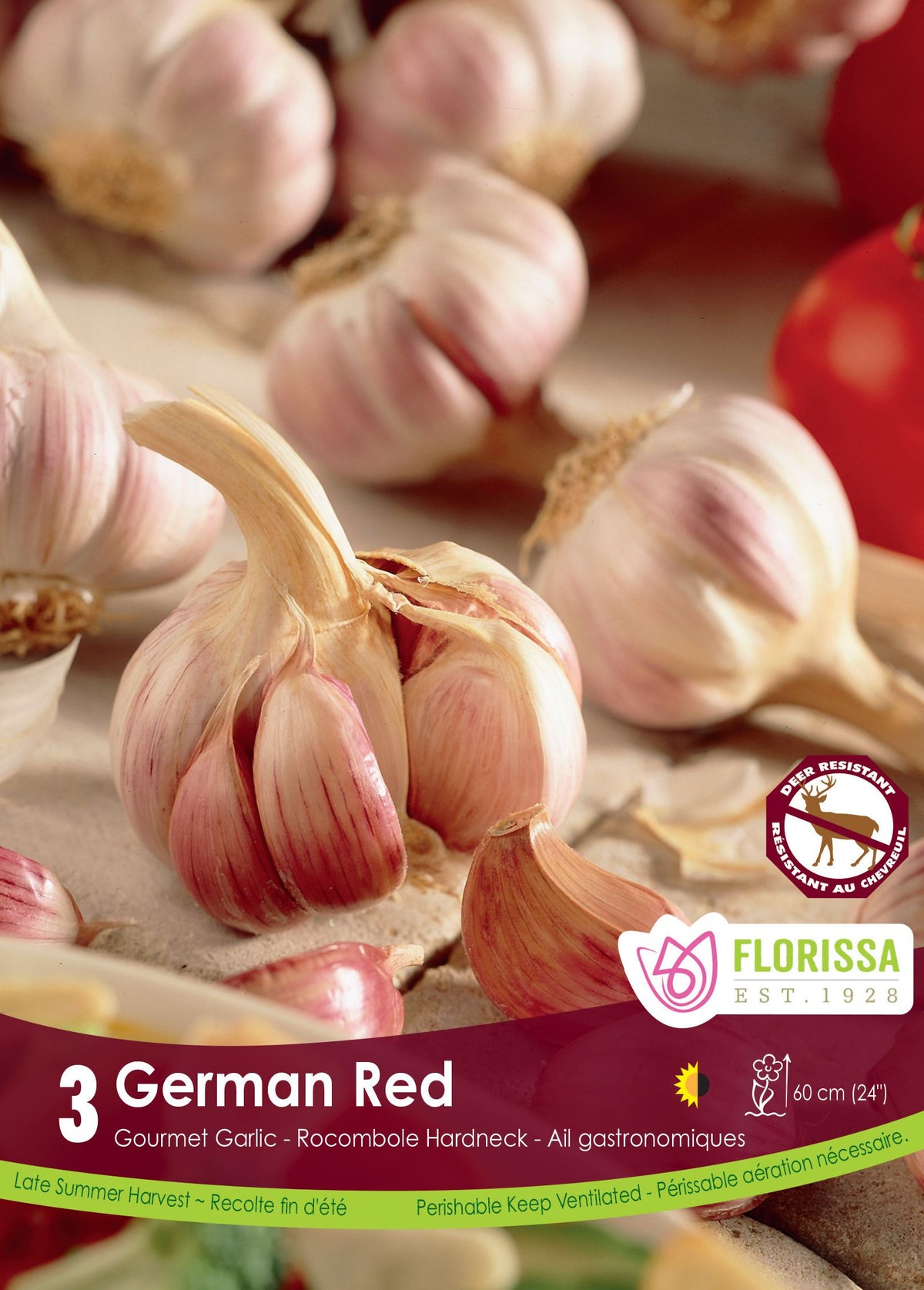
German Red garlic (Allium sativum var. ophioscorodon ‘German Red’) is a hardneck Rocambole valued for authentic garlic flavour that is full-bodied, hot, spicy, and persistent. Round heads wear satiny creamy-white wrappers often streaked or blotched in purple-red. They generally contain 5 to 7 large, readily separated cloves arranged around a rigid stalk. The Van Noort package contains exactly 3 bulbs. Plants reach approximately 60 cm (24 in), produce a spiral scape in late spring, and tolerate Zone 2. Their late harvest is particularly well suited to cold-climate vegetable gardens seeking pronounced flavour.
Plant cloves in fall, four to six weeks before lasting soil freeze, in full sun or bright partial shade. Choose deep, loose, fertile, moisture-retentive, exceptionally well-drained soil. Separate the 3 bulbs only on planting day and position every clove point upward at 8 cm (3 in), leaving 15 cm (6 in) between plants. Water once, then mulch after the ground cools. In spring, weed early, maintain even moisture, and feed moderately. Cut garlic scapes at their first curl to support head size. Prevent saturated conditions because excellent cold hardiness never compensates for poor winter drainage.
Harvest in late summer when several lower leaves brown while four or five upper leaves remain green. Stop irrigation two weeks beforehand, lift with a fork, and cure for two to four weeks in shade with strong airflow. German Red stores best until midwinter. Large cloves bring definition to sauces, marinades, stews, and roasted vegetables, while tender scapes become pesto or a grilled garnish. Reserve the finest heads for future planting, rotate the crop for four years, and keep every part beyond the reach of dogs and cats. Inspect stored heads regularly and use any softening cloves promptly.

Planting guide
Plant well.Grow beautifully.
Planting depth
Spacing / density
Best planting time
Propagation
Growing method
Soil and care
The right care,at the right time.
Soil pH
Minimum temperature
Care level
Watering
Soil type
Fertilization
Moisture
Seasonal care
Container growing
A garden,within reach.
Recommended pot size

Bloom and dimensions
Its place,in your garden.
Mature height
Width / spread
Flower color
Foliage color
Foliage type
Growth rate
Growth habit
Fragrance
Bloom period
Fruiting
Harvest
Garden associations
In goodcompany.
Companion plants
Plants to avoid
Recipe idea
From the gardento your plate.
Frequently asked questions
Your questions,answered.
How many cloves will the 3 German Red bulbs provide?
Why plant German Red in fall in Quebec?
When should German Red garlic scapes be cut?
How can I tell when German Red is ready to harvest?
Is German Red garlic safe for dogs and cats?
Wildlife and pets