Hardy Porcelain garlic with robust flavour · garlic bulbs for planting · plant garlic in fall

German White garlic (Allium sativum var. ophioscorodon ‘German White’)

Product code : VAN-152-155-01

German White is a hardneck Porcelain garlic appreciated for cold-region performance, clean robust flavour, and long storage. The package contains exactly 3 bulbs to divide into cloves at planting time. Each head usually develops 5 to 7 medium-sized cloves beneath thick, satiny, silvery-white wrappers. Planted in fall, it roots before winter, resumes vigorous growth in spring, and reaches approximately 60 cm (24 in). Harvest occurs from early to midsummer, and careful curing allows sound heads to keep into spring. It is an excellent choice for growing garlic in Canada in fertile, loose, exceptionally well-drained soil, whether the crop is intended for everyday cooking, roasting, or future planting stock.

Format

8 99 $
Pay in 4 interest-free payments with Sezzle
Detailed plant guide
Advice adapted to Canada
Secure payment
2026 preorder for fall bulbs Shipping expected in October 2026.
Share
Quantity
3 bulbs
Exposure
Full sun to bright partial shade
Life cycle
Bulbous perennial grown as an annual vegetable crop
Hardiness
Zones 2 to 10

Discover the plant

Common nameGerman White garlic
FamilyAmaryllidaceae
GenusAllium
Speciessativum var. ophioscorodon
CultivarGerman White
TypePorcelain hardneck garlic bulbs for planting
Botanical nameAllium sativum var. ophioscorodon

German White garlic (Allium sativum var. ophioscorodon ‘German White’) is a hardneck Porcelain garlic valued for cold-climate vigour, strong robust flavour, and reliable storage into spring. Round heads carry thick creamy to silvery-white wrappers that usually protect 5 to 7 medium-sized cloves packed around a firm central stalk. The Van Noort package contains exactly 3 bulbs. Upright foliage reaches approximately 60 cm (24 in), followed by a curling garlic scape in late spring. Hardiness to Zone 2 and an early to midseason harvest make this cultivar especially suitable for Canadian vegetable gardens with short summers and cold winters.

For growing garlic in Canada, separate cloves from the 3 bulbs only when ready to plant garlic in fall, about four to six weeks before lasting soil freeze. Set each clove point upward at a depth of 8 cm (3 in) and space plants 15 cm (6 in) apart in full sun or very bright partial shade. Deep, fertile, loose, exceptionally well-drained soil supports rooting before winter. Water after planting, then add mulch once the ground cools. In spring, gradually remove excess mulch, weed early, maintain even moisture, and cut scapes at their first curl so the plants direct more energy toward head development.

Harvest German White from early to midsummer when three or four lower leaves have browned while five or six upper leaves remain green. Stop watering approximately two weeks beforehand, lift heads without pulling the foliage, and cure them for two to four weeks in shade with excellent airflow. Thick wrappers help this Porcelain garlic store into spring when bulbs remain cool, dry, dark, and well ventilated. Its cloves give sauces, roasts, marinades, and stews a clean, assertive presence; slow cooking softens the heat and develops a rounded sweetness. Reserve the soundest heads as future planting stock, rotate the bed for four years, and inspect stored bulbs regularly.

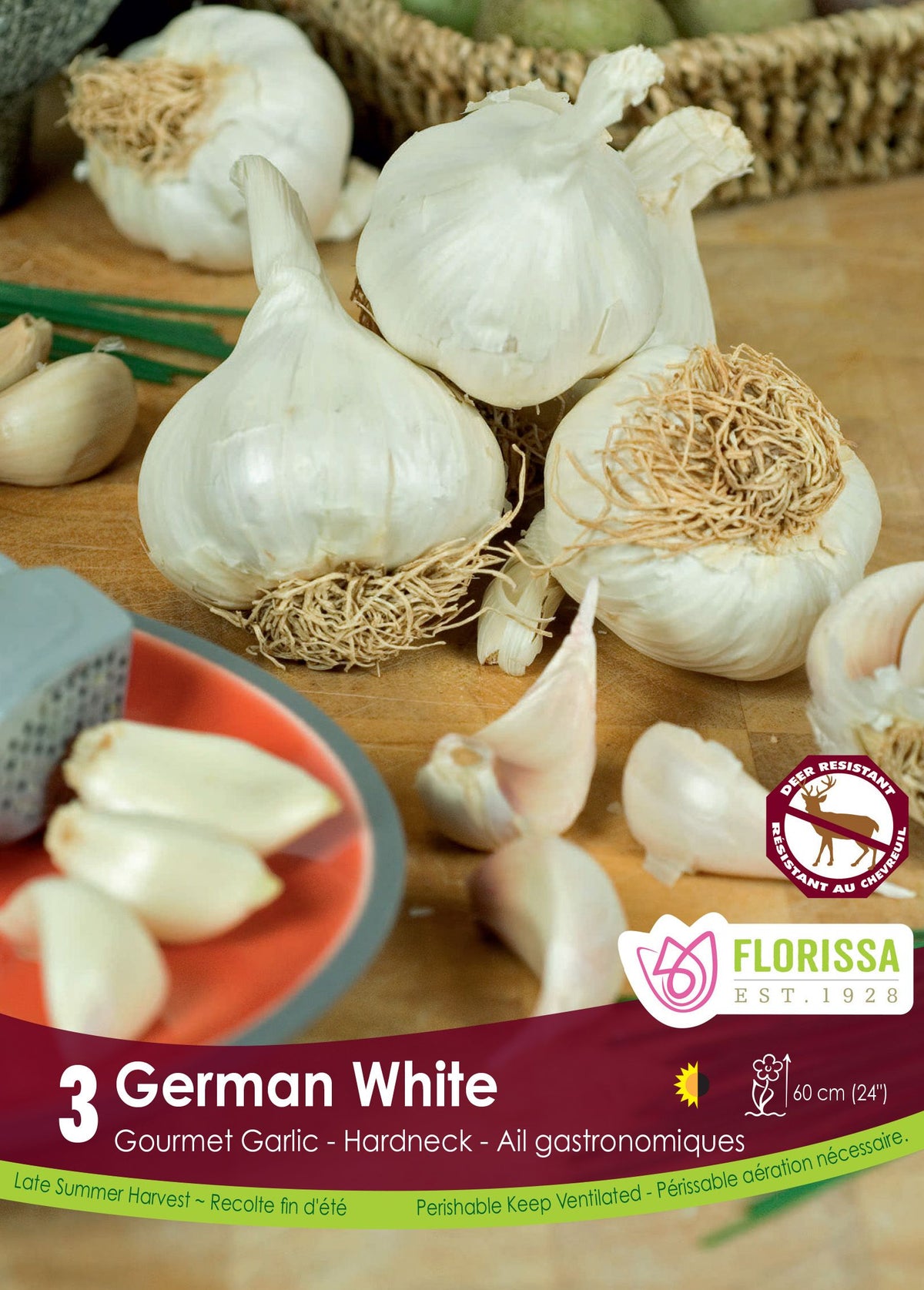
Ail German White ( Allium sativum var. ophioscorodon ‘German White’) : des têtes d’ail blanc ouvertes montrant leurs grosses gousses. Le visuel Florissa présente la plante et son nom dans la partie inférieure de l’étiquette. La photographie occupe presque toute la surface, tandis que le bandeau du bas rassemble les indications du produit. Cette vue permet de reconnaître son apparence et de distinguer la variété présentée.

Planting guide

Plant well.Grow beautifully.

Planting depth

8 cm (3 in), point upward

Spacing / density

15 cm (6 in) between plants and approximately 30 cm (12 in) between rows

Best planting time

October to November in Quebec, depending on region

Propagation

Separate bulbs into cloves immediately before planting

Growing method

Plant German White in fall, approximately four to six weeks before lasting soil freeze, so roots establish without encouraging heavy top growth. Select full sun, or at most very bright partial shade, where water never collects during winter. Loosen at least 25 to 30 cm (10 to 12 in) of soil and incorporate mature compost without excessive nitrogen. Separate the 3 bulbs on planting day so cloves do not dry out. Keep their skins intact, position every clove point upward at a depth of 8 cm (3 in), and space plants 15 cm (6 in) apart with 30 to 40 cm (12 to 16 in) between rows. Water deeply once, then wait until the soil cools before applying 8 to 12 cm (3 to 5 in) of clean straw. In spring, gradually loosen compacted mulch, weed carefully, and supply even moisture without saturation. Apply moderate nitrogen-rich fertilizer early, then stop feeding as heads begin to swell. Cut garlic scapes after their first curl. Reduce irrigation when foliage starts yellowing and stop watering approximately two weeks before harvest. Lift heads with a fork, cure them in shade with excellent airflow, and retain intact wrappers for storage.

Soil and care

The right care,at the right time.

Soil pH

6.2 to 6.8

Minimum temperature

Hardy to Zone 2 with well-drained soil and winter mulch

Care level

Easy

Watering

Water deeply after planting, then allow fall rainfall to keep the soil lightly moist. In spring, provide approximately 2.5 cm (1 in) of water weekly, including rainfall, directing moisture to the soil rather than foliage. Even moisture supports head formation, but standing water encourages rot. Reduce irrigation as leaves begin their natural yellowing and stop approximately two weeks before harvest so wrappers dry and remain protective.

Soil type

German White prefers deep, loose, fertile soil enriched with stable organic matter, but drainage remains the first priority. Sandy loam or light loam allows heads to expand without staying waterlogged. Incorporate mature compost before planting; in heavy clay, raise the bed and add structural mineral material instead of large amounts of peat. Avoid wet depressions and compacted ground, especially through winter, because hardy cloves can still rot in saturated soil.

Fertilization

Before planting, incorporate a thin layer of mature compost and, when supported by a soil test, balanced slow-release fertilizer. In early spring, side-dress rows with moderate nitrogen without touching shoots. Repeat lightly three or four weeks later if foliage pales. Stop nitrogen once heads begin expanding; late excess promotes leaves, delays maturity, and weakens storage. Avoid fresh manure, concentrated fertilizer against cloves, and repeated feeding in already fertile soil.

Moisture

Evenly moist soil during growth, followed by drier conditions during maturation and curing.

Seasonal care

In spring, gradually remove compacted or waterlogged mulch as shoots emerge, while retaining a light layer that suppresses weeds. Loosen only the soil surface to avoid damaging roots. Apply moderate nitrogen as growth resumes, followed by one light application if foliage lacks vigour. Maintain even moisture and watch areas where water persists after snowmelt. In late spring, cut garlic scapes at their first curl and use them promptly in the kitchen. During summer, stop feeding as heads expand. Reduce watering when lower leaves yellow, then stop approximately two weeks before harvest. Lift bulbs with a fork from early to midsummer, when three or four lower leaves are brown while five or six upper leaves remain green. Cure whole plants for two to four weeks in shade with strong airflow, without washing the heads. After curing, trim roots and foliage, brush away soil gently, and preserve the wrappers. In fall, choose the finest sound heads as planting stock, divide them only at planting time, and use a different bed to maintain a four-year rotation. During winter, check outdoor mulch after thaws and inspect stored bulbs monthly, removing any that soften, mould, or sprout. Keep storage cool, dry, dark, and ventilated rather than sealed in plastic. Record the harvest date, head size, and storage performance so the strongest planting stock can be selected more accurately the following fall.

Container growing

A garden,within reach.

Recommended pot size

At least 30 cm (12 in) deep and 40 to 50 cm (16 to 20 in) wide, with generous drainage
Choose a frost-resistant container at least 30 cm (12 in) deep and ideally 35 to 45 cm (14 to 18 in) wide for several cloves. It needs numerous drainage holes and should rest on feet so water escapes even during winter thaws. Fill it with a light blend of vegetable potting mix, mature compost, and a mineral drainage component. Plant German White cloves in fall, point upward, 8 cm (3 in) deep and 15 cm (6 in) apart, without crowding them against the wall. Water once, place the pot in full sun, and wait until conditions cool before mulching. In cold Canadian climates, protect roots from freeze-thaw swings by temporarily sinking the container, insulating it, or grouping it beside a sheltered structure; do not bring it into a heated room because winter cold is required. In spring, expose shoots, verify drainage, and water when the upper 2 to 3 cm of mix dries. Feed moderately until heads begin swelling, cut scapes, and reduce water as foliage yellows. After harvest, cure bulbs elsewhere and replace the entire potting mix before growing another Allium crop. Avoid saucers that retain water and turn the container periodically if light reaches it unevenly.
Ail German White ( Allium sativum var. ophioscorodon ‘German White’) : des têtes d’ail blanc ouvertes montrant leurs grosses gousses. Le visuel Florissa présente la plante et son nom dans la partie inférieure de l’étiquette. La photographie occupe presque toute la surface, tandis que le bandeau du bas rassemble les indications du produit. Cette vue permet de reconnaître son apparence et de distinguer la variété présentée.

Bloom and dimensions

Its place,in your garden.

Mature height

60 cm (24 in) according to Van Noort

Width / spread

10 to 15 cm (4 to 6 in)

Flower color

Purple when umbels mature

Foliage color

Green

Foliage type

Deciduous, strap-like, and aromatic

Growth rate

Moderate

Growth habit

Upright and vigorous, with spaced leaves and a strongly curling scape

Fragrance

Clean, strong, robust garlic aroma that becomes milder and rounder when cooked

Bloom period

German White normally sends up a firm curling scape in late spring or early summer. Harvest this garlic scape at its first curl while it remains tender and edible; removal directs more energy toward the underground head. If one scape is retained for display, it may straighten and carry an umbel of bulbils rather than a typical fertile flower cluster. Leaving many scapes generally reduces final head size.

Fruiting

German White does not form fleshy fruit. A retained scape mainly produces aerial bulbils, sometimes accompanied by several flowers capable of setting seed. Bulbils provide slow propagation and require several seasons before forming a culinary-sized head. Because the crop is normally grown for bulbs, remove most scapes early; retain only a few for observation, propagation, insect visits, or decorative value. Bulbil-grown plants can nevertheless help renew clean planting material over time.

Harvest

Early to midsummer, when three or four lower leaves brown while five or six upper leaves remain green
Ail German White ( Allium sativum var. ophioscorodon ‘German White’) : des têtes d’ail blanc ouvertes montrant leurs grosses gousses. Le visuel Florissa présente la plante et son nom dans la partie inférieure de l’étiquette. La photographie occupe presque toute la surface, tandis que le bandeau du bas rassemble les indications du produit. Cette vue permet de reconnaître son apparence et de distinguer la variété présentée.

Garden associations

In goodcompany.

Companion plants

Pair German White with crops whose timing and rooting do not compete heavily. Radishes, lettuce, or spinach sown lightly along bed edges can be harvested before heads expand. Calendula, sweet alyssum, and phacelia planted outside the row support beneficial insects. After harvest, a short green manure protects and improves open soil. These combinations mainly support organization, biodiversity, and efficient space use; they do not replace crop rotation, drainage, sanitation, or regular monitoring for pests and disease.

Recipe idea

From the gardento your plate.

Roasted German White spread — Preheat the oven to 190°C (375°F). Remove only loose outer wrappers from one head, trim the top to expose the cloves lightly, and place it in a small covered dish. Add 10 ml (2 tsp) olive oil, a thyme sprig, and pepper. Roast for 40 to 55 minutes until the cloves are very tender. Cool briefly, squeeze the flesh from its skins, and mash with 45 g (3 tbsp) white beans or cream cheese, 5 ml (1 tsp) lemon juice, and a pinch of salt. Serve on toast or with vegetables. Refrigerate within two hours and use within three days. Never keep a garlic-and-oil mixture at room temperature because a low-oxygen environment can support botulism toxin formation. Freeze extra spread in small labelled portions for longer storage. Taste after adding lemon and adjust salt gradually, because the roasted cloves already contribute concentrated savoury depth.

Frequently asked questions

Your questions,answered.

When and how should German White garlic be planted in Canada?
Plant German White in fall, approximately four to six weeks before lasting soil freeze. Divide the 3 bulbs only on planting day so cloves remain firm and protected by their skins. Choose a sunny, exceptionally well-drained site. Position each clove point upward at a depth of 8 cm (3 in), with 15 cm (6 in) between plants and 30 to 40 cm (12 to 16 in) between rows. Water deeply once, then wait until the ground cools before adding 8 to 12 cm (3 to 5 in) of clean straw. In spring, gradually free emerging shoots if mulch has compacted and begin regular watering as active growth resumes. Avoid wet depressions because cold hardiness does not prevent rot in saturated soil.
How many cloves does one German White head produce?
A well-developed German White head generally contains 5 to 7 medium-sized cloves arranged around a hard central stalk, which is characteristic of Porcelain garlic. Exact number and size vary with planting-clove size, fertility, sunlight, spring moisture, and especially drainage. The retail package contains exactly 3 bulbs, but each bulb should be divided immediately before planting; every sound clove can then produce a new head. To support size, space plants 15 cm (6 in) apart, weed early, maintain even moisture, feed moderately in spring, and remove garlic scapes at their first curl. Reserve the largest healthy heads for future planting instead of choosing leftover or damaged cloves, which can gradually reduce crop quality.
When should German White be harvested and cured?
Harvest from early to midsummer when three or four lower leaves are brown while five or six upper leaves remain green. Do not wait until all foliage is dry because wrappers may split and protect the cloves poorly. Stop watering approximately two weeks beforehand. Loosen soil beside the heads with a fork, lift without pulling the leaves, and do not wash them. Spread or hang whole plants in shade in a dry, highly ventilated location for two to four weeks. When wrappers and necks are completely dry, trim roots and foliage, brush off soil gently, and sort bulbs before storage. Use any bruised or exposed cloves first and keep only fully sound heads for long storage or replanting.
How can German White be stored into spring?
Storage into spring begins with harvest at the correct stage and complete curing. After two to four weeks drying in shade with strong airflow, retain only firm, intact, mould-free heads. Store them whole in baskets, mesh, or paper bags that allow air circulation. Choose a cool, dry, dark, stable location away from heat and protected from freezing. Avoid sealed plastic containers and a humid refrigerator, which encourage condensation or sprouting. Inspect heads monthly and use any that soften, sprout, or develop a spot promptly. Keep cloves intended for planting inside their heads until planting day. German White’s thick Porcelain wrappers support long keeping, but no cultivar will store well if harvested late, bruised, insufficiently cured, or exposed to fluctuating humidity.
Can German White be grown in a container through a Canadian winter?
Yes, provided the container is frost resistant, at least 30 cm (12 in) deep, wide enough to maintain 15 cm (6 in) between cloves, and fitted with many drainage holes. A light, draining potting mix is essential. Plant in fall at 8 cm (3 in), water once, and mulch after conditions cool. The main risk is not simply cold but repeated freezing, thawing, and excess moisture around roots. Temporarily sink the pot, insulate its walls, or group it in a sheltered location without moving it into a heated room. In spring, verify drainage, expose shoots gradually, and resume watering. Elevate the container during wet periods and never leave a water-filled saucer beneath it.

Wildlife and pets

Life,around your plants.

Reported toxicity

Yes

Supporting wildlife

If a few scapes remain until their umbels open, small flowers or bulbils may attract bees and other visiting insects. The crop is primarily harvested for its heads, however, and normal scape removal limits this wildlife value. Foliage is not an important food source for birds or hummingbirds, so German White should not be presented as a major pollinator plant.