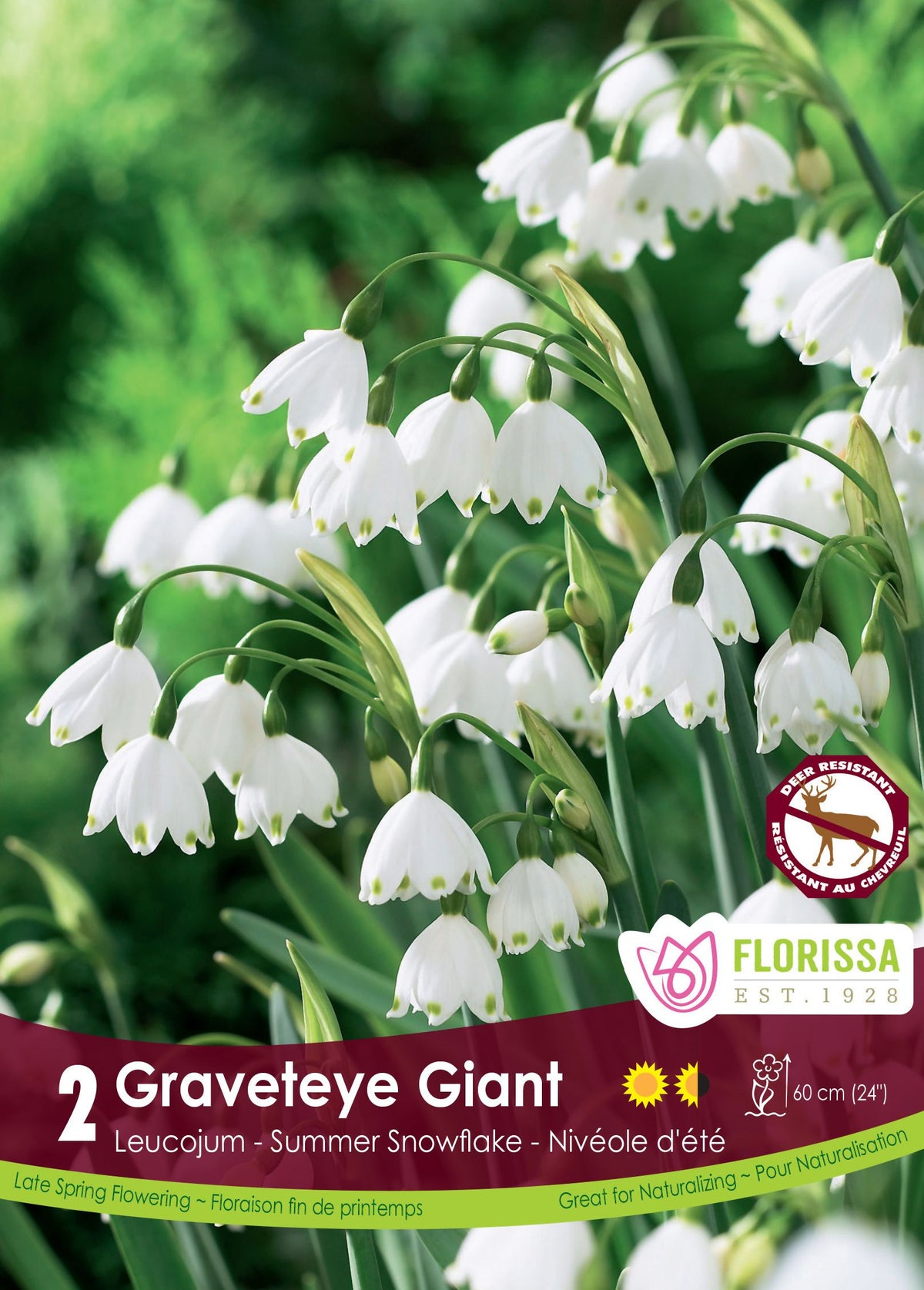
‘Gravetye Giant’ Summer Snowflake

Leucojum aestivum

Product code : 147 351 01

The ‘Gravetye Giant’ Summer Snowflake is a bulbous perennial producing up to eight slightly fragrant white bells, each distinctly tipped with green in spring. The package contains 2 bulbs. Plant them in fall, 8 to 10 cm deep, in full sun or partial shade and humus-rich soil that stays moist without holding stagnant water. Hardy in Zone 4, this summer snowflake suits borders, open woodland, and naturalized gardens. Allow the strap-like foliage to yellow completely after flowering so the bulbs rebuild reserves and return for many years. Grouping every bulb strengthens the display and keeps the clump easy to see from a path. A discreet label also protects its position during dormancy and later garden work.
5 99 $
Pay in 4 interest-free payments with Sezzle
Detailed plant guide
Advice adapted to Canada
Secure payment
Share
Quantity
2 bulbs
Exposure
Full sun to partial shade
Life cycle
Hardy naturalizing bulbous perennial
Hardiness
Zone 4 to 8

Discover the plant

Common name‘Gravetye Giant’ Summer Snowflake
FamilyAmaryllidaceae
GenusLeucojum
Speciesaestivum
CultivarGravetye Giant
TypePerennial ornamental bulb
Botanical nameLeucojum aestivum

‘Gravetye Giant’ Summer Snowflake (Leucojum aestivum ‘Gravetye Giant’) produces up to eight slightly fragrant white bells, each distinctly tipped with green in mid- to late spring. The package contains 2 bulbs. This vigorous selection can reach 90 cm and carry up to eight flowers on each stem. Dark-green glossy strap-like foliage frames the nodding bells. Hardy in Zone 4, this perennial suits moist borders, open woodland, damp meadows, and pond edges when bulbs are not submerged. It can return and expand gradually for many years in a suitable site. A position near a path makes each green marking and the light fragrance easy to appreciate.

Plant the bulbs in fall, from September until the ground freezes, 8 to 10 cm deep and approximately 15 cm apart. Choose full sun or partial shade and humus-rich, moderately fertile, moist but freely drained soil. Group every bulb in the package for a coherent display. Water deeply after planting, then maintain even moisture in spring whenever rainfall is insufficient. Avoid stagnant pockets around the bulbs. A thin layer of mature compost supports rooting without encouraging excessively soft growth. Check drainage after heavy rain and keep emerging shoots free of compacted mulch.

After flowering, remove spent stems when seedlings are not wanted, but allow every leaf to yellow completely. The foliage rebuilds reserves needed for the following display. Reduce watering during summer dormancy and mark the position to avoid damaging resting bulbs. Divide a very crowded clump after leaves have dried, then promptly replant firm offsets. Watch for slugs around fresh shoots. Ornamental bulbs should not be eaten, so keep stored bulbs away from children and pets and wear gloves if your skin is sensitive. Remove only fully dry foliage and avoid digging deeply near the dormant group.

Gravetye Giant Summer Snowflake: nodding white bells with green-tipped petals.

Planting guide

Plant well.Grow beautifully.

Spacing / density

Space 15 cm (6 in.) apart

Best planting time

September until the ground freezes

Propagation

Divide offsets after foliage yellows

Growing method

Plant the bulbs in fall, ideally from September until the ground freezes. Choose full sun or partial shade and loosen a broad area with mature compost. Set each bulb 8 to 10 cm deep with its pointed end up, leaving approximately 15 cm between bulbs. Group all 2 bulbs instead of scattering them to create a coherent display. Water deeply after planting. In spring, keep soil moist through emergence and flowering. Remove spent stems if seedlings are not wanted, but retain every leaf until it yellows completely. Divide crowded clumps during dormancy and promptly replant firm offsets. Mark the position so resting bulbs are not disturbed during summer work. During winter, a thin mulch can moderate temperature changes, but it should not smother emerging shoots in spring. Keep the area free of vigorous weeds and avoid compacting soil by walking near the group. After heavy rain, verify that water does not remain around the bulbs. If stems become less numerous after several years, check both shade from neighbouring shrubs and clump density. Apply only a moderate amount of bulb fertilizer to moist soil. In containers, monitor moisture more often and protect the pot from repeated freeze-and-thaw cycles. Keep the label visible and note the dormant position before nearby summer planting or cultivation.

Soil and care

The right care,at the right time.

Soil pH

Neutral to alkaline

Minimum temperature

Zone 4 hardiness

Care level

Low

Watering

Water deeply after planting, then keep soil evenly moist during active growth and flowering whenever rainfall is insufficient. Check moisture below the surface before every application and avoid standing water. Reduce irrigation after foliage yellows; the bulbs tolerate drier conditions during summer dormancy. In containers, always empty the saucer and check moisture more often because exposed pots dry faster than garden soil.

Soil type

This summer snowflake prefers humus-rich, moderately fertile, moist but freely drained soil. Even moisture during spring growth supports the stems, but bulbs should not remain in a stagnant pocket. The species tolerates clay and occasionally wet conditions when air can circulate and excess water can drain away. Avoid strongly acidic soil. Incorporate mature compost across a broad area and preserve a crumbly structure that roots can enter easily.

Fertilization

Add a modest amount of mature compost at planting if soil is poor. In early spring, a low-nitrogen bulb fertilizer can support flowering. Avoid fresh manure and excessive rates that encourage weak foliage. Apply to moist soil at the label rate, keep granules away from emerging leaves, and water lightly afterward when rain is not expected. Established clumps in fertile soil usually need little additional feeding.

Moisture

Consistent soil moisture is useful from spring emergence until the leaves yellow. Soil may remain fresh and occasionally wet, but it must stay aerated. A thin organic mulch slows evaporation without covering the shoots. Reduce moisture during summer dormancy and correct any spot where water remains after heavy rain. Container drainage must stay open throughout the growing season.

Seasonal care

In fall, plant the bulbs in fresh, well-prepared soil and water deeply. In winter, a thin mulch can reduce repeated freeze-and-thaw cycles; clear it from shoots as they emerge. In spring, check moisture, support tall stems if the site is very windy, and remove only spent flowers. Leaves must remain intact until completely yellow. In summer, reduce watering during dormancy, mark the clump, and avoid digging nearby. Divide a very crowded group after foliage dries. In late summer, spread a little compost around the area without burying bulbs more deeply. Recheck drainage after heavy rain and handpick slugs if they damage fresh growth. Replace labels and reset any bulbs lifted accidentally during nearby work. If autumn is unusually dry, check the soil once or twice before freeze-up. In spring, avoid compacting saturated ground and direct water toward the base rather than over flowers. Declining bloom can indicate shade that has become too dense, an overcrowded clump, or soil that now dries too quickly. Correct the cause before adding more fertilizer. Containers require more frequent monitoring and winter protection suited to the local climate. Clean tools before division and discard soft or damaged bulbs. Replant firm offsets at their normal depth, then water to restore soil contact. Record the new positions so small shoots are not mistaken for weeds the following spring.

Container growing

A garden,within reach.

Recommended pot size

Deep pot at least 30 cm wide and deep
Use a deep container at least 30 cm wide with several unobstructed drainage holes. Fill it with rich but airy potting mix, then set bulbs 8 to 10 cm deep and approximately 10 cm apart. Water until excess drains and empty the saucer. Place the pot in full sun or bright partial shade and keep it moist during growth without letting it stand in water. In cold regions, insulate the container or move it to a cold sheltered location to limit repeated freeze-and-thaw cycles. After flowering, allow foliage to yellow completely, reduce watering, and protect the dormant pot from continual summer rain. Repot firm offsets when the group becomes crowded and renew compacted mix. Check below the surface before each watering because wind and sunlight can dry an exposed container quickly. Rotate the pot if stems lean toward the light and shelter it from strong wind as they lengthen. A very thin mulch can stabilize moisture, but keep shoots clear. Avoid an outer cachepot without drainage. In early spring, use only a low rate of bulb fertilizer when the mix is poor. After several seasons, replace compacted mix and discard soft bulbs. Label the container so it remains identifiable when no leaves are visible. Raise it slightly if drainage slows, and never leave melting snow or rainwater trapped around the base.
Gravetye Giant Summer Snowflake: nodding white bells with green-tipped petals.

Bloom and dimensions

Its place,in your garden.

Mature height

50 to 90 cm (20 to 35 in.)

Width / spread

20 to 30 cm (8 to 12 in.)

Flower color

White with green tips

Foliage color

Glossy dark green

Foliage type

Deciduous linear strap-like foliage

Growth rate

Medium

Growth habit

Upright arching clump

Fragrance

Light fragrance

Bloom period

The ‘Gravetye Giant’ Summer Snowflake blooms in mid- to late spring and produces up to eight slightly fragrant white bells, each distinctly tipped with green. Vigorous stems can reach 90 cm and carry up to eight flowers. Cool weather can extend flowering. Group bulbs to display the nodding bells clearly, then allow strap-like leaves to yellow completely so underground reserves are renewed for the following season.
Gravetye Giant Summer Snowflake: nodding white bells with green-tipped petals.

Garden associations

In goodcompany.

Companion plants

Pair this summer snowflake with plants that enjoy moist spring soil: daffodils, hardy primroses, wood anemones, ferns, and hostas. Later-emerging perennials naturally cover foliage while it yellows. Avoid very vigorous ground covers that smother shoots and neighbours requiring prolonged dryness. Respect each plant’s mature width so spring light and air can reach the clump, and choose companions that tolerate the same seasonal moisture pattern. Add simple flowers that extend resources for insects without covering emerging stems. Repeating the combination in small groups creates a coherent scene that remains easy to maintain.

Frequently asked questions

Your questions,answered.

When should leucojum bulbs be planted?
Plant the bulbs in fall, ideally from September until the ground freezes. Planting reasonably early lets roots develop before winter without encouraging excessive top growth. Choose full sun or partial shade and humus-rich, moist, freely drained soil. Set each bulb 8 to 10 cm deep with its pointed end up, leaving approximately 15 cm between bulbs. Water deeply after planting and mark the location. If autumn remains unusually dry, check moisture before freeze-up, but avoid saturating the soil or leaving water in a depression around the bulbs. Always adjust watering and care to current rainfall, temperature, soil drainage, and the actual condition of the planting site.
How deep should these bulbs be planted?
Set every bulb 8 to 10 cm deep, measured from the soil surface to the top of the bulb, with its pointed end facing upward. Leave approximately 15 cm between bulbs so the clump can expand. In heavy soil, improve drainage across a broad area instead of adding gravel only to the hole. Group bulbs for a more visible display, then water deeply to settle soil gently. Avoid walking over the planting and add a discreet marker so the resting bulbs are not disturbed during later garden work. Always adjust watering and care to current rainfall, temperature, soil drainage, and the actual condition of the planting site.
What light does leucojum need?
Full sun is suitable when soil remains moist during spring growth. Partial shade also works well, especially beneath deciduous trees that admit light before their canopy fully opens. Avoid dense all-day shade, which can reduce flowering, and hot sites that dry rapidly. After flowering, leaves still need light until they yellow completely because they are rebuilding bulb reserves. Good air movement also supports the stems and prevents stagnant moisture around emerging shoots. If flowering declines, check whether neighbouring shrubs now cast more shade than in previous years. Always adjust watering and care to current rainfall, temperature, soil drainage, and the actual condition of the planting site.
How should summer snowflake be watered?
Water deeply after planting. In spring, keep soil evenly moist through emergence, growth, and flowering whenever rainfall is insufficient. Check below the surface instead of following a rigid calendar. The plant tolerates occasionally wet soil, but bulbs should not remain in stagnant water. Gradually reduce irrigation as leaves yellow, then allow drier conditions during summer dormancy. In containers, check more often and always empty the saucer. Water at soil level in the morning when possible, and verify drainage after prolonged rain or snowmelt. Always adjust watering and care to current rainfall, temperature, soil drainage, and the actual condition of the planting site.
What should happen after flowering?
Remove spent stems when seedlings are not wanted, but keep every leaf until it yellows completely. For several weeks, foliage captures light and rebuilds the bulb’s reserves. Do not braid, tie, or cut leaves while they are green. Reduce watering afterward for summer dormancy. When the clump becomes crowded, separate offsets after foliage dries and promptly replant firm bulbs. Mark the location to avoid digging into resting bulbs. Later-emerging hostas or ferns can discreetly cover yellowing foliage without depriving it of the light needed for reliable repeat flowering. Always adjust watering and care to current rainfall, temperature, soil drainage, and the actual condition of the planting site.

Wildlife and pets

Life,around your plants.

Reported toxicity

Yes

Supporting wildlife

The lightly fragrant spring flowers can offer nectar and pollen to bees and other insects active early in the season. Group bulbs, avoid insecticides during bloom, and add simple flowers opening before and after the summer snowflake to extend available resources. Keep drinking water shallow and free of chemical residues when supporting garden wildlife.