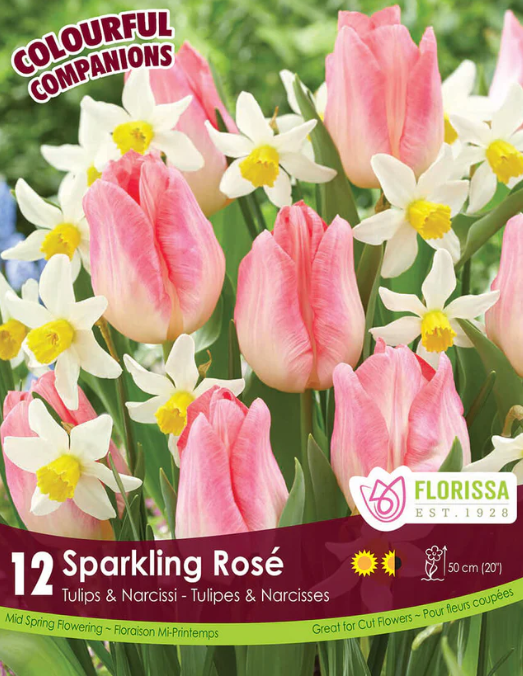
Tulip and daffodil mix (Tulipa and Narcissus) ‘Sparkling Rose’

Tulipa and Narcissus

‘Sparkling Rose’ combines 12 pink tulip and creamy white daffodil bulbs with yellow centres. Reaching 35 to 50 cm (14 to 20 in), this romantic, lightly fragrant mixture is ideal for spring beds, containers and bouquets.
15 99 $
Pay in 4 interest-free payments with Sezzle
Detailed plant guide
Advice adapted to Canada
Secure payment
2026 preorder for fall bulbs Shipping expected in October 2026.
Share
Exposure Full sun to partial shade
Hardiness Zones 3 to 8
Difficulty level Easy

Discover the plant

Family Liliaceae and Amaryllidaceae
Type Mixed flowering bulbs

Tulip and daffodil mix (Tulipa and Narcissus) ‘Sparkling Rose’ is a 12-bulb assortment combining pink tulips with creamy white daffodils featuring yellow centres for a coordinated mid-spring display. Upright tulips contribute shades ranging from soft blush to richer rose pink, while star-shaped daffodils brighten the planting with pale petals and sunny yellow cups. The two flower forms create a light, romantic and well-structured composition. The planting reaches approximately 35 to 50 cm (14 to 20 in) tall. Lightly fragrant and visually balanced, this mixture is especially well suited to soft, luminous and classic spring garden schemes.

This mixture prefers full sun to partial shade and light, fertile, well-drained soil. In Quebec, plant the bulbs in fall, ideally from September to December before the ground freezes. Set them approximately 150 mm deep and space them 10 to 15 cm (4 to 6 in) apart. Water after planting to settle the soil around the bulbs, then maintain moderate moisture when active growth resumes in spring. Avoid saturated soil, particularly during cold periods. After flowering, remove faded blooms but allow the foliage to yellow completely before cutting it back so the bulbs can rebuild their stored energy for the following season and enter dormancy naturally.

This combination is ideal for flower beds, romantic borders, cottage gardens, containers and cutting gardens. Planted in groups, it creates a generous display of rose pink, creamy white and yellow that blends easily into pastel colour schemes. Blue grape hyacinths, windflowers, forget-me-nots or silver foliage can strengthen the contrast while preserving a soft overall effect. The daffodils also contribute light fragrance, and both flower types may be visited by some flower-feeding insects in spring. The blooms are suitable for bouquets, but tulips and daffodils are not edible and may be harmful to pets if ingested. This product is presented under the Florissa brand.

Tulip and daffodil mix (<em>Tulipa</em> and <em>Narcissus</em>) ‘Sparkling Rose’

Planting guide

From planting to establishment.

Spacing / density Space 10 to 15 cm (4 to 6 in) apart
Best planting time September to December, before the ground freezes
Propagation Division of bulbs and offsets
Growing method
Plant the bulbs in fall in loosened, fertile and well-drained soil. Set them approximately 150 mm deep with the pointed end upward and space them 10 to 15 cm (4 to 6 in) apart. Group tulips and daffodils together to preserve the coordinated effect of the mixture. Water after planting, then moderately during active spring growth. After flowering, remove faded blooms if desired but allow all foliage to yellow naturally before cutting it back so the bulbs can replenish their stored energy.

Soil and care

The right conditions.

Exposure Full sun to partial shade
Soil pH Slightly acidic to neutral
Hardiness zone Zones 3 to 8
Minimum temperature Approximately -40 °C
Watering
Moderate during active growth; reduce after flowering
Soil type
Light, fertile and well-drained soil
Fertilization
Light application of compost or bulb fertilizer in early spring
Seasonal care
In fall, plant the 12 bulbs before the ground freezes in loose, well-drained soil, then water to ensure good soil contact. In spring, maintain moderate moisture as foliage, stems and buds develop. A light application of compost or bulb fertilizer can be made as active growth begins. During flowering, harvest stems for bouquets or remove faded blooms. After flowering, leave all green foliage intact until it has completely yellowed so it can replenish the bulbs. Reduce watering afterward during summer dormancy and avoid locations where water remains standing after rainfall, as prolonged saturation can damage both tulip and daffodil bulbs.

Container growing

A controlled environment.

Recommended pot size
Pot at least 30 to 35 cm (12 to 14 in) in diameter
Tulip and daffodil mix (<em>Tulipa</em> and <em>Narcissus</em>) ‘Sparkling Rose’

Bloom and dimensions

The complete profile.

Flower color Blush pink, deeper rose, creamy white and yellow
Foliage color Green to blue-green
Foliage type Deciduous
Growth rate Moderate
Bloom period
Mid to late spring
Maximum height 50 cm (20 in)
Maximum width 15 cm (6 in) per plant
Tulip and daffodil mix (<em>Tulipa</em> and <em>Narcissus</em>) ‘Sparkling Rose’

Garden associations

What to plant with it.

Good companions
Blue grape hyacinths, forget-me-nots, windflowers and silver foliage
Avoid planting with
Plants requiring constantly moist or waterlogged soil
Beds, borders, romantic gardens, containers and cut flowers

Frequently asked questions

Everything toknow.

‘Sparkling Rose’ contains 12 bulbs combining pink tulips with creamy white daffodils featuring yellow centres. The tulips provide height and softness, while the daffodils add a star-shaped form, bright contrast and light fragrance. The individual cultivars included in the assortment are not specified.
Plant the bulbs in fall, from September to December, before the ground freezes. Set them approximately 150 mm deep and space them 10 to 15 cm (4 to 6 in) apart. Fertile, well-drained soil and good light encourage a balanced spring display.
The mixture generally reaches 35 to 50 cm (14 to 20 in) tall in bloom. This variation comes from the slightly different habits of the tulips and daffodils. The combination works especially well through the middle of a border, in a spring bed or in a large container.
Yes. The package indicates that the mixture is suitable for cut flowers. Pink tulips and creamy white daffodils create bright spring bouquets. Harvest stems as the buds begin opening and leave enough foliage on the plants to support the bulbs after flowering.
No. Tulips and daffodils can be harmful to dogs and cats when ingested, and their bulbs present a particularly important risk. Keep bulbs out of reach before planting and prevent pets from digging them up or chewing the leaves and flowers.

Its strengths, naturally.

Not recommended for pets

Pets

Pollinators
Attracts or supports pollinating insects

Pollinators