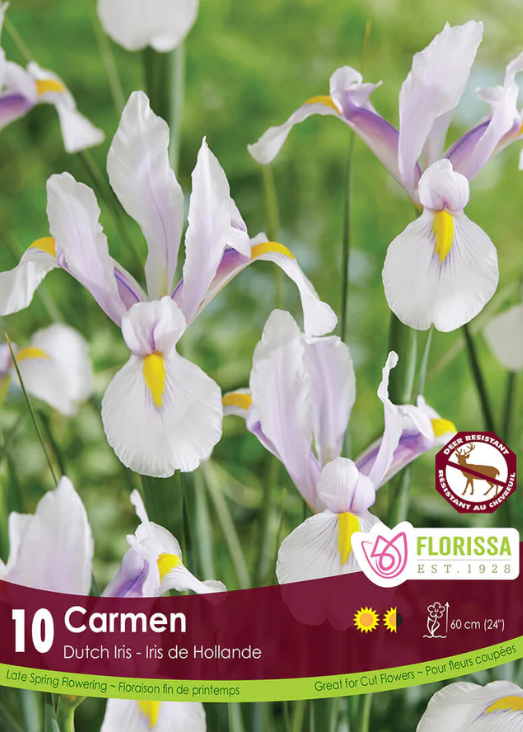
Multicoloured lavender Dutch iris for cutting

‘Carmen’ Dutch Iris

Iris × hollandica ‘Carmen’

Product code : VAN-146-500-01

‘Carmen’ Dutch iris (Iris × hollandica) produces elegant large flowers on upright stems about 60 cm tall in late spring. Lavender-pink standards rise above white falls finely veined purple, each marked by a strongly contrasting golden-yellow signal. Narrow upright green foliage complements the refined silhouette without making the planting appear heavy. Supplied as 10 size 8/9 bulbs, this cultivar suits sunny borders, naturalized groups in drained soil, and bouquets. Its flowering bridges the seasonal gap between small early spring bulbs and the first summer perennials, adding clean vertical structure and multicoloured detail when many border plants are still developing. The 10 size 8/9 bulbs produce an effective vertical group between small early bulbs and the first summer perennials.
5 99 $
Pay in 4 interest-free payments with Sezzle
Detailed plant guide
Advice adapted to Canada
Secure payment
2026 preorder for fall bulbs Shipping expected in October 2026.
Share
Quantity
10 size 8/9 bulbs
Exposure
Full sun to light partial shade
Life cycle
Naturalizing bulbous perennial
Hardiness
Zones 5 to 10; naturalizes best in freely drained soil

Discover the plant

Common nameCarmen Dutch iris
FamilyIridaceae
GenusIris
Species× hollandica
CultivarCarmen
TypeBulbous Dutch iris
Botanical nameIris × hollandica ‘Carmen’

‘Carmen’ Dutch Iris (Iris × hollandica ‘Carmen’) produces elegant large flowers on upright stems about 60 cm tall in late spring. Lavender-pink standards rise above white falls finely veined purple, each marked by a strongly contrasting golden-yellow signal. Narrow upright green foliage complements the refined silhouette without making the planting appear heavy. Supplied as 10 size 8/9 bulbs, this cultivar suits sunny borders, naturalized groups in drained soil, and bouquets. Its flowering bridges the seasonal gap between small early spring bulbs and the first summer perennials, adding clean vertical structure and multicoloured detail when many border plants are still developing.

Plant bulbs in fall about 8 cm deep and 8 cm apart, with pointed ends upward. Choose full sun or bright partial sun in loose, fertile, very freely drained soil; standing moisture during dormancy encourages rot. Group at least ten bulbs for a coherent vertical effect. Water after planting to settle soil, then allow seasonal rainfall to support rooting. Resume moderate watering in spring if soil becomes dry during active growth. In containers, use a deep pot with open drainage holes and protect it from excessive winter moisture. Avoid disturbing emerging shoots, and keep dense mulch away from the immediate planting area.

After flowering, cut spent stems if seed capsules are not wanted, but retain leaves until they yellow completely. They replenish the bulb for the following year. Reduce watering during summer dormancy. Mature compost or a high-potash fertilizer after flowering may support the next season without excessive nitrogen. Combine ‘Carmen’ with established alliums, peonies, catmint, and light ornamental grasses. The long stems are excellent for cutting. Like other irises, the plant should not be ingested by people or pets. Wear gloves if bulb handling irritates sensitive skin, wash hands after planting, and keep stored bulbs beyond the reach of children and animals.

Iris hollandais ‘Carmen’ ( Iris × hollandica ) : des iris blancs et lilas portant une petite marque jaune sur les sépales. Le visuel Florissa présente la plante et son nom dans la partie inférieure de l’étiquette. La photographie occupe presque toute la surface, tandis que le bandeau du bas rassemble les indications du produit. Cette vue permet de reconnaître son apparence et de distinguer la variété présentée.

Planting guide

Plant well.Grow beautifully.

Planting depth

8 cm (3 in.) deep, pointed end upward

Spacing / density

Space approximately 8 cm (3 in.) apart in groups

Best planting time

September to November before the ground freezes

Propagation

Separate offsets during dormancy

Growing method

Plant bulbs in fall about 8 cm deep and 8 cm apart, with pointed ends upward. Choose full sun or bright partial sun in loose, fertile, very freely drained soil; standing moisture during dormancy encourages rot. Group at least ten bulbs for a coherent vertical effect. Water after planting to settle soil, then allow seasonal rainfall to support rooting. Resume moderate watering in spring if soil becomes dry during active growth. In containers, use a deep pot with open drainage holes and protect it from excessive winter moisture. Avoid disturbing emerging shoots, and keep dense mulch away from the immediate planting area. After flowering, cut spent stems if seed capsules are not wanted, but retain leaves until they yellow completely. They replenish the bulb for the following year. Reduce watering during summer dormancy. Mature compost or a high-potash fertilizer after flowering may support the next season without excessive nitrogen. Combine ‘Carmen’ with established alliums, peonies, catmint, and light ornamental grasses. The long stems are excellent for cutting. Like other irises, the plant should not be ingested by people or pets. Wear gloves if bulb handling irritates sensitive skin, wash hands after planting, and keep stored bulbs beyond the reach of children and animals.

Soil and care

The right care,at the right time.

Soil pH

About 6.0 to 7.5; adaptable when drainage is excellent

Minimum temperature

Approximately −34°C in freely drained soil, corresponding to Zone 5

Care level

Moderate

Watering

Water once after fall planting to settle soil around the bulbs. Normal precipitation is generally sufficient until spring. During flowering and leaf growth, maintain light moisture if weather is unusually dry without saturating the ground. Reduce irrigation as foliage yellows and keep the area relatively dry through summer dormancy. Check containers more often while always allowing excess water to drain freely. This practice respects the natural cycle of spring Dutch iris keeps bulbs healthy in.

Soil type

Light, humus-rich, freely drained soil is ideal, especially sandy loam amended with a little mature compost. The ground must release fall rain and spring meltwater quickly to prevent bulb rot. In clay, create a slight mound and incorporate fine gravel. Avoid fresh manure, waterlogged hollows, and thick mulch that keeps the emerging crowns wet. This practice respects the natural cycle of.

Fertilization

Incorporate mature compost before planting. When shoots reach 5 cm (2 in), apply balanced slow-release fertilizer or a half-strength liquid feed. Repeat once as buds begin forming. Avoid excess nitrogen, which promotes foliage and weak flowers at the expense of flowers and the bulb’s stored energy. Stop feeding after bloom so foliage can mature naturally and bulbs can enter dormancy with firm, well-ripened tissues.

Moisture

Maintain moderate, even moisture through establishment, active growth, and flowering without leaving bulbs in saturated soil. Rapid drainage is essential for winter hardiness, especially in Zone 5. Reduce irrigation as foliage yellows. Light mulch conserves summer moisture, but keep it away from emerging shoots to preserve airflow and prevent crown rot after prolonged rain or repeated winter thaws in Quebec gardens.

Seasonal care

Plant bulbs in fall about 8 cm deep and 8 cm apart, with pointed ends upward. Choose full sun or bright partial sun in loose, fertile, very freely drained soil; standing moisture during dormancy encourages rot. Group at least ten bulbs for a coherent vertical effect. Water after planting to settle soil, then allow seasonal rainfall to support rooting. Resume moderate watering in spring if soil becomes dry during active growth. In containers, use a deep pot with open drainage holes and protect it from excessive winter moisture. Avoid disturbing emerging shoots, and keep dense mulch away from the immediate planting area. After flowering, cut spent stems if seed capsules are not wanted, but retain leaves until they yellow completely. They replenish the bulb for the following year. Reduce watering during summer dormancy. Mature compost or a high-potash fertilizer after flowering may support the next season without excessive nitrogen. Combine ‘Carmen’ with established alliums, peonies, catmint, and light ornamental grasses. The long stems are excellent for cutting. Like other irises, the plant should not be ingested by people or pets. Wear gloves if bulb handling irritates sensitive skin, wash hands after planting, and keep stored bulbs beyond the reach of children and animals. Watch for rot where soil remains damp in summer, and mark the planting position before dormancy so bulbs are not damaged during later soil work.

Container growing

A garden,within reach.

Recommended pot size

Pot at least 30 cm deep
Plant bulbs in fall about 8 cm deep and 8 cm apart, with pointed ends upward. Choose full sun or bright partial sun in loose, fertile, very freely drained soil; standing moisture during dormancy encourages rot. Group at least ten bulbs for a coherent vertical effect. Water after planting to settle soil, then allow seasonal rainfall to support rooting. Resume moderate watering in spring if soil becomes dry during active growth. In containers, use a deep pot with open drainage holes and protect it from excessive winter moisture. Avoid disturbing emerging shoots, and keep dense mulch away from the immediate planting area. In containers, use a pot at least 30 cm deep with several open drainage holes. Plant bulbs 8 cm deep without touching in freely drained mix. Place the pot in sun, protect it from excessive winter rainfall, and water moderately in spring. Allow foliage to yellow, then keep the mix comparatively dry during summer dormancy. Raise the container slightly so every rainfall drains promptly, and inspect drainage holes regularly throughout active growth. Turn the pot periodically to keep stems straight and evenly lit. Check moisture below the surface before watering again.
Iris hollandais ‘Carmen’ ( Iris × hollandica ) : des iris blancs et lilas portant une petite marque jaune sur les sépales. Le visuel Florissa présente la plante et son nom dans la partie inférieure de l’étiquette. La photographie occupe presque toute la surface, tandis que le bandeau du bas rassemble les indications du produit. Cette vue permet de reconnaître son apparence et de distinguer la variété présentée.

Bloom and dimensions

Its place,in your garden.

Mature height

65 cm (26 in)

Width / spread

15 cm (6 in)

Flower color

Lavender pink, purple-veined white, and golden-yellow signal

Foliage color

Dark green

Foliage type

Deciduous, narrow, strap-shaped, and upright

Growth rate

Moderate

Growth habit

Upright and columnar

Fragrance

Light or variable fragrance

Bloom period

In late spring, lavender-pink and white flowers veined purple open with a golden-yellow signal on upright stems. Successive buds briefly extend the display. Cut spent stems if seed capsules are not wanted, but retain green leaves until they yellow completely so they can replenish the bulbs for the following growing and flowering season. This late display is especially valuable between early bulbs and summer perennials.
Iris hollandais ‘Carmen’ ( Iris × hollandica ) : des iris blancs et lilas portant une petite marque jaune sur les sépales. Le visuel Florissa présente la plante et son nom dans la partie inférieure de l’étiquette. La photographie occupe presque toute la surface, tandis que le bandeau du bas rassemble les indications du produit. Cette vue permet de reconnaître son apparence et de distinguer la variété présentée.

Garden associations

In goodcompany.

Companion plants

Peonies, catmint, alliums, perennial sages, light ornamental grasses, and nonaggressive groundcovers. These companions extend the season or conceal foliage after flowering. Avoid invasive plants and species requiring constantly wet summer soil because they compete with bulbs and increase the risk of rot during dormancy. Low spring foliage preserves light around the upright iris shoots, while later leaves disguise dormancy naturally. Choose low spring foliage to maintain light and airflow around emerging stems; later growth can naturally conceal the iris as dormancy begins.

Plants to avoid

Aggressive plants and dense groundcovers that shade foliage before it ripens

Frequently asked questions

Your questions,answered.

When and how should Carmen bulbs be planted?
Plant the ten bulbs in fall before the ground freezes. Choose a sunny position with loose, very freely drained soil. Place every bulb pointed end upward about 8 cm deep and 8 cm from the next. Group them rather than scattering them for a visible vertical effect. Backfill, firm gently, and water once to settle soil. Avoid hollows where water collects in winter or during summer dormancy. Mark the area so shoots and bulbs are not damaged during spring garden work, and keep dense mulch away from the immediate planting zone. This simple practice also protects the group’s vigour and encourages dependable flowering over successive seasons.
Why is drainage essential?
Dutch iris grows from a true bulb that may rot in constantly saturated soil, especially during summer dormancy. Loosen a broad area and incorporate mature organic matter if soil is compacted. In heavy clay, plant on a slight mound or use a freely drained container. Water during growth only when soil dries, then reduce applications sharply after leaves yellow. Do not plant beside species requiring abundant summer irrigation. Reliable drainage also supports stronger fall rooting, upright spring growth, and more consistent flowering over following seasons. This simple practice also protects the group’s vigour and encourages dependable flowering over successive seasons.
How should Carmen be used as a cut flower?
Cut stems when buds show colour but before every flower is fully open. Use a clean, sharp tool, harvest early in the morning, and place stems immediately in fresh water. Remove only leaves that would sit below water. Leave enough foliage on uncut plants so bulbs replenish their reserves. Refresh vase water regularly and keep the bouquet away from direct sun and ripening fruit. Slender 60 cm stems suit vertical arrangements with peonies, foliage, and airy flowers, while the lavender, white, purple-veined, and yellow details remain easy to appreciate indoors. This simple practice also protects the group’s vigour and encourages dependable flowering over successive seasons.
What should be done with foliage after flowering?
Leave all green leaves in place until they yellow completely, even when flowers are cut. They use light to replenish bulb reserves. Remove only diseased or severely damaged leaves. When foliage is yellow and dry, cut it near soil level and reduce watering to respect summer dormancy. Neighbouring perennials can conceal this phase without shading irises in spring. A light compost or high-potash fertilizer application after flowering may support the following season, but avoid excessive nitrogen that produces soft growth and may reduce sturdy flower stem development. This simple practice also protects the group’s vigour and encourages dependable flowering over successive seasons.
Is Carmen safe for pets?
No if ingested. Bulbs and other iris parts may cause irritation or digestive upset in people and animals. Store unplanted bulbs beyond the reach of children, dogs, and cats, and collect any that are dug up. Wear gloves if your skin is sensitive and wash hands after planting. If ingestion or symptoms are suspected, contact a healthcare professional or veterinarian. This product is intended only for ornamental cultivation and is not sold as edible. Keep cut foliage, spent flowers, and discarded bulbs away from areas explored by pets. This simple practice also protects the group’s vigour and encourages dependable flowering over successive seasons.

Wildlife and pets

Life,around your plants.

Reported toxicity

Yes

Supporting wildlife

Flowers may attract some bees and other flower-visiting insects in late spring. Maintain diverse simple flowers before and after their display, avoid insecticides on open blooms, and provide shallow water. Visits vary with weather and local populations, so Dutch iris should complement rather than replace dedicated pollinator plants.