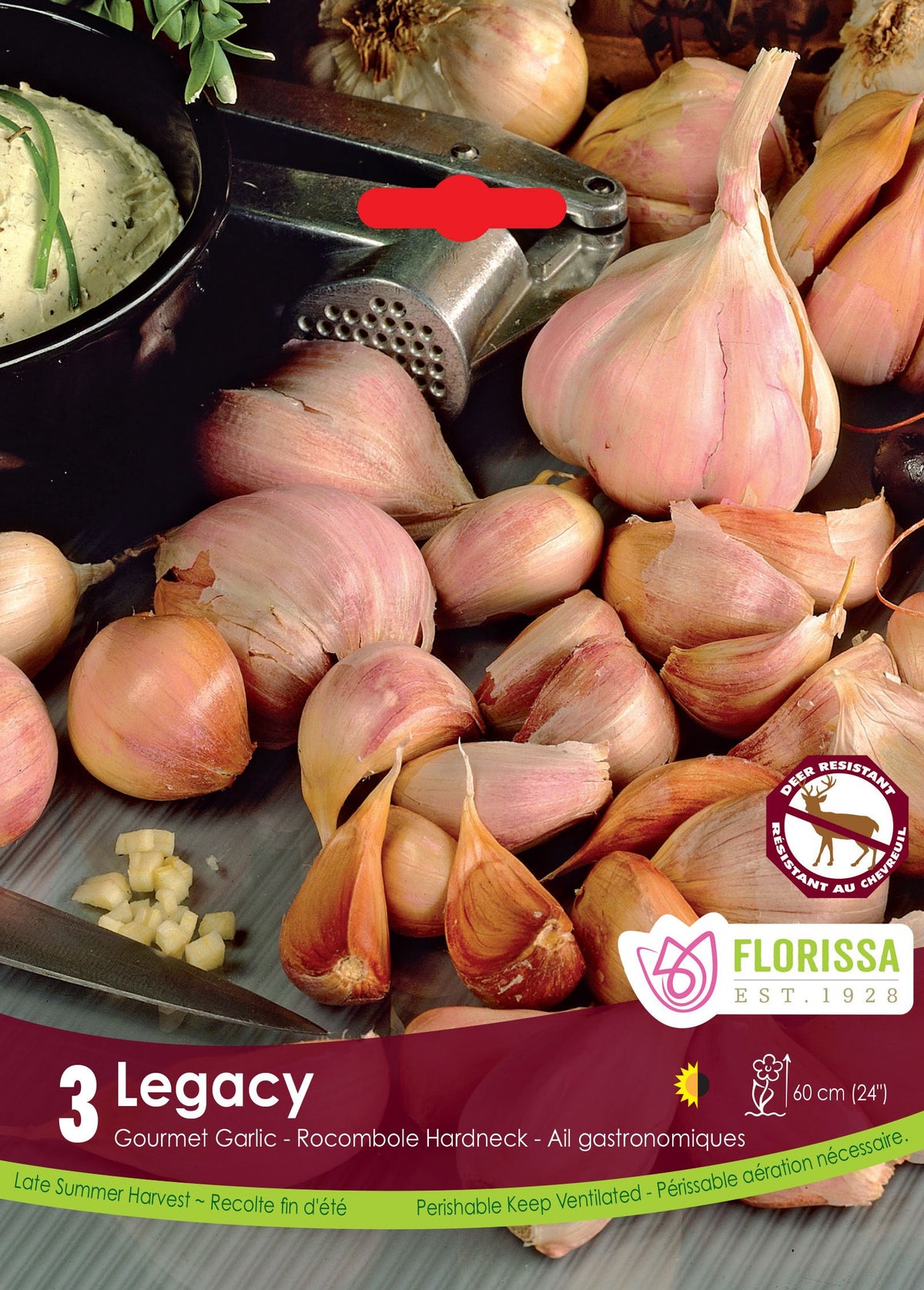
Cold-hardy, easy-peeling Rocambole garlic · garlic bulbs for planting · plant garlic in fall

Legacy garlic (Allium sativum var. ophioscorodon ‘Legacy’)

Allium sativum var. ophioscorodon

Legacy is a hardneck Rocambole garlic recognized for excellent flavour, cold hardiness, and easy-peeling cloves. The package contains exactly 3 bulbs, each normally forming 7 to 12 medium cloves around a firm central stalk. Planted in fall, it overwinters beneath mulch, resumes quickly in spring, and reaches approximately 60 cm (24 in). Its curling garlic scape provides an early edible harvest before heads mature in late summer. Medium to strong flavour works in raw preparations and slow cooking alike. After careful curing, sound bulbs generally store until midwinter in a cool, dry, ventilated location. It is a practical cultivar for growing garlic in Canada when flavour and straightforward kitchen preparation are priorities. The crop remains straightforward when drainage and timing are respected.
8 99 $
Pay in 4 interest-free payments with Sezzle
Detailed plant guide
Advice adapted to Canada
Secure payment
2026 preorder for fall bulbs Shipping expected in October 2026.
Share
Quantity 3 bulbs
Exposure Full sun to bright partial shade
Hardiness Zones 2 to 10
Difficulty level Easy

Discover the plant

Family Amaryllidaceae
Genus Allium
Species sativum var. ophioscorodon
Cultivar Legacy
Type Rocambole hardneck garlic bulbs for planting
Cycle Bulbous perennial grown as an annual vegetable crop

Legacy garlic (Allium sativum var. ophioscorodon ‘Legacy’) is a hardneck Rocambole combining excellent flavour, strong cold hardiness, and cloves that peel readily. Each head usually contains 7 to 12 medium cloves arranged around a firm central stalk. Medium to strong flavour remains assertive without overwhelming every ingredient, making it versatile for everyday cooking. The Van Noort package contains exactly 3 bulbs. Upright plants reach approximately 60 cm (24 in), produce a curling garlic scape in late spring, and tolerate Zone 2. A late-summer harvest fits cold Canadian vegetable gardens where hardy planting stock and dependable kitchen quality matter equally.

Plant cloves in fall, at least four weeks before lasting soil freeze, in deep, fertile, exceptionally well-drained soil. Separate the 3 bulbs only on planting day so cloves remain firm. Position them point upward at a depth of 8 cm (3 in) and space plants 15 cm (6 in) apart in full sun or very bright partial shade. Water after setting, then wait until the ground cools before mulching. In spring, weed early, apply moderate nitrogen, and keep soil evenly moist without saturation. Cut garlic scapes after their first curl to support head size. Good winter drainage remains more important than heavy fertilizer or frequent watering.

Harvest in late summer when several lower leaves are brown while four or five upper leaves remain green. Stop irrigation approximately two weeks beforehand, loosen every head with a fork, and cure whole plants in shade with strong airflow for two to four weeks. Legacy normally stores until midwinter in a cool, dry, ventilated location. Easy-peeling cloves flavour sauces, soups, marinades, roasted vegetables, and stews, while tender scapes cook like a green vegetable. Reserve the firmest heads for the next planting and maintain a rotation of approximately four years. Inspect stored bulbs regularly and use any softening cloves before they deteriorate further.

Legacy garlic (<em>Allium sativum var. ophioscorodon</em> ‘Legacy’)

Planting guide

From planting to establishment.

Planting depth 8 cm (3 in), point upward
Spacing / density 15 cm (6 in) between plants and approximately 30 cm (12 in) between rows
Establishment temperature 10 to 15°C
Establishment time 14 to 28 days
Best planting time October to November in Quebec, depending on region
Propagation Separate bulbs into cloves immediately before planting
Growing method
Prepare for Legacy in fall, ideally from mid-September through October in cold Canadian regions, at least four weeks before the ground freezes permanently. Select a sunny site where melting snow never leaves standing water. Loosen 25 to 30 cm (10 to 12 in) of soil, remove perennial weeds, and incorporate a thin layer of mature compost. Separate the 3 bulbs immediately before planting; keep cloves firm and their skins intact. Position the root plate downward and point upward at a depth of 8 cm (3 in). Leave 15 cm (6 in) between plants and approximately 30 cm (12 in) between rows. Water deeply, then apply 8 to 12 cm (3 to 5 in) of clean straw once the ground becomes cold. In spring, open compacted mulch around shoots, weed without digging deeply, and fertilize moderately as growth begins. Keep soil evenly moist through deep watering, never saturated. Cut garlic scapes approximately ten to fourteen days after they appear or at their first curl. Stop feeding as heads swell, reduce water when leaves yellow, and stop completely about two weeks before the late-summer harvest. Lift carefully and cure without washing. Store only fully sound heads.

Soil and care

The right conditions.

Exposure Full sun to bright partial shade
Soil pH 6.2 to 6.8
Hardiness zone Zones 2 to 10
Minimum temperature Hardy to Zone 2 with well-drained soil and winter mulch
Watering
After planting, water enough to moisten the entire root zone, then allow fall precipitation to take over. In spring and early summer, provide approximately 2.5 cm (1 in) weekly, including rain, whenever soil begins drying. Water at the base in the morning. Reduce gradually as lower leaves yellow and stop about two weeks before harvest so wrappers remain sound and storage quality is protected.
Soil type
Legacy develops its best heads in deep, loose, fertile, exceptionally well-drained loam. A light texture allows the 7 to 12 cloves to develop evenly and reduces winter rot risk. Add mature compost before planting. In heavy clay, use a raised bed and incorporate structural mineral material. Avoid fresh manure, wet depressions, compacted soil, and any location receiving spring runoff, because cold hardiness cannot compensate for prolonged saturation.
Fertilization
Incorporate mature compost before planting and use a soil test to correct actual deficiencies. In spring, apply moderate nitrogen beside rows as shoots resume growth, followed by one light dose three or four weeks later if needed. Stop nitrogen as soon as heads begin expanding. Late or excessive feeding prolongs foliage growth, delays maturity, and reduces storage quality. Never place concentrated fertilizer directly against cloves or roots.
Seasonal care
In spring, monitor snowmelt and open any mulch pockets that retain water. Once shoots are clearly visible, keep only a light straw layer for weed suppression. Weed by hand or with a shallow tool because roots occupy the upper soil. Apply moderate nitrogen at the start and repeat lightly after three or four weeks if growth warrants it. Water deeply whenever the soil begins drying. In late spring, harvest garlic scapes at their first curl; removal supports head size. During summer, stop all feeding while heads expand. Reduce watering as lower leaves yellow, then stop approximately two weeks before harvest. Lift heads in late summer when several lower leaves are brown while four or five upper leaves remain green. Cure whole plants for two to four weeks in shade, dryness, and strong airflow without washing them. Then trim roots and stalks, brush away soil gently, and sort the crop. In fall, replant only firm cloves from the finest heads in a different bed. During winter, keep the stored crop cool, dry, and ventilated; inspect it monthly and cook any bulb that softens or begins sprouting. Record which heads stored best before choosing the next planting stock. Note the harvest date, head size, and storage performance so the most reliable planting stock can be selected more accurately for the following season.

Container growing

A controlled environment.

Recommended pot size
At least 30 cm (12 in) deep and 40 to 50 cm (16 to 20 in) wide, with generous drainage
Use a frost-resistant container at least 30 cm (12 in) deep and 40 to 50 cm (16 to 20 in) wide for several Legacy cloves. Numerous holes and feet beneath the pot must allow water to escape rapidly. Fill it with light vegetable mix enriched with mature compost and a mineral drainage component. In fall, plant cloves point upward at 8 cm (3 in), maintaining 15 cm (6 in) between them and open space near the walls. Water, place the container in full sun, and mulch after conditions cool. For a Canadian winter, temporarily sink the pot, insulate its walls, or group it in a sheltered outdoor location to reduce rapid freeze-thaw cycles. Do not move it into a heated home. In spring, remove excess mulch, ensure holes remain clear, and water when the upper 2 to 3 cm dries. Feed moderately early, cut scapes, and reduce irrigation as foliage yellows. After harvest, cure heads away from the pot and replace the mix before another Allium crop to limit disease. Never leave a saucer filled with water beneath the container. Rotate the container occasionally if sunlight reaches only one side, and keep foliage open to airflow after rain.
Legacy garlic (<em>Allium sativum var. ophioscorodon</em> ‘Legacy’)

Bloom and dimensions

The complete profile.

Flower color Purple when umbels mature
Foliage color Green
Foliage type Deciduous, strap-like, and aromatic
Growth rate Moderate
Bloom period
Legacy produces a Rocambole scape that rises and curls in late spring or early summer. Cut it while tender, approximately ten to fourteen days after emergence, to support head development. This garlic scape is edible. A retained scape may straighten and carry an umbel of bulbils, but leaving every scape normally reduces final head size and is not recommended when the main goal is a strong bulb harvest.
Fruiting
Garlic does not produce a fleshy fruit. Hardneck types instead develop aerial bulbils in the structure at the top of the scape. These small propagules can be planted but generally require several seasons to form culinary-sized bulbs. For vegetable production, removing the scape while curled supports enlargement of the underground bulb and provides an early edible harvest before the main crop matures. successfully.
Harvest
Late summer, when several lower leaves brown while four or five upper leaves remain green
Legacy garlic (<em>Allium sativum var. ophioscorodon</em> ‘Legacy’)

Garden associations

What to plant with it.

Good companions
Sow radishes, lettuce, or spinach lightly along Legacy bed edges and harvest them before heads need full space. Calendula, sweet alyssum, and phacelia can support beneficial insects when kept outside the rows. After harvest, a short green manure protects open soil. These choices support succession and biodiversity, but no companion replaces effective drainage, early weeding, sound rotation, or regular crop inspection. Avoid crowding roots or creating dense shade around garlic during spring head development. Keep an open zone around each plant base so foliage dries promptly after rain.
Avoid planting with
The main problems are bulb rot in poorly drained soil, onion flies, and certain fungal diseases. Proper crop rotation helps reduce these risks.
Legacy cloves peel readily and suit recipes requiring several cloves. Raw, they provide medium to strong flavour in dressings, salsas, and compound butter. Chopped cloves season sauces, soups, marinades, vegetables, and stews. Roasting makes them milder and creamier. Tender garlic scapes work in pesto, omelettes, stir-fries, or on the grill. Reserve firm, even heads for future planting, and use damaged cloves promptly because they lose storage quality faster than intact bulbs. Add garlic late for stronger character or earlier for a rounded, integrated flavour.

From the garden to inspiration.

Legacy garlic scape pesto — Rinse and dry 100 g (about 1 tightly packed cup) tender garlic scapes, then trim their fibrous ends. Place them in a food processor with 40 g (⅓ cup) sunflower seeds or nuts, 30 g (⅓ cup) Parmesan, 15 ml (1 tbsp) lemon juice, and a pinch of salt. Pulse, then gradually add 75 to 90 ml (about ⅓ cup) olive oil until spreadable. Taste and adjust the lemon. Serve with pasta, bread, grilled vegetables, or soup. Refrigerate immediately in a closed container and use within three days, or freeze in small portions. Never leave a garlic-and-oil mixture at room temperature because its low-oxygen environment can support botulism toxin formation. Add cheese after thawing if preparing a dairy-free freezer batch. For a lighter texture, replace part of the oil with 15 to 30 ml (1 to 2 tbsp) cold water added at the end. Taste again before serving and adjust seasoning gradually.

Frequently asked questions

Everything toknow.

Plant Legacy in fall, ideally from mid-September through October and at least four weeks before lasting soil freeze. Divide the 3 bulbs only when the bed is ready so cloves do not dry out. Choose a sunny, exceptionally well-drained site. Position the root plate downward and the point upward at a depth of 8 cm (3 in). Leave 15 cm (6 in) between plants and approximately 30 cm (12 in) between rows. Water deeply after planting. Once the ground cools, add 8 to 12 cm (3 to 5 in) of clean straw. In spring, gradually expose shoots if mulch is compacted or overly wet. Avoid low ground because standing winter water can rot even cold-hardy cloves.
Legacy belongs to the Rocambole group, which forms distinct cloves around a firm central stalk. A mature head normally holds 7 to 12 medium cloves. After harvest at the correct stage and complete curing, dry skins release readily without lengthy scraping, simplifying recipes that require substantial garlic. This quality still depends on maturity and drying: a head lifted too early remains moist, while one left in the ground too long can lose protective wrappers. Cure for two to four weeks with strong airflow, then store heads whole. Keep planting cloves together inside the head until they are ready to go into the soil, because separated cloves dry and become damaged more easily.
Legacy matures in late summer. Watch the leaves rather than relying on a fixed date: several lower leaves should be brown while four or five upper leaves remain green. Each remaining green leaf roughly corresponds to a protective wrapper around the head. If the entire plant dries, wrappers may split and storage life will decline. Reduce water as yellowing starts and stop approximately two weeks before harvest. Test one head by lifting it with a fork; cloves should be clearly defined beneath an intact wrapper. Then dig the row without pulling the foliage and move plants immediately into shade for curing. Avoid washing, bruising, or leaving freshly lifted heads in direct sun.
Legacy normally stores until midwinter, a shorter period than some Porcelain garlic but long enough to extend the harvest for several months. To reach that duration, lift before wrappers split and cure whole plants for two to four weeks in shade, dryness, and strong airflow. Then trim roots and stalks without removing clean wrappers that protect the cloves. Store heads in a basket, mesh, or paper bag in a cool, dry, dark, stable place. Avoid sealed plastic and humid refrigerator conditions. Inspect monthly and use any head that softens, moulds, or sprouts promptly. Keep the best intact heads for planting and divide them only when the next bed is prepared.
Yes, when the container is deep, draining, and protected from rapid temperature swings. Use a frost-resistant pot at least 30 cm (12 in) deep, wide enough to leave 15 cm (6 in) between cloves, and fitted with numerous holes. Plant 8 cm (3 in) deep, water, then mulch once the mix cools. For a cold Canadian winter, temporarily sink the pot, insulate its walls, or group it in a sheltered outdoor location. Do not place it in a heated room because a cold cycle is required. In spring, clear drainage holes, remove excess mulch, and water only when the surface begins drying. Never leave the container standing in a water-filled saucer during thaws or spring rain.

Its strengths, naturally.

Not recommended for pets

Pets

Pollinators
Attracts or supports pollinating insects

Pollinators

Deer
Less attractive or generally tolerated by deer

Deer