Ornamental fall-planted bulb

Golden garlic (Allium moly var. luteum)

Allium moly var. luteum

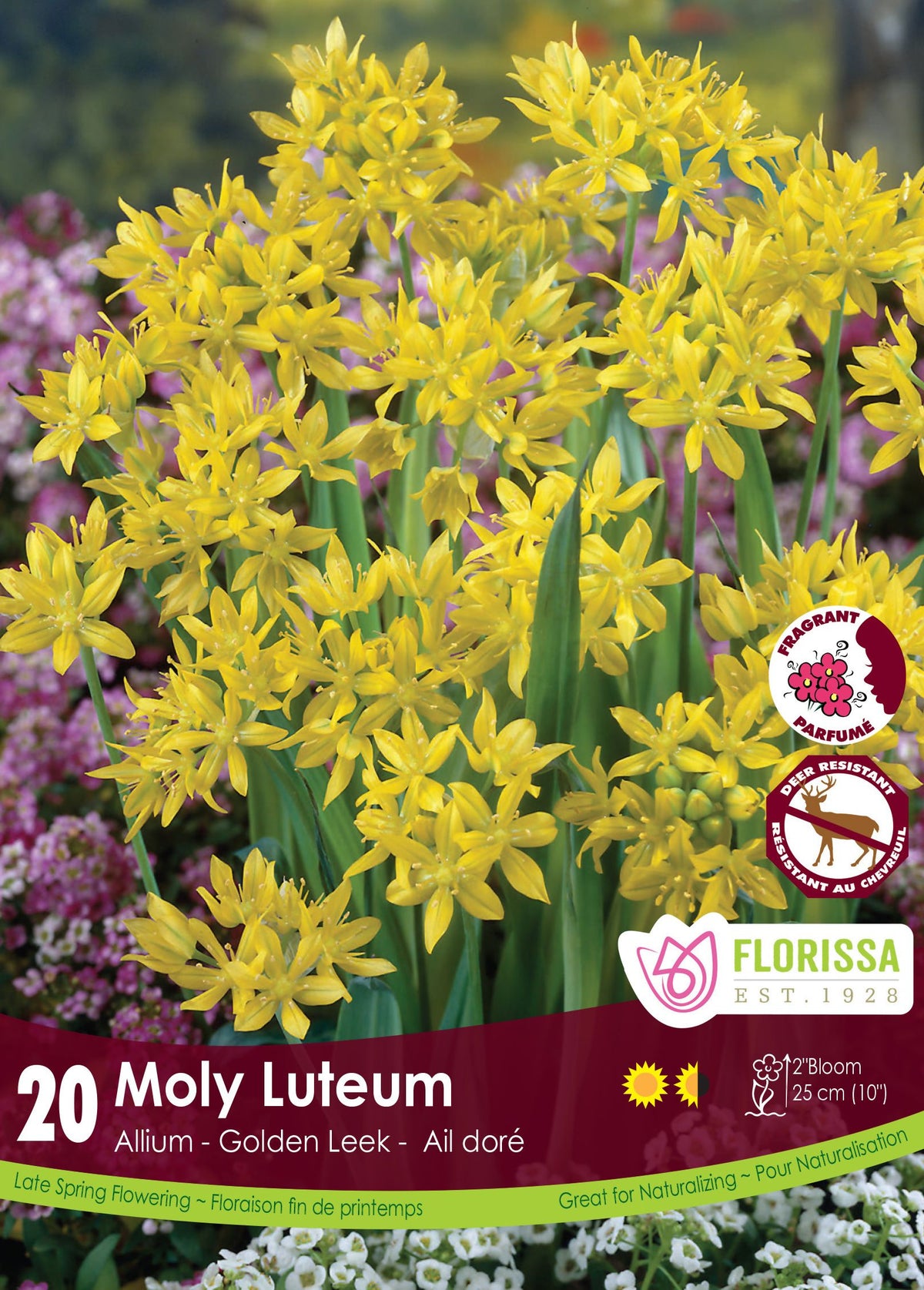
Golden garlic is a compact, vigorous Allium producing clusters of bright yellow star-shaped flowers on 25 cm (10 in) stems from late spring into early summer. The Van Noort package contains twenty bulbs, enough to create several groups or a small naturalized carpet near the front of a border, in a rock garden, or in containers. Plant them in fall, 80 mm deep and apart, in full sun or bright partial shade using fertile, very well-drained soil. Hardy in Zones 3 to 10, the plant attracts bees and butterflies, requires little maintenance, and gradually expands through offsets. Dried stems also suit small arrangements.
4 99 $
Pay in 4 interest-free payments with Sezzle
Detailed plant guide
Advice adapted to Canada
Secure payment
2026 preorder for fall bulbs Shipping expected in October 2026.
Share
Quantity 20 bulbs
Exposure Full sun to partial shade
Hardiness Zones 3 to 10
Difficulty level Easy

Discover the plant

Family Amaryllidaceae
Genus Allium
Species moly var. luteum
Type Compact late-spring-flowering ornamental bulb
Cycle Vigorous naturalizing bulbous perennial

Golden garlic (Allium moly var. luteum) is a vigorous perennial bulb that quickly forms low, luminous clumps. Its grey-green, narrow, strap-shaped leaves are usually produced in pairs and remain short. From late spring into early summer, upright stems about 25 cm (10 in) tall carry clusters of upward-facing golden yellow star-shaped flowers. This clear colour catches available light and develops into a vivid carpet when bulbs are grouped, after which the foliage disappears into dormancy. Hardy in Zones 3 to 10, the species naturalizes readily and suits Canadian gardens needing a durable small-scale plant for seasonal colour.

Install the twenty bulbs in fall, 80 mm deep and 80 mm (3 in) apart, in fertile, very well-drained soil. Full sun produces the most abundant display, although bright partial shade remains possible where the ground never stays waterlogged. Golden garlic accepts acidic, neutral, or alkaline conditions but prefers chalky, loamy, or sandy textures. Water after planting and whenever the surface dries in spring. Add modest compost or bulb fertilizer at emergence. After flowering, retain all leaves until completely yellow, then reduce irrigation through dormancy. Where winter clay remains saturated, use a container or raised planting area to protect the bulbs.

In the garden, golden garlic brightens the front of borders, rock gardens, gravel plantings, wildflower meadows, urban courtyards, and containers. Divide the twenty bulbs among several groups to repeat yellow accents through hardy geraniums, catmints, bellflowers, creeping thyme, or small grasses. Nectar- and pollen-bearing flowers support bees, butterflies, and other beneficial insects, while deer generally avoid Allium. Stems can be cut for small arrangements, although a naturalized carpet often provides the strongest effect. This ornamental plant is not intended for eating and may be toxic to pets. Control its expansion through division when necessary and preserve free-draining soil around every developing clump.

Golden garlic (<em>Allium moly var. luteum</em>)

Planting guide

From planting to establishment.

Planting depth 80 mm
Spacing / density Space bulbs 80 mm (3 in) apart, centre to centre.
Best planting time Fall
Propagation Division of clumps in spring or sowing fresh seed in a cold frame
Growing method
In fall, select a sunny or lightly shaded area where soil drains quickly after rain and thaws. Loosen the ground 20 to 25 cm (8 to 10 in) deep, remove perennial weeds, and incorporate a modest amount of mature compost. Avoid fresh manure and clay depressions where water collects; use a low mound or container when necessary. Position the twenty bulbs pointed end upward 80 mm deep and 80 mm (3 in) apart. Divide them among several irregular groups to create a future carpet without forming a rigid line. Refill, firm lightly, and water deeply once. After the soil cools, add thin mulch in Quebec regions subject to rapid temperature cycles while keeping the surface permeable. In spring, clear shoots, apply a low dose of bulb fertilizer, and water as the surface dries. Never allow saturated ground. After bloom, remove stems if seed is unwanted but retain leaves until completely yellow. Reduce water afterward. Divide clumps in spring when they become crowded and replant offsets immediately to preserve generous flowering. Mark every group before dormancy so later cultivation does not injure hidden bulbs, and keep aggressive perennial roots from closing the soil surface.

Soil and care

The right conditions.

Exposure Full sun to partial shade
Soil pH Acid to alkaline
Hardiness zone Zones 3 to 10
Watering
Water deeply after fall planting, then allow seasonal rainfall to support rooting. In spring, irrigate whenever the upper few centimetres of soil are dry, especially as stems rise and flowers open. Reduce water as soon as foliage yellows and keep dormant bulbs relatively dry. Frequent irrigation in heavy soil increases the risk of white rot and downy mildew and can weaken naturalized clumps.
Soil type
Provide fertile, light, perfectly drained soil, preferably chalk, loam, or sand. Golden garlic accepts acidic, neutral, or alkaline conditions and moderate moisture during growth but performs poorly in saturated winter clay. In heavy ground, broaden the improved area with compost and horticultural grit, plant on a slight mound, or use a container. Do not create a small loose pocket enclosed by impermeable clay.
Fertilization
Before planting, incorporate a moderate amount of mature compost across the entire area without placing concentrated fertilizer against bulbs. At spring emergence, add a low dose of balanced bulb fertilizer and water. Excessive feeding, particularly with nitrogen, produces soft foliage at the expense of flowers. Stop applications after bloom so the plant can enter dormancy naturally and harden before winter.
Seasonal care
In spring, remove compacted mulch after snowmelt and confirm that water is not standing within groups. Weed carefully because small bulbs sit relatively near the surface, then add a thin compost layer or low dose of bulb fertilizer. Water only after the soil dries. Inspect young leaves for allium leaf miner, onion fly, or early downy mildew; good air movement and efficient drainage reduce problems. During bloom, cut several stems for small arrangements or leave every flower to feed pollinators. After fading, remove stems when you wish to limit seedlings, but retain foliage until completely yellow. In summer, mark each group, reduce water, and avoid deep cultivation during dormancy. The following spring, divide crowded clumps and redistribute offsets so competition does not reduce flowering. In fall, check the 80 mm depth, improve compacted areas, and apply light mulch only after the ground cools. Through winter, prevent saturation above all. Containers should remain cold, raised, insulated, and sheltered from excessive precipitation, never placed in a heated room. Mark every group before dormancy so summer cultivation does not damage hidden bulbs. Inspect foliage after extended wet weather and remove only tissue that is fully diseased. Dispose of affected material instead of composting it, and avoid moving suspect soil to another Allium bed. Record flowering density from year to year; a decline may indicate crowding, reduced light, or slow drainage. Keep vigorous groundcovers from sealing the surface, and refresh container mix whenever water begins leaving more slowly. These small checks preserve a naturalized display without allowing it to become congested or unhealthy.

Container growing

A controlled environment.

Recommended pot size
At least 25 cm (10 in) wide and 25 cm (10 in) deep
A container makes it possible to grow golden garlic where garden soil is heavy and wet. Choose a broad pot at least 25 cm (10 in) wide and deep with numerous open drainage holes, raised on feet. Fill it with peat-free potting mix blended with mature compost and a generous portion of horticultural grit. In fall, plant ten to twenty bulbs pointed end upward 80 mm deep and approximately 80 mm (3 in) apart according to available volume. Water until excess drains completely, then position the pot in full sun or bright partial shade. In spring, monitor moisture without watering by calendar; wait until the surface begins drying. Feed lightly at emergence. After bloom, allow leaves to yellow, cut stems if desired, and gradually reduce water. Clumps widen quickly, so divide and repot in spring when crowded, renewing part of the mix. For a Quebec winter, raise the container, insulate its walls, or group it in a sheltered position. Protect bulbs from winter rain and wet thaws without bringing them into a heated space. In spring, remove protection gradually and confirm that drainage holes remain open. Avoid aggressive companion roots within the pot.
Golden garlic (<em>Allium moly var. luteum</em>)

Bloom and dimensions

The complete profile.

Flower color Bright golden yellow
Foliage color Grey-green
Foliage type Deciduous herbaceous short, narrow, strap-like foliage
Growth rate Fast
Bloom period
From late spring into early summer, 25 cm (10 in) stems carry open clusters of bright, upward-facing golden yellow star-shaped flowers. Each group opens progressively and can form a highly visible carpet once bulbs naturalize. Florets provide nectar and pollen to insects. After fading, stems may be removed while the short foliage disappears naturally into dormancy. Golden petals remain clearly visible in evening light.
Golden garlic (<em>Allium moly var. luteum</em>)

Garden associations

What to plant with it.

Good companions
Pair golden garlic with creeping thyme, bellflowers, hardy geraniums, catmints, yarrows, lamb’s ears, purple heucheras, and small grasses that tolerate sun and drainage. Blue, mauve, purple, and silver emphasize golden yellow, while neighbouring foliage fills spaces after Allium leaves disappear. Avoid invasive, tall, or water-demanding plants that would shade the flowers and keep the soil excessively moist around naturalizing bulbs. Maintain about 80 mm (3 in) around bulbs, preserve an open viewing angle, and choose companions that do not form a dense wet mat during winter.
Use golden garlic near the front of borders, in rock or gravel gardens, wildflower meadows, urban courtyards, wall bases, and containers. Twenty bulbs create several yellow patches that gradually connect through naturalizing. The plant remains low enough not to conceal perennials, and its flowers support pollinators. Several stems suit small arrangements, although repeated groups usually provide the strongest landscape effect. Control expansion by division in restricted spaces and preserve free-draining soil around every clump. Yellow stars also reflect evening light near paths.

Frequently asked questions

Everything toknow.

Plant them in fall, generally from September through November, before the ground freezes permanently. Choose full sun or bright partial shade and fertile soil that drains quickly. Loosen the area, then position every bulb pointed end upward 80 mm deep and 80 mm (3 in) from the next. Divide the twenty bulbs among several irregular groups instead of a row to prepare harmonious naturalizing. Refill without heavy compaction, water deeply once, and allow moisture to drain. Thin mulch applied after the ground cools may moderate Quebec freeze-thaw cycles while keeping the soil surface permeable. Mark the groups before summer dormancy begins.
Yes. This vigorous bulbous perennial produces offsets that gradually enlarge the clump in a suitable position. Fertile, drained, sunny soil encourages expansion. Groups may begin connecting after several seasons and form an increasingly visible yellow carpet. That effect is desirable in a large wildflower meadow or rock garden. In a small bed or container, monitor density and divide clumps in spring before they compete with neighbouring plants or flower less freely. Replant offsets 80 mm deep and keep 80 mm (3 in) between them to restart a balanced group with enough soil, light, and air movement. and good air circulation.
Growing in clay is possible only when a broad area is improved and does not remain saturated through winter. Incorporate mature compost and horticultural grit, then plant on a slight mound so water moves away from the bulbs. Avoid filling one small hole with loose mix inside impermeable clay because that pocket acts like a basin. If puddles remain after rain or thaws, choose a raised garden or deep container with a sharply drained mix instead. White rot and downy mildew become more likely when small bulbs spend long periods in cold, waterlogged ground, so drainage must be corrected before fall planting.
A vigorous clump may become so dense that bulbs compete for water, nutrients, and space. Reduced sun, accumulated wet organic matter, or foliage cut too early can also weaken the next display. In spring, carefully lift a crowded group, separate offsets, and replant them 80 mm deep with 80 mm (3 in) between bulbs. Use the opportunity to improve drainage and add a modest amount of compost. After the following bloom, let all leaves yellow completely before removal. Avoid heavy nitrogen, which promotes foliage instead of flowers, and keep neighbouring plants from forming an impermeable mat over the bulbs. consistently.
Yes. Upward-facing star-shaped flowers provide nectar and pollen to honeybees, native bees, bumblebees, butterflies, and other insects as spring transitions into summer. Several naturalized groups increase the number of available florets and support efficient foraging at a low height. Plant in full sun to encourage visitor activity and avoid insecticides during bloom. Combine golden garlic with thymes, catmints, and other perennials flowering before or after it to extend food availability. Once the flowers fade, their food value ends even if stems remain decorative, so a succession of companion flowers remains important. while preserving open soil and good air circulation around every flowering group.

Its strengths, naturally.

Not recommended for pets

Pets

Pollinators
Attracts or supports pollinating insects

Pollinators

Butterflies
Plants that attract butterflies

Butterflies

Deer
Less attractive or generally tolerated by deer

Deer