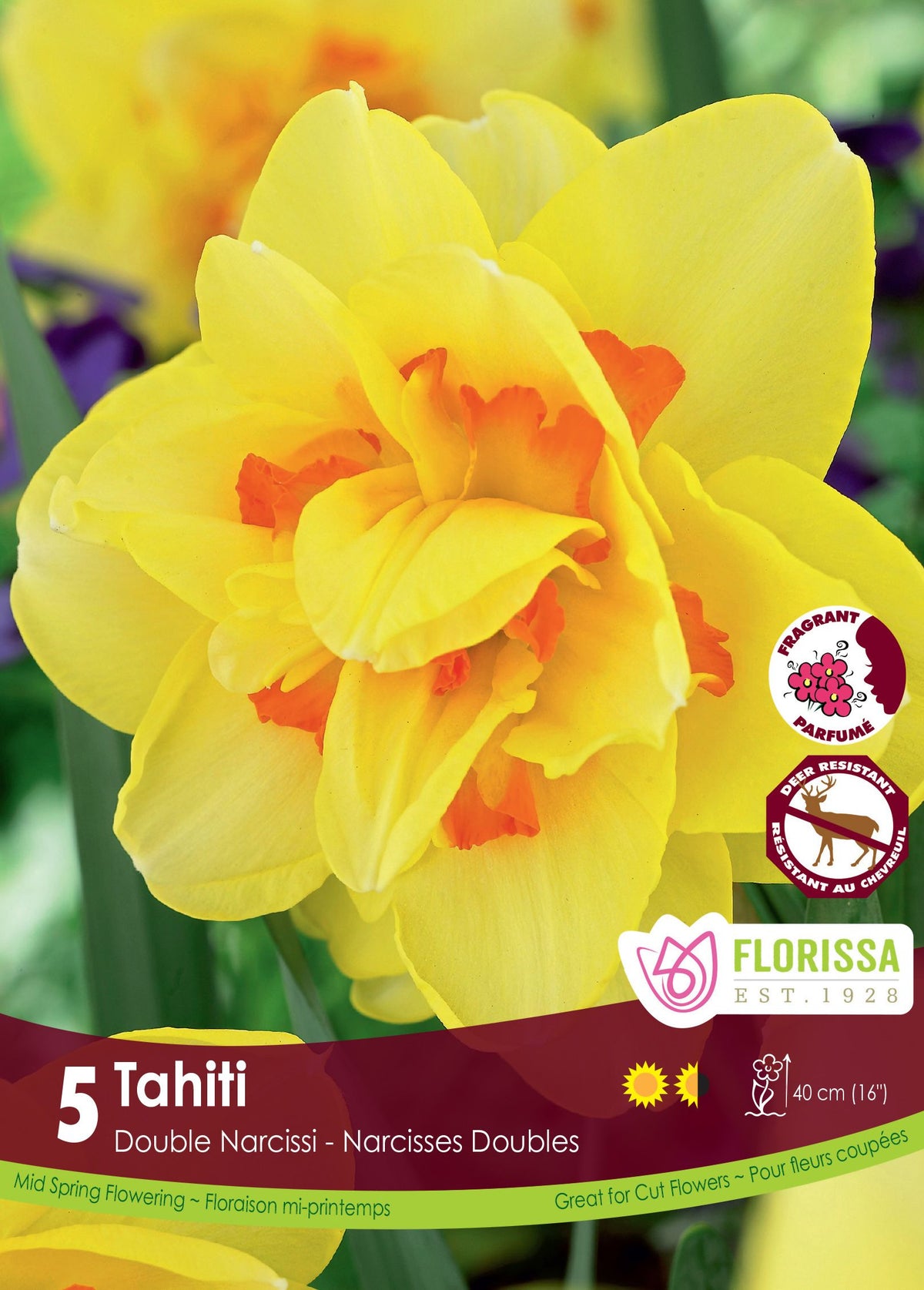
‘Tahiti’ Daffodil (Narcissus ‘Tahiti’)

Product code : 128 160 01

‘Tahiti’ daffodil produces large golden-yellow double flowers with ruffled orange-red petaloid segments in mid-spring. The package contains 5 size 12/14 bulbs. Sturdy stems reach approximately 40 cm and suit borders, containers, and bouquets. Plant bulbs in fall in full sun or light partial shade and fertile soil that drains freely. Hardy in Zone 3, this easy perennial can naturalize and return for many years when foliage remains until it yellows completely. Grouped planting highlights the ruffled form and warm colour palette. Its robust height fits naturally among other mid-spring bulbs and allows several stems to be harvested for indoor arrangements.
8 99 $
Pay in 4 interest-free payments with Sezzle
Detailed plant guide
Advice adapted to Canada
Secure payment
Share
Quantity
5 size 12/14 bulbs
Exposure
Full sun to partial shade
Life cycle
Hardy, naturalizing perennial
Hardiness
Zone 3 to 10

Discover the plant

Common name‘Tahiti’ double daffodil
FamilyAmaryllidaceae
GenusNarcissus
CultivarTahiti
TypeDouble daffodil bulb
Botanical nameNarcissus

‘Tahiti’ Daffodil (Narcissus ‘Tahiti’) produces large, densely double flowers in mid-spring. Golden-yellow petals surround ruffled orange-red petaloid segments, creating a warm and luminous contrast. The package contains 5 size 12/14 bulbs. Sturdy stems reach approximately 40 cm (16 in.) and suit borders, containers, and bouquets. Hardy in Zone 3, this perennial daffodil can return for many years and gradually naturalize in fertile, freely drained soil. Grouped planting displays the ruffled form and intense colours of ‘Tahiti’ especially well near a path, entrance, or sunny patio. Its warm palette draws attention naturally within a spring border.

Plant the bulbs in fall with the pointed end up, 15 cm (6 in.) deep and 15 cm (6 in.) apart. Full sun encourages abundant flowering, although light partial shade is also suitable. Loosen the soil, incorporate a modest amount of mature compost when fertility is low, and water deeply after planting. In spring, maintain even moisture without allowing water to stand. Grouping all five bulbs creates a fuller effect. In containers, choose a deep pot with unobstructed drainage holes and protect it from repeated freeze-and-thaw cycles. Avoid fertilizer that is rich in nitrogen.

After flowering, remove faded blooms before seeds develop, but allow the foliage to yellow completely. Leaves rebuild the reserves needed for next year’s flowers. Reduce watering during summer dormancy. Divide crowded clumps after the foliage dries, then promptly replant firm bulbs. For bouquets, cut stems as buds begin opening and condition them separately in water first, because fresh daffodil sap can shorten the vase life of other cut flowers. Keep bulbs away from children and pets because every plant part is harmful when eaten. Wear gloves if sensitive skin reacts to the sap.

Tahiti’ Daffodil: a double yellow daffodil with orange central segments.

Planting guide

Plant well.Grow beautifully.

Planting depth

15 cm (6 in.) deep, pointed end up

Spacing / density

Space 15 cm (6 in.) apart

Best planting time

From September until the ground freezes

Propagation

Separation of offsets after dormancy

Growing method

Choose a sunny or lightly shaded location where water drains quickly after rainfall. In fall, loosen the soil to at least 20 cm and incorporate a modest amount of mature compost when fertility is low. Plant ‘Tahiti’ daffodil bulbs 15 cm deep with the pointed end up, leaving 15 cm between them. Grouping all five bulbs creates a fuller display than isolated planting. Cover with soil, firm gently, and water deeply. Maintain moderate moisture until freeze-up without saturating the soil. In spring, water when rainfall is insufficient and apply a low-nitrogen bulb fertilizer as growth begins. Remove faded flowers, but retain all foliage until it yellows and pulls away easily. Reduce watering during summer dormancy. Divide crowded clumps after the leaves dry and promptly replant healthy offsets. Avoid deep cultivation around emerging shoots because it can damage the bulbs. Mark the planting location if later garden work could disturb the dormant clump. During flowering, support only stems that lean after heavy rain. For vase use, harvest buds that are beginning to open and let the stems stand separately in water for several hours before combining them with other flowers. This conditioning step limits the effect of fresh daffodil sap on bouquet companions. Wear gloves when dividing crowded clumps if your skin reacts easily to plant sap.

Soil and care

The right care,at the right time.

Soil pH

pH 6.0 to 7.5

Minimum temperature

Zone 3 hardiness, approximately -40°C

Care level

Low

Drought tolerance

Yes

Watering

Water deeply after planting, then moderately until freeze-up. In spring, keep the soil lightly and evenly moist during growth and flowering without saturating it. Allow natural rainfall to meet the need whenever the root zone remains moist. Gradually reduce watering as foliage yellows, and keep the bulbs relatively dry during summer dormancy. Always adjust frequency to rainfall, temperature, and drainage.

Soil type

This daffodil prefers loose, fertile, well-drained soil. Light, even moisture during active growth supports flowering, but standing water can rot the bulbs. In heavy soil, incorporate mature compost and improve the structure, or choose a raised bed. Avoid waterlogged depressions and potting mixes that remain saturated during summer dormancy. A crumbly soil also helps new roots establish in fall. Avoid compacting the soil around emerging shoots as well.

Fertilization

Incorporate a modest amount of mature compost at planting when soil fertility is low. In early spring, a low-nitrogen bulb fertilizer can support growth and flowering. Avoid excessive nitrogen, which encourages leaves at the expense of flowers, and keep fresh manure away from the bulbs. Water after applying granular fertilizer so nutrients enter the active root zone. A moderate application is generally sufficient for established bulbs.

Moisture

Even spring moisture; drier during summer dormancy

Seasonal care

In fall, plant firm, healthy bulbs before the ground freezes, then water deeply. A thin mulch layer can reduce temperature fluctuations, but remove excess material in spring so emerging shoots remain clear. When foliage appears, confirm that water drains freely and apply a low-nitrogen bulb fertilizer if needed. Water only when rainfall does not maintain light moisture. During flowering, remove spent blooms to prevent unnecessary seed formation. For bouquets, harvest when buds begin opening and condition stems separately in water so their sap does not affect other flowers. After bloom, retain every leaf until it yellows completely; do not braid or tie the foliage because it needs light. Remove leaves when they pull away easily, then reduce watering. During summer dormancy, avoid excess moisture. Every three to five years, or when flowering declines, lift crowded clumps after the foliage dries. Separate offsets and promptly replant firm bulbs 15 cm deep. Wear gloves if your skin is sensitive because daffodil sap can cause irritation. Mark the dormant clump before later planting work to prevent accidental damage. Inspect leaves during spring and remove debris that could trap excessive moisture around new shoots. If a stem bends after heavy rain, support it gently without tightening the tie. During summer, mark the bulb location to prevent accidental damage when adding new plants. The following fall, renew only a thin mulch layer if the site is exposed to rapid temperature changes. Check drainage after major storms and correct nearby runoff before winter rather than moving an established clump unnecessarily.

Container growing

A garden,within reach.

Recommended pot size

Container at least 30 cm wide and 25 to 30 cm deep
Choose a container at least 30 cm wide and 25 to 30 cm deep with several unobstructed drainage holes. Fill it with a light container mix and keep enough open space for water to drain freely. Plant all five bulbs approximately 15 cm deep with their pointed ends up, without allowing them to touch. Water deeply, then maintain moderate moisture until freeze-up. Place the pot in full sun or light partial shade. In very cold regions, protect the container from repeated freeze-and-thaw cycles by insulating it or moving it to a cold, sheltered area; the bulbs still require a chilling period. In spring, water when the surface begins to dry and apply a low-nitrogen bulb fertilizer. Remove faded blooms, but retain the foliage until it yellows completely. Reduce watering afterward and keep the pot relatively dry through summer. Repot and separate offsets when the clump becomes crowded or flowering declines. Raise the pot slightly if drainage slows after heavy rainfall. Rotate it each week to keep stems balanced. Because double flowers become heavy when wet, shelter the container from strong gusts and support only stems that need help. Divide the planting when bulbs crowd the pot. Refresh compacted growing medium during repotting, remove any soft bulbs, and return healthy offsets to the same planting depth.
Tahiti’ Daffodil: a double yellow daffodil with orange central segments.

Bloom and dimensions

Its place,in your garden.

Mature height

40 cm (16 in.)

Width / spread

Approximately 10 to 15 cm (4 to 6 in.)

Flower color

Golden yellow and orange-red

Foliage color

Medium green

Foliage type

Linear deciduous foliage that becomes dormant after flowering

Growth rate

Moderate

Growth habit

Upright habit on sturdy flowering stems

Bloom period

‘Tahiti’ daffodil produces large golden-yellow double flowers with orange-red petaloid segments in mid-spring. Sturdy stems reach approximately 40 cm above upright green foliage. Cool spring weather extends the display. Grouping the bulbs strengthens the warm contrast. Remove faded blooms, then always allow foliage to yellow completely so every bulb can rebuild reserves for the following year. Established clumps can gradually become fuller in freely drained soil.
Tahiti’ Daffodil: a double yellow daffodil with orange central segments.

Garden associations

In goodcompany.

Companion plants

Pair ‘Tahiti’ with plants that enjoy spring sunlight and freely draining soil. Blue grape hyacinths, pastel tulips, De Caen anemones, and silver-leaved perennials highlight its bright golden yellow tones. Later-emerging perennials can discreetly cover yellowing daffodil foliage. Avoid very vigorous plants that smother new shoots and species requiring constantly wet soil. Keep enough spacing for air movement and future naturalization. In containers, limit the number of companions so bulbs retain adequate root space. These combinations are aesthetic suggestions based on compatible growing needs rather than guaranteed pest protection. Leave access for removing faded flower stems without disturbing the surrounding foliage.

Plants to avoid

Very vigorous plants and species that prefer constantly wet soil

Frequently asked questions

Your questions,answered.

When should ‘Tahiti’ daffodil bulbs be planted?
Plant the bulbs in fall, ideally from September until the ground freezes. Planting reasonably early allows roots to develop before winter without encouraging excessive top growth. Choose full sun or light partial shade and soil that drains quickly. Set each bulb 15 cm deep with the pointed end up and leave 15 cm between bulbs. Water deeply after planting. If autumn remains unusually dry, check moisture once or twice before freeze-up, but avoid any watering that leaves the soil saturated. Mark the location if later fall work could disturb the newly planted group. In regions with mild autumn weather, wait until the soil has cooled before planting to reduce the chance of premature top growth before winter.
What light does ‘Tahiti’ daffodil need?
Full sun encourages sturdy stems and abundant flowering. Light partial shade is also suitable, especially beneath deciduous trees that allow spring sunlight to reach the bulbs before their canopy expands. Avoid dense all-day shade because it can reduce flower production. The location should also provide air movement and quick drainage after rain. In a container, rotate the pot weekly if stems lean strongly toward the light. After flowering, the leaves still require light until they yellow completely because they are rebuilding reserves for the next season. Watch the display over several years: a marked decline can indicate that nearby shrubs now create too much shade. Prune them when appropriate without disturbing the dormant bulbs, or divide and relocate part of an overcrowded clump after foliage matures.
How should ‘Tahiti’ daffodil be watered?
Water deeply after planting to settle soil around the bulbs. In spring, maintain light, even moisture during growth and flowering whenever rainfall is insufficient. Allow the surface to begin drying before watering again because standing water promotes bulb rot. Direct water toward the soil rather than the double flowers. Gradually reduce watering when foliage yellows, then keep the bulbs relatively dry during summer dormancy. Containers dry more quickly than garden beds, but their saucers should always be emptied. Check moisture before watering instead of following a rigid calendar. During cool or rainy weather, lengthen the interval between waterings. After a major storm, check that runoff has not created a wet pocket around the planting and correct drainage before adding more water.
Can ‘Tahiti’ grow in a container?
Yes. Choose a container at least 30 cm wide and 25 to 30 cm deep with several drainage holes. Plant all five bulbs approximately 15 cm deep with their pointed ends up in a light container mix. Water deeply, then maintain moderate moisture without leaving water in the saucer. In very cold climates, insulate the pot or move it to a cold, sheltered place to limit repeated freeze-and-thaw cycles. The bulbs still require winter chilling. Allow the foliage to yellow completely before reducing watering for summer dormancy. Raise the container slightly if drainage slows, and rotate it when stems lean toward one direction of light. Repot crowded bulbs after the foliage dries, keeping only firm, healthy offsets.
What should happen to the foliage after flowering?
Leave every leaf in place until it yellows completely and pulls away easily. For several weeks after flowering, the foliage captures light and rebuilds the bulb’s reserves for the following year. Do not braid, tie, or cut leaves while they are green. Remove only the stem carrying the faded flower to prevent seed formation. Later-emerging perennials can discreetly hide the foliage during this period. Once the leaves are dry, clear them away and reduce watering for summer dormancy. This simple step is essential for reliable repeat flowering. If the clump becomes crowded, use this dormant period to separate offsets and promptly replant firm bulbs at their usual depth in freely draining soil.

Wildlife and pets

Life,around your plants.

Reported toxicity

Yes