Red Beauty Fritillaria

Crown imperial

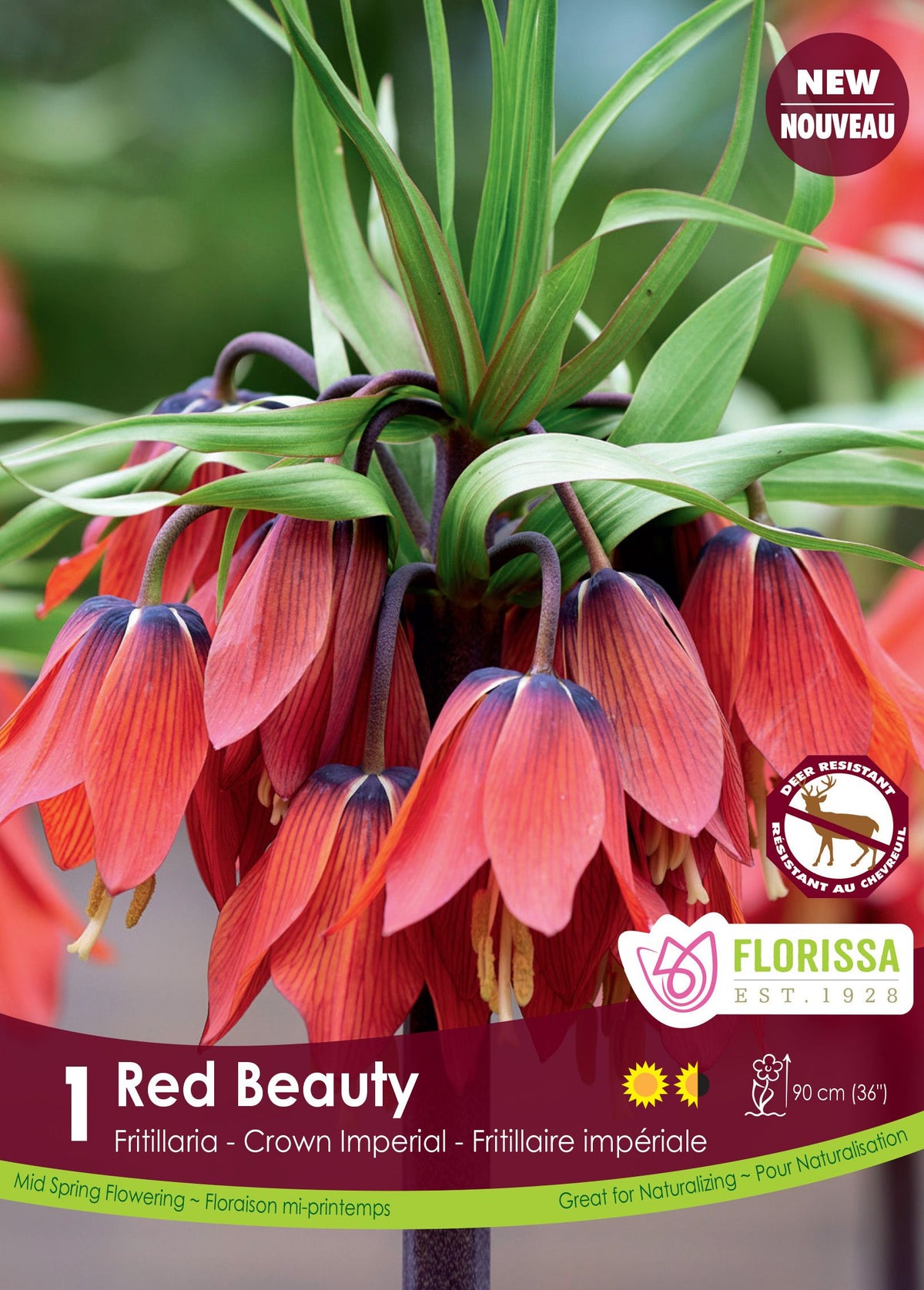
Red Imperial Fritillary (Fritillaria imperialis ‘Red Beauty’) stands out with its large, drooping orange-red bells, grouped under a crown of bright green foliage. Its majestic and exotic silhouette brings a strong architectural presence to spring flowerbeds, where its tall stems immediately catch the eye. Generally flowering from April to May, this perennial reaches approximately 80 to 100 cm (31 to 39 inches) in height and remains decorative for several weeks. Its characteristic fragrance also helps to deter certain rodents. Hardy up to Zone 4 when grown in perfectly drained soil, it returns faithfully every spring once well-established. Plant the bulb in autumn in a warm, bright location protected from strong winds, in full sun or partial sun.
11 99 $
Pay in 4 interest-free payments with Sezzle
Detailed plant guide
Advice adapted to Canada
Secure payment
Share
Quantity
1 bulb
Exposure
Sun to partial shade
Life cycle
Hardy perennial
Hardiness
Zone 4

Discover the plant

Common nameCrown Imperial Red
FamilyLiliaceae
GenusFritillary
TypeBulb
Botanical nameCrown imperial
Reproducible seedsYes

?? Fritillaria 'Red Beauty' (1 bulb) – The ruby ??glow that sets spring ablaze ? Submitted by Van Noort

Fritillaria 'Red Beauty' asserts itself in the garden as a vibrant floral torch , offering spectacular garnet-red bell-shaped blooms, topped with a cap of bright green fan-shaped foliage.

Its proud, upright appearance evokes an imperial crown , while the richness of its hue adds a flamboyant depth to spring beds. It flowers early, from April, and warms up compositions with a rare charisma , while structuring the space with its theatrical verticality . Resilient and striking, it is perfect for creating a bold and elegant focal point, in the ground or in a pot. A fiery bloom, with a royal and bold charm ...

?? Product Features

?? Average height : 80 to 100 cm
?? Exposure : Full sun
?? Hardiness : Zone 5 and above
?? Attracts wildlife : Little, but it attracts attention
?? Water requirements : Moderate
?? Ideal soil : Light, fertile, well-drained
?? Quantity : 1 bulb

?? Planting and cultivation

?? When to plant? From September to November, for flowering in April
?? In open ground : Ideal at the back of a flowerbed, a noble border or a structured garden for a colorful presence
?? In a pot : Sublime in a deep pot, alone or in contrast with softer shades for an intense and refined scene
?? How to plant?
1?? Depth : 20 cm
2?? Spacing : 25 to 30 cm
3?? Watering : Light at planting, moderate during growth

?? Maintenance

?? Watering : Regular but not excessive, in spring
?? Fertilizer : Light application upon recovery
?? Pruning : Cut off the faded stems, let the foliage dry
?? Wintering : No care required, very hardy bulb

?? Why choose Fritillaria 'Red Beauty'?

? Spectacular flowering , deep and intense red
? Architectural silhouette , perfect for structuring the garden
? Easy to grow , very hardy
? Brings energy, nobility and vibrant contrast to spring scenes

? Bring power , fiery light , and floral sophistication to the garden with Fritillaria 'Red Beauty' , offered by Van Noort — a regal and captivating variety. ?

?? To be married with...

Pale yellow tulips , acid green euphorbias or white alliums , for a contrasting and dynamic scene, with princely charm. ??

Fritillaria ‘Red Beauty’ ( Fritillaria ) : une couronne de clochettes rouge orangé sous un toupet de feuilles. Le visuel Florissa présente la plante et son nom dans la partie inférieure de l’étiquette. La photographie occupe presque toute la surface, tandis que le bandeau du bas rassemble les indications du produit. Cette vue permet de reconnaître son apparence et de distinguer la variété présentée.

Planting guide

Plant well.Grow beautifully.

Planting depth

6 to 8 in (15 to 20 cm)

Best planting time

Autumn

Propagation

Multiplication is achieved by separating the bulbils when the bulbs are sufficiently developed. This method makes it possible to preserve all the qualities of the variety.

Growing method

Plant the bulb in autumn in deep, fertile, and perfectly drained soil. Position it slightly tilted, about 15 to 20 cm (6 to 8 in) deep, to prevent water from accumulating at the top of the bulb. Maintain a spacing of 25 to 30 cm (10 to 12 in). Water lightly after planting to encourage good root development before winter. Once well established, leave the bulb in place for several years. Hardy down to zone 4 when grown in perfectly drained soil, it faithfully returns each spring once established. Plant the bulb in autumn in a warm, bright location protected from strong winds, in full sun or partial sun. Choose deep, fertile, light, neutral to slightly alkaline, and perfectly drained soil, enriched with well-rotted compost. Install the bulb slightly tilted at a depth of 15 to 20 cm (6 to 8 in) to prevent water from accumulating at its top, then leave 25 to 30 cm (10 to 12 in) between plants. Water moderately during growth, allowing the soil to dry slightly between waterings. After flowering, reduce watering and let the foliage yellow completely before removing it. The Imperial Fritillary 'Red Beauty' is particularly suitable for the back of borders, spring flowerbeds, naturalist gardens, and large pots at least 35 cm (14 in) deep.

Soil and care

The right care,at the right time.

Soil pH

Neutral to slightly alkaline

Minimum temperature

-34 °C (-30 °F)

Care level

Easy

Watering

During the growth period, water at the base when the soil surface starts to dry out. Take rainfall into account: if the soil remains moist, wait before adding more water. Continue to monitor moisture after flowering as long as the leaves are green, then reduce watering as they naturally yellow. Avoid stagnant water around the bulbs. For potted plants, check the soil more frequently and allow excess water to drain freely through the drainage holes.

Soil type

Opt for loose, well-drained soil where water doesn't linger around the roots or bulbs. Check drainage after rain: water should be able to exit the root zone. Work the soil when it's just damp to avoid compacting it. Adapt amendments to its actual texture. In containers, use appropriate potting mix and a pot with drainage holes. Keep these openings clear and prevent water from accumulating in the saucer.

Fertilization

Add well-rotted compost when planting to enrich the soil. A light application of bulb fertilizer in early spring promotes abundant and regular flowering. Respect the dosage indicated on the fertilizer packaging and measure the quantity before applying it. Take into account the compost and other additions already made to avoid fertilizing the same plants twice.

Seasonal care

Plant the bulb in autumn in a warm, bright spot protected from strong winds, in full sun or partial sun. Choose deep, fertile, light, neutral to slightly alkaline, and perfectly drained soil, enriched with well-rotted compost. Install the bulb slightly tilted at a depth of 15 to 20 cm (6 to 8 in) to prevent water from accumulating at its top, then leave 25 to 30 cm (10 to 12 in) between plants. Water moderately during growth, allowing the soil to dry slightly between waterings. After flowering, reduce watering and let the foliage yellow completely before removing it. Fritillaria imperialis 'Red Beauty' is particularly suitable for the back of borders, spring flowerbeds, naturalist gardens, and large pots at least 35 cm (14 in) deep. Its orange-red flowers create striking contrasts with ornamental alliums, late tulips, daffodils, euphorbias, and forget-me-nots. Its flower stalks also hold well in a vase and add a lot of character to spring bouquets. The flowers attract pollinators for several weeks, while the plant's particular scent can deter some rodents. This variety is cultivated solely for its remarkable ornamental value. Over the seasons, observe new shoots, soil moisture, and stem condition. A durable label helps locate the planting during its dormancy. Clean tools after cutting diseased parts and remove debris that degrades around the base.

Container growing

A garden,within reach.

Recommended pot size

35 cm (14 in)
Container growing requires planning for the necessary root volume and the plant's final height. Choose a stable pot with drainage holes and a substrate suitable for planting. Leave enough space to respect the recommended depth and spacing, rather than crowding plants to immediately fill the pot. Place the container in the indicated exposure and regularly check the humidity, especially in hot or windy weather. A pot is more exposed to temperature variations than ground planting. Therefore, plan an overwintering location from the outset that is compatible with the plant's needs and your region's climate. Plant the bulb in the fall in a warm, bright location protected from strong winds, in full sun or partial sun. Choose a deep, fertile, light, neutral to slightly alkaline, and perfectly drained soil, enriched with well-rotted compost. Plant the bulb slightly tilted at a depth of 15 to 20 cm (6 to 8 in) to prevent water from accumulating at its top, then leave 25 to 30 cm (10 to 12 in) between plants. Water moderately during growth, allowing the soil to dry slightly between waterings. After flowering, reduce watering and let the foliage yellow completely before removing it. In winter, protect the container according to the plant's needs: its roots are more exposed to cold than when planted in the ground.
Fritillaria ‘Red Beauty’ ( Fritillaria ) : une couronne de clochettes rouge orangé sous un toupet de feuilles. Le visuel Florissa présente la plante et son nom dans la partie inférieure de l’étiquette. La photographie occupe presque toute la surface, tandis que le bandeau du bas rassemble les indications du produit. Cette vue permet de reconnaître son apparence et de distinguer la variété présentée.

Bloom and dimensions

Its place,in your garden.

Mature height

80 to 100 cm (32 to 39 in)

Width / spread

25 to 30 cm (10 to 12 in)

Flower color

Orange-red

Foliage color

Bright green

Foliage type

Null and void

Growth rate

Moderate

Bloom period

This spring bloomer features large, reddish-orange bell-shaped flowers clustered beneath a crown of green leaves. Typically flowering from April to May, this perennial reaches approximately 80 to 100 cm (31 to 39 inches) in height and remains decorative for several weeks. Hardy down to zone 4 when grown in perfectly drained soil, it reliably returns each spring once established. After flowering, reduce watering and allow the foliage to yellow completely before removing it. The flowers attract pollinators for several weeks, while the plant's unique scent may deter some rodents.
Fritillaria ‘Red Beauty’ ( Fritillaria ) : une couronne de clochettes rouge orangé sous un toupet de feuilles. Le visuel Florissa présente la plante et son nom dans la partie inférieure de l’étiquette. La photographie occupe presque toute la surface, tandis que le bandeau du bas rassemble les indications du produit. Cette vue permet de reconnaître son apparence et de distinguer la variété présentée.

Garden associations

In goodcompany.

Companion plants

To accompany Fritillaria ‘Red Beauty’, consider plants chosen for compatible light exposure and water requirements. Select neighboring varieties based on their height, flowering period, and the colors you wish to combine. Above all, ensure their light exposure and water needs are suitable for the same location. Maintain enough distance so that leaves do not obscure young shoots and to easily access each plant during maintenance. These associations are for composing the garden's decor; they do not guarantee protection against pests or diseases. Adjust the layout after observing one growing season.

Frequently asked questions

Your questions,answered.

How to successfully plant Fritillaria ‘Red Beauty’?
Plant the bulb in the fall in a warm, bright spot protected from strong winds, in full sun or partial sun. Choose a deep, fertile, light, neutral to slightly alkaline, and perfectly drained soil, enriched with well-rotted compost. Plant the bulb slightly tilted at a depth of 15 to 20 cm (6 to 8 in) to prevent water from accumulating at its top, then leave 25 to 30 cm (10 to 12 in) between plants. Water moderately during growth, allowing the soil to dry slightly between waterings. After flowering, reduce watering and allow the foliage to yellow completely before removing it.
What light should I provide for Fritillaria 'Red Beauty'?
The recommended exposure is from full sun to partial shade. Observe the light at your chosen location in the morning and afternoon, as the shade from trees or buildings changes throughout the day. Also consider nearby plants: their foliage can obscure a young plant as it grows. For potted plants, place the pot where you can move it if conditions become too hot or too shady. Suitable exposure must go hand in hand with appropriate soil and watering. If you move a plant started indoors outdoors, gradually accustom it to garden conditions to avoid too abrupt a transition for young leaves.
How do I adjust the watering?
Water according to the actual soil moisture, taking into account rain, heat, and wind. Check below the surface before deciding on adding more water: soil that is dry on the surface can still be moist at the root level. Direct the water to the base and allow it to penetrate, without keeping the plant in saturated soil. Containers generally require more frequent checks because they dry out faster. Make sure their drainage holes remain clear and empty any saucers that retain water. Also adapt care to the plant's cycle: active growth and a dormant period do not require the same amount of water.
What to plan for a container culture?
Container gardening requires you to plan for the necessary root volume and the plant's final height. Choose a stable pot with drainage holes and a suitable growing medium. Leave enough space to respect the recommended depth and spacing, rather than overcrowding the plants to immediately fill the pot. Place the container in the indicated exposure and regularly check the moisture level, especially during hot or windy weather. A pot is more exposed to temperature variations than planting directly in the ground. Therefore, plan ahead for a wintering location compatible with the plant's needs and your region's climate.
What care should be planned after the growing season?
The imperial fritillary 'Red Beauty' is particularly well-suited for the back of flowerbeds, spring borders, naturalistic gardens, and large pots at least 35 cm (14 in.) deep. Its orange-red flowers create striking contrasts with ornamental alliums, late tulips, daffodils, euphorbias, and forget-me-nots. Its flower stalks also last well in a vase and add a lot of character to spring bouquets. The flowers attract pollinators for several weeks, while the plant's unique scent can deter some rodents. This variety is cultivated solely for its remarkable ornamental value. Keep a durable label to easily find this planting during its dormant period.

Wildlife and pets

Life,around your plants.