


Naturalizing blue crocus for early-spring bloom
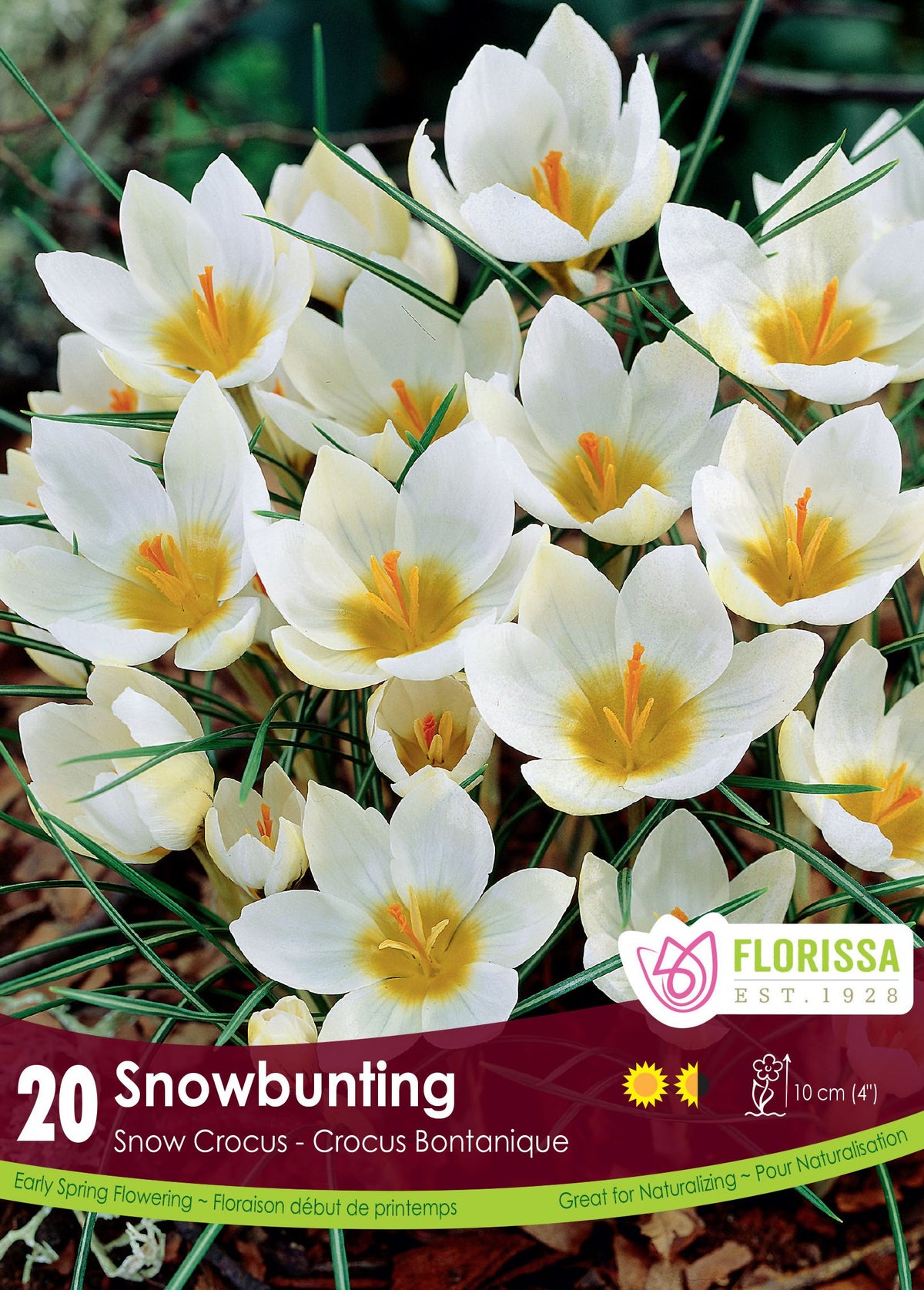
SnowBunting Crocus (Crocus chrysanthus)
Crocus chrysanthus ‘SnowBunting’
Product code : VAN-142-180-01
- Quantity
- 20 corms
- Exposure
- Full sun to partial sun
- Life cycle
- Naturalizing perennial
- Hardiness
- Zones 3 to 8
Discover the plant
SnowBunting crocus (Crocus chrysanthus) brightens late winter with creamy white flowers warmed by a golden-yellow throat and sometimes brushed grey-violet on the outer petals. Blooms open widely in sunshine and close at night or under cloudy skies. Narrow dark-green leaves marked by a silver stripe accompany the display discreetly. About 10 cm tall, this botanical crocus is ideal near the front of a planting. The Van Noort retail package contains 20 corms. Hardy from Zone 3, it returns reliably in drained soil and gradually forms a clear colony as the first mild days arrive.
Plant the 20 corms from September through November before the ground freezes, setting them 8 cm deep and 5 to 8 cm apart. Choose full sun or light shade beneath deciduous trees in light, fertile, freely drained soil. Position each corm pointed end upward, water after planting, then let seasonal rainfall provide moderate moisture while roots develop. Avoid hollows where meltwater stands, compact clay, and nitrogen-rich fertilizers. In containers, amend bulb compost with fine grit and keep every drainage opening clear. Mark each group so spring cultivation and later planting never disturb the resting corms beneath the soil.
Creamy white crocus makes a striking natural effect when all 20 corms are gathered in irregular islands through a rock garden, border, bank, or lightly managed lawn. Combine it with snowdrops, reticulata iris, squill, grape hyacinths, and small daffodils for a luminous late-winter scene. Early flowers provide pollen and nectar to the first active bees on mild days. After flowering, allow foliage to yellow completely so corms can rebuild their reserves. Wait until leaves disappear before mowing, divide only crowded colonies during dormancy, and promptly replant firm cormlets. Avoid pesticides around open flowers and protect newly planted groups from digging animals.

Planting guide
Plant well.Grow beautifully.
Planting depth
Spacing / density
Best planting time
Propagation
Growing method
Soil and care
The right care,at the right time.
Soil pH
Minimum temperature
Care level
Watering
Soil type
Fertilization
Moisture
Seasonal care
Container growing
A garden,within reach.
Recommended pot size

Bloom and dimensions
Its place,in your garden.
Mature height
Width / spread
Flower color
Foliage color
Foliage type
Growth rate
Growth habit
Fragrance
Bloom period
Harvest
Garden associations
In goodcompany.
Companion plants
Frequently asked questions
Your questions,answered.
When and how should SnowBunting crocus corms be planted?
Why does SnowBunting crocus produce leaves but few flowers?
Must the corms be lifted for winter in Quebec?
When can a lawn planted with SnowBunting crocus be mown?
Is SnowBunting crocus edible or safe to ingest?
Wildlife and pets