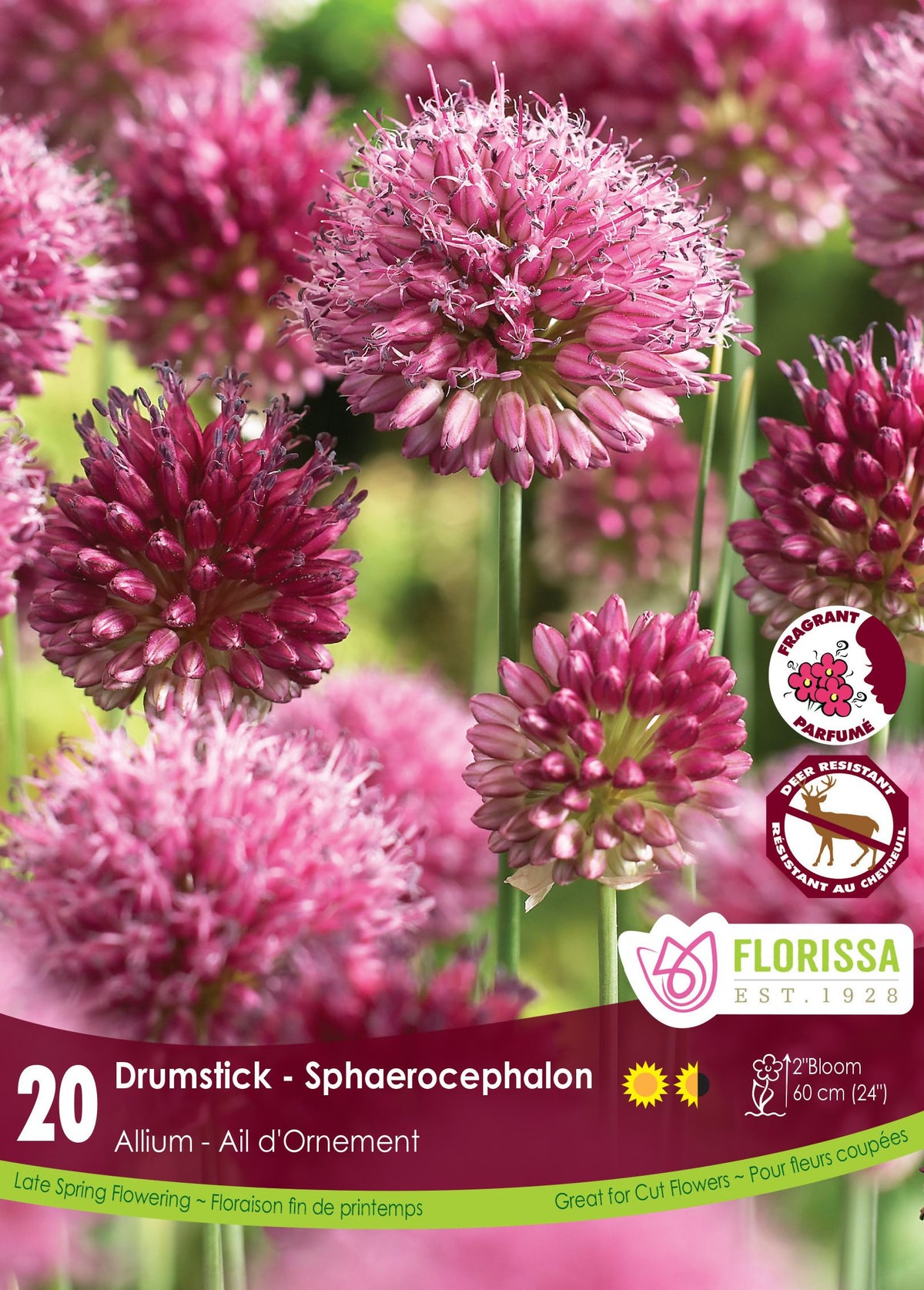
Ornamental fall-planted bulb

Drumstick allium (Allium sphaerocephalon)

Allium sphaerocephalon

Allium sphaerocephalon is the drumstick allium, a slender 60 cm species whose oval heads change from green to rosy purple as they open from the top downward. The Van Noort package contains twenty size 5/6 bulbs for fall planting, set 8 cm deep and 8 cm apart. Hardy in Zones 4 to 10, it prefers sun or light partial shade and sharply drained soil. Flowers attract pollinators, suit bouquets, and gradually naturalize into airy groups. The generous package quantity creates an effective drift from the first flowering season. Good drainage remains essential to protect the bulb during rainy periods. A light mulch limits weeds without trapping excessive moisture around bulbs.
4 99 $
Pay in 4 interest-free payments with Sezzle
Detailed plant guide
Advice adapted to Canada
Secure payment
2026 preorder for fall bulbs Shipping expected in October 2026.
Share
Quantity 20 bulbs
Exposure Full sun to light partial shade
Hardiness Zones 4 to 10
Difficulty level Easy

Discover the plant

Family Amaryllidaceae
Genus Allium
Species sphaerocephalon
Cultivar Sphaerocephalon
Type Naturalizing ornamental bulb with oval umbels
Cycle Naturalizing bulbous perennial with summer dormancy

Drumstick allium (Allium sphaerocephalon) raises slender 60 cm stems topped with small, dense, oval umbels resembling drumsticks. Buds begin fresh green, then flowers open progressively from the top downward and develop rosy purple, burgundy, and violet tones. This two-colour transition animates borders for several weeks from late spring into early summer. Narrow, almost grass-like foliage remains discreet at the base. Slender, airy, and naturalistic, the species supplies movement without hiding surrounding perennials and becomes especially effective when repeated in generous groups. Good drainage remains essential to protect the bulb during rainy periods.

The Van Noort package contains twenty size 5/6 bulbs, an ideal quantity for establishing a generous drift. Plant them in fall, pointed end upward, 8 cm deep and 8 cm apart. Choose full sun or light partial shade in loose, fertile, sharply drained soil. Arrange bulbs in irregular clusters instead of rigid rows. Water after planting, then only when the soil dries during active growth. Once established, the slender stems tolerate short dry periods. After flowering, retain every leaf until completely yellow so it can replenish the bulbs for the following season.

Weave Sphaerocephalon through fine grasses, catmint, yarrows, salvias, coneflowers, and verbenas to create a lively naturalistic garden. Twenty bulbs make it possible to thread several small groups through a border or fill a large container. Rosy-purple umbels attract bees, bumblebees, and butterflies, then produce dried heads suited to arrangements. Their narrow silhouette also fits urban gardens and borders where space is limited. Deer generally avoid Allium. This species is grown as an ornamental plant and may be toxic to pets if eaten, so store unplanted bulbs securely. Good drainage remains essential to protect the bulb during rainy periods.

Drumstick allium (<em>Allium sphaerocephalon</em>)

Planting guide

From planting to establishment.

Planting depth 80 mm
Spacing / density 8 cm (3 in) between bulbs
Establishment temperature 15 to 18°C (59 to 64°F)
Establishment time 21 to 35 days
Best planting time Fall
Propagation Division of offsets in fall and controlled natural seeding
Growing method
Plant the twenty Sphaerocephalon bulbs in fall, four to six weeks before the ground freezes solid. Choose full sun or light partial shade and loosen the soil to about 25 cm. Incorporate mature compost into poor ground, but improve clay mainly with fine grit for rapid drainage. Arrange the small bulbs in irregular groups, pointed end upward, 8 cm deep and 8 cm apart. Water after planting to settle the soil. In spring, maintain moderate moisture only when the surface dries and weed carefully around the fine shoots. Stems reach about 60 cm and carry oval heads that change from green to rosy purple. They normally stand without support except in a very exposed site. Cut flowers for bouquets when the upper half is coloured, or leave the heads to dry on the plant. Retain all foliage until completely yellow so the bulbs can rebuild their reserves. Reduce watering during summer dormancy. Divide crowded groups in fall and promptly replant healthy offsets. Good drainage remains essential to protect the bulb during rainy periods. A light mulch limits weeds without trapping excessive moisture around bulbs. The flowers attract pollinators and also make elegant fresh bouquets.

Soil and care

The right conditions.

Exposure Full sun to light partial shade
Soil pH Acid to alkaline
Hardiness zone Zones 4 to 10
Minimum temperature -34°C (-30°F)
Watering
Water thoroughly immediately after planting, then let fall and spring rainfall supply most of the moisture. During active growth, irrigate only when the top five centimetres of soil feel dry. Apply water directly to the soil rather than over the foliage. Reduce watering gradually after flowering and stop once the leaves turn yellow. In containers, check moisture more often, but always empty the saucer so the bulbs never remain waterlogged.
Soil type
Sphaerocephalon grows well in loose, fertile, sharply drained soil, whether loamy, sandy, improved clay, or slightly chalky. Incorporate mature compost without creating an overly rich pocket beneath the bulb. In heavy ground, mix in fine grit and plant on a slight mound so winter water drains away. Slightly acidic, neutral, or alkaline soil is suitable, provided its structure remains open and the bulb never sits in water.
Fertilization
In early spring, spread a thin layer of mature compost around emerging shoots without covering their bases. In poor soil, add a balanced slow-release granular fertilizer at the lowest recommended rate. Avoid high-nitrogen formulas, which encourage soft foliage at the expense of flowers. After bloom, allow the leaves to replenish the bulb naturally; no summer feeding is needed while the plant is dormant.
Seasonal care
In fall, plant the bulbs 8 cm deep and mark their position so they are not disturbed. Protect new plantings with a light mulch after the soil cools, without burying the crown heavily. In late winter, remove excess mulch and confirm that water drains freely. During spring, weed carefully around emerging shoots, add a little compost, and water only if conditions become dry. Place discreet supports before flowers open when the garden is windy, although sturdy stems normally stand unaided. After bloom, remove spent heads for a tidy appearance or retain a few for their sculptural seed-head outline. Never tie the leaves; let them yellow and dry completely because they rebuild the bulb’s reserves. Reduce watering sharply during summer dormancy. The following fall, lift crowded clumps, separate healthy offsets, and replant them immediately. Watch for rosy purple rot, downy mildew, slugs, and onion-related pests; remove affected tissue promptly and avoid planting another Allium in contaminated ground. Good drainage remains essential to protect the bulb during rainy periods. A light mulch limits weeds without trapping excessive moisture around bulbs. The flowers attract pollinators and also make elegant fresh bouquets. Grouped planting creates a bright architectural effect throughout the garden border. After flowering, let the foliage yellow completely before removing it. Good drainage remains essential to protect the bulb during rainy periods. A light mulch limits weeds without trapping excessive moisture around bulbs.

Container growing

A controlled environment.

Recommended pot size
At least 30 cm (12 in) wide and 25 cm (10 in) deep
Grow Sphaerocephalon in a container at least 35 cm wide and 30 cm deep, with numerous drainage holes. Fill it with a light potting mix amended with a little compost and fine grit. Arrange the twenty small bulbs in irregular groups, pointed end upward, 8 cm deep and about 8 cm apart; use several pots if necessary to prevent crowding. Place the container in full sun or very bright partial shade. Water after planting, then whenever the surface dries during active growth. Slender 60 cm stems usually remain upright, although a discreet ring can protect them on a windy balcony. Cut several umbels for bouquets when their tops turn purple, then let the remainder dry. Retain foliage until completely yellow and reduce watering during summer dormancy. For a Quebec winter, insulate the sides or temporarily bury the pot in a sheltered position without moving it into a heated room. In spring, inspect drainage, renew the upper layer of mix, and feed lightly. Good drainage remains essential to protect the bulb during rainy periods. A light mulch limits weeds without trapping excessive moisture around bulbs. The flowers attract pollinators and also make elegant fresh bouquets.
Drumstick allium (<em>Allium sphaerocephalon</em>)

Bloom and dimensions

The complete profile.

Flower color Green changing to rosy purple, burgundy, and violet
Foliage color Green
Foliage type Deciduous herbaceous narrow grass-like foliage
Growth rate Moderate
Bloom period
From late spring into early summer, slender 60 cm stems carry dense oval umbels about 3 to 5 cm long. Buds begin green, then flowers open from the top downward and mature through rosy purple, burgundy, and violet. This gradual change creates a two-colour gradient visible for several weeks. Numerous small flowers feed bees, bumblebees, and butterflies. The heads later retain an attractive dried structure for bouquets and add fine texture among ornamental grasses.
Fruiting
None
Harvest
None
Drumstick allium (<em>Allium sphaerocephalon</em>)

Garden associations

What to plant with it.

Good companions
Pair Sphaerocephalon with purple salvias, blue catmint, peonies, irises, hardy geraniums, and fine-textured grasses. These plants share its preference for sun and drained soil while gracefully hiding yellowing Allium foliage. Late tulips extend the spring sequence, whereas coneflowers and black-eyed Susans continue the display in summer. Maintain enough distance from moisture-demanding perennials, however, and avoid dense groundcovers that trap humidity around the bulbs or restrict air circulation. Good drainage remains essential to protect the bulb during rainy periods. A light mulch limits weeds without trapping excessive moisture around bulbs.
Avoid planting with
Watch mainly for rosy purple rot, downy mildew, and bulb rots in cold or waterlogged soil. Slugs may chew emerging shoots, while thrips and onion flies occasionally cause damage. Prevent problems through excellent drainage, good air circulation, clean tools, and rotation away from other Allium crops. Remove any soft, discoloured, or foul-smelling bulb promptly and do not compost it. Avoid overhead irrigation late in the day and inspect purchased bulbs before planting.
Use Sphaerocephalon in airy groups near the front in sunny borders, repeating groups among perennials or behind shorter plants that will conceal its aging foliage. Its rosy purple globes brighten pastel combinations and contrast beautifully with purple flowers. This cultivar suits fresh bouquets, dried seed heads, pollinator gardens, and large containers. Plant several bulbs together for stronger visual impact while preserving the recommended spacing and good air circulation. Good drainage remains essential to protect the bulb during rainy periods. A light mulch limits weeds without trapping excessive moisture around bulbs.

From the garden to inspiration.

The flowers are not intended for consumption. They are grown primarily for their ornamental value and their appeal to pollinators. The small egg-shaped flower heads are outstanding in fresh or dried bouquets and remain decorative long after flowering.

Frequently asked questions

Everything toknow.

Plant each bulb about 8 cm deep, measured from the bulb’s base to the soil surface, with the pointed end facing upward. Leave roughly 8 cm between bulbs to provide room for roots and good air movement. In clay soil, loosen the ground more deeply and mix in fine grit so water cannot collect beneath the bulb. Water once after planting to settle the soil, then allow fall rainfall to support rooting. Mark the position so emerging shoots are not damaged during spring cleanup or cultivation. Good drainage remains essential to protect the bulb during rainy periods. A light mulch limits weeds without trapping excessive moisture around bulbs.
Yes. Sphaerocephalon is a perennial bulb suited approximately to zones 4 through 10 when grown in sharply drained soil. In Quebec, winter survival depends mainly on preventing standing water around the bulb. Plant at the recommended depth, apply only a light mulch after the soil cools, and remove excess mulch in spring. Always let the foliage yellow completely after flowering so it can replenish the bulb. In a container, insulate the sides against rapid freeze-thaw cycles without moving the pot into a heated room, because the bulb requires a cold dormant period. Good drainage remains essential to protect the bulb during rainy periods.
Poor flowering often results from insufficient sun, waterlogged soil, shallow planting, or foliage removed too early during the previous year. Give the plant several hours of direct sunlight, ensure rapid drainage, and retain every leaf until it yellows naturally. Avoid high-nitrogen fertilizer, which mainly encourages foliage. If the clump has become crowded, lift it in fall, separate healthy offsets, and replant them 8 cm deep. Small offsets may require several growing seasons before reaching flowering size, while mature bulbs should bloom reliably under bright, well-drained conditions. Good drainage remains essential to protect the bulb during rainy periods. A light mulch limits weeds without trapping excessive moisture around bulbs.
Yes, provided you use a heavy, sharply drained container at least 60 cm wide and 35 cm deep. Fill it with a light potting mix amended with mature compost and fine grit, then set the bulb 12 to 8 cm deep. Place the pot in full sun and shelter it from gusts that could catch the broad umbel. Water when the surface dries and always empty the saucer. For a Quebec winter, insulate the sides or temporarily bury the pot in a protected position, but do not move it into a heated room. Good drainage remains essential to protect the bulb during rainy periods.
Cut umbels for bouquets when most of the small flowers have opened. In the garden, remove spent heads if you want to prevent seedlings, or retain them for their sculptural appearance. Foliage requires a different rule: never cut, tie, or braid it while it remains green. At that stage it is producing the reserves needed for next year’s flowers. Wait until every leaf is completely yellow and dry before removing it easily. At the same time, reduce watering gradually so the bulb enters summer dormancy in comparatively dry soil. Good drainage remains essential to protect the bulb during rainy periods.

Its strengths, naturally.

Not recommended for pets

Pets

Pollinators
Attracts or supports pollinating insects

Pollinators

Butterflies
Plants that attract butterflies

Butterflies

Repellent
Helps repel certain pests

Repellent

Deer
Less attractive or generally tolerated by deer

Deer