Fruiting vegetables seeds

Sweetness F1 bicolour sweet corn (Zea mays)

Zea mays

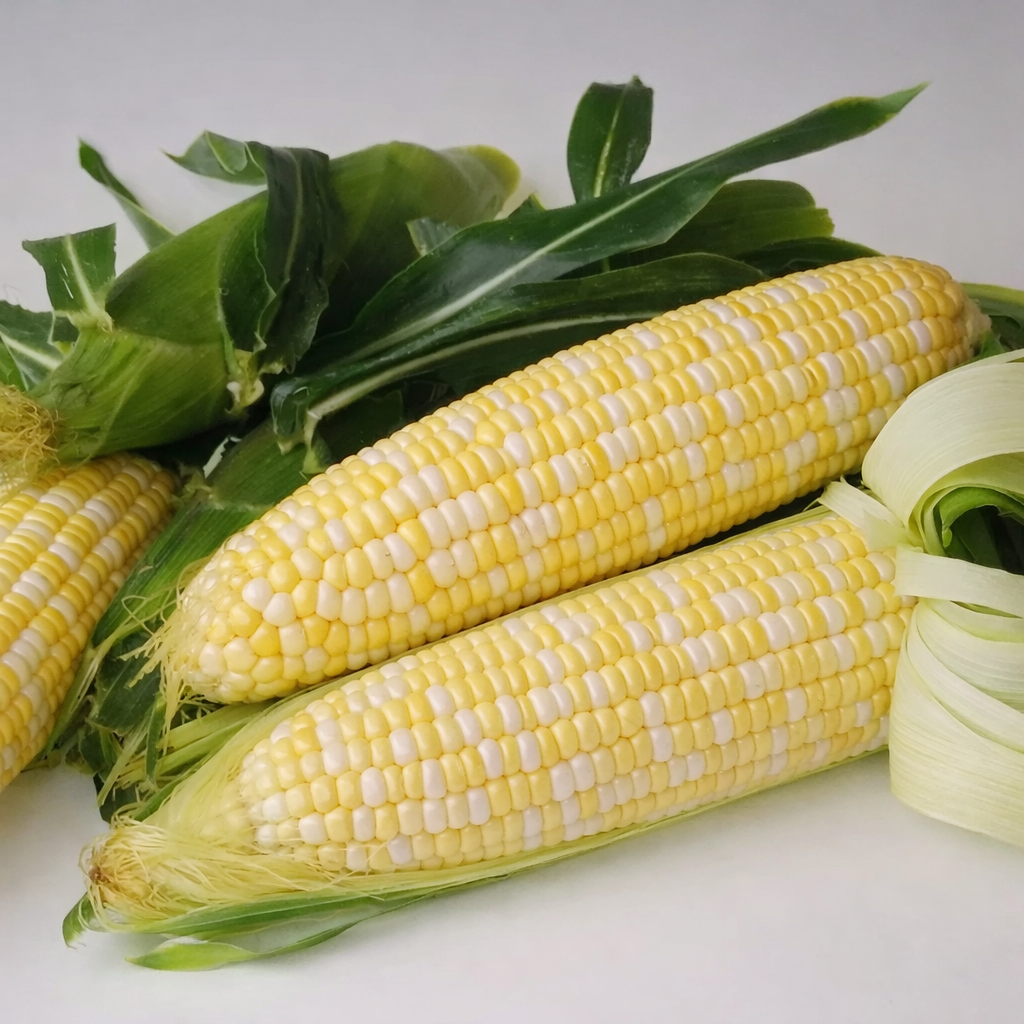
Sweetness F1 is an early, vigorous SeSh2 bicolour sweet corn with tender, exceptionally sweet kernels. Plants reach approximately 180 cm and commonly produce two 20 cm ears carrying about 16 rows of yellow and white kernels. Maturity arrives around 67 days after sowing. W.H. Perron packet 65-1118-01N contains approximately 85 untreated seeds. Direct-sow from mid-May to mid-June in full sun and warmed, fertile, consistently moist soil. Plant a block of several rows to support pollination. Harvest when silks brown and kernels release milky liquid, then eat promptly to preserve sugar and crisp texture. Its early maturity is especially useful in short-season Canadian vegetable gardens.
8 79 $
Pay in 4 interest-free payments with Sezzle
Detailed plant guide
Advice adapted to Canada
Secure payment
Share
Quantity Approximately 85 seeds per packet
Exposure Full sun
Difficulty level Moderate

Discover the plant

Family Poaceae
Genus Zea
Species mays
Cultivar Sweetness F1
Type Non-organic seeds, Untreated seeds, F1 hybrid, coated seeds
Cycle Annual

Sweetness F1 bicolour sweet corn (Zea mays) is an early SeSh2 hybrid valued for vigour, tenderness, and a very sweet flavour. Plants reach approximately 180 cm and commonly carry two ears per stalk when pollination and fertility are adequate. Each ear measures about 20 cm, contains approximately 16 rows of yellow and white kernels, and matures around 67 days after sowing. Ears form roughly 45 cm above the ground beneath protective husks. This combination of early maturity, yield, and eating quality suits Canada’s relatively short summer season, allowing gardeners to enjoy substantial ears without depending on a long late-season ripening period.

Direct-sow from mid-May to mid-June after frost danger has passed and the soil is sufficiently warm. Set seeds 1 to 3 cm deep in hills of three or four spaced 25 cm apart, with approximately 70 cm between rows. For effective pollination, plant a block of at least four to six short rows instead of one long line. Sweetness requires full sun, cool yet warm-growing, fertile, light soil rich in organic matter, and consistent moisture. Water especially as silks emerge and kernels fill, then support growth with fertilizer suitable for a heavy-feeding vegetable. Keep weeds controlled while roots are young without cultivating deeply around established stalks.

In the vegetable garden, reserve a well-exposed block for Sweetness and isolate it from other corn types whose pollen could alter kernel quality. Harvest when silks turn brown, ears feel full, and a pierced kernel releases milky liquid. Hold the stalk with one hand and pull the ear downward with a twisting motion. Eat promptly after harvest to preserve crisp texture and maximum sweetness. W.H. Perron recommends beans and climbing peas as companions but identifies Swiss chard, beets, ground cherries, mint, rosemary, and tomatoes as neighbours to avoid. A dense block also resists wind better than a single row and improves pollen distribution among plants.

Photo de Maïs ‘Sweetness bicolore’. Le visuel permet d’observer les contours, les teintes et la disposition des éléments présentés. Les détails de forme et les contrastes donnent un aperçu de l’apparence de cette plante ou de sa récolte. Cette photographie accompagne la variété nommée afin de l’identifier dans la sélection de semences.

Planting guide

From planting to establishment.

Planting depth 1 to 3 cm
Spacing / density Hills of 3 to 4 seeds spaced 25 cm apart; rows 70 cm apart in a block
Establishment temperature Warmed soil, ideally at least 15°C
Establishment time Approximately 7 to 14 days depending on soil temperature
Best planting time When soil is warm; earlier in light soil, later in cold or clay soil
Propagation Seed
Growing method
For best results with Sweetness F1 bicolour sweet corn, follow the confirmed sowing information and observe growth at each stage. Sweetness F1 bicolour sweet corn is a fruiting vegetables variety offered as seed for gardeners who want clear, practical product information. Confirmed details include height:, avec des épis situés à Approximately, spread: Approximately 30 to 45 cm (12 to 18 in) per plant. The packet contains approximately 85 seeds, and the formulation is non-organic seeds, untreated seeds, f1 hybrid, coated seeds. For best results, follow the sowing, light, and spacing information associated with this variety. You can adjust care to your soil, weather, and observed growth without exceeding the plant’s actual needs. Sweetness F1 67 20 16 Available in untreated seed. It is recommended to remove only damaged material while retaining healthy foliage needed for continued growth. Results may vary with weather, sowing date, soil quality, and the number of hours of useful light each day. This approach helps gardeners enjoy the variety’s confirmed qualities without adding more maintenance than the plant requires. For best results, check the growing medium before watering and adjust frequency to the actual conditions around the plant.

Soil and care

The right conditions.

Exposure Full sun
Soil pH Approximately 5.8 to 7.0
Minimum temperature Sow only after frost in warmed soil
Watering
Maintain consistent moisture from sowing through harvest and water deeply rather than superficially. Demand becomes especially important as tassels appear, silks emerge, and kernels fill. Water shortage during these stages may reduce pollination and produce incomplete ears. Apply water to the soil, add mulch after the ground has warmed, and avoid standing water. Monitor vigour, moisture, and stalk stability weekly so care can be adjusted.
Soil type
Sweetness requires cool, fertile, light, humus-rich, well-drained soil in full sun. Light, warm, stony soils allow slightly earlier sowing, while wet, cold, or clay soils require a later start. Incorporate mature compost before sowing and avoid compacted areas. Maintain even moisture without saturation, especially while silks emerge and kernels fill. Preserve enough soil fertility to support approximately two ears on vigorous plants.
Fertilization
Incorporate mature compost before sowing and provide sufficient fertility for this heavy-feeding crop. Split nitrogen feeding may help: a light initial application followed by another as plants approach 30 to 45 cm, always according to soil testing and product directions. Avoid excessive rates that burn roots or delay maturity. Water after application to move nutrients into the root zone. Monitor vigour, moisture, and stalk stability weekly so care can be adjusted.
Seasonal care
Seasonal care for Sweetness F1 bicolour sweet corn relies on regular observation, measured intervention, and respect for its growth cycle. Sweetness F1 bicolour sweet corn is a fruiting vegetables variety offered as seed for gardeners who want clear, practical product information. Confirmed details include height:, avec des épis situés à Approximately, spread: Approximately 30 to 45 cm (12 to 18 in) per plant. The packet contains approximately 85 seeds, and the formulation is non-organic seeds, untreated seeds, f1 hybrid, coated seeds. For best results, follow the sowing, light, and spacing information associated with this variety. You can adjust care to your soil, weather, and observed growth without exceeding the plant’s actual needs. Sweetness F1 67 20 16 Available in untreated seed. It is recommended to remove only damaged material while retaining healthy foliage needed for continued growth. Results may vary with weather, sowing date, soil quality, and the number of hours of useful light each day. This approach helps gardeners enjoy the variety’s confirmed qualities without adding more maintenance than the plant requires. For best results, check the growing medium before watering and adjust frequency to the actual conditions around the plant. You can review foliage and new growth each week to notice water stress, slowed development, or damage at an early stage. Good air movement and spacing that follows the product information support steady development throughout the growing season.

Container growing

A controlled environment.

Recommended pot size
Minimum 75 to 100 L for a small group; approximately 40 cm deep
Sweetness F1 bicolour sweet corn can be considered for a container when volume, drainage, and light match the expected growth. Sweetness F1 bicolour sweet corn is a fruiting vegetables variety offered as seed for gardeners who want clear, practical product information. Confirmed details include height:, avec des épis situés à Approximately, spread: Approximately 30 to 45 cm (12 to 18 in) per plant. The packet contains approximately 85 seeds, and the formulation is non-organic seeds, untreated seeds, f1 hybrid, coated seeds. For best results, follow the sowing, light, and spacing information associated with this variety. You can adjust care to your soil, weather, and observed growth without exceeding the plant’s actual needs. Sweetness F1 67 20 16 Available in untreated seed. It is recommended to remove only damaged material while retaining healthy foliage needed for continued growth. Results may vary with weather, sowing date, soil quality, and the number of hours of useful light each day. This approach helps gardeners enjoy the variety’s confirmed qualities without adding more maintenance than the plant requires. For best results, check the growing medium before watering and adjust frequency to the actual conditions around the plant.
Photo de Maïs ‘Sweetness bicolore’. Le visuel permet d’observer les contours, les teintes et la disposition des éléments présentés. Les détails de forme et les contrastes donnent un aperçu de l’apparence de cette plante ou de sa récolte. Cette photographie accompagne la variété nommée afin de l’identifier dans la sélection de semences.

Bloom and dimensions

The complete profile.

Flower color Greenish tassels and pale silks turning brown
Foliage color Green
Foliage type Long strap-like leaves on a sturdy stalk
Growth rate Fast
Bloom period
Corn produces a male tassel at the top and female silks on each developing ear. Wind carries pollen to the silks, and each silk must receive pollen to form one complete kernel. Plant Sweetness in a block and prevent water stress during this period. Poor pollination leaves empty spaces on the ear. Monitor vigour, moisture, and stalk stability weekly so care can be adjusted.
Fruiting
Ears measure approximately 20 cm, carry about 16 rows of yellow and white kernels, and commonly form two per vigorous plant. Harvest occurs around 67 days when silks are brown and tender kernels release milky liquid. Pick promptly at this stage to maximize sweetness. Monitor vigour, moisture, and stalk stability weekly so care can be adjusted. Record sowing, flowering, and harvest dates to improve planning for the next season.
Maximum height 1,8 m (5,9 pi)
Maximum width Environ 30 à 45 cm (12 à 18 po) par plant
Harvest
Approximately 67 days; milky stage when silks are brown
Photo de Maïs ‘Sweetness bicolore’. Le visuel permet d’observer les contours, les teintes et la disposition des éléments présentés. Les détails de forme et les contrastes donnent un aperçu de l’apparence de cette plante ou de sa récolte. Cette photographie accompagne la variété nommée afin de l’identifier dans la sélection de semences.

Garden associations

What to plant with it.

Good companions
W.H. Perron recommends beans and climbing peas as companions for corn. Position them so they do not overwhelm young stalks and preserve access for watering and harvest. A legume can diversify the block but does not replace fertility required during the corn season. The most important partner remains another nearby Sweetness plant: a dense block provides better pollen distribution and more completely filled ears. Monitor vigour, moisture, and stalk stability weekly so care can be adjusted. Record sowing, flowering, and harvest dates to improve planning for the next season.
Sweetness F1 bicolour sweet corn can be integrated into your space by respecting its dimensions, habit, and confirmed garden or culinary use. Sweetness F1 bicolour sweet corn is a fruiting vegetables variety offered as seed for gardeners who want clear, practical product information. Confirmed details include height:, avec des épis situés à Approximately, spread: Approximately 30 to 45 cm (12 to 18 in) per plant. The packet contains approximately 85 seeds, and the formulation is non-organic seeds, untreated seeds, f1 hybrid, coated seeds.

From the garden to inspiration.

After harvesting Sweetness F1 bicolour sweet corn, use only the specified edible parts, washed carefully and gathered at the proper stage. Sweetness F1 bicolour sweet corn is a fruiting vegetables variety offered as seed for gardeners who want clear, practical product information. Confirmed details include height:, avec des épis situés à Approximately, spread: Approximately 30 to 45 cm (12 to 18 in) per plant. The packet contains approximately 85 seeds, and the formulation is non-organic seeds, untreated seeds, f1 hybrid, coated seeds. For best results, follow the sowing, light, and spacing information associated with this variety. You can adjust care to your soil, weather, and observed growth without exceeding the plant’s actual needs. Sweetness F1 67 20 16 Available in untreated seed. It is recommended to remove only damaged material while retaining healthy foliage needed for continued growth. Results may vary with weather, sowing date, soil quality, and the number of hours of useful light each day.

Frequently asked questions

Everything toknow.

Direct-sow from mid-May to mid-June after frost danger once soil is thoroughly warmed. Light, warm, stony soil may permit an earlier sowing, while wet, cold clay requires waiting. Set three or four seeds per hill 1 to 3 cm deep every 25 cm, with 70 cm between rows. Keep the seedbed moist until emergence. Do not start too early in cold ground: even a vigorous variety germinates more slowly and becomes vulnerable. Maturity arrives approximately 67 days after sowing under favourable conditions. Monitor vigour, moisture, and stalk stability weekly so care can be adjusted. Record sowing, flowering, and harvest dates to improve planning for the next season.
The exact W.H. Perron packet 65-1118-01N contains approximately 85 seeds. Its official formulation is untreated. The product-code suffix distinguishes this format from treated versions and packages of 500 or 5,000 seeds. Quantity is stored in custom.semence_quantite and treatment in custom.semence_type so the two facts remain separate. The product is a bicolour SeSh2 F1 hybrid but is not identified as organic. The product page lists several formulations; the 2026 catalogue confirms that SKU 65-1118-01N specifically corresponds to the packet of approximately 85 untreated seeds. Monitor vigour, moisture, and stalk stability weekly so care can be adjusted. Record sowing, flowering, and harvest dates to improve planning for the next season.
Corn depends on wind to move pollen from tassels to silks. Each fertilized silk corresponds to one kernel on the ear. In one long row, some pollen may blow past the silks and leave empty areas. A block of four to six short rows increases contact from several directions and improves filling. Space rows approximately 70 cm apart and hills 25 cm apart. During flowering, maintain consistent moisture and avoid unnecessary disturbance in wet weather. A small, well-organized block generally produces better ears than the same number of scattered plants. Monitor vigour, moisture, and stalk stability weekly so care can be adjusted.
Inspect ears near 67 days after sowing without relying only on the calendar. Silks should be brown and dry, husks still green, and the ear firm under your hand. Pull back the tip of one test ear slightly and pierce a kernel with a fingernail. White milky liquid indicates the best stage. Clear liquid means the ear is still young; thick paste shows it has moved past peak tenderness. Harvest by holding the stalk and pulling the ear downward with a twist. Cool it and eat promptly. Monitor vigour, moisture, and stalk stability weekly so care can be adjusted. Record sowing, flowering, and harvest dates to improve planning for the next season.
Yes, but only in a very large 75-to-100-L planter approximately 40 cm deep, with several plants arranged in a square. One corn plant pollinates poorly. Use rich vegetable mix, place the planter in full sun, and water very consistently, especially as silks emerge. Feed according to directions for a heavy-feeding vegetable and support stalks against wind. In dry weather, gently shake tassels above silks to assist pollination. Despite these measures, a block in the ground remains more reliable for producing completely filled ears and two ears per plant. Monitor vigour, moisture, and stalk stability weekly so care can be adjusted.