Sprouts and microgreens seeds

Red cabbage for sprouts and microgreens (Brassica oleracea)

Brassica oleracea

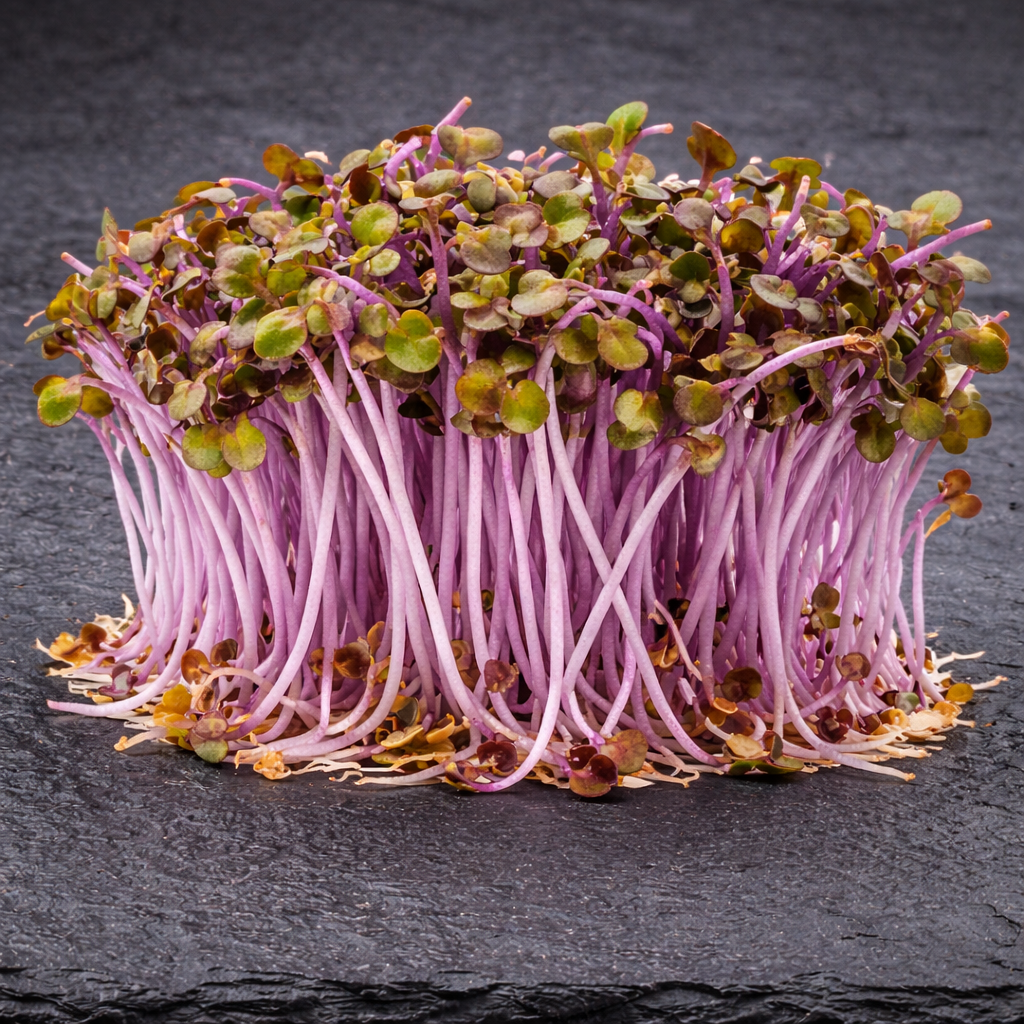
W.H. Perron red cabbage produces highly decorative sprouts and microgreens with a strong, slightly bitter red-cabbage flavour. Packet 65-9517-01N contains 50 g of untreated seed. Soak it for 6 to 12 hours, then rinse and drain sprouts two or three times daily. Harvest sprouts after 5 to 7 days or microgreens after 7 to 14 days. Maintain careful hygiene, even moisture without standing water, and gentle airflow. Dry the harvest thoroughly before refrigerating it promptly in a clean container. Label every batch and observe it daily. Daily observation helps adjust density, moisture, and harvest timing. Record dates, clean equipment between batches, and keep the dry harvest refrigerated.
7 49 $
Pay in 4 interest-free payments with Sezzle
Detailed plant guide
Advice adapted to Canada
Secure payment
Share
Quantity 50 g de seeds per packet
Exposure Initial darkness, then bright indirect light
Hardiness Short-duration indoor food crop
Difficulty level Moderate

Discover the plant

Family Brassicaceae
Genus Brassica
Species oleracea
Cultivar Red cabbage
Type Untreated seeds, coated seeds
Cycle Biennial

Red cabbage for sprouts and microgreens (Brassica oleracea) produces highly decorative sprouts and microgreens with white or fuchsia stems and green cotyledons. Their strong red-cabbage flavour has a slightly bitter edge that livens up fresh dishes. W.H. Perron packet 65-9517-01N contains 50 g of untreated seed. The supplier’s guide highlights calcium, sulphur, iron, magnesium, zinc, and vitamins A, B1, B2, B3, and C. This quick indoor crop makes it practical to stagger small fresh batches throughout the year while observing each stage closely. The verified 50 g format also makes measured, clearly labelled batches straightforward to prepare.

Soak seed for 6 to 12 hours in potable water, then drain it completely. For sprouts, place seed in a clean sprouter and rinse two or three times daily, always followed by thorough draining. For microgreens, spread pregerminated seed evenly over a clean, moist medium. After emergence, provide bright indirect light to develop colour. Maintain even moisture without standing water, gentle airflow, clean equipment, and washed hands at every handling step. Label each container with the soaking date and record the rinsing routine so the crop remains easy to monitor.

Sprouts are generally harvested after 5 to 7 days and have an official approximate yield of 5 to 1 by weight. Microgreens require approximately 7 to 14 days and have an indicative 3-to-1 yield according to the W.H. Perron guide. Give sprouts a final rinse or cut microgreens above the medium with clean scissors. Dry the harvest carefully, then refrigerate it promptly in a clean container. Timing and yields may vary with temperature, light, moisture, density, and seed lot. Discard any crop that smells unusual, becomes slimy, or shows visible contamination. Clean the equipment thoroughly before starting another batch.

Red cabbage for sprouts and microgreens (<em>Brassica oleracea</em>)

Planting guide

From planting to establishment.

Planting depth On the surface after presoaking
Spacing / density 2 tbsp per tray or 1 tsp per mesh dish
Establishment temperature Moderate, stable indoor temperature
Establishment time Rapid emergence after a 6-to-12-hour presoak
Best planting time Any time in a clean indoor growing area
Propagation Seed
Growing method
For best results with Red cabbage for sprouts and microgreens, follow the confirmed sowing information and observe growth at each stage. Red cabbage for sprouts and microgreens is a sprouts and microgreens variety offered as seed for gardeners who want clear, practical product information. Confirmed details include maturity: 5 to 7 days sprouts; 7 to 14 days microgreens, colour:, qui apporte instantanément une touche spectaculaire aux plats. The packet contains 50 g de seeds, and the formulation is untreated seeds, coated seeds. For best results, follow the sowing, light, and spacing information associated with this variety. You can adjust care to your soil, weather, and observed growth without exceeding the plant’s actual needs. It is recommended to water the base and drain well. (2) Rinse/Drain: Rinse daily as often as recommended and drain well. Gradual hardening helps reduce transplant stress when seedlings have been started indoors before moving into the garden. The information printed on the packet remains the reference for depth, temperature, and timing associated with this seed lot. It is best to adapt care to your garden’s microclimate instead of following a fixed watering schedule in every situation.

Soil and care

The right conditions.

Exposure Initial darkness, then bright indirect light
Soil pH Potable water; clean neutral medium
Hardiness zone Short-duration indoor food crop
Minimum temperature Protect from cold and sudden temperature changes
Watering
After soaking for 6 to 12 hours, rinse and drain sprouts two or three times daily with potable water. Always allow water to drain completely. For microgreens, keep the medium evenly moist through gentle misting or bottom watering without puddles. Adjust frequency to temperature, density, and airflow, then stop watering shortly before cutting. Daily observation helps adjust density, moisture, and harvest timing. Record dates, clean equipment between batches, and keep the dry harvest refrigerated.
Soil type
This variety prefers soil or growing medium that follows the drainage and texture information published for Red cabbage for sprouts and microgreens. Red cabbage for sprouts and microgreens is a sprouts and microgreens variety offered as seed for gardeners who want clear, practical product information. Confirmed details include maturity: 5 to 7 days sprouts; 7 to 14 days microgreens, colour:, qui apporte instantanément une touche spectaculaire aux plats.
Fertilization
Sprouts harvested within days require no fertilizer because seed supplies initial reserves. For microgreens, a clean medium and good-quality water are generally sufficient during the short cycle. Avoid concentrated fertilizers or products not intended for food crops. Hygiene, even moisture, complete drainage, and harvest at the proper stage remain the priorities. Regular observation allows density, moisture, and harvest timing to be adjusted without unnecessary disturbance to young shoots.
Seasonal care
Seasonal care for Red cabbage for sprouts and microgreens relies on regular observation, measured intervention, and respect for its growth cycle. Red cabbage for sprouts and microgreens is a sprouts and microgreens variety offered as seed for gardeners who want clear, practical product information. Confirmed details include maturity: 5 to 7 days sprouts; 7 to 14 days microgreens, colour:, qui apporte instantanément une touche spectaculaire aux plats. The packet contains 50 g de seeds, and the formulation is untreated seeds, coated seeds. For best results, follow the sowing, light, and spacing information associated with this variety. You can adjust care to your soil, weather, and observed growth without exceeding the plant’s actual needs. It is recommended to water the base and drain well. (2) Rinse/Drain: Rinse daily as often as recommended and drain well. Gradual hardening helps reduce transplant stress when seedlings have been started indoors before moving into the garden. The information printed on the packet remains the reference for depth, temperature, and timing associated with this seed lot. It is best to adapt care to your garden’s microclimate instead of following a fixed watering schedule in every situation. A suitable mulch can help stabilize moisture, reduce soil splash, and limit competition from weeds around established plants. Growth is worth checking after major changes in temperature, light exposure, rainfall, or watering frequency.

Container growing

A controlled environment.

Recommended pot size
Shallow tray, sprouter, or mesh dish
Red cabbage for sprouts and microgreens can be considered for a container when volume, drainage, and light match the expected growth. Red cabbage for sprouts and microgreens is a sprouts and microgreens variety offered as seed for gardeners who want clear, practical product information. Confirmed details include maturity: 5 to 7 days sprouts; 7 to 14 days microgreens, colour:, qui apporte instantanément une touche spectaculaire aux plats. The packet contains 50 g de seeds, and the formulation is untreated seeds, coated seeds. For best results, follow the sowing, light, and spacing information associated with this variety. You can adjust care to your soil, weather, and observed growth without exceeding the plant’s actual needs. It is recommended to water the base and drain well. (2) Rinse/Drain: Rinse daily as often as recommended and drain well. Gradual hardening helps reduce transplant stress when seedlings have been started indoors before moving into the garden. The information printed on the packet remains the reference for depth, temperature, and timing associated with this seed lot. It is best to adapt care to your garden’s microclimate instead of following a fixed watering schedule in every situation.
Red cabbage for sprouts and microgreens (<em>Brassica oleracea</em>)

Bloom and dimensions

The complete profile.

Flower color Not observed at the harvest stage
Foliage color Fresh green after light exposure
Foliage type Two green cotyledons on a white-to-fuchsia stem
Growth rate Very fast
Bloom period
Red cabbage is harvested here long before its natural flowering stage. Sprouts and microgreens are eaten at the cotyledon or first-young-leaf stage after only a few days. No flowers should appear during the recommended cycle. A stem that elongates and ages instead indicates that the best harvest window has passed and the texture may become less tender. Regular observation allows density, moisture, and harvest timing to be adjusted without unnecessary disturbance to young shoots.
Fruiting
The desired crop is a mass of sprouts or young cotyledon stems rather than a mature cabbage head. W.H. Perron indicates an approximate 5-to-1 yield by weight for sprouts and 3-to-1 for microgreens. Volume increases quickly after soaking. Avoid overcrowding the container so airflow, drainage, colour, and uniform growth are preserved. Daily observation helps adjust density, moisture, and harvest timing.
Harvest
5 to 7 days sprouts; 7 to 14 days microgreens
Red cabbage for sprouts and microgreens (<em>Brassica oleracea</em>)

Garden associations

What to plant with it.

Good companions
Grow red cabbage in its own container so its soaking and rinsing needs remain consistent. On a nearby shelf, alfalfa, radish, broccoli, or sunflower can form separate, clearly labelled batches. Mix species in one tray only when soaking times, growth rates, and care requirements are compatible and an official blend is intended for that purpose. Regular observation allows density, moisture, and harvest timing to be adjusted without unnecessary disturbance to young shoots. Record every date and clean equipment between batches so the method remains easy to repeat.
Add red cabbage sprouts or microgreens to salads, sandwiches, bowls, chilled soups, and garnishes. Their fuchsia, white, and green colouring creates decorative contrast, while their strong, slightly bitter flavour brightens milder ingredients. They pair well with vegetables, eggs, fish, legumes, grains, and creamy dressings. Dry the harvest carefully, keep medium out of cut shoots, and refrigerate promptly in a clean container. Daily observation helps adjust density, moisture, and harvest timing. Record dates, clean equipment between batches, and keep the dry harvest refrigerated.

From the garden to inspiration.

Build a crisp bowl by placing cooled quinoa or rice in two dishes. Add cucumber, shredded carrot, chickpeas, and a handful of thoroughly dried red cabbage sprouts or microgreens. Whisk a dressing with lemon juice, olive oil, mild mustard, a pinch of salt, and pepper. Add it only when serving so the young shoots remain crisp. Finish with fresh herbs and toasted seeds. For a sandwich version, fold the same shoots into lemony soft cheese and spread on whole-grain bread with cucumber slices. Always use a fresh harvest that was refrigerated promptly and shows no sign of spoilage. Wash vegetables and utensils, and do not leave the finished dish at room temperature for an extended period. Regular observation allows density, moisture, and harvest timing to be adjusted without unnecessary disturbance to young shoots. Record every date and clean equipment between batches so the method remains easy to repeat. Always keep harvested shoots clean, dry, and promptly refrigerated.

Frequently asked questions

Everything toknow.

Packet 65-9517-01N contains 50 g of untreated red cabbage seed. W.H. Perron and the Norseco professional catalogue confirm this formulation. No coating or other special treatment is stated. The quantity is given by weight rather than as an estimated seed count. Keep the packet tightly closed in a cool, dry, dark place, and remove only the needed portion with a clean, dry utensil. Record the opening date and inspect the seed before each batch. Untreated status does not replace food-safety practices: always clean hands, the sprouter, the growing tray, and every utensil before starting or handling the crop safely indoors.
Light exposure for Red cabbage for sprouts and microgreens should follow the published variety information and the light actually available in your garden. Red cabbage for sprouts and microgreens is a sprouts and microgreens variety offered as seed for gardeners who want clear, practical product information. Confirmed details include maturity: 5 to 7 days sprouts; 7 to 14 days microgreens, colour:, qui apporte instantanément une touche spectaculaire aux plats. The packet contains 50 g de seeds, and the formulation is untreated seeds, coated seeds. For best results, follow the sowing, light, and spacing information associated with this variety. You can adjust care to your soil, weather, and observed growth without exceeding the plant’s actual needs.
W.H. Perron indicates harvest after approximately 5 to 7 days for sprouts and 7 to 14 days for microgreens. The indicative yield is 5:1 by weight for sprouts and 3:1 for microgreens. Temperature, light, density, and the preferred stage may change these results slightly. Harvest only a fresh batch with no unusual odour or slimy texture. For microgreens, cut clean stems above the growing medium with sanitized scissors. Rinse if needed, drain or dry thoroughly, refrigerate promptly, and consume while the shoots remain crisp and colourful. Clean and sanitize the sprouter or tray completely before beginning another fresh crop safely.
The shoots have a pronounced red-cabbage flavour that may be slightly bitter. W.H. Perron describes a small, round, dark-brown seed producing a decorative sprout with a white stem, fuchsia or purple-red colour, and two green leaflets. This three-colour combination adds visual interest to salads, sandwiches, bowls, and garnishes. Begin with a small amount if milder flavours are preferred, then adjust it to the dish. The supplier lists calcium, iron, magnesium, zinc, and several vitamins; this information describes the product and is not a therapeutic claim. Serve only a fresh harvest that has been properly rinsed, thoroughly drained, and kept refrigerated after harvest.
Discard the entire batch without tasting if it develops an unusual odour, becomes slimy, shows concerning colours unrelated to its natural fuchsia and purple shades, or has visible contamination that remains after rinsing. Do not try to save one portion. Empty the sprouter, wash and sanitize it using a method suitable for the material, then let it dry completely. Restart with fresh seed, potable water, and a less crowded amount. Careful hygiene, two or three daily rinses, and complete drainage reduce problems without eliminating every risk. Inspect the batch morning and evening, and promptly refrigerate the clean, dry harvest in a clean food container.

Its strengths, naturally.

Not recommended for pets

Pets