Sprouts and microgreens seeds

Organic alfalfa sprouts (Medicago sativa)

Medicago sativa

Organic W.H. Perron alfalfa produces fine, crisp, delicate sprouts in 5 to 6 days. The packet contains 50 g of organic seed. Soak for 8 to 12 hours, then rinse and drain two or three times daily in a clean sprouter. Keep seed away from light initially, then introduce young shoots gradually to bright indirect light. Give a final rinse, remove hulls, dry very carefully, and refrigerate promptly. The official yield is approximately 7 to 1 by weight, although actual results vary with growing conditions. Daily observation helps adjust moisture and harvest timing. Record dates, clean equipment between batches, and keep dry sprouts refrigerated.
5 09 $
Pay in 4 interest-free payments with Sezzle
Detailed plant guide
Advice adapted to Canada
Secure payment
Share
Quantity 50 g de seeds per packet
Exposure Initial darkness, then bright indirect light
Difficulty level Moderate

Discover the plant

Family Fabaceae
Genus Medicago
Species sativa
Cultivar Alfalfa
Type Organic seeds, Treated seeds, coated seeds
Cycle Perennial

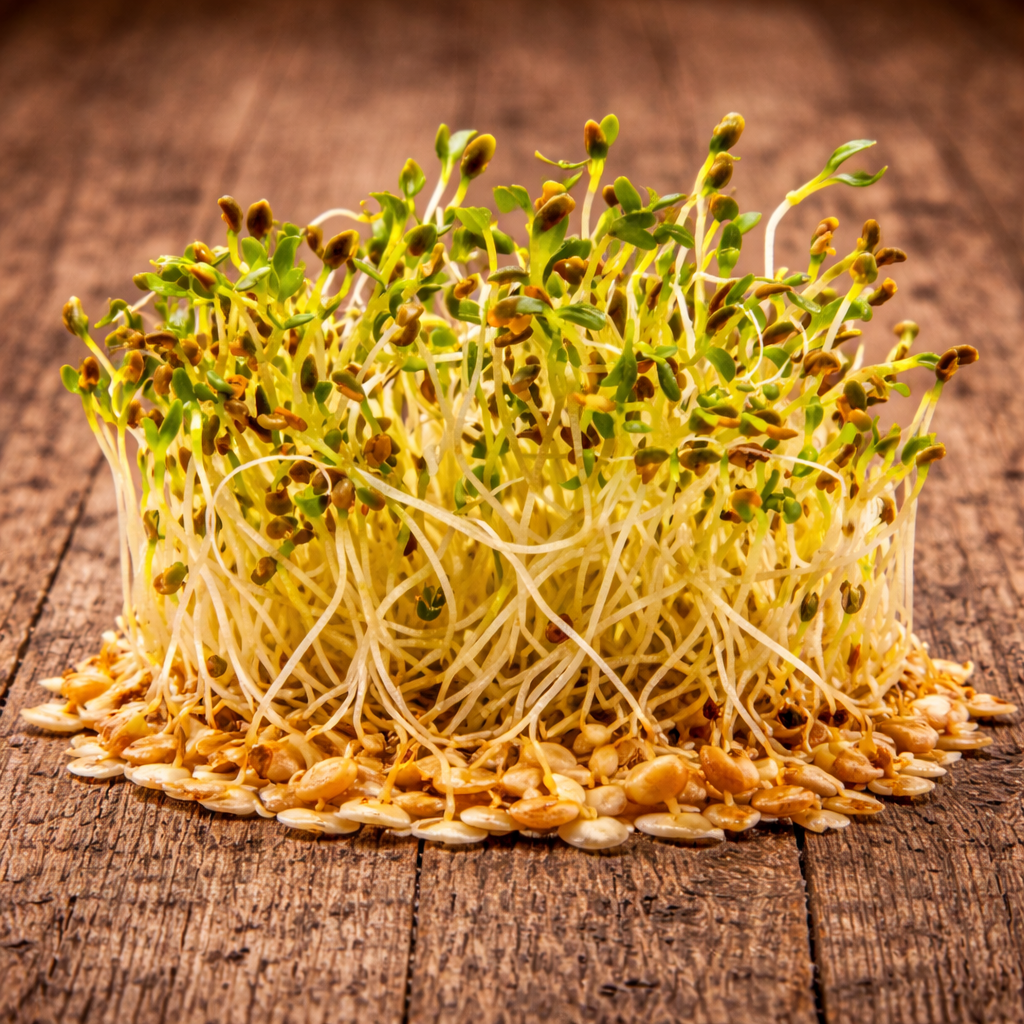
Organic alfalfa sprouts (Medicago sativa) produces fine, crisp, delicate sprouts enjoyed bare in salads and sandwiches. The W.H. Perron 65-9502-01B packet contains 50 g of organic seed. Small yellowish-brown seed develops white stems with young yellow tips that become green after receiving light. The supplier describes alfalfa as an excellent source of protein and amino acids. Its mild, refreshing flavour and light texture make a small handful easy to add to everyday meals. The compact packet supports several measured batches grown indoors throughout the year. Measured portions also help prevent overcrowding in the sprouter.

Soak seed for 8 to 12 hours in potable water, then drain completely. Place it in a clean sprouter with enough room for the rapidly increasing volume. Rinse and drain two or three times daily, never allowing standing water between rinses. Keep the container away from light at first, then gradually expose sprouts to bright indirect light for greening. Wash hands and equipment before every handling step, maintain gentle airflow, and observe odour, colour, and texture daily. Label the sprouter with its soaking date and record each rinse to maintain a consistent routine.

Harvest generally after 5 to 6 days. W.H. Perron indicates an approximate yield of 7 to 1 by weight, which varies with water, temperature, seed lot, and stage. Give sprouts a final rinse, remove loose hulls, and dry them very carefully before refrigerating in a clean container. Drying protects crispness and limits residual water. Consume sprouts promptly and keep them cold until serving. Discard without tasting any batch that develops an unusual odour, becomes slimy, or shows visible contamination, then sanitize the sprouter before restarting. Use a clean utensil whenever removing a serving.

Photo de Micropousses de luzerne bio. Les petites graines brun-jaune donnent des tiges blanches portant de jeunes extrémités jaunes puis vertes lorsqu’elles reçoivent de la lumière. Le visuel permet d’observer les contours, les teintes et la disposition des éléments présentés. Les détails de forme et les contrastes donnent un aperçu de l’apparence de cette plante ou de sa récolte.

Planting guide

From planting to establishment.

Planting depth Soilless, spread inside a sprouter
Spacing / density Airy layer allowing room for expansion
Establishment temperature Moderate, stable indoor temperature
Establishment time First sprouts appear soon after soaking
Best planting time Any time in a clean indoor growing area
Propagation Seed
Growing method
For best results with Organic alfalfa sprouts, follow the confirmed sowing information and observe growth at each stage. Organic alfalfa sprouts is a sprouts and microgreens variety offered as seed for gardeners who want clear, practical product information. Confirmed details include maturity: 5 to 6 days. The packet contains 50 g de seeds, and the formulation is organic seeds, treated seeds, coated seeds. For best results, follow the sowing, light, and spacing information associated with this variety. You can adjust care to your soil, weather, and observed growth without exceeding the plant’s actual needs. It is recommended to water the base and drain well. (2) Rinse/Drain: Rinse daily as often as recommended and drain well. You can review foliage and new growth each week to notice water stress, slowed development, or damage at an early stage. Good air movement and spacing that follows the product information support steady development throughout the growing season. Gradual hardening helps reduce transplant stress when seedlings have been started indoors before moving into the garden. The information printed on the packet remains the reference for depth, temperature, and timing associated with this seed lot.

Soil and care

The right conditions.

Exposure Initial darkness, then bright indirect light
Soil pH Potable water; clean neutral medium
Minimum temperature Protect from cold and sudden temperature changes
Watering
After soaking for 8 to 12 hours, rinse sprouts two or three times daily with fresh potable water. Drain completely after every rinse and keep the sprouter tilted if its design allows. Seed should remain moist but never submerged between care sessions. Adjust frequency slightly in very dry or warm air without replacing direct observation of odour and texture. Daily observation helps adjust moisture and harvest timing.
Soil type
Use a clean, light, even, well-drained medium intended for indoor food production. Moisten it without soaking, distribute seed evenly, and prevent standing water around roots. A suitable microgreen mat or fresh, fine potting medium works well. The container should be washable, stable, and equipped with effective drainage to support uniform emergence, healthy early growth, clean handling, and reliable harvest quality.
Seasonal care
Seasonal care for Organic alfalfa sprouts relies on regular observation, measured intervention, and respect for its growth cycle. Organic alfalfa sprouts is a sprouts and microgreens variety offered as seed for gardeners who want clear, practical product information. Confirmed details include maturity: 5 to 6 days. The packet contains 50 g de seeds, and the formulation is organic seeds, treated seeds, coated seeds. For best results, follow the sowing, light, and spacing information associated with this variety. You can adjust care to your soil, weather, and observed growth without exceeding the plant’s actual needs. It is recommended to water the base and drain well. (2) Rinse/Drain: Rinse daily as often as recommended and drain well. You can review foliage and new growth each week to notice water stress, slowed development, or damage at an early stage. Good air movement and spacing that follows the product information support steady development throughout the growing season. Gradual hardening helps reduce transplant stress when seedlings have been started indoors before moving into the garden. The information printed on the packet remains the reference for depth, temperature, and timing associated with this seed lot. It is best to adapt care to your garden’s microclimate instead of following a fixed watering schedule in every situation. A suitable mulch can help stabilize moisture, reduce soil splash, and limit competition from weeds around established plants.

Container growing

A controlled environment.

Recommended pot size
Shallow tray, sprouter, or mesh dish
Organic alfalfa sprouts can be considered for a container when volume, drainage, and light match the expected growth. Organic alfalfa sprouts is a sprouts and microgreens variety offered as seed for gardeners who want clear, practical product information. Confirmed details include maturity: 5 to 6 days. The packet contains 50 g de seeds, and the formulation is organic seeds, treated seeds, coated seeds. For best results, follow the sowing, light, and spacing information associated with this variety. You can adjust care to your soil, weather, and observed growth without exceeding the plant’s actual needs. It is recommended to water the base and drain well. (2) Rinse/Drain: Rinse daily as often as recommended and drain well. You can review foliage and new growth each week to notice water stress, slowed development, or damage at an early stage. Good air movement and spacing that follows the product information support steady development throughout the growing season. Gradual hardening helps reduce transplant stress when seedlings have been started indoors before moving into the garden. The information printed on the packet remains the reference for depth, temperature, and timing associated with this seed lot.
Photo de Micropousses de luzerne bio. Les petites graines brun-jaune donnent des tiges blanches portant de jeunes extrémités jaunes puis vertes lorsqu’elles reçoivent de la lumière. Le visuel permet d’observer les contours, les teintes et la disposition des éléments présentés. Les détails de forme et les contrastes donnent un aperçu de l’apparence de cette plante ou de sa récolte.

Bloom and dimensions

The complete profile.

Flower color Not observed at the harvest stage
Foliage color Fresh green after light exposure
Foliage type Very young tender leaves
Growth rate Very fast
Bloom period
Harvested before flowering
Harvest
After 5 to 6 days, before crispness declines
Photo de Micropousses de luzerne bio. Les petites graines brun-jaune donnent des tiges blanches portant de jeunes extrémités jaunes puis vertes lorsqu’elles reçoivent de la lumière. Le visuel permet d’observer les contours, les teintes et la disposition des éléments présentés. Les détails de forme et les contrastes donnent un aperçu de l’apparence de cette plante ou de sa récolte.

Garden associations

What to plant with it.

Organic alfalfa sprouts can be integrated into your space by respecting its dimensions, habit, and confirmed garden or culinary use. Organic alfalfa sprouts is a sprouts and microgreens variety offered as seed for gardeners who want clear, practical product information. Confirmed details include maturity: 5 to 6 days. The packet contains 50 g de seeds, and the formulation is organic seeds, treated seeds, coated seeds. For best results, follow the sowing, light, and spacing information associated with this variety. You can adjust care to your soil, weather, and observed growth without exceeding the plant’s actual needs.

From the garden to inspiration.

Build a crisp bowl by placing cooled quinoa or rice in two dishes. Add cucumber, shredded carrot, chickpeas, and a handful of thoroughly dried alfalfa sprouts. Whisk a dressing with lemon juice, olive oil, mild mustard, a pinch of salt, and pepper. Add it only when serving so the young shoots remain crisp. Finish with fresh herbs and toasted seeds. For a sandwich version, fold the same shoots into lemony soft cheese and spread on whole-grain bread with cucumber slices. Always use a fresh harvest that was refrigerated promptly and shows no sign of spoilage. Wash vegetables and utensils, and do not leave the finished dish at room temperature for an extended period. Regular observation allows density, moisture, and harvest timing to be adjusted without unnecessary disturbance to young shoots. Record every date and clean equipment between batches so the method remains easy to repeat. Always keep harvested shoots clean, dry, and promptly refrigerated.

Frequently asked questions

Everything toknow.

Packet 65-9502-01B contains 50 g of organic alfalfa seed. W.H. Perron states the format by weight rather than as an estimated seed count. The supplier does not state that the seed is coated or otherwise treated. Keep the packet tightly closed in a cool, dry, dark place, and remove only the amount needed with a clean, dry utensil. Record the opening date and inspect the seed before each batch. Organic status describes the seed but never replaces food-safety practices: wash hands, the sprouter, and every utensil before handling, and prevent moisture from entering the packet while the remaining seed is stored.
Light exposure for Organic alfalfa sprouts should follow the published variety information and the light actually available in your garden. Organic alfalfa sprouts is a sprouts and microgreens variety offered as seed for gardeners who want clear, practical product information. Confirmed details include maturity: 5 to 6 days. The packet contains 50 g de seeds, and the formulation is organic seeds, treated seeds, coated seeds. For best results, follow the sowing, light, and spacing information associated with this variety. You can adjust care to your soil, weather, and observed growth without exceeding the plant’s actual needs. It is recommended to water the base and drain well.
W.H. Perron indicates harvest after approximately 5 to 6 days and an indicative 7:1 yield by weight. Temperature, light, density, and the preferred stage may cause the result to vary slightly. Harvest when sprouts are well developed, fresh, and still crisp. Give them a final rinse, remove loosened hulls, then drain and dry the harvest thoroughly before refrigerating it in a clean container. Never mix an older batch with a new harvest. Consume sprouts while they retain a healthy appearance, normal odour, and delicate texture. Discard any questionable batch without tasting, and wash and sanitize the sprouter before beginning another crop.
Alfalfa sprouts have a fine, delicate, fresh flavour that pairs easily with stronger ingredients. W.H. Perron recommends them especially for salads and sandwiches. They may also be added to bowls, wraps, and garnishes, or folded into a dish at the last moment to protect their texture. The supplier describes them as a source of protein and amino acids; this information describes the product and is not a therapeutic claim. Serve only a fresh harvest that has been properly rinsed, thoroughly drained, and kept refrigerated. Young children, pregnant people, older adults, and immunocompromised individuals should follow applicable public-health guidance concerning bare sprouts.
Discard the entire batch without tasting if it develops an unusual odour, becomes slimy, shows concerning colours, or has visible contamination that does not disappear during rinsing. Do not try to save only one portion. Empty the sprouter, wash and sanitize it using a method suitable for the material, then let it dry completely. Restart with fresh seed, potable water, and a less crowded amount. Careful hygiene, two or three daily rinses, and complete drainage reduce problems without eliminating every risk. Inspect the batch morning and evening, and promptly refrigerate clean, dry sprouts after harvest in a clean container intended for food.

Its strengths, naturally.

Not recommended for pets

Pets