

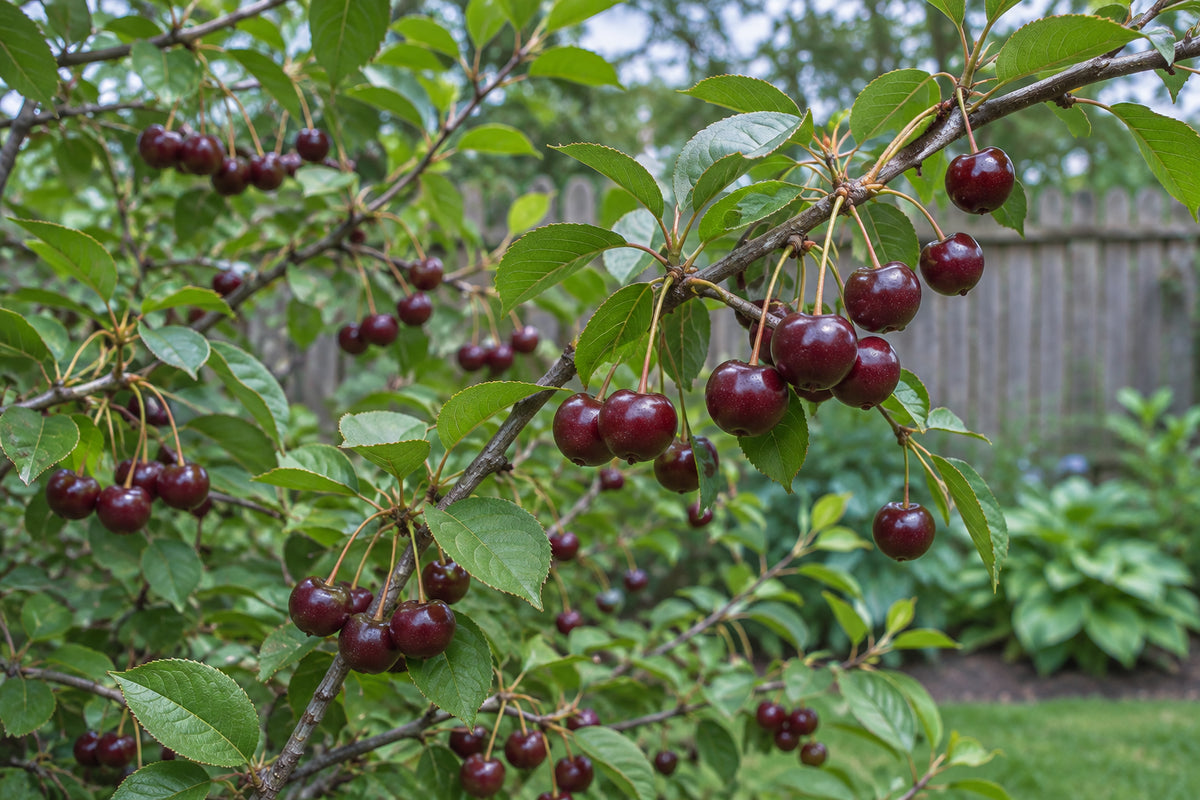
Three dwarf cherries to compare
Juliet, Romeo and Carmine Jewel are cold‑hardy sour cherries that grow as shrubs. They often reach about two metres, depending on site and care. All three are self‑fertile. How you plan to use the fruit and when you want to pick it are good ways to narrow down your choice.
Juliet
The largest cherry of the three. Fully ripe Juliet cherries are burgundy and juicy, with a good balance of sweetness and tartness. Choose Juliet if you want a cherry you can snack on straight from the bush and still have enough for a pie.
View the Juliet cherry tree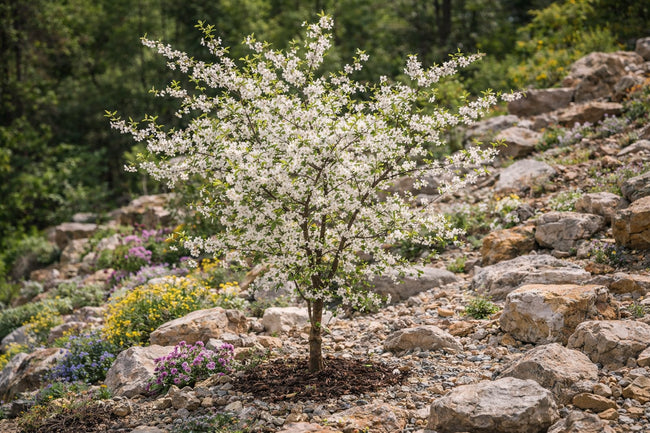

Romeo
A mid‑sized sour cherry that ripens to a very dark red. Its bold flavour suits juice and sauces. Romeo generally follows Carmine Jewel, making the pair a way to spread out picking if you have room for two shrubs.
View the Romeo cherry tree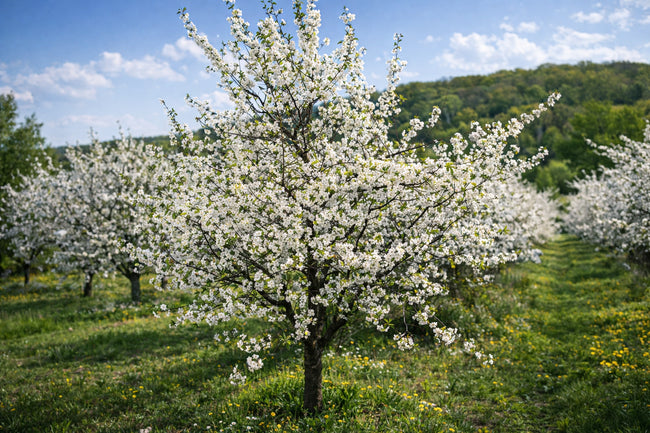

Carmine Jewel
The smallest of the three and usually the first to ripen. The skin darkens from deep red to nearly black. It’s a good choice for jam, compotes and pies, or if you want to start picking earlier.
View the Carmine Jewel cherry tree

How to plant a dwarf sour cherry
Spring is a practical time to plant once the ground is workable. Container‑grown shrubs can also go in later if you can keep up with watering through hot weather.
- Choose a spot in full sun with well‑drained soil. Leave room for the mature shrub and enough space to reach it at harvest.
- Water the root ball before planting. Dig wide enough to work around the roots. Set the depth according to the type of stock and your nursery’s directions. If the tree is grafted, keep the graft union above the soil.
- Backfill around the root ball and water deeply to settle the soil. Check that water soaks in and the ground does not stay soggy.
- Spread mulch over the soil, leaving a clear gap around the stems. Check moisture beneath the mulch in the first summer.

Mycorrhizal fungi associate with plant roots. If you choose an inoculant at planting, follow the label directions. Good drainage and consistent watering still come first.
View MYKE Tree and Shrub
Seasonal care for dwarf sour cherries
Watering and flowering
In the first year, check the soil near the root ball. Water deeply when it starts to dry, adjusting for rainfall. Once the shrub is established, pay particular attention to dry spells while the fruit is sizing up.
Even self‑fertile cherries benefit from visits by pollinating insects. Avoid applying insecticides to open flowers.
Pruning and airflow
Keep the cherry’s natural shrub shape. Remove broken, dead or rubbing branches. If the centre gets congested, thin out selected stems instead of shearing all the tips.
Keep grass back from the base to reduce competition and protect young stems from mower damage.
When sour cherries are ready to pick
The first flush of red comes before full ripeness. Let the fruit deepen in colour, then taste a few cherries and pick when the flavour has the balance you want. Colour and taste are more reliable than a fixed harvest date across Canada.
Pick gently and refrigerate the fruit soon after harvest. To freeze it, pit the cherries, spread them on a tray and bag them once firm. You can then take out just what you need for a compote or pie.
Frequently asked questions
Do I need two dwarf cherry trees to get fruit?
No. Juliet, Romeo and Carmine Jewel are self‑fertile, so one shrub can set fruit. Pollinating insects help move pollen between flowers, and frost during bloom can reduce the crop.
Which dwarf sour cherry ripens first?
Carmine Jewel is generally the earliest of the three. Romeo ripens later. Exact timing depends on the site, spring weather and summer heat.
How far apart should I plant dwarf sour cherries?
About two metres between centres is a starting point for individual shrubs. Adjust for the listed mature width, airflow and how much room you want for picking.
How can I tell when sour cherries are ripe?
Wait for the cultivar’s full colour, from burgundy to almost black‑red. Taste a few cherries from different branches before picking the rest.
Can I grow a dwarf sour cherry in a container?
A large, free‑draining container is possible, but roots freeze more readily above ground. In cold regions, planting in the ground is simpler. If you grow in a container, plan winter protection for your site and check moisture through the summer.
How do I protect sour cherries from birds?
After flowering, fit taut bird netting over a frame and secure it at the base before the fruit colours. Check it regularly and take it down after harvest.
When and how should I prune a dwarf sour cherry?
Prune for shape in early spring, before the buds open. On an established shrub, cut a few older stems at the base to make room for new growth. Remove damaged wood as soon as you spot it.
















 Outils
 Compostage et écologie



