

Potting mix or garden soil?
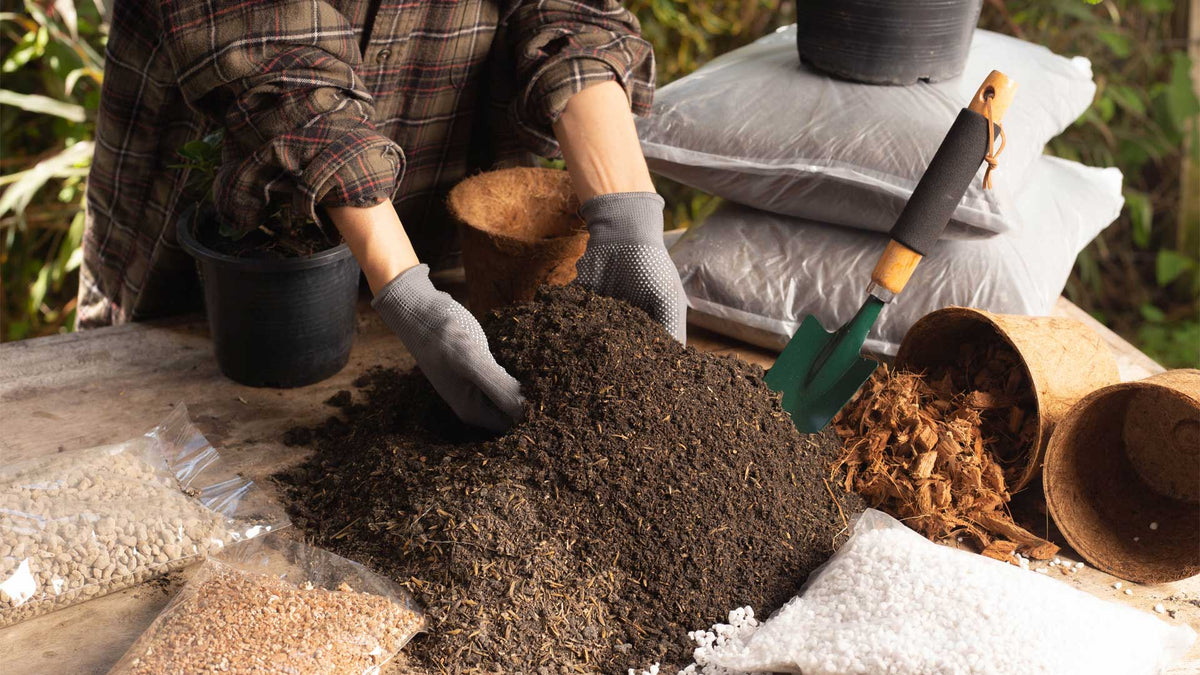
Start with where the roots will grow. A potting mix holds moisture and keeps air moving through the container. Garden soil has a mineral component and can pack down in a pot. Black earth varies in texture and fertility, so check what the bag is meant for.
What to look for on the bag
Look for the intended use, ingredients, and whether fertilizer has already been added. Peat, coconut coir and compost help hold moisture. Perlite and coarse bark help keep the mix open. If the label lists pH, check it against the needs of your plants.

Seed starting and cuttings
Use a fresh, fine seed‑starting mix for small cells. Perlite or vermiculite can help keep the texture light. Moisten the mix before sowing and keep it evenly damp. For cuttings, check the plant’s needs: some root better in a coarser mix. Move seedlings into a suitable growing mix once true leaves develop and the seedlings are large enough to handle.

Planters, raised beds and in‑ground gardens

Vegetables in pots
Use container mix in a pot with drainage holes. For tomatoes and peppers, choose a mix made for container vegetables and check whether it already contains fertilizer.
Raised beds and in‑ground gardens
Choose a raised‑bed mix for a deep bed open to the ground. Treat shallow balcony boxes like containers. For an in‑ground vegetable patch, start with your existing soil and add mature compost as needed. Keep the original soil as the main backfill around trees and shrubs.
Bare spots in lawns
Use lawn soil to repair bare patches, level small depressions or prepare an area for seed or sod. On established grass, spread it thinly so the blades still get light.
Trees, shrubs and perennials in the ground
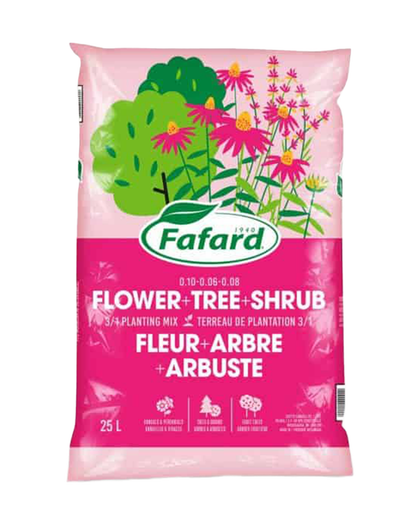
Fafard 3‑in‑1 planting soil is made to amend the soil in flower beds and during in‑ground planting. For perennials, mix it into the existing soil according to the bag directions. For trees and shrubs, use the original soil as the main backfill and keep the root flare at the finished soil level.
View Fafard 3‑in‑1 planting soilBalcony planters and flower pots
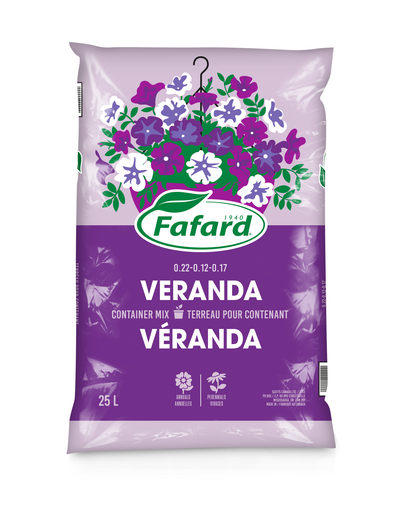
Fafard VÉRANDA container mix is designed for annuals and perennials in outdoor pots, balcony planters and hanging baskets. Coconut coir helps hold moisture, and the mix already contains slow‑release fertilizer. Use a container with drainage holes and check the bag before adding more fertilizer.
View Fafard VÉRANDA container mixWhen to choose a specialty mix
Cacti and succulents
Choose a fast‑draining blend with coarse mineral particles so the root zone can dry between waterings.
Acid‑loving plants
Blueberries, azaleas and rhododendrons need an appropriately acidic growing medium. Lower pH can encourage blue blooms in some hydrangeas, depending on the variety and the availability of aluminium.
Orchids
For common epiphytic orchids, use an airy bark‑ or sphagnum‑based mix. Repot when it starts to break down, often after one to two years. Remove dead roots with clean tools and, if practical, wait until flowering has finished.
Coconut coir
Coir holds moisture while leaving room for air. It can be part of mixes for seedlings, tropical plants or container vegetables. Check whether the blend includes fertilizer.
Houseplants
An indoor potting mix suits most foliage plants. If roots have filled the pot, move the plant into a slightly larger container with drainage holes.
When you can reuse potting mix
If the mix still drains well
Remove old roots and loosen the mix. Blend in fresh mix to top up outdoor planters or use a small amount to improve a garden bed. Add mature compost or fertilizer only if needed.
If it stays wet or plants were sick
Replace mix that has lost its structure or was used by plants with root disease or pests. Start indoor seeds and houseplants in fresh mix to reduce the risk of bringing pests or disease inside.
Frequently asked questions
Can I use garden soil in a pot?
Use a mix made for containers. Garden soil and topsoil can compact in a pot, especially after repeated watering, and leave too little air for the roots.
What mix should I use for indoor seed starting?
Choose a fresh seed‑starting mix with a fine texture. Moisten it before filling your trays and keep it evenly damp during germination.
What soil should I use to fill a raised bed?
Look for a blend labelled for raised beds. A shallow planter on a balcony behaves more like a large pot, so use a mix made for containers.
Can I use potting mix in the ground?
A little clean leftover mix can go into an established bed. For a new bed, keep the existing soil as your base and amend it with mature compost if needed.
Can I reuse last year’s potting mix?
Yes, for outdoor plantings if the previous plants were healthy and the mix is still crumbly and drains well. Remove old roots and blend with fresh mix if you need more volume.
Is compost enough to fill a planter?
Use a container mix as the base. Mature compost can be one ingredient, but on its own its texture and nutrient content can vary too much for a planter.
















 Outils
 Compostage et écologie



