


What’s in potting mix
A good potting mix holds moisture for roots while leaving room for air. If it stays soggy or packs down, roots can struggle.
What holds water
Peat, coconut coir and vermiculite hold moisture. Mature compost and worm castings add organic matter and varying amounts of nutrients.
What keeps air around the roots
Perlite, pumice and coarse bark help keep air spaces open. Horticultural charcoal is optional in some chunky mixes. Check the label for added fertilizer, a wetting agent or a mycorrhizal inoculant.

Which potting mix suits your plant?
Tropical and flowering plants
Choose a mix that holds some moisture and stays airy. For patio pots, pick a blend made for outdoor containers and check moisture more often in hot, windy weather.
Cacti and succulents
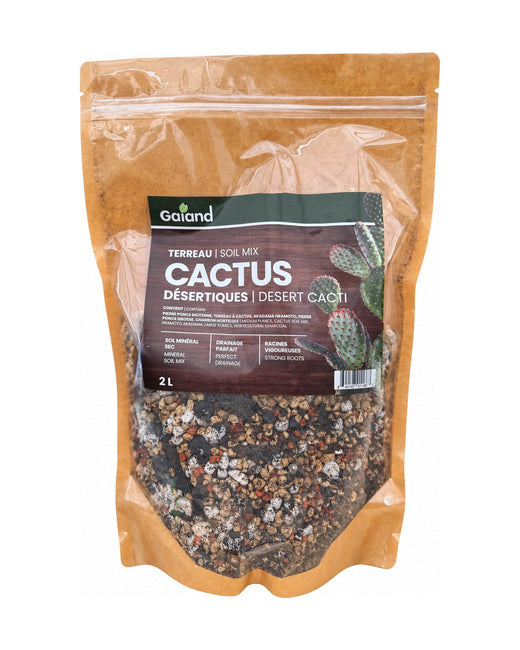
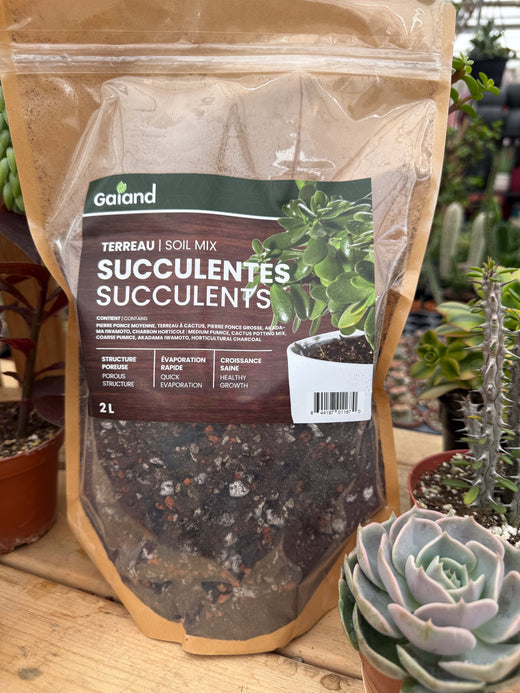
Use a fast‑draining mix with perlite, pumice or coarse horticultural sand. Fine sand can pack the mix and reduce air around the roots.
Carnivorous plants
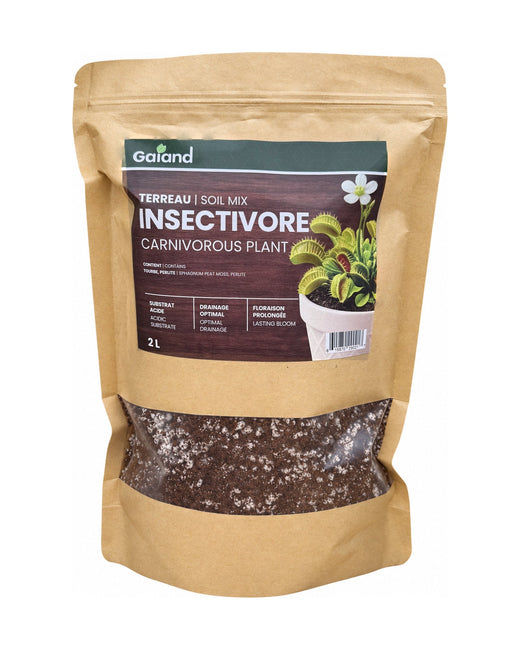
Use an unfertilized mix suited to the species. Sphagnum peat and perlite or washed silica sand work for some bog species. Check your plant’s requirements.
Seed‑starting mix
Start seeds in a fine, light, fresh mix. Its even texture helps small seeds make contact with the mix while leaving air around young roots.

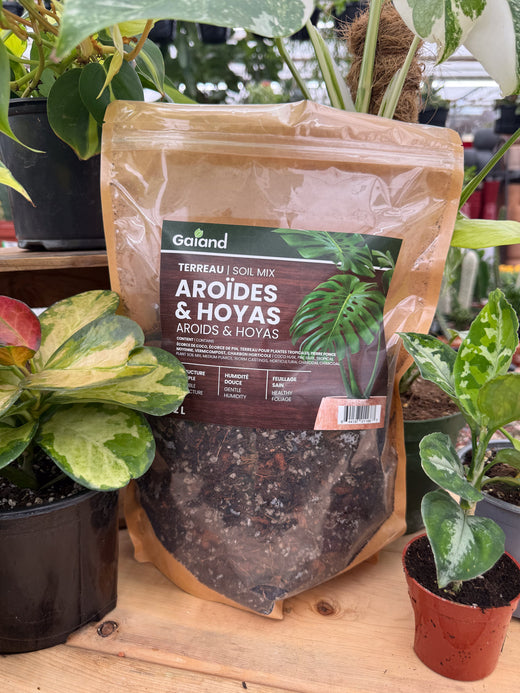
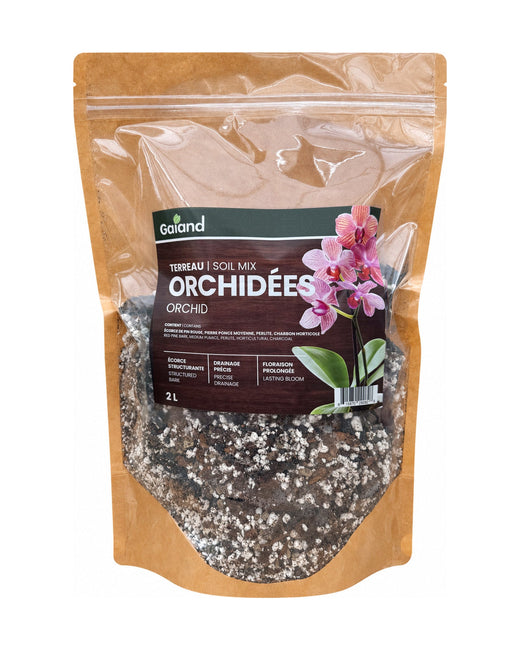
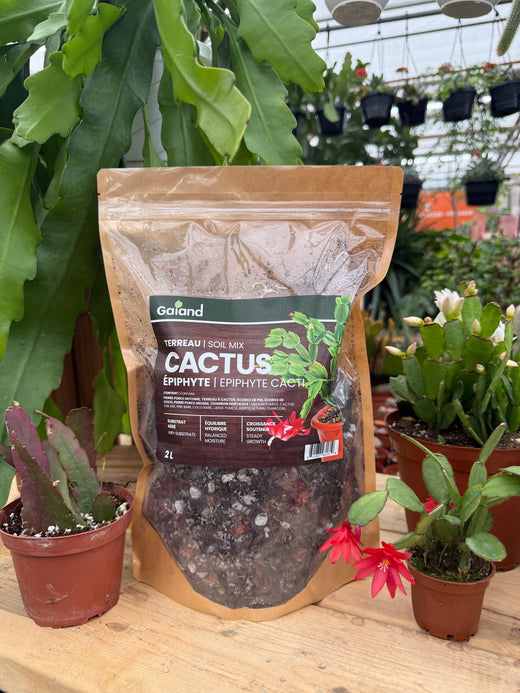
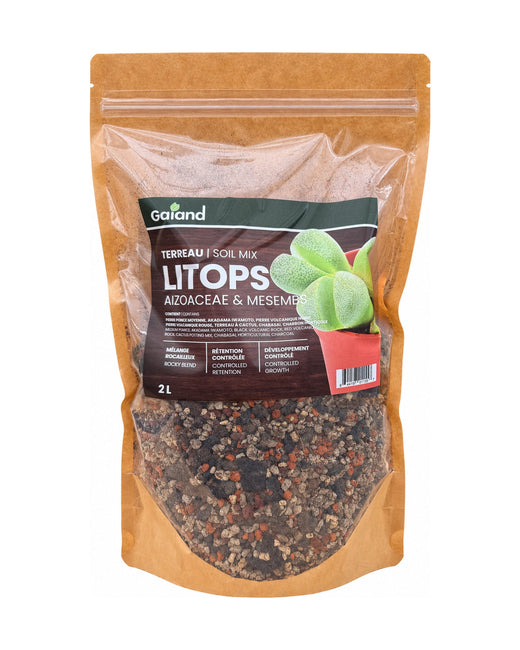
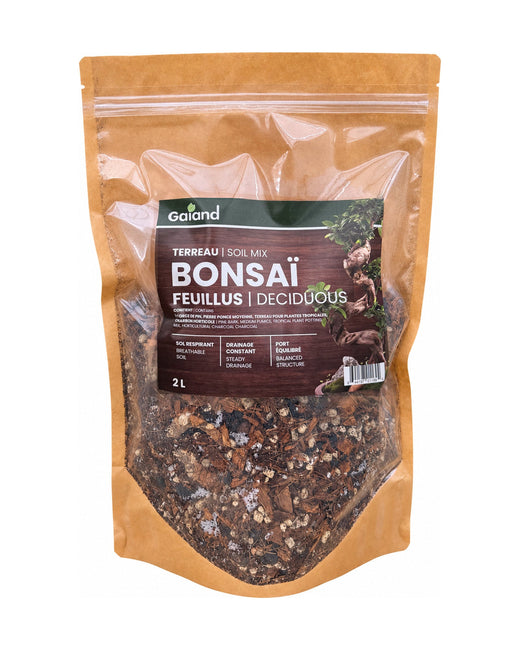
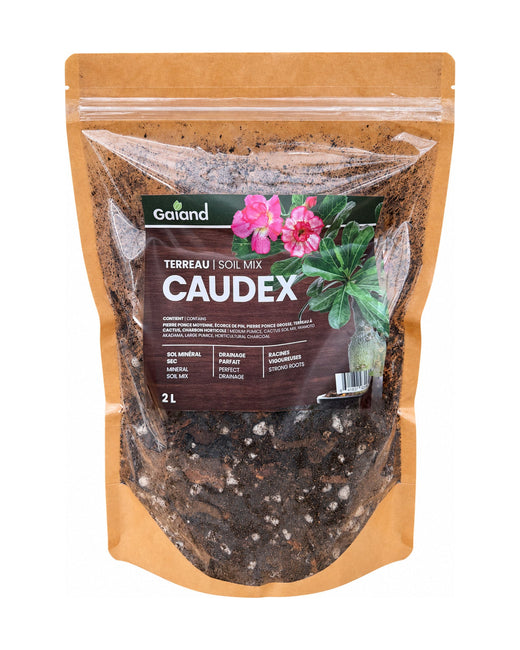
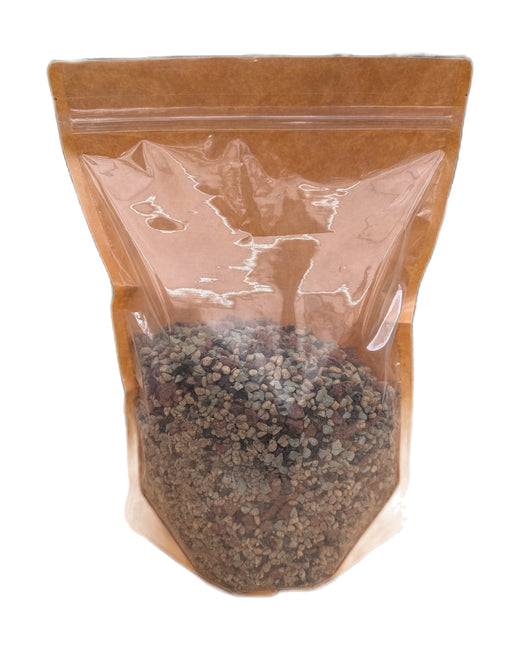
Gaïand potting mixes by plant type
Choose a mix formulated for your plant. A desert cactus and a tropical cactus can need different growing conditions.

Drainage and repotting

Check the root ball
Look for tightly circling roots or a root ball that dries unusually fast. If the plant needs more room, choose a pot one size up with drainage holes.
Keep the original planting depth
Centre the plant and fill around the root ball. Settle the mix gently and leave space under the rim for watering.
Let excess water drain
Water according to the plant’s needs. Let the pot drain after watering and empty the saucer or decorative outer pot.
pH and fertilizer
Match the mix to the plant
pH affects nutrient availability. Blueberries and azaleas often prefer an acidic medium, around 4.5 to 5.5 depending on the plant. For common houseplants or annuals, choose a mix formulated for that use.
Read the bag before feeding
If your mix already contains fertilizer, follow the timing on the bag. If the leaves yellow, check moisture, drainage and light before adding fertilizer.
Frequently asked questions
What is the best potting mix for indoor plants?
Use a light indoor potting mix for most foliage houseplants. Choose a specialty mix for plants with specific needs, including cacti and carnivorous plants.
Can I use garden soil in pots?
Garden soil can compact in a pot. Potting mix is formulated to keep spaces open for air and water around the roots.
When does a houseplant need repotting?
Check for tightly circling roots, roots lifting the plant from the pot or a root ball that dries much faster than before. If there is still room and the plant is doing well, refreshing the top layer may be enough.
Does gravel at the bottom improve drainage?
Use a pot with holes and a mix that drains throughout the container. A gravel layer takes up space and can bring the wettest part of the mix closer to the roots.
Can I reuse old potting mix?
Start with fresh mix for seedlings and plants with sensitive roots. Avoid reusing mix from a pot with pests or disease, or mix that has compacted and stays soggy.
Should I fertilize right after repotting?
If the bag lists added fertilizer, follow its timing. Otherwise, adjust to the needs of your plant and its growth.
















 Outils
 Compostage et écologie



