

Which vegetables grow well together?
Companion planting means growing crops together for part of the season. Start with a practical reason for pairing them. Early lettuce clears space for later crops. Trellised cucumbers take up less ground. A flower border gives visiting insects another place to feed.
Match growing conditions
Check sun, drainage and watering needs. Crops that prefer different moisture levels are often easier to manage in neighbouring pots.
Leave room for mature plants
Plan for stakes and supports before sowing. Leave an access path for watering and picking. Harvest fast crops on schedule if summer crops begin to shade them.
Vegetable companion planting chart
Each pairing serves a practical purpose. Choose according to the space you have and when you want to harvest.
| Pairing | Why it works | What to plan for |
|---|---|---|
| Tomatoes and lettuce | Harvest lettuce before tomato vines fill the bed. | Sow lettuce along the edge and leave room from the start for full-grown tomatoes and their stakes. |
| Carrots and radishes | Stagger two harvests in the same part of the garden. | Use separate rows so you can pull radishes without disturbing young carrots. |
| Tomatoes and basil | Keep two warmth-loving crops handy for the same meals. | Keep basil on the sunny side and leave room for air to move around the tomatoes. |
| Cucumbers and radishes | Pick a fast crop before cucumber vines cover the trellis. | Put up the trellis early and harvest the radishes before cucumber foliage shades them. |
| Squash and border flowers | Give flower-visiting insects several sources of nectar and pollen. | Keep the border clear of spreading vines and let bees reach the squash blossoms. |
| Peas and spinach | Make use of cool spring weather. | Train peas up a net and sow spinach on the sunny side. Harvest it before hot weather. |

A simple plan for a small raised bed
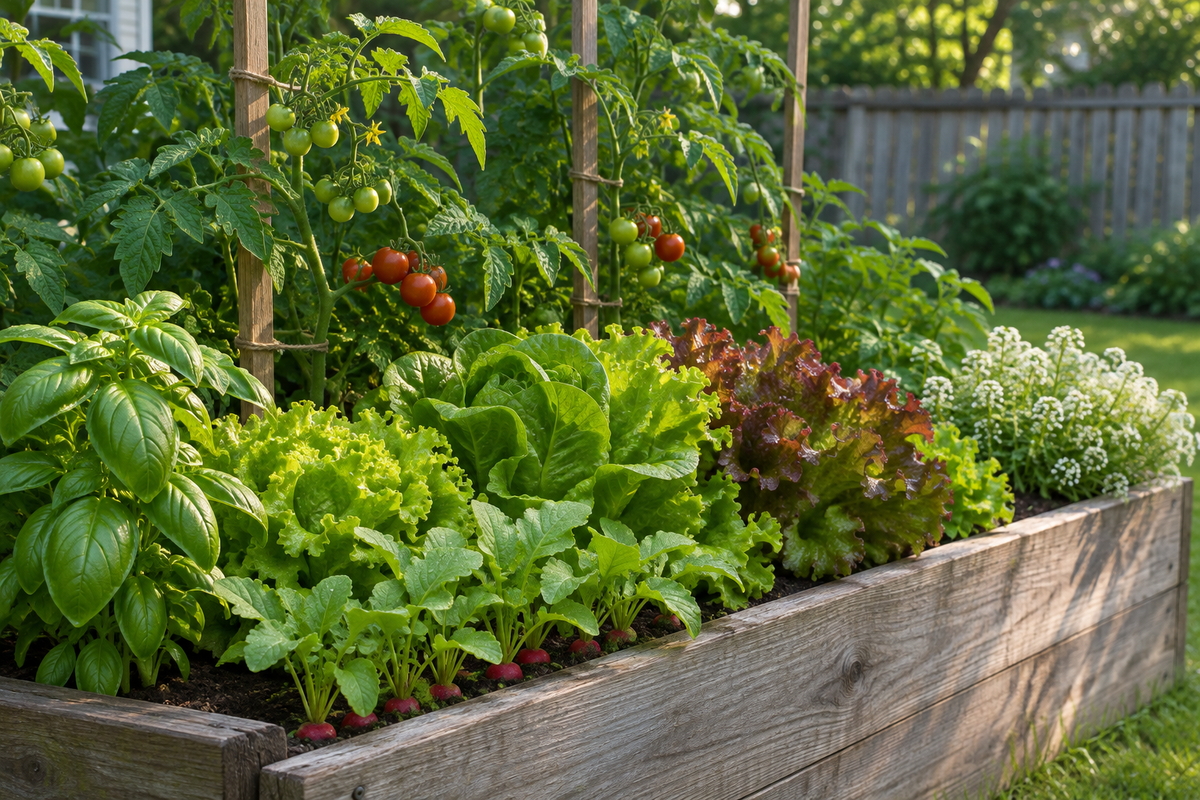
In a bed you can reach from both sides, choose one main summer crop, such as tomatoes or cucumbers. Allow for its mature spread and put supports where they will cast the least shade on the border. In a narrow bed, use one row of tall crops.
- In spring, sow a short border of radishes or lettuce once local conditions and the seed packet allow.
- After frost risk has passed, transplant tomatoes or sow cucumbers once the soil is warm. Set up supports while plants are small.
- Harvest the border as it matures. If the spot is still sunny in late summer, consider another sowing of radishes or arugula, allowing time before the first frost.
Which flowers belong in the vegetable garden?
A flower border adds nectar and pollen without taking over the vegetable bed. Try sweet alyssum along a low edge or let some dill flower where its height will fit. Choose plants that bloom at different times and keep the flowers accessible.

Identify damage before treating
Flowers will not reliably eliminate garden pests. Effects reported for some marigolds depend on the growing conditions and the insect involved. If leaves look chewed or sticky, check the undersides and identify the cause before deciding what to do.
Common companion planting mistakes
Leaving the first crop in too long
Lettuce and radishes make good use of the edge while summer crops are small. Pick them on time to keep access open and leaves from crowding.
Mixing crops with different needs
On a patio, keep tomatoes and basil in separate containers side by side. Move the basil if it gets shaded and water each pot according to its own moisture.
Overlooking crop rotation
Companion planting arranges crops within one season. Crop rotation moves plant families between beds over successive years. Note where you grow tomatoes, cucumbers and squash, and move families when space allows.
Underestimating the space for the Three Sisters
Corn, climbing beans and squash make up a traditional Indigenous planting system that needs space. Choose cultivars suited to one another and let the corn establish before the beans begin climbing.
Frequently asked questions
Does basil make tomatoes taste better?
Grow them together because they like warmth and go well in the kitchen. For flavourful tomatoes, start with a cultivar suited to your garden and harvest ripe fruit.
Can I plant lettuce and tomatoes on the same day?
Yes, once conditions suit tomatoes. In a short season you can also give lettuce a head start, then pick it before the tomatoes spread.
Which flowers attract beneficial insects?
Sweet alyssum and flowering dill can feed flower-visiting insects. Choose flowers that suit your space and stagger bloom times.
Which vegetable pairings should I avoid?
First rule out pairings that shade each other too heavily, block the path or need conflicting watering schedules. Use mature size and harvest timing to decide what fits your own bed.
Can I companion plant in containers?
Yes. Neighbouring pots let you group crops and still adjust water and light for each one. Use containers with drainage and enough room for the roots.
When should I start companion crops in Canada?
Work from your local frost dates and soil temperature. Lettuce and radishes can generally go in ahead of tomatoes, basil and cucumbers. Check your local planting calendar and the seed packet.
















 Outils
 Compostage et écologie



