

The quick answer
Identify the cause first. Remove truly dead turf, lightly loosen the soil, add a thin layer of lawn soil if needed, spread a suitable seed mix and keep the surface moist until germination. Follow local watering rules.
Start with the cause
Brown patches can result from drought, salt, traffic, shade, poor drainage, disease or insects. A dry, dormant lawn is not necessarily dead: check soil moisture, roots and recovery before removing it.
If turf lifts easily or animals dig, inspect several areas for larvae rather than assuming an infestation. Address the cause or adapt the site’s use. Our lawn problem guide compares clues.
When should a lawn be repaired in Quebec?
Late summer and early fall often bring cooler days and soil favourable for seed. Allow enough time for seedlings to establish before sustained freeze-up; timing varies by region and mix.
Spring can also work once soil warms and is dry enough to cultivate. Avoid saturated soil, extreme heat and periods when necessary watering is prohibited.
Prepare the repair area
Remove debris and truly dead turf while retaining living grass. Lightly loosen the surface to make a fine seedbed without deeply turning the soil; do not work saturated ground.
Level small hollows and add a thin layer of lawn soil or screened mature compost if useful. Address drainage, compaction and shade where possible. A soil test can guide pH and fertility corrections; do not add lime indiscriminately.

Choose a suitable seed mix
Select for sunlight, soil, moisture and traffic. Sun, shade and low-maintenance mixtures suit different conditions. In persistent deep shade, consider a suitable groundcover or another surface instead.
Check species, date and application rate on the package. A diverse mix can respond to varying conditions, but seed alone will not solve drainage or use problems.
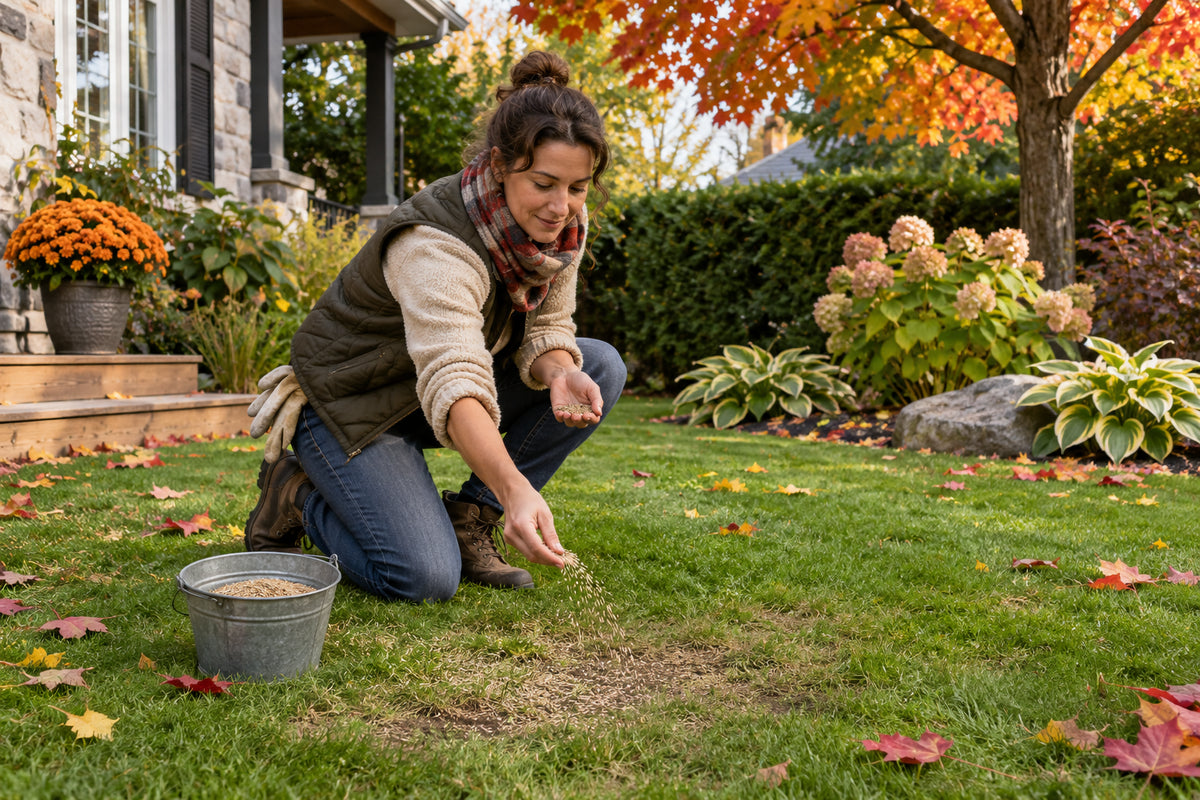
Reseed bare patches
- Prepare a fine, lightly firmed surface.
- Spread seed evenly at the package rate without piling it.
- Rake very lightly for seed-to-soil contact; do not bury deeply.
- Firm gently with a board or the back of a rake.
- Water gently and keep foot traffic off.
Measure the patch before sowing. If the label gives a rate per 100 m², divide that rate by 100 and multiply by your patch area in square metres. Use the label rate for bare soil or overseeding, as appropriate. For thin but living turf, mow before overseeding and ensure seed reaches the soil between blades. A thick layer of soil over existing grass can smother it.

Water new seed
Until germination, keep the surface evenly moist without puddling or washing seed away. Short watering sessions may be needed depending on weather; reduce them during rain and respect municipal restrictions or permit requirements.
After emergence, gradually water less often and more deeply as roots develop. Germination time varies with species, temperature, planting depth and moisture.

Repair with sod
Sod provides an immediately green surface but still needs rooting. Prepare and level the soil, lay fresh sod promptly with tight non-overlapping seams, and water according to conditions and local rules.
Keep good soil contact and adequate moisture without saturation. Once sod resists a gentle tug, gradually reduce watering and traffic restrictions. Slopes, large areas or drainage problems may warrant professional help.
Care after germination
Keep off young seedlings. Mow once they are tall enough to cut without pulling them out, using a sharp blade and removing no more than one-third at a time. Established turf is generally kept around 6–8 cm depending on season and conditions.
Fertilize only according to soil needs, product directions and local rules. A lawn can tolerate some spontaneous plants and variation. Monitor establishment and reseed if needed during a suitable season.
Frequently asked questions
How do I repair brown lawn patches?
First determine whether grass is dead or dormant and identify the cause. Lightly prepare soil, seed a suitable mix and keep the surface moist until germination.
When should I seed a lawn in Quebec?
Late summer and early fall are often favourable; spring can work once soil warms. Adjust to your region and allow time before freeze-up.
Should I cover grass seed with soil?
Good seed-to-soil contact matters. A very thin layer may help depending on the product, but do not bury seed deeply; follow the package.
How much should I water after seeding?
Keep the surface moist without runoff until emergence, then gradually space watering as roots establish. Follow municipal rules.
Must I replace the whole lawn?
No. Localized damage can often be repaired by overseeding or sod after the cause is addressed; widespread decline calls for a fuller assessment.
Lasting repair starts with a good diagnosis
Choose a method suited to the cause, site and season. Our team can help choose seed and repair materials.
















 Outils
 Compostage et écologie



