Organic 'Genovese' Basil

Sweet basil

Product code : JAREC-0013

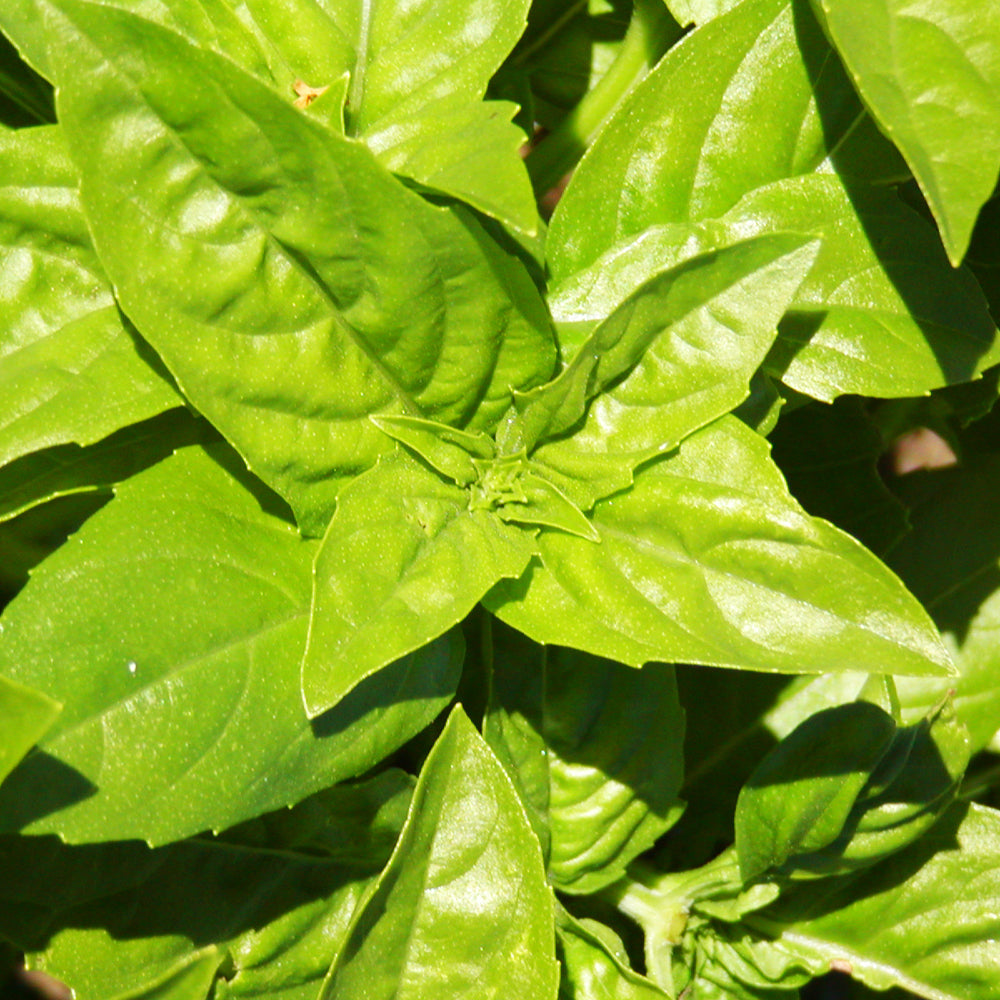
Organic 'Genovese' basil is one of the stars of the herb garden, as much for its captivating fragrance as for its natural elegance. With its large, glossy green leaves, it quickly forms a generous, bushy clump that almost spontaneously invites harvesting. Grown as an annual in our climates, it thrives in heat, sun, and well-drained soil, where it fully expresses its vigor and aromatic richness. Whether in the ground or in a pot, it is as ornamental as it is useful, easily finding its place near the kitchen or in the heart of edible flowerbeds. When allowed to flower, it attracts bees and other pollinators, adding significant ecological value to its already precious presence.
4 49 $
Pay in 4 interest-free payments with Sezzle
Detailed plant guide
Québec product
Secure payment
Share
Quantity
Approximately 400 seeds
Exposure
Sun
Life cycle
Annual

Discover the plant

Common name'Genovese' Basil
FamilyLamiaceae
GenusBasil
Speciesbasil
CultivarGenovese
TypeHerb
Botanical nameSweet basil
Reproducible seedsYes

'Genovese' Basil (Ocimum basilicum). Organic 'Genovese' basil is one of the stars of the herb garden, as much for its enchanting aroma as for its natural elegance in the garden. With its large, glossy green leaves, it quickly forms a generous, bushy clump that almost spontaneously invites harvesting. Grown as an annual in our climates, it loves warmth, sun, and well-drained soil, where it fully displays its vigor and aromatic richness. Both in the ground and in pots, it is as decorative as it is useful, easily finding its place near the kitchen or in the heart of gourmet flowerbeds.

Recommended sowing period: March to May. The depth to respect is 0.5 cm (0.2 in). Emergence generally takes 7 to 14 days. For germination, maintain the potting soil at 20 to 25 °C (68 to 77 °F). Label herbs as soon as they are sown to distinguish between species whose first leaves resemble each other. Transplant young plants without crushing their collars and gradually give them more space under the light. Wait until the roots fill their root ball before planting out. A plant intended for regular harvesting benefits from establishment before a lot of foliage is removed.

Its flexible and abundant habit allows for repeated harvests throughout the growing season, especially if the tips are pinched regularly. An herb corner becomes more useful when placed near a path or the kitchen. Group species that share similar moisture needs, then leave space around the clumps. An identified border allows you to quickly find the desired aroma for a meal. Prevent more vigorous vegetables from covering young aromatic plants during their establishment. With its large, glossy green leaves, it quickly forms a generous, bushy clump that almost spontaneously invites harvesting.

Basilic Genovese. Grandes feuilles de basilic vert clair vues de près. Le cadrage permet de voir les formes, les couleurs et les détails du sujet représenté. Les contours se détachent du fond de l’image, avec des différences de teinte et de texture visibles sur les surfaces. Cette vue accompagne la présentation du produit dans la boutique.

Sowing guide

It all startswith a seed.

Sowing depth

0.5 cm (0.2 in)

Germination temperature

20 to 25 °C (68 to 77 °F)

Germination time

7 to 14 days

Sowing period

March to May

Propagation

Sowing

Growing method

Recommended sowing period: March to May. The depth to respect is 0.5 cm (0.2 in). Germination usually takes 7 to 14 days. For germination, maintain the soil at 20 to 25 °C (68 to 77 °F). Label the herbs immediately after sowing to distinguish species whose first leaves are similar. Transplant young plants without crushing their collars and gradually give them more space under the light. Wait until the roots fill their root ball before planting out. A plant intended for regular harvesting benefits from being established before a lot of foliage is removed. Harvest small stems or a few leaves at a time, leaving the plant enough vegetation to continue its growth. A clean cut is better than a leaf torn off with a piece of stem. Remove dry parts and observe the formation of flower buds according to the desired use. If you want to dry an aromatic harvest, spread it in a thin layer in an airy place away from direct sunlight. For leafy herbs, make several small pickings rather than one cut that removes all the vegetation.

Soil and care

The right care,at the right time.

Care level

Regular during establishment, then adapted to growing conditions

Watering

Regular

Soil type

Well drained

Fertilization

Fertilization supports growth and takes into account nutrients already present in the soil or potting mix. Use mature compost or a fertilizer suited to the crop, following the dosage instructions. Avoid using too many products, especially in a container where roots occupy a limited volume. Water as needed after application and observe the foliage development before re-fertilizing.

Moisture

Keep the compost moist during germination, without waterlogging; then adjust according to cultivation.

Seasonal care

With its large, glossy green leaves, it quickly forms a generous, bushy clump that almost spontaneously invites harvesting. Label herbs from sowing to distinguish between species whose first leaves look similar. Transplant young plants without crushing their collars and gradually give them more space under the light. Wait until the roots fill their pot before planting. A plant intended for regular harvesting benefits from being established before a lot of its foliage is removed. Harvest small stems or a few leaves at a time, leaving enough vegetation on the plant to continue its growth. A clean cut is better than a leaf torn off with a piece of stem. Remove dry parts and observe the formation of flower buds according to the desired use. If you want to dry an aromatic harvest, spread it in a thin layer in a ventilated place away from direct sunlight. For leafy herbs, make several small harvests rather than one cut that removes all the vegetation. Clean, healthy leaves are prepared just before the meal. If you also want to enjoy the flowers, keep a few stems intact. This way you can distinguish the area reserved for leaves from the one that accompanies visiting insects. In the ground as in a pot, it is as decorative as it is useful, easily finding its place near the kitchen or in the heart of edible flowerbeds. Recommended sowing period: March to May.

Container growing

A garden,within reach.

Suitable for containers

Yes

Recommended pot size

Stable and perforated container, wide enough for the plant to spread out and deep enough for the roots
Choose this exposure: full sun. Reserve this spacing around the plant: 30 to 40 cm (12 to 16 in.). An herb in a container is easy to move to adjust its exposure. The pot must allow the roots to breathe and drain excess water. Repeated harvests are cleaner when the foliage freely extends beyond the rim. Occasionally rotate the container if the light comes from only one side. Adapt watering to the species rather than treating all herbs in a planter the same way. Both in the ground and in a pot, it is as decorative as it is useful, easily finding its place near the kitchen or in the heart of edible flowerbeds. Organic 'Genovese' basil is one of the big stars of the aromatic vegetable garden, as much for its captivating fragrance as for its natural elegance in the garden. With its large, shiny green leaves, it quickly forms a generous, bushy clump that almost spontaneously invites harvesting. Grown as an annual in our climates, it loves warmth, sun, and well-drained soil, where it fully displays its vigor and aromatic richness. When allowed to flower, it attracts bees and other pollinators, adding significant ecological value to its already precious presence.
Sachet de semences Basilic Genovese. Emballage blanc photographié de face sur un fond de bois brun. Une image du végétal occupe la partie centrale, sous le nom imprimé. De petits pictogrammes et un code-barres apparaissent au bas du sachet. La marque Écoumène figure dans la partie supérieure de cette présentation.

Bloom and dimensions

Its place,in your garden.

Mature height

60 cm (24 in)

Width / spread

30 to 40 cm (12 to 16 in.)

Foliage type

Seasonal foliage

Growth habit

Bushy, Compact

Bloom period

July to September

Fruiting

With its large, glossy green leaves, it quickly forms a generous, bushy clump that almost spontaneously invites harvesting. Whether in the ground or in a pot, it is as ornamental as it is useful, easily finding its place near the kitchen or in the heart of edible flowerbeds. Its flexible and abundant habit allows for repeated harvests throughout the growing season, especially if the tips are regularly pinched back.

Harvest

70 days after sowing
Basilic Genovese. Grandes feuilles de basilic vert clair vues de près. Le cadrage permet de voir les formes, les couleurs et les détails du sujet représenté. Les contours se détachent du fond de l’image, avec des différences de teinte et de texture visibles sur les surfaces. Cette vue accompagne la présentation du produit dans la boutique.

Garden associations

In goodcompany.

Companion plants

In a diversified planting area, you can dedicate neighboring sections to these plants: tomato, pepper, eggplant. The purpose of grouping them here is to organize space and harvests. Respect each plant’s height, light, and water needs, without overcrowding the foliage. Keep an aisle for watering and picking, then remove finished crops to free up space. This organization simplifies maintenance without promising pest protection. A herb garden becomes more useful when placed near an aisle or the kitchen.

Recipe idea

From the gardento your plate.

Edible parts

Leaves
Kitchen idea with 'Genovese' Basil: herb sauce for four servings. Finely chop two tablespoons of clean, healthy leaves, then mix with 150 ml of plain yogurt, 10 ml of lemon juice, and 5 ml of olive oil. Salt lightly and taste. For a strong-flavored herb, start with one teaspoon and add gradually. Serve with cooked potatoes, crudités, or vegetable patties. Add the herbs at the last moment to preserve their freshness. Prepare ingredients with clean utensils and adjust cutting to the size of your harvest. This recipe highlights freshly picked parts: remove damaged pieces before preparation. If you double the quantities, ensure enough space in the dish for even mixing or cooking. Quickly place leftovers in the refrigerator in a closed container and consume within two days. For a meal for two people, simply divide all quantities by two.

Frequently asked questions

Your questions,answered.

How to successfully sow 'Genovese' Basil?
Recommended sowing period: March to May. The depth to respect is 0.5 cm (0.2 in). Germination usually takes 7 to 14 days. For germination, keep the potting soil at 20 to 25 °C (68 to 77 °F). Label the herbs as soon as they are sown to distinguish species whose first leaves look similar. Transplant young seedlings without crushing their collar and gradually give them more space under the light. Wait until the roots fill their root ball before planting. A plant intended for regular harvesting benefits from being established before a lot of its foliage is taken.
Can you grow 'Genovese' basil in a pot?
Choose this exposure: full sun. Reserve this spread around the plant: 30 to 40 cm (12 to 16 in). An herb in a container remains easy to move to adjust its exposure. The pot should allow the roots to breathe and drain excess water. Repeated harvests are cleaner when the foliage freely extends beyond the rim. Occasionally rotate the container if light comes from only one side. Adapt watering to the species rather than treating all herbs in a planter the same way. Organic 'Genovese' basil is one of the great stars of the aromatic garden, as much for its enchanting fragrance as for its natural elegance in the garden.
When to harvest 'Genovese' Basil?
With its large, shiny green leaves, it quickly forms a generous, bushy clump that almost spontaneously invites harvesting. Whether in the ground or in a pot, it is as decorative as it is useful, easily finding its place near the kitchen or in the heart of edible garden beds. Its flexible and abundant habit allows for repeated harvests throughout the growing season, especially if the tips are regularly pinched back. Growing 'Genovese' basil means bringing a generous, fragrant classic into the garden that is deeply linked to the pleasure of cooking with fresh herbs. For leafy herbs, make several small pickings rather than a cut that removes all the foliage.
What makes 'Genovese' Basil stand out in the garden?
Organic 'Genovese' basil is one of the stars of the herb garden, as much for its captivating fragrance as for its natural elegance. With its large, glossy green leaves, it quickly forms a generous, bushy clump that practically invites harvesting. Grown as an annual in our climates, it loves warmth, sun, and well-drained soil, where it fully expresses its vigor and aromatic richness. Whether in the ground or in pots, it is as decorative as it is useful, easily finding its place near the kitchen or in the heart of edible flowerbeds. When allowed to flower, it attracts bees and other pollinators, adding significant ecological value to its already precious presence.
How to organize a 'Genovese' Basil planting?
An herb garden becomes more useful when placed near a pathway or the kitchen. Group species that have similar moisture needs, then leave space around the clumps. A labelled border helps you quickly find the aroma you’re looking for to use in a meal. Prevent more vigorous vegetables from overshadowing young aromatic plants as they establish themselves. Harvest small sprigs or a few leaves at a time, leaving enough foliage on the plant for it to continue growing. A clean cut is better than a leaf torn off with a piece of stem. Remove dry parts and observe the formation of flower buds depending on the desired use.