Sale
Sold out

Herb
Lamiaceae
Organic seeds
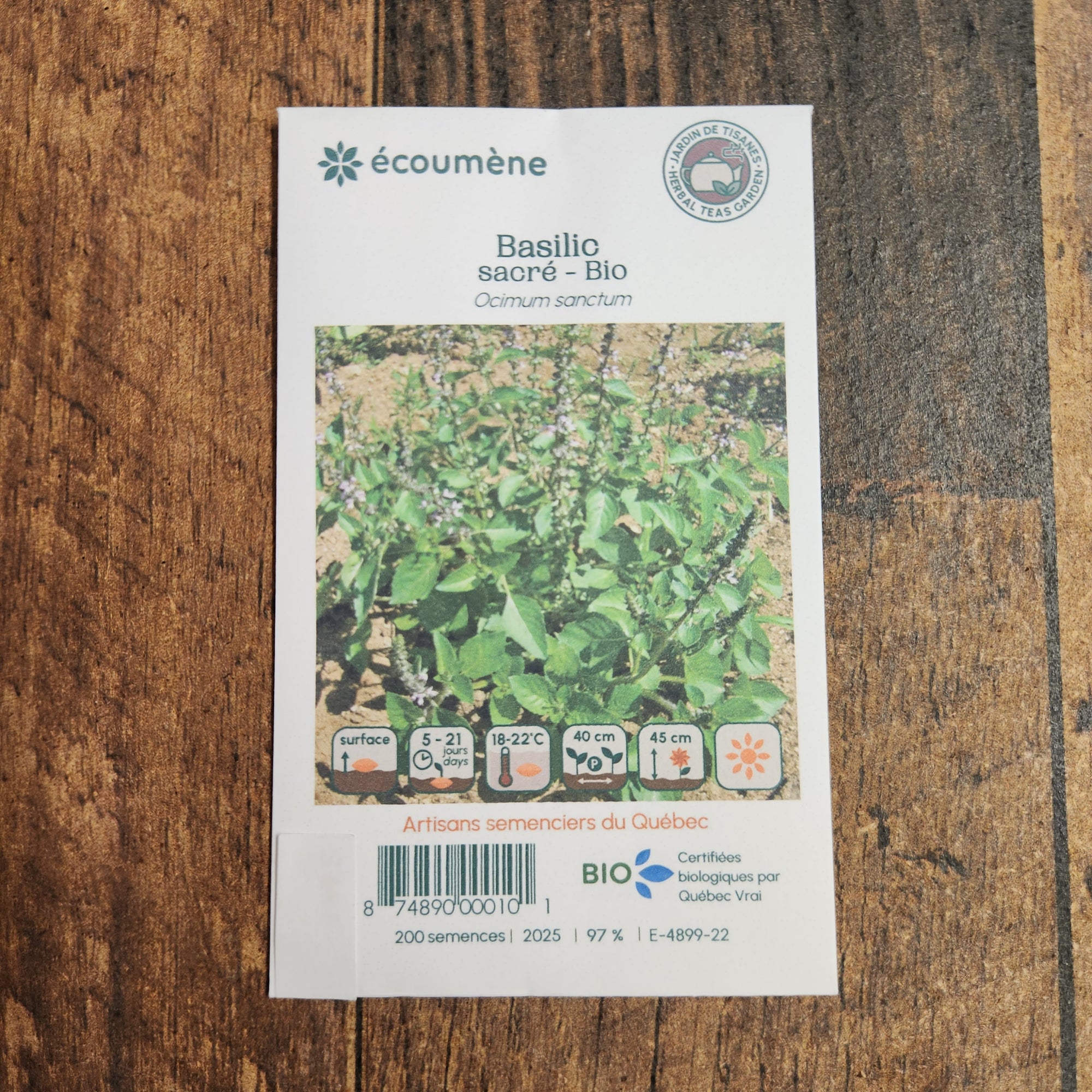
Organic Holy Basil
Ocimum tenuiflorum
Product code : JAREC-0016
In the vegetable garden as on the patio, it forms an elegant clump with fragrant foliage, accented with menthol and herbaceous notes that perfume the air at the slightest touch. Its purplish-pink flowers generously attract bees and other pollinating insects, adding a lovely lively animation around summer crops. Easy to grow in light, well-drained soil, it loves warmth, light, and consistent, moderate watering. It is sown with pleasure in spring, already imagining the harvest of leaves destined for infusions, beneficial herbal teas, or delicate culinary uses. In an ecological garden, it also plays a valuable role in supporting biodiversity while admirably accompanying sun-loving vegetables.
- Quantity
- Approximately 200 seeds
- Exposure
- Sun
- Life cycle
- Annual
Discover the plant
Common nameHoly basil
FamilyLamiaceae
GenusBasil
Speciestenuiflorum
TypeHerb
Botanical nameOcimum tenuiflorum
Reproducible seedsYes
Holy Basil (Ocimum tenuiflorum). In the vegetable garden or on the patio, it forms an elegant clump with fragrant foliage, enhanced by menthol and herbaceous notes that perfume the air at the slightest touch. Its purplish-pink flowers generously attract bees and other pollinating insects, adding a beautiful lively animation around summer crops. Easy to grow in light, well-drained soil, it loves warmth, light, and consistent watering without excess. It is a pleasure to sow in spring, already imagining the harvests of leaves destined for beneficial infusions, herbal teas, or delicate culinary uses.
Recommended sowing period: March to June. The depth to respect is 0.5 cm (0.2 in). Germination usually takes 7 to 14 days. For germination, keep the potting soil at 20 to 25 °C (68 to 77 °F). Label the herbs as soon as they are sown to distinguish species whose first leaves resemble each other. Transplant young plants without crushing their collar and gradually give them more space under the light. Wait until the roots occupy their root ball before planting. A plant intended for regular harvests benefits from being established before a lot of foliage is removed from it.
Holy basil (tulsi) bears aromatic leaves that you can pick in small quantities. Pinch above a pair of leaves to encourage branching and renew young shoots. An herb patch becomes more useful when placed near a pathway or the kitchen. Group species that share similar moisture needs, then leave space around the clumps. An identified border makes it easy to quickly find the desired aroma for a meal. Prevent more vigorous vegetables from covering young aromatic plants during their establishment. It is a pleasure to sow in spring, already imagining the harvests of leaves destined for beneficial infusions, herbal teas, or delicate culinary uses.

Sowing guide
It all startswith a seed.
Sowing depth
0.5 cm (0.2 in)
Germination temperature
20 to 25 °C (68 to 77 °F)
Germination time
7 to 14 days
Sowing period
March to June
Propagation
Sowing
Growing method
Recommended sowing period: March to June. The recommended depth is 0.5 cm (0.2 in). Germination usually takes 7 to 14 days. For germination, keep the soil temperature at 20 to 25 °C (68 to 77 °F). Label herbs as soon as you sow them to distinguish species whose first leaves look similar. Transplant young plants without crushing their collar and gradually give them more space under light. Wait until the roots have filled their root ball before planting them out. A plant intended for regular harvesting benefits from being established before a lot of foliage is removed. Harvest small stems or a few leaves at a time, leaving enough vegetation on the plant to continue its growth. A clean cut is better than a leaf torn off with a piece of stem. Remove dry parts and observe the formation of flower buds according to the desired use. If you want to dry an aromatic harvest, spread it in a thin layer in a well-ventilated place away from direct sunlight. For leafy herbs, make several small harvests rather than one cut that removes all the vegetation.
Soil and care
The right care,at the right time.
Care level
Regular during establishment, then adapted to growing conditions
Watering
Moderate
Soil type
Light and well-drained
Fertilization
Fertilization supports growth and takes into account the nutrients already present in the soil or potting mix. Use mature compost or a fertilizer suited to the crop, following the dosage instructions. Avoid using too many products, especially in a container where roots occupy a limited volume. Water as needed after application and observe foliage development before re-fertilizing.
Moisture
Moist soil during germination, with no standing water; then adjust to the crop
Seasonal care
Holy basil (tulsi) has aromatic leaves that you can pick in small quantities. Pinch above a pair of leaves to encourage branching and new growth. Label herbs as soon as you sow them to distinguish between species whose first leaves look similar. Transplant young plants without crushing their collar, and gradually give them more space under the light. Wait until the roots have filled their pot before planting out. A plant intended for regular harvesting benefits from being established before a lot of foliage is removed. Harvest small stems or a few leaves at a time, leaving enough vegetation on the plant to continue its growth. A clean cut is better than a leaf torn off with a piece of stem. Remove dry parts and observe the formation of flower buds depending on the desired use. If you want to dry an aromatic harvest, spread it in a thin layer in a well-ventilated place, away from direct sunlight. For leafy herbs, make several small pickings rather than a cut that removes all the vegetation. Clean, healthy leaves should be prepared just before the meal. If you also want to enjoy the flowers, keep a few stems intact. This will allow you to distinguish the area reserved for leaves from the one that accompanies visiting insects. We sow it with pleasure in spring, already imagining the harvests of leaves intended for infusions, beneficial herbal teas or delicate culinary uses.
Container growing
A garden,within reach.
Suitable for containers
Yes
Recommended pot size
Stable, perforated container, wide enough for the plant to spread out and deep enough for the roots
Choose this exposure: sun. Allow this spacing around the plant: 20 to 30 cm (8 to 12 in). A fine herb in a container remains easy to move to adjust its exposure. The pot must allow the roots to breathe and excess water to drain. Repeated harvests are cleaner when the foliage freely extends beyond the rim. Occasionally turn the container if the light comes from only one side. Adapt watering to the species rather than treating all herbs in a planter in the same way. In the vegetable garden as on the terrace, it forms an elegant clump with fragrant foliage, enhanced with mentholated and herbaceous notes that perfume the air at the slightest touch. Its purplish-pink flowers generously attract bees and other pollinating insects, adding beautiful lively animation around summer crops. Easy to grow in light, well-drained soil, it loves warmth, light, and consistent, moderate watering. We sow it with pleasure in spring, already imagining the harvests of leaves intended for infusions, beneficial herbal teas, or delicate culinary uses. In an ecological garden, it also plays a valuable role in supporting biodiversity while admirably accompanying sun-loving vegetables.
Bloom and dimensions
Its place,in your garden.
Mature height
30 cm (12 in)
Width / spread
20 to 30 cm (8 to 12 in)
Foliage type
Seasonal foliage
Growth habit
Compact
Bloom period
July to September
Fruiting
We gladly sow it in spring, already imagining the harvests of leaves destined for infusions, beneficial herbal teas, or delicate culinary uses. For leafy herbs, perform several small pickings rather than a cut that removes all the vegetation. Clean and healthy leaves should be prepared just before the meal. If you also want to enjoy the flowers, keep a few stems intact.
Harvest
60 to 90 days after sowing

Garden associations
In goodcompany.
Companion plants
In a diversified plantation, you can reserve neighboring sections for these plants: tomato, pepper, eggplant. Here, the association serves to organize space and harvests. Respect each plant's height, light, and water needs, without crowding the foliage. Maintain a pathway for watering and harvesting, then remove finished crops to free up space. This organization facilitates maintenance without promising protection against pests. A herb garden becomes more useful when placed near a pathway or the kitchen.
Recipe idea
From the gardento your plate.
Edible parts
Aromatic leaves
Holy Basil kitchen idea: aromatic infusion for two cups. Use a small teaspoon of dried leaves or edible flowers, depending on the plant, for 250 ml of hot water. Prepare two cups separately, let infuse for five to ten minutes, then strain. Taste before adding a little honey. For German chamomile, use the flower heads; for leafy aromatics, use healthy and clean leaves. This preparation is offered for its fragrance and taste, for an aromatic tasting experience. Prepare the ingredients with clean utensils and adapt the cut to the size of your harvest. This recipe highlights freshly picked parts: remove damaged pieces before preparation. If you double the quantities, ensure enough space in the dish for even mixing or cooking. Quickly place leftovers in the refrigerator in a closed container and consume within two days. For a meal for two people, simply divide all quantities by two.
Frequently asked questions
Your questions,answered.
How to successfully sow Holy Basil?
Recommended sowing period: March to June. The recommended depth is 0.5 cm (0.2 in). Germination usually takes 7 to 14 days. For germination, keep the soil at 20 to 25 °C (68 to 77 °F). Label herbs as soon as you sow them to distinguish between species whose first leaves look similar. Transplant young plants without crushing their collars and gradually give them more space under the light. Wait for the roots to fill their pot before planting out. A plant intended for regular harvesting benefits from being established before you start picking a lot of its foliage.
Can holy basil be grown in pots?
Choose this exposure: sun. Reserve this spread around the plant: 20 to 30 cm (8 to 12 in). A fine herb in a container remains easy to move to adjust its exposure. The pot must allow the roots to breathe and drain excess water. Repeated harvests are cleaner when the foliage freely extends beyond the rim. Occasionally turn the container if the light comes from only one side. Adapt watering to the species rather than treating all herbs in a planter in the same way. In the vegetable garden as well as on the patio, it forms an elegant clump with fragrant foliage, enhanced with menthol and herbaceous notes that perfume the air at the slightest touch.
When to harvest Holy Basil?
We love to plant it in the spring, already imagining the harvests of leaves destined for infusions, beneficial herbal teas, or delicate culinary uses. For leafy herbs, make several small pickings rather than a cut that removes all the vegetation. Clean, healthy leaves should be prepared just before the meal. If you also want to enjoy the flowers, leave a few stems intact. This way, you can distinguish the area reserved for leaves from the one that welcomes visiting insects. Harvest small stems or a few leaves at a time, leaving enough vegetation on the plant to continue its growth.
How to enjoy Holy Basil in the garden?
Holy basil (tulsi) produces aromatic leaves that you can harvest in small quantities. Pinch above a pair of leaves to encourage branching and new growth. Whether in the garden or on the patio, it forms an elegant clump with fragrant foliage, accented by menthol and herbaceous notes that perfume the air at the slightest brush. Its purplish-pink flowers generously attract bees and other pollinating insects, adding vibrant life around summer crops. Easy to grow in light, well-drained soil, it thrives in warmth, light, and consistent, moderate watering. It's a joy to sow in spring, already envisioning harvests of leaves for soothing infusions, beneficial herbal teas, or delicate culinary uses.
How to organize a Holy Basil planting?
An herb garden is more useful when located near a pathway or the kitchen. Group species that have similar moisture needs, then leave space around the clumps. A labeled border makes it easy to quickly find the aroma you're looking for for a meal. Prevent more vigorous vegetables from covering young aromatic plants as they establish. Harvest small stems or a few leaves at a time, leaving enough foliage on the plant to continue growing. A clean cut is better than a leaf torn off with a piece of stem. Remove dry parts and observe the formation of flower buds depending on the desired use.
For a great start to your seeds
The right extras.Right here.
Seed Starting Soil
Shop the collectionSeed starting supplies
Shop the collection