Sale
Sold out

Vegetable
Amaranthaceae
Organic seeds
Yellow Beetroot 'Touchstone Gold' (Beta vulgaris)
Product code : JAREC-0027
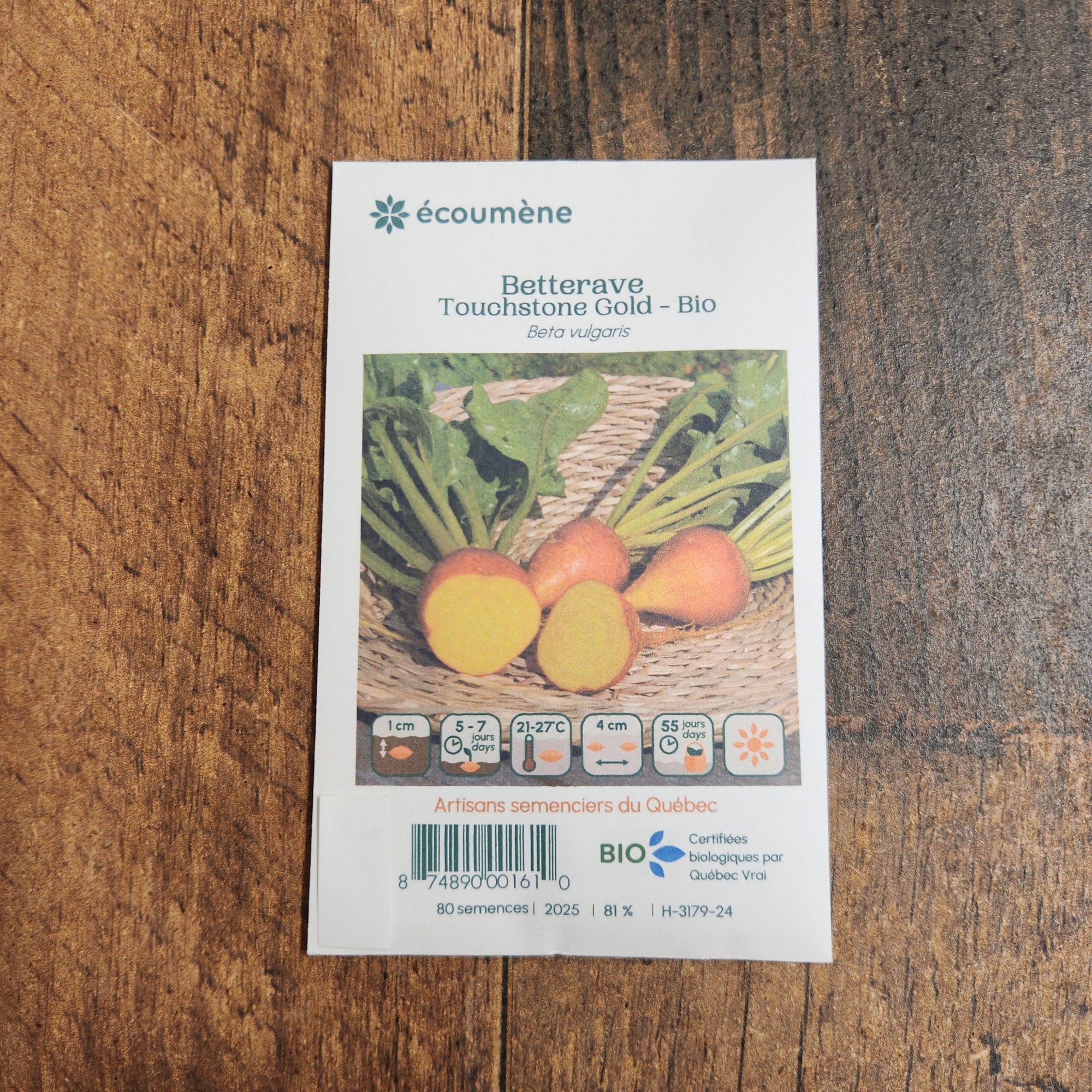
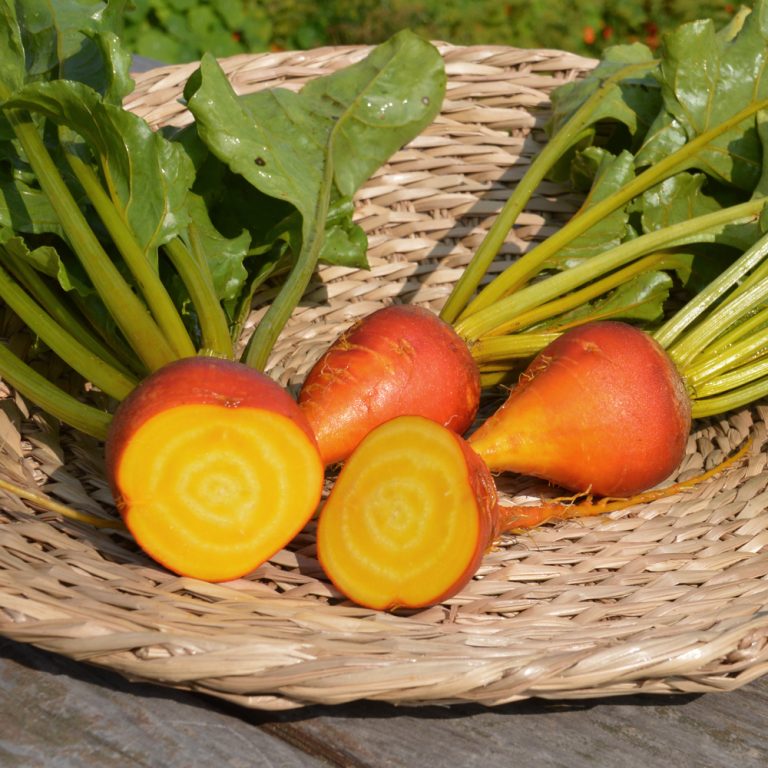
With its yellow-orange roots and uniform flesh, Beta vulgaris stands out with a delicate sweetness that appeals to root vegetable lovers and gardeners seeking new colors alike. In the kitchen, it offers a much-appreciated advantage: it doesn't stain, making it as practical as it is aesthetically pleasing for salads, roasted dishes, or steamed preparations. Easy to grow thanks to its excellent germination, it adapts well to sunny vegetable gardens where the soil remains loose and well-drained. Its sweet flavor allows it to be enjoyed raw to appreciate all its finesse, or cooked to reveal its tender texture and beautiful warm color.
- Quantity
- About 100 seeds
- Exposure
- Sun
- Life cycle
- Biennial
Discover the plant
Common nameBeetroot 'Touchstone Gold'
FamilyAmaranthaceae
GenusBeta
Speciescommon
CultivarTouchstone Gold
TypeVegetable
Botanical nameBeetroot
Reproducible seedsYes
'Touchstone Gold' Yellow Beet (Beta vulgaris). With its uniform orange-yellow roots, Beta vulgaris stands out for its delicate sweetness, appealing to root vegetable enthusiasts and gardeners seeking new colors alike. In the kitchen, it offers a highly appreciated advantage: it doesn't stain, making it as practical as it is aesthetically pleasing for salads, roasted dishes, or steamed preparations. Easy to grow thanks to its excellent germination, it adapts well to sunny vegetable gardens where the soil remains loose and well-drained.
Recommended sowing period: in spring, as soon as the soil is dry enough and workable; adjust subsequent sowings to the season and type of harvest. The depth to respect is 1 to 2 cm (0.4 to 0.8 in). Emergence generally takes 7 to 14 days. For germination, maintain the potting soil at 10 to 30 °C (50 to 86 °F). Small beet glomerules can produce several closely spaced seedlings. Monitor emergence then progressively thin so that each root has space. Loose and consistently moist soil promotes continuous growth.
Its vigorous foliage accompanies steady growth, while its well-formed roots promise homogeneous and attractive harvests. Beets can form a colorful vegetable garden border or occupy small rows between two pathways. Keep the planting visible to choose the right harvest size. Young lettuces are suitable in an adjacent section if their harvest precedes the full development of the beet foliage. Reserve the most regular rows for roots intended for grouped harvesting. With its uniform orange-yellow roots, Beta vulgaris stands out for its delicate sweetness, appealing to root vegetable enthusiasts and gardeners seeking new colors alike.

Sowing guide
It all startswith a seed.
Sowing depth
0.4 to 0.8 in (1 to 2 cm)
Germination temperature
10 to 30 °C (50 to 86 °F)
Germination time
7 to 14 days
Sowing period
May to July
Propagation
Sowing
Growing method
Recommended sowing period: in spring, as soon as the soil is drained and workable; adjust subsequent sowings to the season and type of harvest. The depth to respect is 1 to 2 cm (0.4 to 0.8 in). Germination usually takes 7 to 14 days. For germination, keep the potting soil at 10 to 30 °C (50 to 86 °F). Small beet glomerules can produce several seedlings close together. Monitor emergence then thin gradually so that each root has space. Loose, consistently moist soil promotes continuous growth. Avoid turning the row into a dense clump under the pretext that all young plants appear vigorous: root enlargement then requires more space. Beets can provide leaves and roots, but excessive harvesting of foliage slows underground enlargement. Only take a few outer leaves from plants kept for their roots. For complete harvesting, loosen the soil then gently lift. Remove the tops before storing in a cool place to limit moisture loss from the roots. The harvested part develops below the surface, which requires some checks instead of a simple observation of the foliage.
Soil and care
The right care,at the right time.
Care level
Regular during establishment, then adapted to growing conditions
Watering
Regular
Soil type
Well drained
Fertilization
Fertilization supports growth and takes into account nutrients already present in the soil or potting mix. Use mature compost or a fertilizer suited to the crop, following the dosage instructions. Avoid using multiple products, especially in containers where roots have limited space. Water as needed after application and observe foliage development before re-fertilizing.
Moisture
Keep the potting soil moist during germination, with no standing water; then adjust according to the plant's needs.
Seasonal care
Its vigorous foliage accompanies steady growth, while its well-formed roots promise uniform and attractive harvests. Small beet clusters can produce several closely spaced seedlings. Monitor emergence, then progressively thin them so that each root has enough space. Loose, consistently moist soil promotes continuous growth. Avoid turning the row into a dense clump under the pretext that all young plants appear vigorous: the roots will then require more space to expand. Beets can provide both leaves and roots, but excessive leaf harvesting slows underground expansion. Harvest only a few outer leaves from plants kept for their roots. For a full harvest, loosen the soil then gently lift. Remove the tops before storing in a cool place to limit moisture loss from the roots. The harvested part develops below the surface, which requires some checks instead of just observing the foliage. Gently clear a crown or lift an initial plant to assess its size. Steady growth promotes tenderness. Use damaged roots quickly and save intact specimens for proper storage. With its orange-yellow roots and uniform flesh, Beta vulgaris stands out for its delicate sweetness that appeals to root vegetable enthusiasts and gardeners seeking new colors alike. In the kitchen, it offers a highly appreciated advantage: it doesn't stain, making it as practical as it is aesthetically pleasing for salads, roasted dishes, or steamed preparations.
Container growing
A garden,within reach.
Suitable for containers
Yes
Recommended pot size
A stable, perforated container, wide enough for the plant to spread out and deep enough for the roots.
Choose this exposure: full sun. Reserve this spacing around the plant: 20 to 30 cm (8 to 12 in). A beet container should allow for root development and access to plants for thinning. Sow in loose, pre-moistened potting soil, then maintain regular spacing. Mature leaves extend well beyond the root's diameter: allow them to spread over the rim. Harvest the most developed plants first to make room for the others. With its orange-yellow roots and uniform flesh, *Beta vulgaris* stands out with a delicate sweetness that appeals to root vegetable enthusiasts and gardeners seeking new colors alike. In the kitchen, it offers a much-appreciated advantage: it doesn't stain, making it as practical as it is aesthetically pleasing for salads, roasted dishes, or steamed preparations. Easy to grow thanks to its excellent germination, it adapts well to sunny vegetable gardens where the soil remains loose and well-drained. Its mild flavor allows it to be enjoyed raw to appreciate all its finesse, or cooked to reveal its tender texture and beautiful warm color. It enriches harvests with a sunny note, subtly renewing the classic image of the beet.
Bloom and dimensions
Its place,in your garden.
Mature height
30 to 40 cm (12 to 16 in.)
Width / spread
20 to 30 cm (8 to 12 in)
Foliage type
Seasonal foliage
Bloom period
2nd-year summer
Fruiting
With its yellow-orange roots and uniform flesh, Beta vulgaris stands out for its delicate sweetness that appeals to root vegetable enthusiasts and gardeners seeking new colors alike. In the kitchen, it offers a highly appreciated advantage: it doesn't stain, making it as practical as it is aesthetically pleasing for salads, roasted dishes, or steamed preparations.
Harvest
55 to 65 days after sowing
Garden associations
In goodcompany.
Companion plants
In a diversified planting, you can reserve neighboring sections for these plants: lettuce, onion, radish. The purpose of this arrangement is to organize space and harvests. Respect the height, light, and water needs of each plant, without crowding the foliage. Maintain a pathway for watering and harvesting, then remove finished crops to free up space. This organization simplifies maintenance without guaranteeing pest protection. Beets can form a colorful garden border or occupy small rows between two pathways.
Recipe idea
From the gardento your plate.
Edible parts
Roots and young leaves
Recipe idea with 'Touchstone Gold' Yellow Beet: roasted beets for four servings. Brush 600g of beets, cut into quarters, and mix with 15ml of olive oil, a pinch of salt, and a little thyme. Spread on a baking sheet without crowding the pieces too much. Cook at 200°C (400°F) for 35 to 50 minutes, until a knife point inserts easily. Turn halfway through cooking and adjust the time according to the size of the quarters. Add 10ml of balsamic vinegar when serving. Prepare ingredients with clean utensils and adjust the cut to the size of your harvest. This recipe highlights freshly picked parts: remove damaged pieces before preparation. If you double the quantities, leave enough space in the dish to mix or cook evenly. Quickly place leftovers in the refrigerator in a closed container and consume within two days. For a meal for two, simply halve all quantities.
Frequently asked questions
Your questions,answered.
How to successfully sow 'Touchstone Gold' Yellow Beetroot?
Recommended sowing period: in spring, as soon as the soil is dry enough to work; adjust subsequent sowings to the season and type of harvest. The recommended sowing depth is 1 to 2 cm (0.4 to 0.8 in). Germination usually takes 7 to 14 days. For germination, keep the potting mix at 10 to 30 °C (50 to 86 °F). Small beet glomerules can produce several seedlings close together. Monitor emergence, then progressively thin out so that each root has enough space. Loose, consistently moist soil promotes continuous growth. Avoid turning the row into a dense clump under the pretext that all young plants appear vigorous: root enlargement subsequently requires more space.
Can you grow 'Touchstone Gold' yellow beetroot in pots?
Choose this exposure: sun. Reserve this spread around the plant: 20 to 30 cm (8 to 12 in). A beet container should allow root development and access to the plants for thinning. Sow in loose, pre-moistened potting soil, then maintain regular spacing. Adult leaves extend well beyond the root's diameter: allow them to spread over the rim. Harvest the most developed plants first to make room for the others. With its orange-yellow roots and uniform flesh, Beta vulgaris stands out with a delicate sweetness that appeals to root vegetable enthusiasts and gardeners seeking new colors alike.
When to harvest ‘Touchstone Gold’ yellow beets?
With its orange-yellow roots and uniform flesh, Beta vulgaris stands out for its delicate sweetness that appeals to root vegetable lovers and gardeners seeking new colors alike. In the kitchen, it offers a highly appreciated advantage: it doesn't stain, which makes it as practical as it is aesthetically pleasing for salads, roasted dishes, or steamed preparations. Its mild flavor allows it to be enjoyed raw to appreciate all its finesse, or cooked to reveal its tender texture and beautiful warm color. It enriches harvests with a sunny note, subtly renewing the classic image of the beet.
What distinguishes 'Touchstone Gold' yellow beet in the garden?
With its uniform orange-yellow roots and flesh, Beta vulgaris stands out for its delicate sweetness, delighting both root vegetable enthusiasts and gardeners seeking new colors. In the kitchen, it offers a much-appreciated advantage: it doesn't stain, making it as practical as it is aesthetically pleasing for salads, roasted dishes, or steamed preparations. Easy to grow thanks to its excellent germination, it adapts well to sunny vegetable gardens where the soil remains loose and well-drained. Its mild flavor allows it to be enjoyed raw to appreciate all its subtlety, or cooked to reveal its tender texture and beautiful warm color.
How to plant ‘Touchstone Gold’ Yellow Beets?
Beetroots can form a colourful vegetable border or occupy small rows between two pathways. Keep plantings visible to pick the right harvest size. Young lettuces are suitable in an adjacent section if their harvest precedes the full development of beetroot foliage. Reserve the most regular rows for roots intended for a bulk harvest. Beetroot can provide leaves and roots, but excessive foliage harvesting slows down underground growth. Take only a few outer leaves from plants kept for their roots. For a complete harvest, loosen the soil and then gently lift.
For a great start to your seeds
The right extras.Right here.
Seed Starting Soil
Shop the collectionSeed starting supplies
Shop the collection