Plantes d’extérieur
Tout pour fleurir, cultiver et aménager votre jardin.


Pépinière.ca
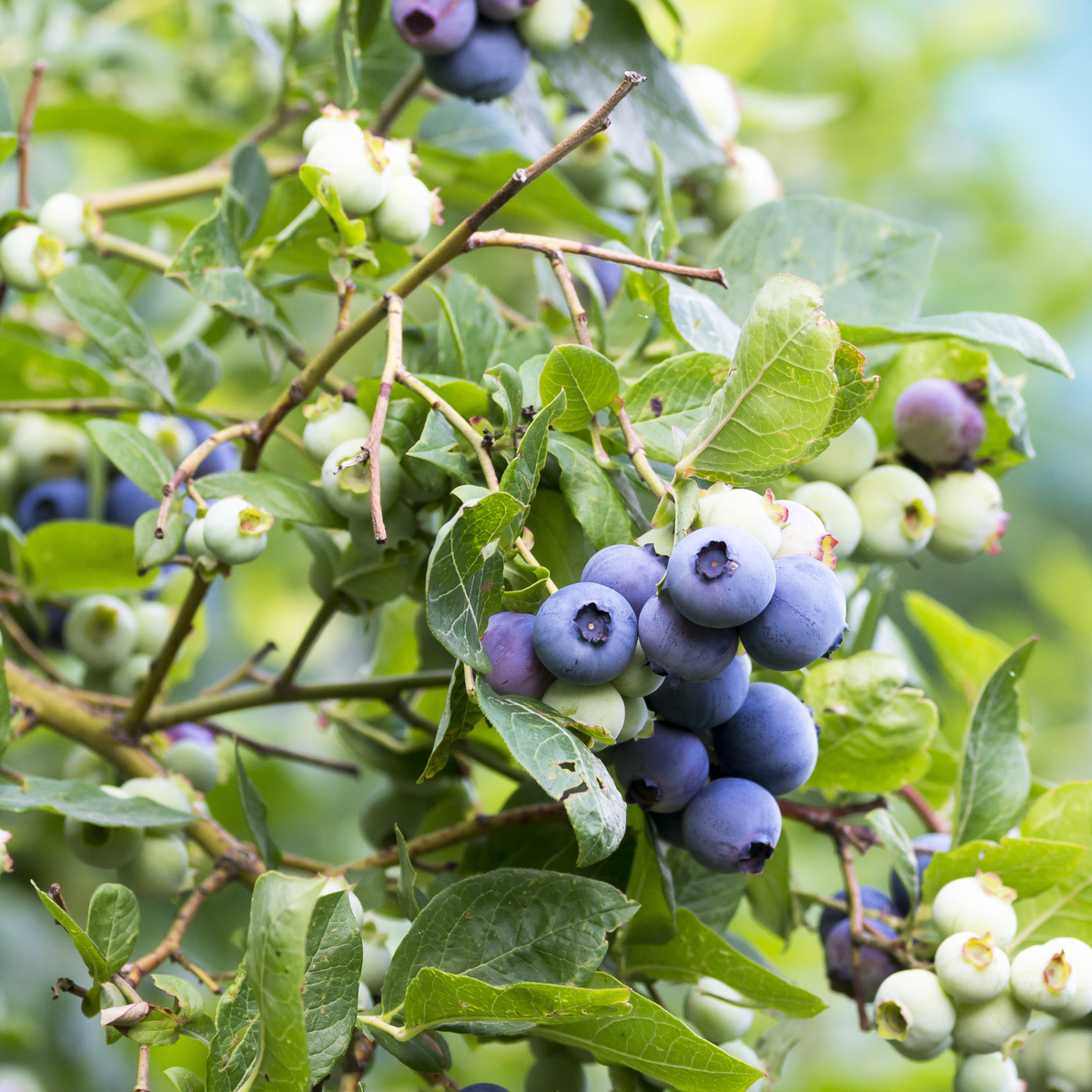
‘Patriot’ Highbush Blueberry (Vaccinium corymbosum ‘Patriot’). The ‘Patriot’ highbush blueberry (Vaccinium corymbosum 'Patriot') is a hardy fruit shrub from the Ericaceae family, valued as much for its blueberry production as for its ornamental value in the garden. It forms a dense, well-branched bush, ideal for edible hedges, mixed beds, edible landscaping, and fruit gardens in Quebec. In spring, its small, creamy-white bell-shaped flowers add a delicate touch before giving way to a generous harvest of blue, plump, sweet, and slightly tart fruits.
To plant ‘Patriot’ highbush blueberry, choose a suitable exposure: full sun to partial shade. The recommended soil is: acidic, light to medium-heavy, well-drained. These plants require acidic soil and regular moisture. Check the pH before choosing amendments: foliage color is not enough to diagnose a specific need. Avoid liming and protect superficial roots when weeding. Water the root ball before planting and ensure water can drain after planting. During establishment, check the moisture by hand before watering again.
Ideal for fruit gardens, edible hedges, edible landscaping, shrub beds, and large container cultivation. It pairs perfectly with other blueberry plants and plants that prefer acidic soils. Allow a width of 1.2 m (4 ft) to organize the plant's space in the garden. The indicated height of 1.5 m (5 ft) helps choose its position relative to neighboring plants. Keep access to the base for weeding, checking moisture, and removing damaged parts. Combine this variety with plants whose light and water needs are compatible.
Patriot is an early-season highbush blueberry that produces large berries. A single Patriot plant can bear fruit. For potentially larger berries, grow it near a different highbush blueberry cultivar whose flowers open at the same time in your garden. Compare bloom times when choosing a pollination partner, since the harvest dates describe when the berries ripen.
Planting guide
Soil and care
Container growing

Garden associations
Frequently asked questions
Wildlife and pets
Click a product to build your selection.
Tout pour fleurir, cultiver et aménager votre jardin.
Une touche de nature, dans chaque pièce.
Tout pour fleurir, cultiver et aménager votre jardin.
Tout découvrir Potager et fines herbes
 Fleurs et vivaces
 Arbres et arbustes
 Soins et plantation
Une touche de nature, dans chaque pièce.
Tout découvrir Plantes tropicales
 Cactus et succulentes
 Collections spécialisées
 Soins et accessoires
Tout pour semer, planter et faire pousser.
Tout découvrir Semences
 Bulbes
 Tout pour les semis
 Pour planter les bulbes
Tout pour semer, nourrir et retrouver une belle pelouse.
Tout pour semer, nourrir et retrouver une belle pelouse.
Tout découvrir Semences à gazon
 Engrais pour gazon
 Tourbe et préparation
 Soins et traitements
Tout pour nourrir, protéger et entretenir vos plantes.
Tout pour nourrir, protéger et entretenir vos plantes.
Tout découvrir



Valide uniquement dans la succursale choisie lors de l’achat.
Choisir la carte en magasinTout pour semer, planter et faire pousser.
 Outils
 Compostage et écologie