Sale
Sold out

Organic seeds
Boraginaceae
Organic Borage Seeds
Borago officinalis
Product code : GAIAS-0022
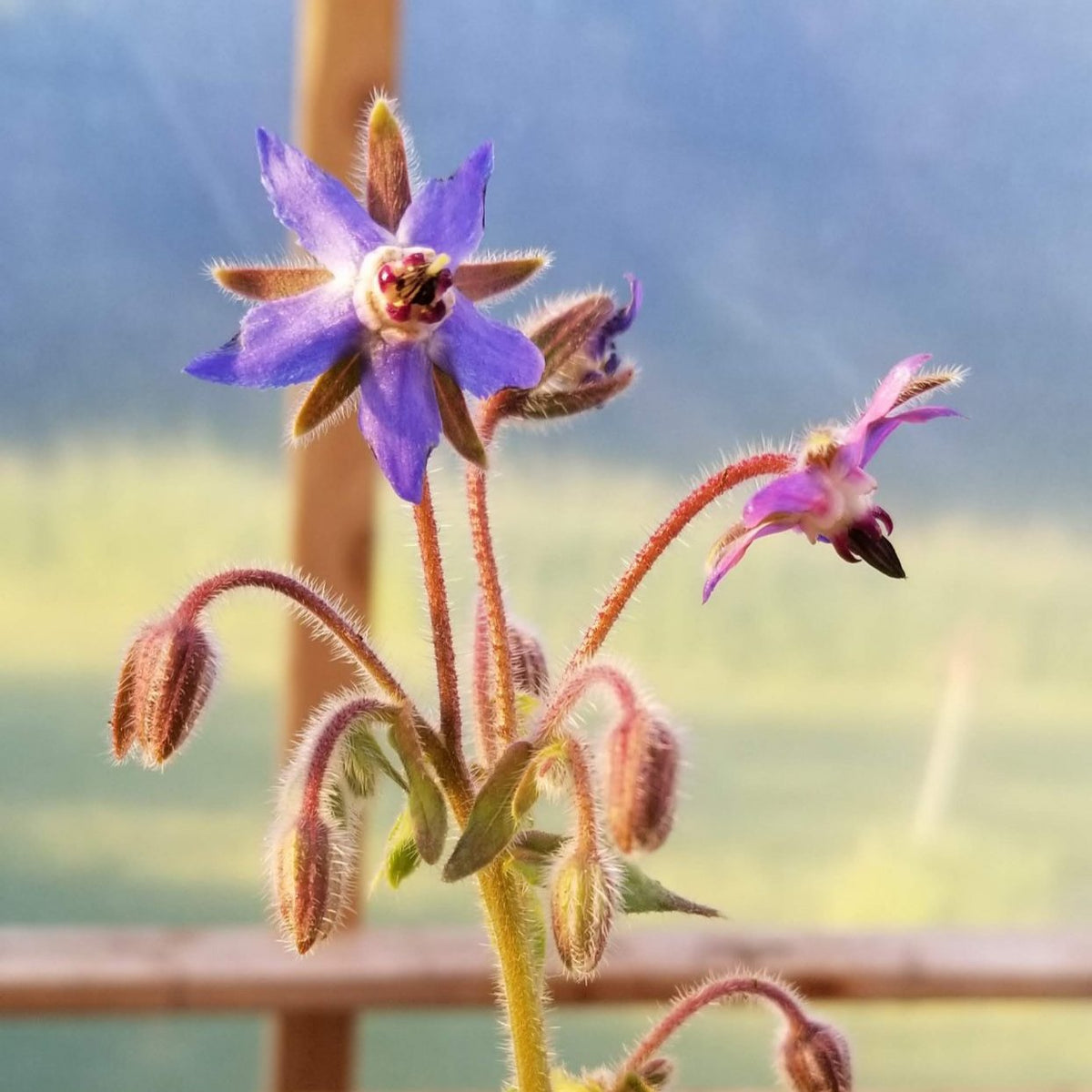
This organic variety is part of Gaia's seed selection for Canadian gardens. Originated in Syria, naturalized to Europe. Edible flower with a refreshing taste that is often used for tea, tastes like cucumber flavor. Young leaves can be harvested and cooked like spinach. Read the packet directions before starting and keep the label so the variety remains clearly identified throughout the season. Prepare a clean, loose, well-drained growing medium and moisten it before placing the seeds so they are not displaced by the first watering. Keep the seedbed evenly moist without standing water because excess moisture reduces air around developing roots. Borage seeds are presented here with Canadian seed starting and seasonal care guidance.
- Exposure
- Partial shade
- Life cycle
- Annual
Discover the plant
Common nameBorage
FamilyBoraginaceae
GenusBorago
Speciesofficinalis
TypeOrganic seeds
Botanical nameBorago officinalis
Organic Borage Seeds (Borago officinalis). This organic variety is part of Gaia's seed selection for Canadian gardens. Originated in Syria, naturalized to Europe. Edible flower with a refreshing taste that is often used for tea, tastes like cucumber flavour. Young leaves can be harvested and cooked like spinach. Life cycle: annual. Expected height: 30.5 to 91.4 cm (12 to 36 in). For practical seed starting, growing from seed succeeds best when the verified product depth, moisture and temperature guidance is followed.
Seed scarification is recommended to help germinate. Sow seeds directly into the garden after the last date of frost. Sowing the seeds every four weeks will ensure a ready supply of borage flowers. Pinching the terminal growth will force a bushier plant but may sacrifice some of the flowers. 1/4 to 1/2 in direct 9 to 37 °C 5 to 15 days (Scarify). Space plants 0.3 to 0.6 m (1 to 2 ft). Use the product details as a clear guide on how to start seeds while keeping the growing medium evenly moist, never saturated.
Pick fresh flowers for freezing or drying for bouquets. Cut the fresh leaves during the summer to add to salads or spreads. Tomato, Peppers, Squash, Cabbage, Strawberry, Cucumber, Beans, Peas. The packet contains 20 seeds. Confirmed edible parts: Petals or flowers confirmed as edible.

Sowing guide
It all startswith a seed.
Sowing depth
6 to 13 mm (1/4-1/2″) direct
Spacing / density
0.3 to 0.6 m (1-2′)
Germination temperature
9-37°C
Germination time
5 to 15 days (Scarify)
Propagation
Seed propagation
Growing method
Seed scarification is recommended to help germinate. Sow seeds directly into the garden after the last date of frost. Sowing the seeds every four weeks will ensure a ready supply of borage flowers. Pinching the terminal growth will force a bushier plant but may sacrifice some of the flowers. 1/4 to 1/2 in direct 9 to 37 °C 5 to 15 days (Scarify). Read the packet directions before starting and keep the label so the variety remains clearly identified throughout the season. Prepare a clean, loose, well-drained growing medium and moisten it before placing the seeds so they are not displaced by the first watering. Keep the seedbed evenly moist without standing water because excess moisture reduces air around developing roots. Move seedlings into bright light as soon as they emerge and rotate containers regularly to encourage balanced growth. Where several seedlings compete for the same space, thin carefully and retain the strongest plants without disturbing their roots. Before outdoor planting, gradually acclimatize young plants to wind, sunlight, and changing temperatures over several days. Follow the stated spacing so air can move between plants and each plant receives adequate light, water, and nutrients. Check moisture below the surface before watering again. This seed starting sequence supports reliable growing from seed while preserving the product-specific depth and temperature facts.
Soil and care
The right care,at the right time.
Care level
Moderate
Seasonal care
Seed scarification is recommended to help germinate. Sow seeds directly into the garden after the last date of frost. Sowing the seeds every four weeks will ensure a ready supply of borage flowers. Pinching the terminal growth will force a bushier plant but may sacrifice some of the flowers. 1/4-1/2″ direct 9-37°C 5 to 15 days (Scarify) Pick fresh flowers for freezing or drying for bouquets. Cut the fresh leaves during the summer to add to salads or spreads. Tomato, Peppers, Squash, Cabbage, Strawberry, Cucumber, Beans, Peas. The packet contains 20 seeds. Read the packet directions before starting and keep the label so the variety remains clearly identified throughout the season. Prepare a clean, loose, well-drained growing medium and moisten it before placing the seeds so they are not displaced by the first watering. Keep the seedbed evenly moist without standing water because excess moisture reduces air around developing roots. Move seedlings into bright light as soon as they emerge and rotate containers regularly to encourage balanced growth. Where several seedlings compete for the same space, thin carefully and retain the strongest plants without disturbing their roots. Before outdoor planting, gradually acclimatize young plants to wind, sunlight, and changing temperatures over several days. Follow the stated spacing so air can move between plants and each plant receives adequate light, water, and nutrients. Adapt the layout to the mature size of neighbouring plants.
Container growing
A garden,within reach.
Growing Borage in a container requires suitable volume, drainage, and exposure. 10 to 15 L per plant with free drainage. Match the container to the plant's development and provide free drainage from planting onward. Read the packet directions before starting and keep the label so the variety remains clearly identified throughout the season. Prepare a clean, loose, well-drained growing medium and moisten it before placing the seeds so they are not displaced by the first watering. Keep the seedbed evenly moist without standing water because excess moisture reduces air around developing roots. Move seedlings into bright light as soon as they emerge and rotate containers regularly to encourage balanced growth. Where several seedlings compete for the same space, thin carefully and retain the strongest plants without disturbing their roots. Before outdoor planting, gradually acclimatize young plants to wind, sunlight, and changing temperatures over several days. Follow the stated spacing so air can move between plants and each plant receives adequate light, water, and nutrients. Water at soil level when the surface begins to dry, then adjust frequency for weather, drainage, and container volume. A light mulch can reduce splashing and moisture swings after the soil has warmed and plants are established.

Bloom and dimensions
Its place,in your garden.
Mature height
30 to 91 cm (12-36″)
Foliage color
Green
Foliage type
Herbaceous
Growth rate
Moderate
Growth habit
Upright to bushy
Garden associations
In goodcompany.
Plants to avoid
Potato, Cabbage.
Frequently asked questions
Your questions,answered.
How many Borage seeds are in the packet?
For Borage, the packet information states: Approximately 20 seeds · lot GOGOG173 · germination >85%. This wording preserves the commercial approximation when one is provided and helps plan the number of containers or the length of the row without turning an estimate into a guaranteed count. Keep the packet closed in a cool, dry, dark place until sowing time. Keep the label with the seedlings so the variety remains correctly identified throughout the season. Use clean containers and write the sowing date on a water-resistant label. Avoid exposing unused seed to moisture or large temperature swings.
How should I start Borage seeds in Canada?
For Borage, follow the detailed sowing schedule in the product record. The recommended method is sowing from seed, at a depth of 6 to 13 mm (1/4 to 1/2 in) when direct-sown. Follow these product-specific directions and adjust timing to the average last-frost date in your area. Moisten the growing medium before placing the seed so the first watering does not displace it. Label every container and maintain even moisture without allowing standing water. Move seedlings into bright light as soon as they emerge to encourage balanced growth. Thin carefully when several seedlings compete for the same space. For seed starting, label the cultivar and use the stated sowing depth instead of a generic estimate.
How long do Borage seeds take to germinate?
For Borage, the stated germination period is 5 to 15 days (Scarify), at a germination temperature of 9 to 37 °C. Keep these conditions as steady as practical while allowing excess water to drain away. The temperature of the growing medium matters more than the surrounding air during this stage. Check moisture below the surface before watering again and avoid saturating the medium. Good air circulation helps young plants remain vigorous after emergence. Wait until the normal germination window has passed before assuming a seed will not emerge. When growing from seed, keep conditions stable for the full stated germination window before disturbing the mix.
Where should I grow Borage in the garden?
For Borage, the recommended exposure is Partial shade. The stated spacing guideline is 0.3 to 0.6 m (1-2′). For container growing, the product record recommends: 10 to 15 L per plant with free drainage. Allow for the mature habit so neighbouring plants do not restrict light or access for harvest. Choose a site that is easy to water and leave enough room for air to circulate around the foliage. In a container, make sure several holes allow excess water to drain freely. A light mulch can steady moisture after the soil has warmed and plants are established. Place plants where their growth can be observed and stress can be addressed early.
When and how should I harvest Borage?
For Borage, the confirmed edible parts are: Petals or flowers confirmed as edible. Harvest them at the stage stated in the product record, then sort the crop before preparation. Use only the parts correctly identified as edible for this plant. Use a clean tool and handle the harvest carefully to avoid unnecessary injury to the plant. Harvest in dry weather when practical and remove damaged portions promptly. Wash only the parts intended for the kitchen and refrigerate perishable produce promptly. Never eat a plant part whose identity or edibility is uncertain.
For a great start to your seeds
The right extras.Right here.
Seed Starting Soil
Shop the collectionSeed starting supplies
Shop the collection