Sale
Sold out

Fruiting vegetable
Solanaceae
Organic fruiting vegetable seeds
Organic 'Bishop's Crown' hot pepper
Capsicum baccatum
Product code : BIOVO-0073
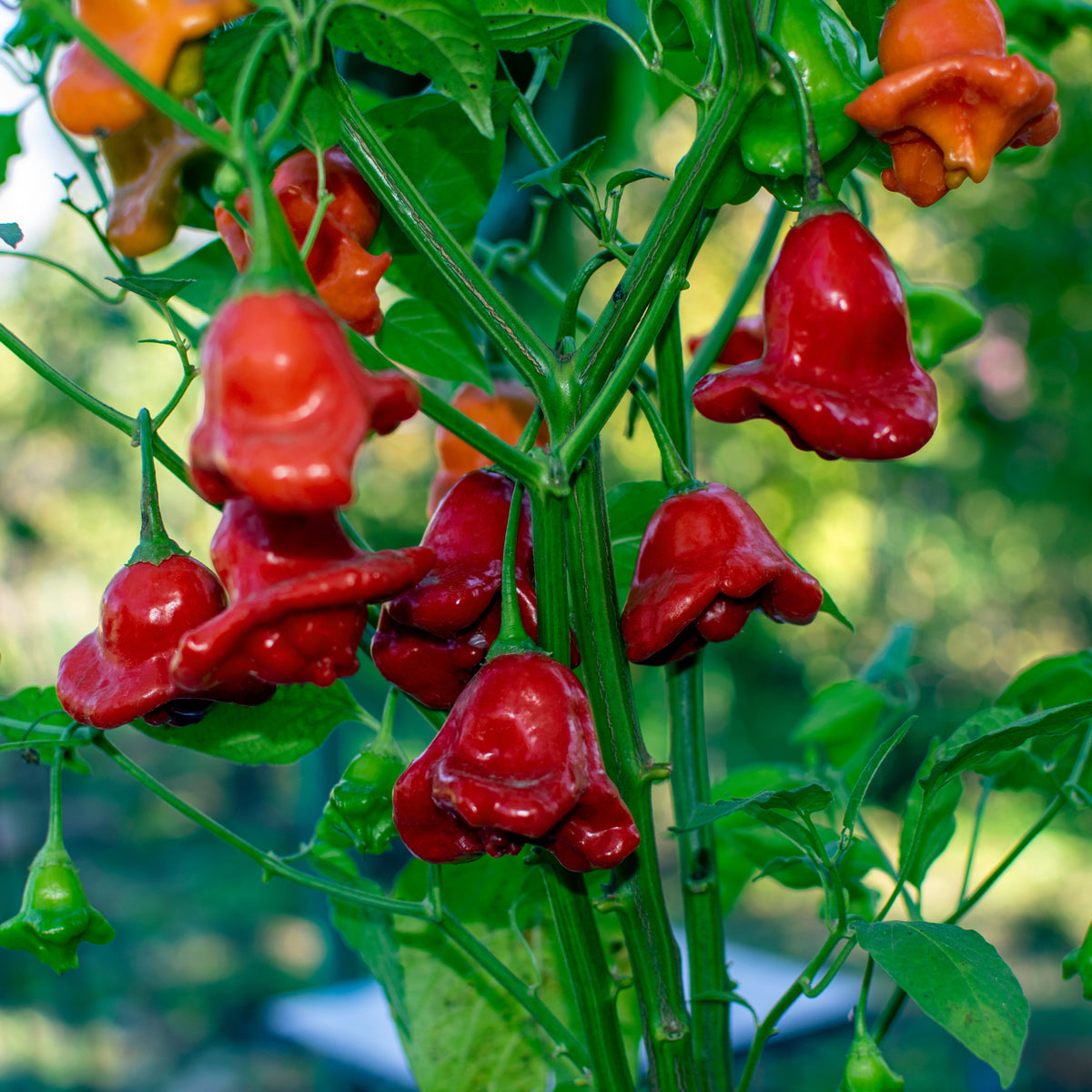
'Bishop's Crown' is a Capsicum baccatum pepper famous for pendant three-winged fruit compared to a bishop's crown or small hat. Peppers change from green to red and develop fruity, lightly sweet flavour with variable heat that may be stronger near the centre. Vigorous branching plants reach approximately 90 to 120 cm (36 to 48 in) and need a long warm season. In your region, a very early indoor start, sheltered location, and sturdy stake improve success. This organic seed suits collection gardens and large containers where sculptural fruit provides as much visual interest as culinary possibility. Taste each harvest cautiously because heat cannot be assumed uniform.
- Exposure
- Sun
- Life cycle
- Annual
Discover the plant
Common name'Bishop's Crown' hot pepper
FamilySolanaceae
GenusCapsicum
Speciesbaccatum
CultivarBishop's Crown
TypeFruiting vegetable
Botanical nameCapsicum baccatum
Organic 'Bishop's Crown' hot pepper (Capsicum baccatum) is immediately recognized by pendant fruit with three wings, creating a silhouette like a bishop's crown or small hat. Peppers change from green to red at maturity and have fruity, lightly sweet flesh with heat that can vary and may be more concentrated near the centre. Vigorous branching plants are generally productive and reach approximately 90 to 120 cm (36 to 48 in), sometimes more in a long season. This organic seed therefore provides two kinds of value: an unusual culinary harvest and strong ornamental interest in the vegetable garden.
Start seed indoors ten to twelve weeks before the last frost because Capsicum baccatum needs time to build a large plant and ripen fruit. Sow 5 or 6 mm (1/4 in) deep in clean starting mix kept warm and lightly moist. After emergence, provide intense light, pot seedlings on, and harden them gradually. Transplant only when soil is warm and nights remain mild, into a sheltered site receiving at least six to eight hours of sun. Fertile, well-drained soil, regular watering without saturation, and moderate fertilizer after fruit set support production. Leave enough room for airflow and easy harvest around the spreading branches.
Provide sufficient space and a sturdy stake for fruit-laden branches. Harvest green peppers for a more vegetal flavour or wait for full red colour and more developed sweetness. Their sculptural shape suits cooked stuffed appetizers, while aromatic flesh can be chopped into salsa, sauce, chutney, or a stir-fry. Taste a small portion cautiously because intensity is not perfectly uniform throughout the fruit. For pickles and preserves, follow only a tested recipe. Wear gloves if your skin reacts to hot peppers and avoid touching your eyes during preparation. Label stored preparations clearly and refrigerate or process the harvest according to the food-safety requirements of the chosen method.

Sowing guide
It all startswith a seed.
Sowing depth
5 to 6 mm (approximately 1/4 in)
Spacing / density
Space approximately 45 to 60 cm (18 to 24 in) apart
Germination temperature
Approximately 24 to 29 °C (75 to 85 °F)
Germination time
Approximately 10 to 14 days at 21–29°C; cooler media can extend emergence to about three weeks.
Sowing period
Indoors, 10 to 12 weeks before the last frost
Propagation
Seed
Growing method
Growing 'Bishop's Crown' hot pepper from seed. Sow indoors eight to ten weeks before the last frost, 5 or 6 mm (1/4 in) deep in clean, lightly moist starting mix. For 'Bishop's Crown' indoor sowing, follow the frost-relative timing above. If a seed harvest from 'Bishop's Crown' is planned, retain the cultivar label and consult crop-specific isolation guidance; vegetable harvest directions alone are not sufficient. A pepper seedling needs strong light, gentle airflow, and an evenly moist root zone without standing water. Use clean, lightly moist seed-starting mix and steady bottom warmth; never leave the tray saturated. Place the crop in sun, while preserving drainage and airflow at root and leaf level. Harden plants gradually to sun, wind, and cooler air, bringing them back under cover if frost threatens. After emergence, move seedlings immediately under strong light with gentle airflow so stems remain sturdy. The expected harvest form—pendant three-winged or three-lobed crown-shaped fruit—helps confirm crop identity, while local warmth and plant health still influence maturity. Label every seedling because fruit colour and heat cannot identify young pepper plants. The plant has a habit described as large, vigorous, branching, and bushy; use this to guide positioning or selective thinning without forcing a cramped plant. After late-season rain or wind, confirm drainage and support while preserving healthy foliage needed to finish ripening. Harvest the crop at its intended colour stage rather than by an absolute date. Use suitable gloves, label the hot fruit clearly, and protect container plants before the first autumn frost only when useful light and warmth remain.
Soil and care
The right care,at the right time.
Soil pH
Approximately 6.0 to 6.8
Minimum temperature
12 °C (54 °F)
Care level
Moderate
Watering
Water deeply when the soil surface begins to dry, then allow excess water to drain away. Even moisture during flowering and fruit development reduces stress and supports a consistent harvest, but roots should never remain waterlogged. Check containers more often during hot weather because they dry quickly. Apply water at soil level whenever practical so foliage stays relatively dry and air circulation remains good.
Soil type
This plant prefers fertile, loose, well-drained soil enriched with mature compost before planting. A texture that holds even moisture while allowing excess water to escape supports healthy roots. In a container, use a quality vegetable potting mix and a pot of at least 20 L with drainage holes. Avoid compacted, waterlogged, or persistently cold garden soil, especially after transplanting outdoors.
Fertilization
Begin 'Bishop's Crown' in soil amended with mature compost, then use a soil test to choose any balanced supplemental feed. Once buds and pendant three-winged or three-lobed crown-shaped fruit appear, steady growth matters more than high nitrogen. In the 'Bishop's Crown' planting, in containers, divide necessary feeding into smaller applications because drainage removes nutrients. Excess nitrogen can delay flowering and ripening by pushing soft foliage. When tending 'Bishop's Crown' hot pepper, read leaf colour and new growth before repeating an application. Stop or reduce feeding when 'Bishop's Crown' already shows balanced growth.
Moisture
Consistent soil moisture without saturation; good air circulation around the foliage.
Seasonal care
Seasonal care for 'Bishop's Crown' hot pepper. Start 'Bishop's Crown' hot pepper when its bed and the local frost pattern are ready; the supplied window is indoors, 10 to 12 weeks before the last frost. Sow 5 to 6 mm deep at approximately 24 to 29 °C (75 to 85 °F); the working germination range is 10 to 14 days, with moisture held steady rather than saturated. After emergence, give 'Bishop's Crown' seedlings bright light and gentle air movement; pot on before roots circle densely, without burying a weak stem in wet mix. Harden the plants gradually, then transplant only after frost risk has passed, the soil is warm, and nights remain consistently mild. Choose full sun and loose fertile soil, mixing in mature compost while preserving drainage around the crown. Water deeply at soil level, then let the upper layer begin drying; repeated drought-to-soaking cycles can interrupt flower and fruit development. If potted, follow this provision for 'Bishop's Crown' hot pepper: at least 25 to 30 L, approximately 40 cm (16 in) in diameter. Recheck root-zone moisture whenever heat or wind increases evaporation. During flowering, inspect 'Bishop's Crown' foliage for pests, maintain airflow, and avoid excess nitrogen, which can favour leafy growth over flower set and fruit ripening. Follow the supplied harvest guidance—90 to 100 days after transplanting—while remembering that warmth and light still determine how quickly each fruit reaches its final stage. When 'Bishop's Crown' fruit begins colouring, handle it with gloves until the actual heat is known and label green and fully ripe harvests separately. Before the first autumn frost, move portable pots under protection or collect sound developed fruit, then remove diseased debris from the growing area.
Container growing
A garden,within reach.
Recommended pot size
At least 25 to 30 L, approximately 40 cm (16 in) in diameter
Growing 'Bishop's Crown' hot pepper in containers. For 'Bishop's Crown', choose a container matching this guide: at least 25 to 30 L, approximately 40 cm (16 in) in diameter. Keep several drainage holes unobstructed. Install a stake or cage at planting when support is needed, without later piercing the root ball. At final planting, space 'Bishop's Crown' approximately 45 to 60 cm (18 to 24 in) apart; crowding extra plants reduces access. Fill the container with fresh, airy vegetable potting mix amended modestly with mature compost, never dense garden soil. As the plant matures, use the expected harvest form—pendant three-winged or three-lobed crown-shaped fruit—to guide support, inspection, and careful picking. Set one established plant at an appropriate depth and keep the stem clear of the rim and mulch. Plan around the way the pepper plant grows: large, vigorous, branching, and bushy. Keep access to the root zone for watering and inspection. Feed at a modest labelled rate after watering. Excess nitrogen can delay flowering and ripening while encouraging leafy growth. The crop needs sun; nearby walls or taller crops should not compromise it. Guide stems through the support while they remain flexible, leaving enough room to water at soil level and reach every ripening cluster. As nights cool, let the rate of mix drying guide watering, and inspect leaf undersides before sheltering the container. Harvest the plant when colour and texture show the intended stage. Before frost, gather sound developed fruit; quarantine any plant moved under protection and inspect it for insects.

Bloom and dimensions
Its place,in your garden.
Mature height
Approximately 90 to 120 cm (36 to 48 in)
Width / spread
Approximately 60 to 90 cm (24 to 36 in)
Flower color
White to greenish white
Foliage color
Green
Foliage type
Herbaceous
Growth rate
Fast
Growth habit
Large, vigorous, branching, and bushy
Bloom period
Small greenish-white blossoms appear during warm weather when the plant receives enough light and heat. They are followed by the characteristic fruit when pollination and growing conditions are favourable. Temperature extremes, drought stress, or excess nitrogen may cause blossom drop. Even moisture, moderate feeding, and good air circulation help the plant set fruit throughout the productive part of the season.
Fruiting
Pendant fruit develops the distinctive three-winged shape that resembles a bishop's crown. Peppers begin green and ripen to red when fully mature. Their flesh tastes fruity and lightly sweet, while heat may be more noticeable near the centre. Harvest with scissors or pruners to protect the branches, and pick regularly as fruit matures to encourage the plant to continue producing during warm weather.
Harvest
90 to 100 days after transplanting
Garden associations
In goodcompany.
Companion plants
Use quick radishes, lettuce, or green onions near young 'Bishop's Crown', then harvest them before pepper roots fill the bed. Rotate 'Bishop's Crown' hot pepper with crops outside the nightshade family; nearby herbs do not interrupt a soil-borne disease cycle. Arrange low companions outside the drip line of the mature pepper canopy. Around 'Bishop's Crown', keep access open to the pendant three-winged or three-lobed crown-shaped fruit so gloves, labels, and clean harvest containers can be used without brushing other crops. Use companion planting to organize succession and diversity, not as a substitute for sound crop care. When arranging neighbours for 'Bishop's Crown' hot pepper, a companion does not guarantee control of insects or disease, so inspect every crop separately. Reassess the arrangement around 'Bishop's Crown' as both crops approach mature size.
Plants to avoid
Fennel and kohlrabi can hinder the optimal development of pepper plants or create unfavorable competition.
Recipe idea
From the gardento your plate.
Edible parts
Fruit, after appropriate culinary preparation
'Bishop's Crown' pepper in the kitchen. Make a warm tomato relish that shows the cultivar's fruity heat without relying on its shape for stuffing. Wear gloves, wash two sound red peppers, remove stems, and begin with half of one finely chopped fruit; reserve the rest until the heat has been tested. Warm 15 mL (1 tbsp) oil in a small pan, soften 60 mL (1/4 cup) diced onion, then add 250 mL (1 cup) chopped tomato and one minced garlic clove. Simmer for eight minutes. Stir in the pepper, 15 mL (1 tbsp) cider vinegar, and a pinch of salt; cook two minutes more. Cool a spoonful before tasting, then add more pepper only if appropriate. Serve warm with beans, grilled vegetables, or cooked grain. This is a fresh refrigerated relish, not a canning formula. Wash gloves, knife, board, and pan handles carefully, warn diners that hot pepper is present, and refrigerate leftovers within two hours in a clean covered container.
Frequently asked questions
Your questions,answered.
When should 'Bishop's Crown' pepper be sown in your region?
Give 'Bishop's Crown' a longer indoor start than a quick pepper because Capsicum baccatum can become tall and needs time to flower in a Canadian season. Sow 5 to 6 mm (about 1/4 in) deep eight to ten weeks before the local last-frost date, at approximately 24 to 29°C (75 to 85°F). Move emerged seedlings immediately into strong light and pot them on before roots circle. Harden them gradually for about one week. Transplant only after frost risk has passed, soil has warmed, and nights remain mild. Install a stake or cage at planting, since the branching plant and its winged fruit become awkward to support later. If spring remains cold, delay transplanting rather than allowing seedlings to stall outdoors.
Are 'Bishop's Crown' fruit suitable for pickling?
Yes. Bishop's Crown fruit can be pickled whole when small enough or cut into pieces to fit the chosen jar. Its three-winged crown shape makes attractive pieces, but safe preservation depends on the tested recipe, not the cultivar's shape. Use a current method from a reliable preservation authority and follow its vinegar strength, ingredient proportions, headspace, container size, and processing time exactly. Do not reduce acid or improvise the heat treatment. Wash sound peppers, discard any with rot, and wear gloves if the variable heat irritates your skin. Keep tools away from eyes and wash surfaces afterward. Label the finished jars and inspect seals during storage. Discard any container that leaks, bulges, foams unexpectedly, smells abnormal, or otherwise shows possible spoilage.
Can 'Bishop's Crown' peppers be stuffed?
Bishop's Crown can be stuffed, especially when an individual fruit has a cavity large enough to hold filling. Remove the cap carefully, scoop out seeds and internal tissue, and keep the distinctive three-winged shell intact. Wear gloves if you are sensitive to hot peppers, because pungency can vary from fruit to fruit. A cheese, grain, or vegetable mixture can work, but cooking time and refrigeration must suit the most perishable ingredient. Prepare a small test pepper before filling a full tray so you understand both heat and texture. Cook the fruit until the filling reaches the safe endpoint required by the recipe. Refrigerate leftovers promptly, label them if others may assume the pepper is sweet, and clean knives, spoons, boards, and hands after preparation.
Can 'Bishop's Crown' be grown in a container?
Bishop's Crown can be grown in a container, but it needs more room than a compact pepper. Use at least 25–30 L in a pot about 40 cm wide, with excellent drainage and enough weight to steady a 90- to 120-cm bushy plant. Its spread can reach 60 to 90 cm, so do not crowd neighbouring pots. Move it outdoors after frost danger, water the full root zone, and let excess escape. Add a cage or several stakes before the pendant crown-shaped fruit loads the branches. Maturity is listed around 90 to 100 days after transplanting, making a warm position important. Keep the pot labelled as hot pepper, monitor moisture during heat, and harvest with care if the fruit's variable pungency irritates your skin.
When should 'Bishop's Crown' peppers be harvested?
Harvest 'Bishop's Crown' once the distinctive three-winged fruit is full sized and firm. It can be used green, but leaving it on the plant until the surface becomes glossy red gives more developed colour and flavour. Because the plant may reach 90–120 cm and branch widely, support the fruit with one hand and clip its stem with clean scissors; pulling can tear an entire side branch. Pick repeatedly instead of waiting for every crown to colour at once. Select sound, uncracked peppers for stuffing or pickling, and process any damaged fruit promptly rather than storing it. Before cold nights arrive, collect remaining fruit that has reached useful size. Wear gloves if pepper juice irritates your skin, wash hands and tools after handling, and refrigerate fresh harvests unless a tested preservation method is used immediately.
Wildlife and pets
Life,around your plants.
Supporting wildlife
Bishop's Crown produces self-fertile blossoms before its distinctive winged fruit. Bees may visit and vibration can help release pollen, but insect service is not essential for a crop. Its wildlife role is therefore modest and seasonal. Keep the flowering canopy accessible, avoid unnecessary treatments during bloom, and rely on dedicated nectar plants for sustained pollinator support.
For a great start to your seeds
The right extras.Right here.
Seed Starting Soil
Shop the collectionSeed starting supplies
Shop the collection