Sale
Sold out

Annual flower
Amaranthaceae
Organic seeds
Celosia argentea ‘Flamingo Feather’
Product code : JAREC-0046
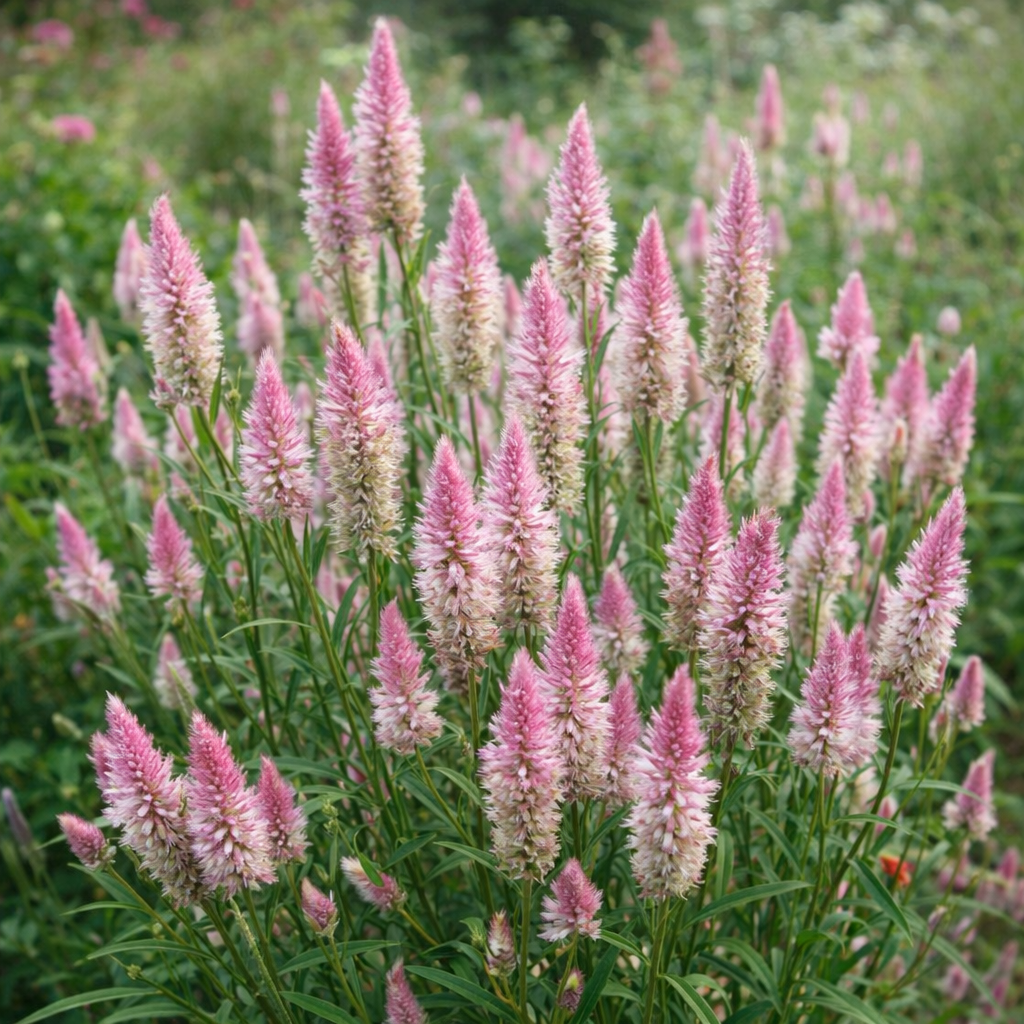
Flamingo Feather celosia is a striking annual whose long, feathery, pale pink flower spikes have silvery tones, giving the garden a light and refined appearance. From its first flowers onward, it brings an airy elegance to sunny beds, where straight, sturdy stems create a clear vertical accent among the other plants. Early, generous flowering continues through the warm season, providing plenty of ornamental stems that look attractive both in the garden and when cut for a bouquet. Valued for cutting, these flowers keep their appearance well when displayed in a vase and are also suitable for dried arrangements, extending their usefulness long after the stems have been harvested.
- Quantity
- 50 seeds
- Exposure
- Full sun
- Life cycle
- Annual
Discover the plant
Common nameFlamingo Feather Celosia
FamilyAmaranthaceae
GenusCelosia
Speciessilvery
CultivarFlamingo Feather
TypeAnnual flower
Botanical nameCelosia argentea
Reproducible seedsYes
Celosia argentea ‘Flamingo Feather’ — Flamingo Feather Celosia. Flamingo Feather celosia is a striking annual whose long, feathery, pale pink flower spikes have silvery tones, giving the garden a light and refined appearance. From its first flowers onward, it brings an airy elegance to sunny beds, where straight, sturdy stems create a clear vertical accent among the other plants. Early, generous flowering continues through the warm season, providing plenty of ornamental stems that look attractive both in the garden and when cut for a bouquet. Valued for cutting, these flowers keep their appearance well when displayed in a vase and are also suitable for dried arrangements, extending their usefulness long after the stems have been harvested.
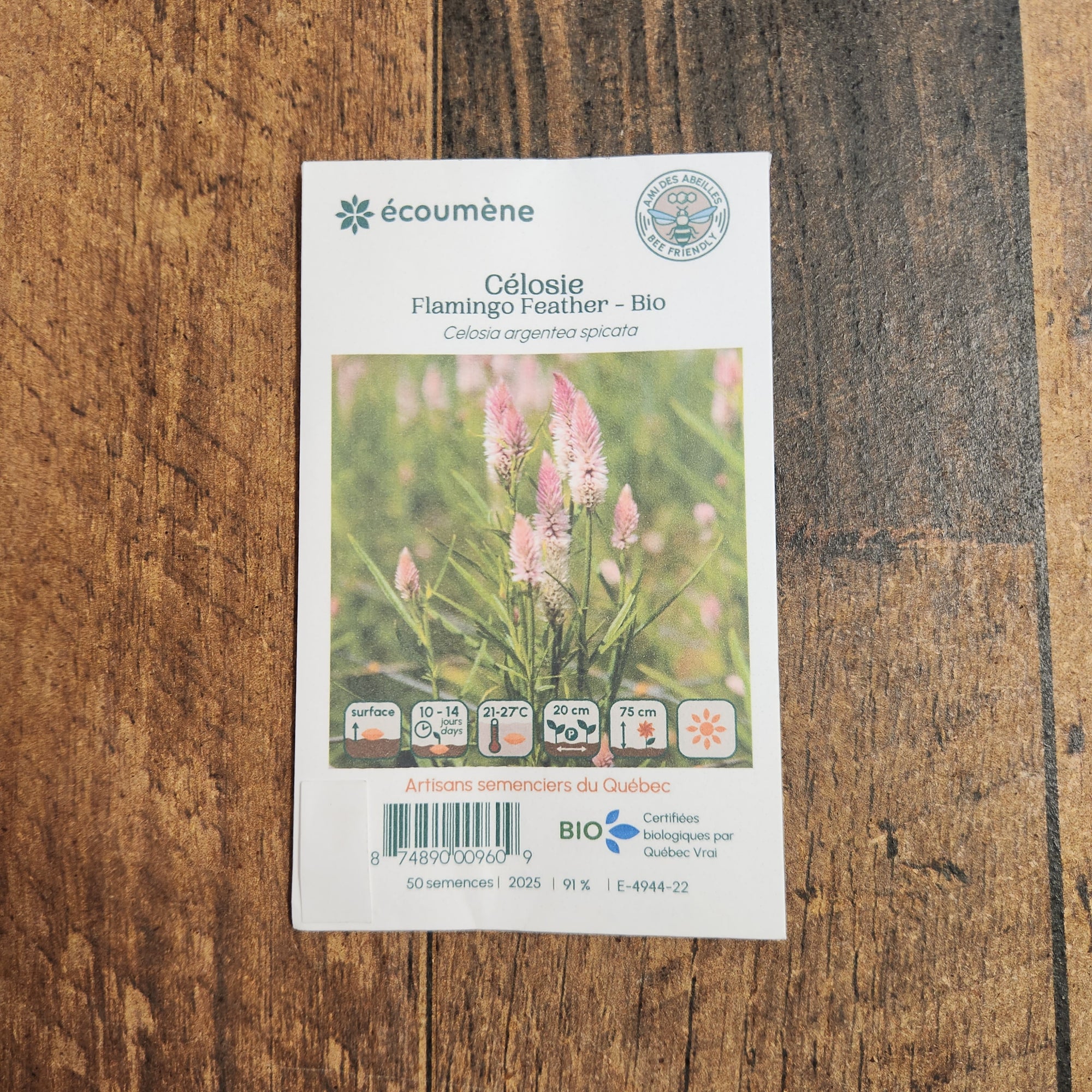
Sowing flower seeds: March to May. The depth to be respected is 0.3 cm (1/8 in.) Germination usually takes 10 to 15 days. For germination, keep the soil at 20-24°C (68-75°F). Transplant the young flowering plants once their true leaves have developed and their roots hold the root ball together. Handle the seedlings gently and avoid squeezing their delicate stems. Under grow lights, gradually space the containers farther apart so that the foliage does not overlap. Hardening off then prepares the plants for outdoor sunlight, wind and changes in temperature.
Plan the arrangement around each plant’s mature habit and the distance from which the flowers will be viewed. Position smaller flowers close to a path for easy viewing, while taller plants can provide a focal point at the back of a bed. Repeat groups of the same variety to create a clear, visible colour pattern. Leave room to reach the plants for cutting, and avoid crowding clumps simply to fill the space right away. Valued for cutting, these flowers keep their appearance well when displayed in a vase and are also suitable for dried arrangements, extending their usefulness long after the stems have been harvested.

Sowing guide
It all startswith a seed.
Sowing depth
0.3 cm (1/8 in)
Germination temperature
20 to 24°C (68 to 75°F)
Germination time
10 to 15 days
Sowing period
March to May
Propagation
From seed
Growing method
Recommended planting period: March to May. The depth to be respected is 0.3 cm (1/8 in.) Germination usually takes 10 to 15 days. For germination, keep the soil at 20-24°C (68-75°F). Transplant the young flowering plants once their true leaves have developed and their roots hold the root ball together. Handle the seedlings gently and avoid squeezing their delicate stems. Under grow lights, gradually space the containers farther apart so that the foliage does not overlap. Hardening off then prepares the plants for outdoor sunlight, wind and changes in temperature. Plant outdoors once the conditions are suitable for the plants’ cold tolerance. Watch the progression from flower buds to open blooms and faded flowers to decide which care the plant needs. A cut must preserve the shoots that will bloom afterwards. Check the supports on tall-stemmed plants after a period of strong wind. Lightly removing damaged growth helps maintain the plant’s shape without leaving it bare. Adapt the end of the season to the cycle of the plant: annuals and perennials do not require the same preparation for winter. Choose between prolonging flowering and keeping seeds on a few stems.
Soil and care
The right care,at the right time.
Watering
Keep the seedbed surface slightly moist until seedlings emerge, using a gentle spray that does not displace the seeds. After rooting, water at the base of the plant when the soil begins to dry and allow excess water to drain. Avoid small, too frequent applications that wet only the surface. In a container, check the needs more often during hot or windy days. Adjust the frequency to precipitation, drainage and plant development.
Soil type
Prepare well-drained soil for planting. Transplant the young flowering plants once their true leaves have developed and their roots hold the root ball together. Handle the seedlings gently and avoid squeezing their delicate stems. Under grow lights, gradually space the containers farther apart so that the foliage does not overlap. Hardening off then prepares the plants for outdoor sunlight, wind and changes in temperature.
Fertilization
Fertilization supports growth and should take into account the nutrients already present in the soil or potting mix. Use mature compost or a fertilizer suitable for the crop, following the recommended application rate. Avoid combining too many products, especially in a container where the roots have a limited volume of growing medium. Water as needed after applying nutrients, and observe foliage growth before deciding whether another fertilizer application is necessary.
Moisture
Keep the growing mix moist during germination, without standing water; then adjust to the crop
Seasonal care
Valued for cutting, these flowers keep their appearance well when displayed in a vase and are also suitable for dried arrangements, extending their usefulness long after the stems have been harvested. Transplant the young flowering plants once their true leaves have developed and their roots hold the root ball together. Handle the seedlings gently and avoid squeezing their delicate stems. Under grow lights, gradually space the containers farther apart so that the foliage does not overlap. Hardening off then prepares the plants for outdoor sunlight, wind and changes in temperature. Plant outdoors once the conditions are suitable for the plants’ cold tolerance. Watch the progression from flower buds to open blooms and faded flowers to decide which care the plant needs. A cut must preserve the shoots that will bloom afterwards. Check the supports on tall-stemmed plants after a period of strong wind. Lightly removing damaged growth helps maintain the plant’s shape without leaving it bare. Adapt the end of the season to the cycle of the plant: annuals and perennials do not require the same preparation for winter. Choose between prolonging flowering and keeping seeds on a few stems. Deadheading is suitable for many annuals, while developing seed heads and dried flower clusters can also provide ornamental interest. Keep plants labelled after flowering ends, and remove self-sown seedlings that are growing in a path. Recommended planting period: March to May. The depth to be respected is 0.3 cm (1/8 in.)
Container growing
A garden,within reach.
Recommended pot size
A stable container with drainage holes, enough width for the plant’s spread and sufficient depth for its roots
Choose a location in full sun. Reserve this spread around the plant: 20 to 30 cm (8 to 12 in.). A flowering container arrangement should leave enough room for every plant to grow. Place upright plants where they remain visible, and let any trailing stems extend over the container’s edge. Check that the combined plants share the desired exposure and moisture. After a few weeks, check where the plants are becoming crowded and remove only damaged parts or stems that disrupt the balance of the arrangement. Flamingo Feather celosia is a striking annual whose long, feathery, pale pink flower spikes have silvery tones, giving the garden a light and refined appearance. From its first flowers onward, it brings an airy elegance to sunny beds, where straight, sturdy stems create a clear vertical accent among the other plants. Early, generous flowering continues through the warm season, providing plenty of ornamental stems that look attractive both in the garden and when cut for a bouquet. Valued for cutting, these flowers keep their appearance well when displayed in a vase and are also suitable for dried arrangements, extending their usefulness long after the stems have been harvested.
Bloom and dimensions
Its place,in your garden.
Mature height
75 cm to 1 m (30 to 39 in.)
Width / spread
20-30 cm (8-12 in.)
Foliage type
Seasonal foliage
Bloom period
Flowering usually occurs in this period: July to October. From its first flowers onward, it brings an airy elegance to sunny beds, where straight, sturdy stems create a clear vertical accent among the other plants. Early, generous flowering continues through the warm season, providing plenty of ornamental stems that look attractive both in the garden and when cut for a bouquet. The calendar varies according to the conditions of the season.
Harvest
90 to 110 days after sowing
Garden associations
In goodcompany.
Companion plants
In a mixed planting, you can reserve sections close to these plants: zinnias, cosmos, amaranths. The association is used here to organize space and crops. Allow for the height, light requirements and water needs of each plant, leaving enough room between the foliage. Keep a path clear for watering and harvesting, then remove finished crops to make room for the next planting. This arrangement makes maintenance easier without promising protection against garden pests. Plan the arrangement around each plant’s mature habit and the distance from which the flowers will be viewed.
Frequently asked questions
Your questions,answered.
How do I grow Flamingo Feather Celosia from seed?
Recommended planting period: March to May. The depth to be respected is 0.3 cm (1/8 in.) Germination usually takes 10 to 15 days. For germination, keep the soil at 20-24°C (68-75°F). Transplant the young flowering plants once their true leaves have developed and their roots hold the root ball together. Handle the seedlings gently and avoid squeezing their delicate stems. Under grow lights, gradually space the containers farther apart so that the foliage does not overlap. Hardening off then prepares the plants for outdoor sunlight, wind and changes in temperature. Plant outdoors once the conditions are suitable for the plants’ cold tolerance.
Can I grow Flamingo Feather Celosia in a container?
Choose a location in full sun. Reserve this spread around the plant: 20 to 30 cm (8 to 12 in.). A flowering container arrangement should leave enough room for every plant to grow. Place upright plants where they remain visible, and let any trailing stems extend over the container’s edge. Check that the combined plants share the desired exposure and moisture. After a few weeks, check where the plants are becoming crowded and remove only damaged parts or stems that disrupt the balance of the arrangement. Flamingo Feather celosia is a striking annual whose long, feathery, pale pink flower spikes have silvery tones, giving the garden a light and refined appearance.
How do I care for Flamingo Feather Celosia during the season?
Valued for cutting, these flowers keep their appearance well when displayed in a vase and are also suitable for dried arrangements, extending their usefulness long after the stems have been harvested. Decide which stems to keep flowering and which to leave in place so that they can develop seeds. Deadheading is suitable for many annuals, while developing seed heads and dried flower clusters can also provide ornamental interest. Keep plants labelled after flowering ends, and remove self-sown seedlings that are growing in a path. Watch the progression from flower buds to open blooms and faded flowers to decide which care the plant needs.
What makes Flamingo Feather Celosia distinctive in the garden?
Flamingo Feather celosia is a striking annual whose long, feathery, pale pink flower spikes have silvery tones, giving the garden a light and refined appearance. From its first flowers onward, it brings an airy elegance to sunny beds, where straight, sturdy stems create a clear vertical accent among the other plants. Early, generous flowering continues through the warm season, providing plenty of ornamental stems that look attractive both in the garden and when cut for a bouquet. Valued for cutting, these flowers keep their appearance well when displayed in a vase and are also suitable for dried arrangements, extending their usefulness long after the stems have been harvested.
How do I arrange a planting of Flamingo Feather Celosia?
Plan the arrangement around each plant’s mature habit and the distance from which the flowers will be viewed. Position smaller flowers close to a path for easy viewing, while taller plants can provide a focal point at the back of a bed. Repeat groups of the same variety to create a clear, visible colour pattern. Leave room to reach the plants for cutting, and avoid crowding clumps simply to fill the space right away. Watch the progression from flower buds to open blooms and faded flowers to decide which care the plant needs. A cut must preserve the shoots that will bloom afterwards. Check the supports on tall-stemmed plants after a period of strong wind.
Wildlife and pets
Life,around your plants.
Supporting wildlife
The flowers can provide a place for visiting pollinating insects during the growing season. Grow several plants in a sunny area that visiting insects can reach, and avoid applying treatments to flowers while they are open. Leave some flowers in the garden for visiting insects if you are also cutting stems to use in bouquets.
For a great start to your seeds
The right extras.Right here.
Seed Starting Soil
Shop the collectionSeed starting supplies
Shop the collection