


Sale
Sold out

Organic open-pollinated heirloom seeds
Cucurbitaceae
Costata Romanesco Zucchini, organic seeds (Cucurbita pepo)
Product code : JAREC-0279
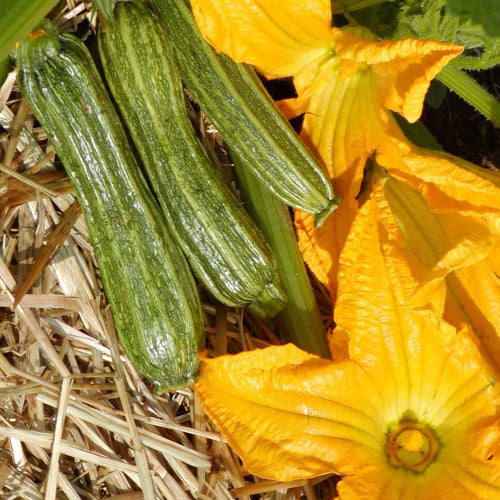
Costata Romanesco Zucchini organic seeds is part of our organic seeds for Canada selection. An Italian heirloom that has a unique nutty taste, light green pattern with bulged ripening. 6” fruit is tender and easy to pick. Read the packet directions before starting and keep the label so the variety remains clearly identified throughout the season. Prepare a clean, loose, well-drained growing medium and moisten it before placing the seeds so they are not displaced by the first watering. Keep the seedbed evenly moist without standing water because excess moisture reduces air around developing roots. Move seedlings into bright light as soon as they emerge and rotate containers regularly to encourage balanced growth.
- Quantity
- Approximately 4 seeds
- Exposure
- Full sun
- Life cycle
- Annual
Discover the plant
Common nameCostata Romanesco Zucchini; Italian Romanesco zucchini
FamilyCucurbitaceae
GenusCucurbita
Speciespepo
CultivarCostata Romanesco
TypeOrganic open-pollinated heirloom seeds
Botanical nameCucurbita pepo
Reproducible seedsYes
Heirloom varietyYes
Costata Romanesco Zucchini, organic seeds (Cucurbita pepo) This open-pollinated Italian heirloom zucchini is known for its gently nutty flavour and light green fruit with pronounced relief. Harvested at approximately 6 inches, the fruit remains tender and easy to pick. The Gaia packet contains approximately 4 seeds certified organic by Ecocert Canada. The current list identifies the cultivar as annual, organic, and heirloom. Kew accepts Cucurbita pepo, an annual in the Cucurbitaceae family originating as a Mexican cultigen and introduced in Québec. Keep the cultivar name with the planting to distinguish this Italian zucchini from other vegetables called Romanesco.
Gaia publishes no lot-specific sowing protocol or numbered maturity period. For summer squash, direct sow after the last frost when soil reaches at least 21°C, approximately 1/2 inch deep. Indoor starting is possible 3 to 4 weeks before planting in individual pots that limit root disturbance. Grow in full sun and fertile, warm, well-drained soil. Space bush plants 2 to 3 feet apart. Keep soil evenly moist and remove floating row covers when flowering begins so pollinating insects can reach the separate male and female flowers. Avoid planting into cold soil because emergence and early establishment will be poor.
Gaia lists plants at 24 to 36 inches high and 36 to 48 inches wide. Harvest fruit regularly at approximately 6 inches long while the skin remains tender and the flesh firm. Fruit left too long becomes larger and can slow production. Use promptly or refrigerate for approximately 4 days. Its texture and nutty flavour suit grilling, sautéing, gratins, raw ribbons, and roasted dishes. Freshly opened male flowers are also edible. Gaia publishes no numbered days to maturity for this lot, so use fruit length, tenderness, and appearance instead of an invented calendar date. Discard any fruit with unusually strong bitterness.

Sowing guide
It all startswith a seed.
Sowing depth
Approximately 1/2 in (1.25 cm) according to University of Minnesota Extension
Spacing / density
2 to 3 ft between bush plants
Germination temperature
Soil at least 21°C for direct sowing
Germination time
Lot-specific germination time not published by Gaia; do not sow into cold soil
Sowing period
Direct sow after the last frost when soil reaches at least 21°C; indoor starting is possible 3 to 4 weeks earlier
Propagation
Direct sowing preferred; short indoor start possible in individual pots
Growing method
Gaia publishes no lot-specific sowing method. For summer squash, direct sow after the last frost when soil reaches at least 21°C, approximately 1/2 inch deep. Approximately 1/2 in (1.25 cm) according to University of Minnesota Extension Soil at least 21°C for direct sowing Lot-specific germination time not published by Gaia; do not sow into cold soil Read the packet directions before starting and keep the label so the variety remains clearly identified throughout the season. Prepare a clean, loose, well-drained growing medium and moisten it before placing the seeds so they are not displaced by the first watering. Keep the seedbed evenly moist without standing water because excess moisture reduces air around developing roots. Move seedlings into bright light as soon as they emerge and rotate containers regularly to encourage balanced growth. Where several seedlings compete for the same space, thin carefully and retain the strongest plants without disturbing their roots. Before outdoor planting, gradually acclimatize young plants to wind, sunlight, and changing temperatures over several days. Follow the stated spacing so air can move between plants and each plant receives adequate light, water, and nutrients.
Soil and care
The right care,at the right time.
Soil pH
Gaia publishes no lot-specific numbered pH range
Care level
Easy to moderate
Watering
Water deeply at soil level to maintain even moisture, especially during flowering and fruit enlargement. Allow the surface to dry slightly between waterings without letting plants wilt. Avoid keeping foliage constantly wet and adjust frequency for heat, wind, and drainage. Water stress can reduce fruit set and make zucchini less tender. Read the packet directions before starting and keep the label so the variety remains clearly identified throughout the season.
Soil type
Choose fertile, warm, loose, well-drained soil that retains even moisture without remaining saturated. Incorporate mature compost before sowing and avoid deep cultivation near plants because shallow roots are easily injured. Apply organic mulch only after soil has warmed so it does not delay establishment, then use it to reduce moisture fluctuations. Read the packet directions before starting and keep the label so the variety remains clearly identified throughout the season.
Fertilization
Incorporate mature compost before sowing and use balanced fertilizer according to soil fertility. Avoid excess nitrogen, which promotes abundant foliage without guaranteeing more fruit. Moderate feeding near the start of flowering can support production in poor soil. Water after fertilizing and never place concentrated fertilizer directly against stems or shallow roots. Read the packet directions before starting and keep the label so the variety remains clearly identified throughout the season.
Moisture
Keep the soil moist during germination, without standing water; then adjust according to the crop.
Seasonal care
Gaia publishes no lot-specific sowing method. For summer squash, direct sow after the last frost when soil reaches at least 21°C, approximately 1/2 inch deep. Approximately 1/2 in (1.25 cm) according to University of Minnesota Extension Soil at least 21°C for direct sowing Lot-specific germination time not published by Gaia; do not sow into cold soil Harvest fruit at approximately 6 inches long while it remains tender and easy to pick. Harvest regularly. The packet contains Approximately 4 seeds. Read the packet directions before starting and keep the label so the variety remains clearly identified throughout the season. Prepare a clean, loose, well-drained growing medium and moisten it before placing the seeds so they are not displaced by the first watering. Keep the seedbed evenly moist without standing water because excess moisture reduces air around developing roots. Move seedlings into bright light as soon as they emerge and rotate containers regularly to encourage balanced growth. Where several seedlings compete for the same space, thin carefully and retain the strongest plants without disturbing their roots. Before outdoor planting, gradually acclimatize young plants to wind, sunlight, and changing temperatures over several days. Follow the stated spacing so air can move between plants and each plant receives adequate light, water, and nutrients. Water at soil level when the surface begins to dry, then adjust frequency for weather, drainage, and container volume.
Container growing
A garden,within reach.
Suitable for containers
Yes
Recommended pot size
Large container holding at least 50 to 75 L and 18 in deep per plant
In-ground growing recommended; use a very large container of 40 L or more only with support and regular watering. Match the container to the plant's development and provide free drainage from planting onward. Read the packet directions before starting and keep the label so the variety remains clearly identified throughout the season. Prepare a clean, loose, well-drained growing medium and moisten it before placing the seeds so they are not displaced by the first watering. Keep the seedbed evenly moist without standing water because excess moisture reduces air around developing roots. Move seedlings into bright light as soon as they emerge and rotate containers regularly to encourage balanced growth. Where several seedlings compete for the same space, thin carefully and retain the strongest plants without disturbing their roots. Before outdoor planting, gradually acclimatize young plants to wind, sunlight, and changing temperatures over several days. Follow the stated spacing so air can move between plants and each plant receives adequate light, water, and nutrients. Water at soil level when the surface begins to dry, then adjust frequency for weather, drainage, and container volume. A light mulch can reduce splashing and moisture swings after the soil has warmed and plants are established.

Bloom and dimensions
Its place,in your garden.
Mature height
24 to 36 in (60 to 90 cm)
Width / spread
36 to 48 in (90 to 120 cm)
Foliage color
Green
Foliage type
Herbaceous
Growth rate
Fast
Growth habit
Bushy, broad, and vigorous
Bloom period
June to September
Fruiting
The plant produces elongated light green zucchini with ribs that become more pronounced as fruit enlarges. Gaia recommends harvesting at approximately 6 inches while the skin remains tender and flesh stays firm. Frequent picking supports continued fruit formation and captures the distinctive nutty flavour associated with Costata Romanesco. Read the packet directions before starting and keep the label so the variety remains clearly identified throughout the season.
Days to maturity
Gaia publishes no numbered maturity period; harvest tender fruit at approximately 6 inches
Harvest
Pick regularly at approximately 6 inches long while the skin is tender and flesh remains firm
Garden associations
In goodcompany.
Companion plants
Gaia publishes no lot-specific companion-plant list. Place it in a warm-season vegetable garden with crops having similar heat, sunlight, and watering needs while preserving 2 to 3 feet around the plant. Keep taller crops from shading flowers and leave clear access for pollinating insects. Companion planting does not replace crop rotation, airflow, or regular pest monitoring. Read the packet directions before starting and keep the label so the variety remains clearly identified throughout the season. Prepare a clean, loose, well-drained growing medium and moisten it before placing the seeds so they are not displaced by the first watering.
Recipe idea
From the gardento your plate.
Edible parts
Young fruit and freshly opened male flowers; discard any unusually bitter fruit
Herb-grilled Costata Romanesco — 4 servings. Rinse 3 young zucchini approximately 6 inches long under potable water, trim the ends, and slice them lengthwise about 1/2 inch thick. Combine 2 tablespoons olive oil with 1 tablespoon lemon juice, 1 small minced garlic clove, 1 tablespoon chopped parsley or oregano, a pinch of salt, and black pepper. Brush both sides of each slice. Grill over medium heat for 3 to 4 minutes per side until grill marks appear and the flesh is tender without becoming soft. Arrange on a platter and spoon over the remaining dressing immediately before serving. The fruit’s ribs hold the seasoning pleasantly. Serve with legumes, pasta, or grilled meat. Refrigerate leftovers promptly and use them within three days. Discard any zucchini with unusually strong bitterness before cooking or serving. Read the packet directions before starting and keep the label so the variety remains clearly identified throughout the season.
Frequently asked questions
Your questions,answered.
How many seeds are in the packet?
The packet contains Approximately 4 seeds. Read the packet directions before starting and keep the label so the variety remains clearly identified throughout the season. Prepare a clean, loose, well-drained growing medium and moisten it before placing the seeds so they are not displaced by the first watering. Keep the seedbed evenly moist without standing water because excess moisture reduces air around developing roots. Move seedlings into bright light as soon as they emerge and rotate containers regularly to encourage balanced growth. Where several seedlings compete for the same space, thin carefully and retain the strongest plants without disturbing their roots. Before outdoor planting, gradually acclimatize young plants to wind, sunlight, and changing temperatures over several days.
How should the seeds be started?
Gaia publishes no lot-specific sowing method. For summer squash, direct sow after the last frost when soil reaches at least 21°C, approximately 1/2 inch deep. Read the packet directions before starting and keep the label so the variety remains clearly identified throughout the season. Prepare a clean, loose, well-drained growing medium and moisten it before placing the seeds so they are not displaced by the first watering. Keep the seedbed evenly moist without standing water because excess moisture reduces air around developing roots. Move seedlings into bright light as soon as they emerge and rotate containers regularly to encourage balanced growth.
How long does germination take?
Lot-specific germination time not published by Gaia; do not sow into cold soil Read the packet directions before starting and keep the label so the variety remains clearly identified throughout the season. Prepare a clean, loose, well-drained growing medium and moisten it before placing the seeds so they are not displaced by the first watering. Keep the seedbed evenly moist without standing water because excess moisture reduces air around developing roots. Move seedlings into bright light as soon as they emerge and rotate containers regularly to encourage balanced growth. Where several seedlings compete for the same space, thin carefully and retain the strongest plants without disturbing their roots.
How should planting be organized?
Read the packet directions before starting and keep the label so the variety remains clearly identified throughout the season. Prepare a clean, loose, well-drained growing medium and moisten it before placing the seeds so they are not displaced by the first watering. Keep the seedbed evenly moist without standing water because excess moisture reduces air around developing roots. Move seedlings into bright light as soon as they emerge and rotate containers regularly to encourage balanced growth. Where several seedlings compete for the same space, thin carefully and retain the strongest plants without disturbing their roots. Before outdoor planting, gradually acclimatize young plants to wind, sunlight, and changing temperatures over several days.
When should it be harvested?
Harvest fruit at approximately 6 inches long while it remains tender and easy to pick. Harvest regularly. Read the packet directions before starting and keep the label so the variety remains clearly identified throughout the season. Prepare a clean, loose, well-drained growing medium and moisten it before placing the seeds so they are not displaced by the first watering. Keep the seedbed evenly moist without standing water because excess moisture reduces air around developing roots. Move seedlings into bright light as soon as they emerge and rotate containers regularly to encourage balanced growth. Where several seedlings compete for the same space, thin carefully and retain the strongest plants without disturbing their roots.
Wildlife and pets
Life,around your plants.
For a great start to your seeds
The right extras.Right here.
Seed Starting Soil
Shop the collectionSeed starting supplies
Shop the collection





