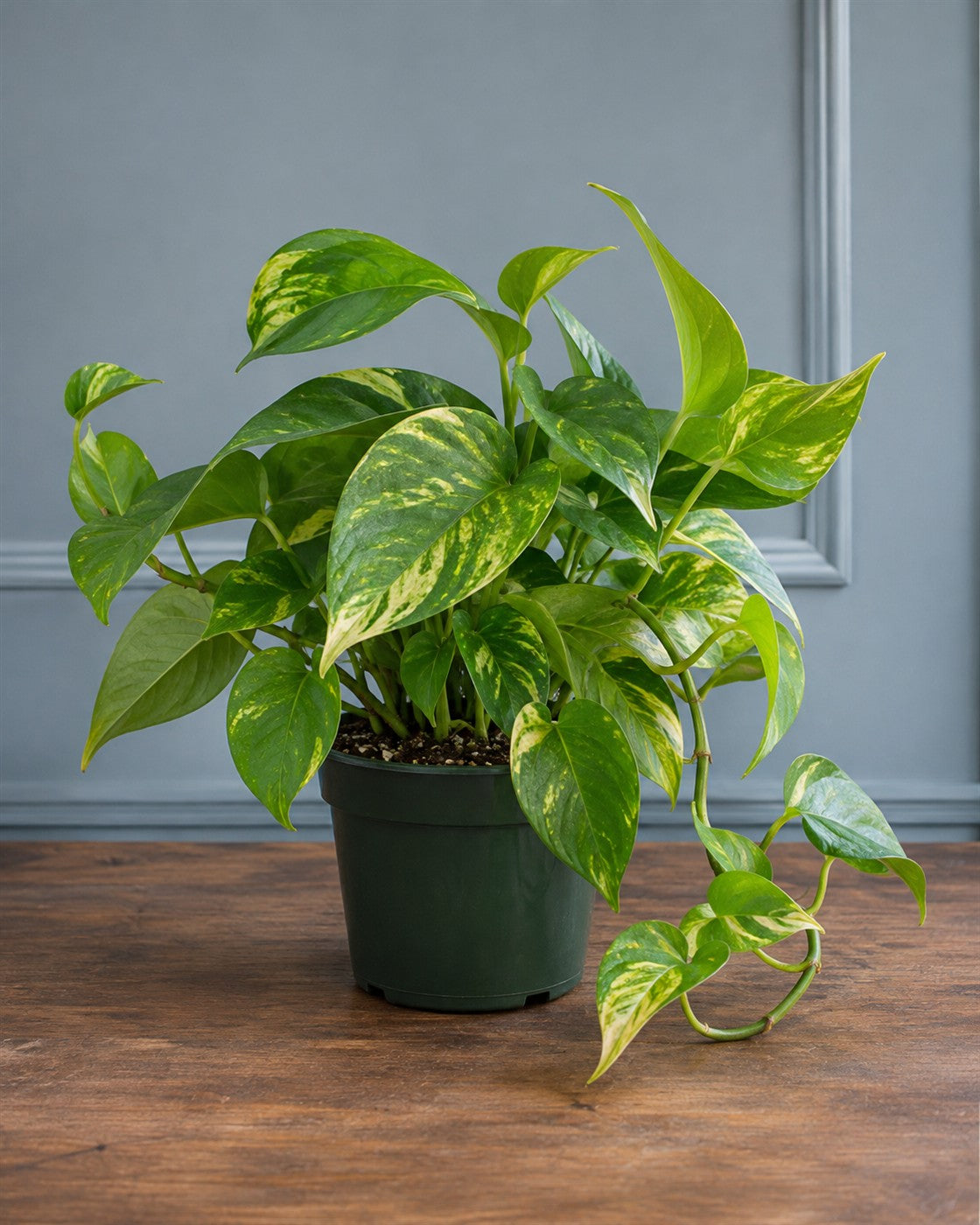
Epipremnum 'Hawaiian' (Epipremnum aureum)

Epipremnum aureum 'Hawaiian' en pot, feuillage vert panaché de jaune doré, vue d’ensemble.
PÉPINIÈRE.CA

Epipremnum 'Hawaiian' (Epipremnum aureum)

BACK-IN-STOCK ALERT

Don’t miss its return.

Leave your email and receive an alert when this product is available again.

An alert for this product only. No newsletter signup. Privacy

Serre

Pothos

Sold as Tropical indoor plant

Sold out

Delivery and pickup: view conditions

Product information
Advice adapted to Canada
Secure payment
Share
Common nameHawaiian pothos
FamilyAraceae
GenusEpipremnum
Speciesgolden
CultivarHawaiian
Plant typeTropical indoor plant
Botanical namePothos

Epipremnum ‘Hawaiian’ (Epipremnum aureum). This plant features large, glossy, dark green leaves variegated with golden yellow. The pothos is a vine: its stems can trail or climb a support. In a pot, the foliage often retains its juvenile appearance; therefore, the cultivation method is just as important as the name of the selection. The yellow or lime shades of the leaves are part of the desired effect. Compare new growth to healthy parts before concluding there is a deficiency; a natural light pattern does not automatically require corrective fertilization.

Growing a Hawaiian Pothos starts with balancing light and water. Let the substrate dry out between waterings, then water the entire root ball and let it drain. A hanging plant may dry out differently than a pot placed on the floor. Lift the container to gauge its weight and check the moisture level before adding water to leaves that have become limp. Fairly bright, indirect light promotes steady growth for the pothos. Variegated selections deserve a spot where their green areas receive enough light. Tolerance to low lighting does not mean that a windowless room is suitable for long-term growth.

Preserve the decorative character of your Hawaiian Pothos as it grows. The yellow or lime shades of the leaves are part of the desired effect. Compare new growth to healthy parts before concluding there is a deficiency; a natural light pattern does not automatically require corrective fertilization. In winter, keep the pothos stems away from cold windows. If new leaves appear more slowly, space out the fertilizer and re-evaluate watering. Also, check the bottom of hanging planters: retained water is less visible there than in a pot placed at eye level.

In the garden

Exposure
Sun to partial shade

Planting guide

Planting & establishment

Minimum temperature

15 °C (59 °F)

Soil and care

Soil & care

Moisture

Moderate

Minimum temperature

15 °C (59 °F)

Watering

For Epipremnum aureum 'Hawaiian', let the substrate dry out between waterings, then water the entire root ball and let it drain. A hanging plant may dry out differently than a pot placed on the ground. Lift the container to gauge its weight and check the moisture level before adding water to leaves that have become limp. A sparse vine can be shortened above a node to improve its shape.

Soil type

For Epipremnum aureum 'Hawaiian', a pot with drainage holes and a well-draining mix will prevent root stagnation. For vertical growth, install a stable support as soon as you repot. Aerial roots can cling to it; keep ties loose and avoid pressing the stems against a fragile surface. A leggy vine can be shortened above a node to reshape it.

Fertilization

For Epipremnum aureum 'Hawaiian', a green plant fertilizer supports active pothos growth, according to the product instructions. Do not add it to force larger leaves in a dark spot. Maturity, light, and support also influence their development; excessive fertilization does not replace these conditions. A bare vine can be trimmed above a node to work on its shape.

Seasonal care

Seasonal maintenance of the Hawaiian Pothos aims to preserve its appearance while keeping pace with its growth. The plant features large, glossy, dark green leaves variegated with golden yellow. In the spring, examine new growth and root crowding before scheduling a repotting. In the summer, check the root ball more frequently during hot days. In the autumn, gradually adapt the routine to observed drying and carefully inspect any plant returning from a stay outdoors. In the winter, keep the pothos stems away from cold windows. If new leaves appear more slowly, space out fertilizer applications and re-evaluate watering. Also, check the bottom of hanging planters: retained water is less visible there than in a pot placed at eye level. The pattern is distributed differently from one leaf to the next. Judge the plant by several leaf blades and its recent growth, without expecting an exact replica of the same design on every new shoot. The highlights change depending on the viewing angle. Soft, lateral light makes them legible without the use of shine products; compare the appearance of the leaves at different times before attributing every nuance to a cultivation problem. The yellow or lime shades of the leaves are part of the desired effect. Compare young shoots to healthy parts before concluding there is a deficiency; a natural light pattern does not automatically require corrective fertilization.

Container growing

Container growing

To grow Hawaiian Pothos in a pot, ensure there's enough space for its decorative features. The plant has large, shiny, dark green leaves variegated with golden yellow. A pot with drainage holes and a well-draining mix will prevent waterlogging around the roots. For vertical growth, install a stable support as soon as you repot. Aerial roots can cling to it; keep ties loose and avoid pressing stems against a fragile surface. Let the substrate dry between waterings, then water the entire root ball and drain. A hanging plant may dry differently than a pot placed on the floor. Lift the container to gauge its weight and check for moisture before adding water to limp leaves. The variegation pattern varies from leaf to leaf. Judge the plant based on several leaves and its recent growth, rather than expecting an exact copy of the same pattern with each new shoot. Bright, indirect light promotes consistent pothos growth. Variegated varieties benefit from a spot where their green areas receive enough light. Tolerance to low light does not mean that a windowless room is suitable for sustained growth.
Gros plan des feuilles vertes striées de jaune de l’Epipremnum aureum 'Hawaiian'.

Size, flowering & harvest

Mature height

240 cm (8 ft)

Width / spread

90 cm (3 ft)

Growth rate

Moderate
Epipremnum aureum 'Hawaiian' en pot, feuillage vert panaché de jaune doré, vue d’ensemble.

Garden associations

Companion plants & uses

Garden use

The Hawaiian Pothos is chosen for its decorative appeal: the plant has large, glossy, dark green leaves variegated with golden yellow. Hanging it accentuates its trailing stems, while a stake highlights its climbing ability. Choose the presentation based on space and access to watering. The difference between pothos and philodendron lies in their botanical identity: these names do not refer to two sizes of the same plant. The pattern varies from one leaf to another. Judge the plant by several leaves and its recent growth, without expecting an exact copy of the same pattern on each new shoot.

Frequently asked questions

Frequently asked questions

What is the distinctive characteristic of Hawaiian Pothos?
Hawaiian Pothos stands out because of this characteristic: the plant bears large, shiny, dark green leaves variegated with golden yellow. The pattern varies from one leaf to another. Judge the plant by several leaves and by its recent growth, without expecting an exact copy of the same pattern with each new shoot. A hanging basket highlights the trailing stems, while a stake takes advantage of their ability to climb. Choose the presentation according to the space and access to watering. The difference between pothos and philodendron lies in their botanical identity: these names do not refer to two sizes of the same plant.
How to water Hawaiian Pothos without damaging its roots?
When watering Hawaiian Pothos, observe the root ball before deciding. The plant has large, glossy, dark green leaves variegated with golden yellow. Allow the substrate to dry out between waterings, then water the entire root ball and drain. A hanging plant may dry differently from a pot placed on the ground. Lift the container to assess its weight and check for moisture before adding water to limp leaves. The pattern varies from leaf to leaf. Judge the plant by several leaves and its recent growth, without expecting an exact replica of the same pattern on every new shoot.
Where to place Hawaiian Pothos to best showcase its foliage?
Hawaiian pothos requires good lighting and adequate space. The plant has large, shiny, dark green leaves variegated with golden yellow. Fairly bright indirect light promotes steady pothos growth. Variegated selections deserve a spot where their green areas receive enough light. Tolerance to low light does not mean that a windowless room is suitable for sustainable growth. The yellow or lime green hues of the leaves are part of the desired effect. Compare young shoots to healthy parts before concluding a deficiency; a natural light pattern does not automatically require corrective fertilization.
How to display Hawaiian Pothos on a moss pole or in a hanging basket?
The plant has large, shiny, dark green leaves variegated with golden yellow. Hawaiian Pothos can be displayed to take advantage of its vine-like stems. A hanging presentation highlights the trailing stems, while a stake utilizes their ability to climb. Choose the presentation according to the space and access to watering. The difference between pothos and philodendron lies in their botanical identity: these names do not refer to two sizes of the same plant. The pattern varies from leaf to leaf. Judge the plant by several leaves and by its recent growth, without expecting an exact copy of the same pattern on each new shoot.
What care should I give to Hawaiian Pothos in winter?
In winter, Hawaiian Pothos requires a routine adapted to its activity. The plant has large, shiny, dark green leaves variegated with golden yellow. In winter, keep the pothos stems away from cold windows. If new leaves appear more slowly, space out fertilizer applications and re-evaluate watering. Also check the bottom of hanging baskets: retained water is less visible there than in a pot placed at eye level. The pattern varies from leaf to leaf. Judge the plant by looking at several leaves and its recent growth, without expecting an exact copy of the same pattern on each new shoot.

Pets and precautions

Reported toxicity

Yes

Complete your purchase

Click a product to build your selection.

Your selection

Total