


Sale
Sold out

Semences biologiques.
Fabaceae.
Bush bean 'Jacob's Cattle Gold' organic
Phaseolus vulgaris.
Product code : GAIAS-0225
Haricot nain 'Jacob's Cattle Gold' fait partie de notre sélection de semences biologiques pour les jardins du Québec.
- Exposure
- Mi-ombre.
- Life cycle
- Annuelle.
Discover the plant
Common nameHaricot nain 'Jacob's Cattle Gold'.
FamilyFabaceae.
GenusPhaseolus
Speciesvulgaris.
TypeSemences biologiques.
Botanical namePhaseolus vulgaris.
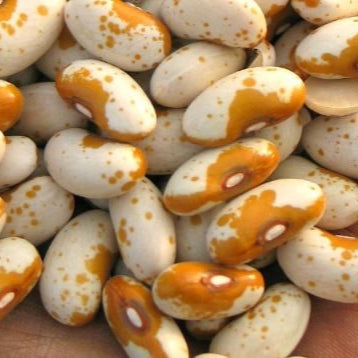
Organic 'Jacob's Cattle' Golden Bush Bean ( Phaseolus vulgaris ) – offered by Gaia, a heritage treasure with golden speckled beans
'Jacob's Cattle Gold' dwarf bean is an exceptional heirloom variety , renowned for its edible green pods and unique gold-flecked beans . This cross between the famous Jacob's Cattle and Paint bean combines rich, creamy flavour with captivating beauty. A favourite in the kitchen, it excels in soups and stews , where its melt-in-the-mouth texture works wonders.
Easy to grow, this bushy dwarf bean does not require staking and fits perfectly into a diversified vegetable garden . It appreciates well-drained soil and full sun exposure for abundant production.
Did you know?
Speckled beans, such as Jacob's Cattle Gold , have been prized for centuries for their high protein content and ability to absorb flavors well in dishes. Their speckled appearance was once associated with spiritual and medicinal beliefs in some indigenous cultures.
Spread : Bushy habit, no need for support
Plant height : 40 to 50 cm
Quantity per pack : ± 40 seeds
Companion plants : Corn, carrot, cabbage, cucumber, peas, radish, potato, squash, nasturtium, rosemary
Enemy plants : Alliums (onions, garlic, leek), beetroot
Cultivation method
Before sowing, it is advisable to soak the seeds in warm water for a maximum of 8 hours to promote germination. Prolonged soaking could harm the viability of the seeds. Once ready, they should be sown directly in the open ground , after the last frosts, when the soil is sufficiently warmed.
'Jacob's Cattle Gold' bean prefers a light, well-drained soil with good sunlight. It is important to leave about 8 to 10 cm between each plant and 30 cm between rows to ensure good air circulation and reduce the risk of disease. Moderate but regular watering is necessary to promote optimal growth, while avoiding excess water which could lead to root rot.
For a continuous harvest throughout the season, it is possible to stagger the sowing by spacing them about three weeks apart. This bean reaches maturity after about 80 days , offering a beautiful production of tasty and colorful beans.
Harvesting and conservation
The pods must be mature and well dried before harvesting. It is best to let them dry on the vine as much as possible to maximize their preservation. Once harvested, the beans should be stored in a cool, dry place to avoid deterioration.
If you want to extend their shelf life, freezing dried beans is a great option. This helps preserve their taste and nutritional quality while protecting them from potential pantry insects.
With its compact habit , its spotted beauty and its excellent culinary quality , the bean 'Jacob's Cattle Gold' is an essential choice for gardeners and gourmets in search of authentic varieties! ??

Sowing guide
It all startswith a seed.
Sowing depth
2,5 à 5,1 cm (1 à 2 po) en semis direct.
Spacing / density
15,2 à 30,5 cm (6 à 12 po).
Germination temperature
21-31°C.
Germination time
8 à 10 jours.
Sowing period
Pour une récolte continue, semez à intervalles de 3 sem.
Propagation
Semis.
Growing method
Pour Haricot nain 'Jacob's Cattle Gold', suivez ces repères de semis et de culture adaptés à la variété. Pour une récolte continue, semez à intervalles de 3 sem. 1-2″ en semis direct 21-31°C 8 à 10 jours Lisez les indications du sachet avant de commencer et conservez l’étiquette pour suivre la variété pendant toute la saison.
Soil and care
The right care,at the right time.
Care level
Modéré.
Seasonal care
Pour Haricot nain 'Jacob's Cattle Gold', adaptez les soins saisonniers au rythme réel de la plante. Pour une récolte continue, semez à intervalles de 3 sem. 1-2″ en semis direct 21-31°C 8 à 10 jours Attendez que les gousses et les graines enfermées aient atteint une maturité complète.
Container growing
A garden,within reach.
La culture de Haricot nain 'Jacob's Cattle Gold' en contenant demande un volume, un drainage et une exposition adaptés. Culture en pleine terre recommandée; très grand contenant de 40 L ou plus seulement si un support et un arrosage régulier sont possibles.

Bloom and dimensions
Its place,in your garden.
Mature height
45,7 à 61 cm (18 à 24 po).
Foliage color
Vert.
Foliage type
Herbacé.
Growth rate
Modérée.
Growth habit
Grimpant ou rampant.
Garden associations
In goodcompany.
Plants to avoid
Alliums, Betterave.
Frequently asked questions
Your questions,answered.
Comment conserver les semences de Haricot nain Jacob s Cattle Gold avant le semis?
Pour Haricot nain 'Jacob's Cattle Gold', les renseignements du sachet indiquent : Environ 25 graines · lot GOGO37 · germination > 85 %.
Comment semer Haricot nain Jacob s Cattle Gold?
Pour Haricot nain 'Jacob's Cattle Gold', la période indiquée est les indications détaillées de la fiche. La méthode recommandée est Semis, avec une profondeur de 2,5 à 5,1 cm (1 à 2 po) en semis direct.
Quelles conditions favorisent la germination de Haricot nain Jacob s Cattle Gold?
Pour Haricot nain 'Jacob's Cattle Gold', le délai de germination indiqué est 8 à 10 jours, avec une température de germination de 21-31°C.
Où installer Haricot nain Jacob s Cattle Gold au jardin?
Pour Haricot nain 'Jacob's Cattle Gold', l’exposition recommandée est Mi-ombre. Le repère d’espacement indiqué est 15,2 à 30,5 cm (6 à 12 po).
Quand et comment récolter Haricot nain Jacob s Cattle Gold?
Pour Haricot nain 'Jacob's Cattle Gold', les parties comestibles confirmées sont : Graines ou gousses récoltées au stade recommandé.
For a great start to your seeds
The right extras.Right here.
Seed Starting Soil
Shop the collectionSeed starting supplies
Shop the collection





