Sale
Sold out

Semences biologiques.
Montiaceae.
Organic seeds
Cuban Claytone organic
Claytonia virginica.
Product code : GAIAS-0342
- Exposure
- Mi-ombre.
- Life cycle
- Annuelle.
Discover the plant
Common nameClaytone de Cuba.
FamilyMontiaceae.
GenusClaytonia
Speciesvirginica.
TypeSemences biologiques.
Botanical nameClaytonia virginica.
Organic Cuban Claytone ( Claytonia perfoliata ) – offered by Gaia, a tender and cold-resistant green
Also called miner's lettuce or winter purslane , Cuban claytone is a tender-leaved plant prized for its mild, slightly sweet flavor . Highly nutritious , it is rich in vitamin C , which made it an essential food for gold prospectors during the California Gold Rush, helping to prevent scurvy.
This hardy, cool-season plant grows rapidly in early spring and fall, producing a luscious carpet of greens perfect for salads, sandwiches, or as a garnish . Shade-tolerant , it fits well under taller crops, along the edge of a vegetable garden, or in a woodland garden.
Did you know?
Cuban Claytone can survive temperatures down to -7°C , making it one of the few winter salads available in cool climates. Its succulent, crunchy texture gives it a slight spinach note , while being sweeter and juicier.
Spread : Creeping habit, natural ground cover
Plant height : 10 to 20 cm
Quantity per pack : ± 500 seeds
Companion plants : White trout lily, wild leek, wild geranium, liverwort, wild blue phlox, may-pod, Solomon's seal, prairie trillium, *man's breeches
Enemy plants : —
* ?? Man's Breeches ( Dicentra cucullaria ) is a wild North American plant also called hooded dicenter or Dutchman's breeches in English. Its name comes from the original shape of its white flowers which resemble… long panties turned inside out hanging on a clothesline! ??
It is a perennial plant that grows in humid, shady forests , often alongside Cuban Claytone. It is prized for its delicate flowers and finely cut foliage , but be careful: it is toxic for human and animal consumption!
So, grow it for beauty, not for salad! ??
Cultivation method
Sow directly in early spring , as soon as the soil can be worked (usually late April ).
Plant seeds 0.5 cm deep in moist, well-drained soil in partial shade . Thin seedlings to 10-15 cm spacing to encourage good development.
Cuban Claytone is cold hardy and self-seeds , allowing for extended harvesting without effort.
Harvesting and conservation
Young leaves and stems are best before flowering , when they are tender and juicy .
Regular harvesting stimulates new shoots and prolongs production. Once harvested, Cuban Claytone can be stored for a few days in the refrigerator in a perforated plastic bag , placed in the vegetable drawer.
Why grow Cuban Claytone?
? Cold hardy, ideal for winter and early spring crops
? Mild and slightly sweet flavor, crunchy and juicy texture
? Shade tolerant, perfect for understory growing
? Reseeds naturally, for a sustainable harvest
With its rapid growth, robustness and delicate freshness , Cuban Claytone is an original alternative to traditional salads , ideal for vegetable gardens in cool climates!

Sowing guide
It all startswith a seed.
Sowing depth
6,4 mm (1/4 po) en semis direct.
Spacing / density
30,5 cm (12 po).
Germination temperature
10-18°C.
Germination time
Généralement 7 à 21 jours dans les conditions recommandées.
Propagation
Semis.
Growing method
Pour Claytone de Cuba, suivez ces repères de semis et de culture adaptés à la variété. 1/4″ en semis direct 10-18°C Lisez les indications du sachet avant de commencer et conservez l’étiquette pour suivre la variété pendant toute la saison.
Soil and care
The right care,at the right time.
Care level
Modéré.
Seasonal care
Pour Claytone de Cuba, adaptez les soins saisonniers au rythme réel de la plante. 1/4″ en semis direct 10-18°C Récoltez les feuilles et les tiges lorsqu’elles sont jeunes et tendres, avant que la plante ne commence à fleurir.
Container growing
A garden,within reach.
La culture de Claytone de Cuba en contenant demande un volume, un drainage et une exposition adaptés. 10 à 15 L par plant, avec drainage libre.

Bloom and dimensions
Its place,in your garden.
Mature height
15,2 à 20,3 cm (6 à 8 po).
Foliage color
Vert.
Foliage type
Herbacé.
Growth rate
Modérée.
Growth habit
Dressé à buissonnant.

Garden associations
In goodcompany.
Companion plants
Laissez assez d’espace pour préserver la lumière et la circulation d’air.
Plants to avoid
Brocoli, Chou, Chou-Fleur, Chou Frisé, Chou de Bruxelles.
Frequently asked questions
Your questions,answered.
Comment conserver les semences de Claytone de Cuba avant le semis?
Pour Claytone de Cuba, les renseignements du sachet indiquent : Environ 100 graines · lot GO24111 · germination > 85 %.
Comment semer Claytone de Cuba?
Pour Claytone de Cuba, la période indiquée est les indications détaillées de la fiche. La méthode recommandée est Semis, avec une profondeur de 6,4 mm (1/4 po) en semis direct.
Quelles conditions favorisent la germination de Claytone de Cuba?
Pour Claytone de Cuba, le délai de germination indiqué est Généralement 7 à 21 jours dans les conditions recommandées, avec une température de germination de 10-18°C.
Où installer Claytone de Cuba au jardin?
Pour Claytone de Cuba, l’exposition recommandée est Mi-ombre. Le repère d’espacement indiqué est 30,5 cm (12 po). Pour la culture en pot, la fiche recommande : 10 à 15 L par plant, avec drainage libre.
Quand et comment récolter Claytone de Cuba?
Pour Claytone de Cuba, observez le développement saisonnier et utilisez la période d’intérêt indiquée dans la fiche comme repère pour profiter de la plante au jardin.
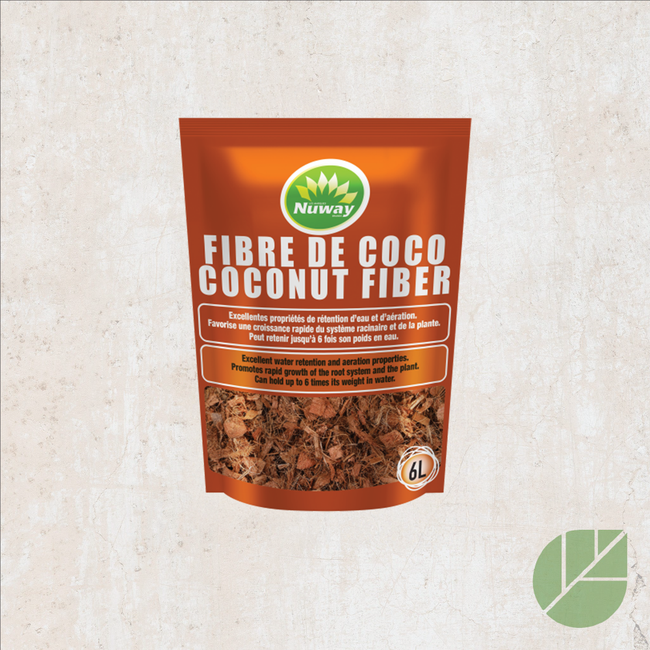
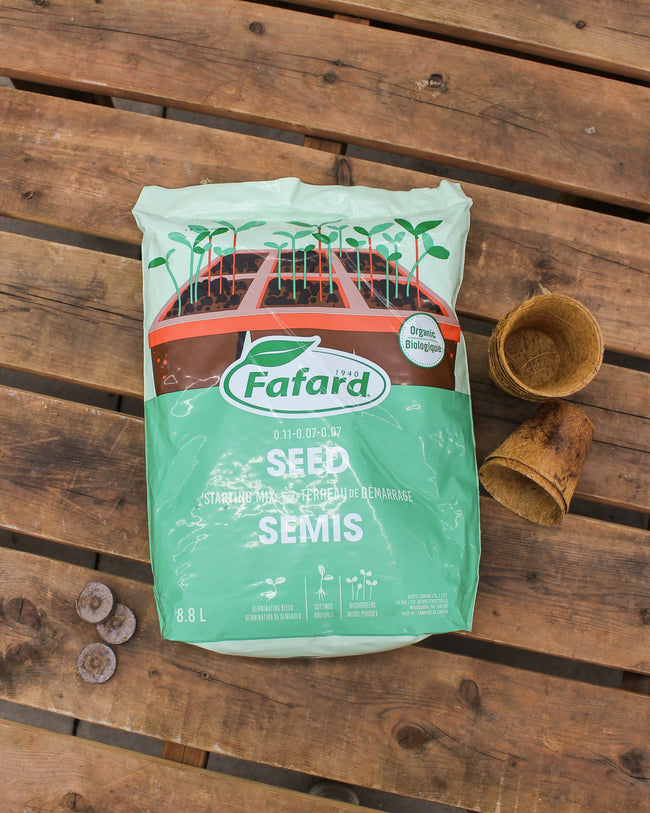
For a great start to your seeds
The right extras.Right here.
Seed Starting Soil
Shop the collectionSeed starting supplies
Shop the collection