


Sale
Sold out

Semences produites écologiquement.
Brassicaceae.
Late Cabbage 'Late Flat Dutch' organic
Brassica oleracea var. capitata.
Product code : GAIAS-0099
Chou tardif 'Late Flat Dutch' fait partie de notre sélection de semences produites écologiquement pour les jardins du Québec.
- Exposure
- Soleil à mi-ombre.
- Life cycle
- Bisannuelle.
Discover the plant
Common nameChou tardif 'Late Flat Dutch'.
FamilyBrassicaceae.
GenusBrassica
Speciesoleracea var. capitata.
TypeSemences produites écologiquement.
Botanical nameBrassica oleracea var. capitata.
Organic 'Late Flat Dutch' Cabbage ( Brassica oleracea var. capitata ) – offered by Gaia, a giant variety and perfect for storing
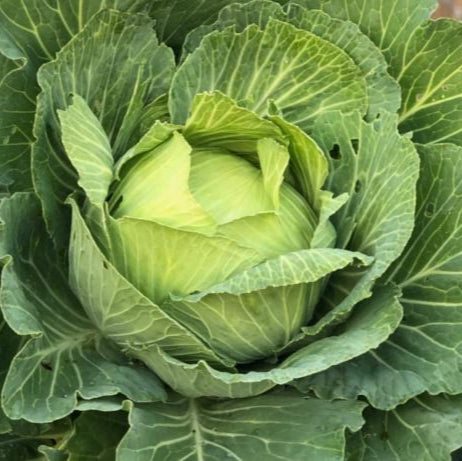
'Late Flat Dutch' cabbage is a late heirloom variety , prized for its large, flattened heads , which can reach 30 cm in diameter and weigh up to 7 kg . Grown since the 1860s , it is prized for its mild flavour and crisp texture , ideal for sauerkraut, stews or winter storage .
Its excellent storage capacity makes it a perfect cabbage for winter , which can be kept for several months in optimal conditions.
Did you know?
Late Flat Dutch is one of the largest heirloom cabbages grown in North America . It was introduced by European settlers and is still popular for late harvests , thanks to its cold hardiness and long storage life .
Spread : Spreading habit, broad, flattened heads
Plant height : 40 to 50 cm
Quantity per pack : ± 200 seeds
Companion plants : Alliums (garlic, onion, leek), rosemary, celery, nasturtium, mint
Enemy plants : Tomato
Cultivation method
Seeds should be soaked in warm water for 12 hours before sowing to speed up germination .
Sowing can be done directly in open ground when the temperature exceeds 23°C , or started indoors 4 to 6 weeks before planting .
Plant in full light , in rich, deep and well-drained soil . Space the plants 45 to 85 cm apart , because this cabbage has vigorous growth and great development .
Harvesting and conservation
Harvest when the outer leaves begin to curl and the head is dense and firm .
For optimal conservation, store the cabbages at 0°C and 95% humidity , in a well-ventilated space . They can be kept for several months , perfect for use throughout the winter.
Why grow 'Late Flat Dutch' cabbage?
? Late variety, ideal for autumn and winter harvests
? Giant heads that can reach 7 kg
? Excellent preservation, perfect for sauerkraut and stews
? Cold resistant up to -7°C
Homemade Sauerkraut with 'Late Flat Dutch' Cabbage
Late Flat Dutch cabbage is perfect for sauerkraut due to its large size, crunchy texture and natural sugar content that promotes fermentation. It develops a sweet and tangy flavor that is ideal for accompanying traditional or modern dishes.
Ingredients (for about 5 L of sauerkraut)
- 1 'Late Flat Dutch' cabbage (about 5 kg)
- 3 tbsp non-iodized salt (sea salt or pickling salt)
- 1 tbsp caraway seeds (optional, for traditional taste)
- 1 tbsp juniper berries (optional, for flavor)
- 1 bay leaf (optional)
- Filtered water (if needed)
Preparation
1. Prepare the cabbage
Remove the first outer leaves of the cabbage and save a few for later. Cut the cabbage into quarters, remove the tough core and thinly slice using a knife, mandolin or food processor.
2. Salt and massage
Place the shredded cabbage in a large bowl or fermentation tray. Add the salt and massage vigorously with your hands for about 10 minutes, until the cabbage softens and releases its juices. Add the spices and mix well.
3. Potting
Place the cabbage in a large glass jar, airtight jar, or fermentation barrel. Pack firmly with your fist or a pestle to expel air and submerge the cabbage in its own juices. Cover with the reserved whole leaves and place a clean weight (a small jar filled with water, a clean rock, or a fermentation weight).
If the cabbage is not completely covered with liquid, add a little filtered water with 1 tsp salt dissolved in it .
4. Fermentation
Leave to ferment at room temperature (18-22°C) for 1 to 4 weeks . Check every day for the first week and remove the white foam if necessary.
Tasting and conservation
Taste after 2 weeks : the longer the fermentation, the more tart the sauerkraut will be. Once the desired flavor is obtained, transfer to the refrigerator or a cool place (0-5°C) to stop the fermentation.
Keeps for several months.
Suggestions for use
- Alsatian sauerkraut : served with sausages, potatoes and bacon
- Vegetarian version : with grated carrots and apples
- On toast : with goat cheese and honey
- In a sandwich : to add a tangy and crunchy touch
With its large size, mild flavor and hardiness , Late Flat Dutch is a great choice for gardeners looking for a reliable, abundant variety.

Sowing guide
It all startswith a seed.
Sowing depth
1,3 cm (1/2 po) en semis direct.
Spacing / density
45,7 à 61 cm (18 à 24 po).
Germination temperature
16-21°C.
Germination time
4 à 10 jours (trempage).
Propagation
Semis.
Growing method
Pour Chou tardif 'Late Flat Dutch', suivez ces repères de semis et de culture adaptés à la variété. 1/2″ en semis direct 16-21°C 4 à 10 jours (trempage) Lisez les indications du sachet avant de commencer et conservez l’étiquette pour suivre la variété pendant toute la saison.
Soil and care
The right care,at the right time.
Care level
Modéré.
Seasonal care
Pour Chou tardif 'Late Flat Dutch', adaptez les soins saisonniers au rythme réel de la plante. 1/2″ en semis direct 16-21°C 4 à 10 jours (trempage) Récolte lorsque les feuilles extérieures commencent à tomber.
Container growing
A garden,within reach.
La culture de Chou tardif 'Late Flat Dutch' en contenant demande un volume, un drainage et une exposition adaptés. 5 à 10 L par plant, avec drainage libre.

Bloom and dimensions
Its place,in your garden.
Foliage color
Vert.
Foliage type
Herbacé.
Growth rate
Modérée.
Growth habit
Rosette ou touffe compacte.
Garden associations
In goodcompany.
Plants to avoid
Tomate.
Frequently asked questions
Your questions,answered.
Comment conserver les semences de Chou tardif Late Flat Dutch avant le semis?
Pour Chou tardif 'Late Flat Dutch', les renseignements du sachet indiquent : Environ 100 graines · lot GO-0000737 · germination > 85 %.
Comment semer Chou tardif Late Flat Dutch?
Pour Chou tardif 'Late Flat Dutch', la période indiquée est les indications détaillées de la fiche. La méthode recommandée est Semis, avec une profondeur de 1,3 cm (1/2 po) en semis direct.
Quelles conditions favorisent la germination de Chou tardif Late Flat Dutch?
Pour Chou tardif 'Late Flat Dutch', le délai de germination indiqué est 4 à 10 jours (trempage), avec une température de germination de 16-21°C.
Où installer Chou tardif Late Flat Dutch au jardin?
Pour Chou tardif 'Late Flat Dutch', l’exposition recommandée est Soleil à mi-ombre. Le repère d’espacement indiqué est 45,7 à 61 cm (18 à 24 po). Pour la culture en pot, la fiche recommande : 5 à 10 L par plant, avec drainage libre.
Quand et comment récolter Chou tardif Late Flat Dutch?
Pour Chou tardif 'Late Flat Dutch', les parties comestibles confirmées sont : Feuilles et tiges tendres.
For a great start to your seeds
The right extras.Right here.
Seed Starting Soil
Shop the collectionSeed starting supplies
Shop the collection





