Shrubs

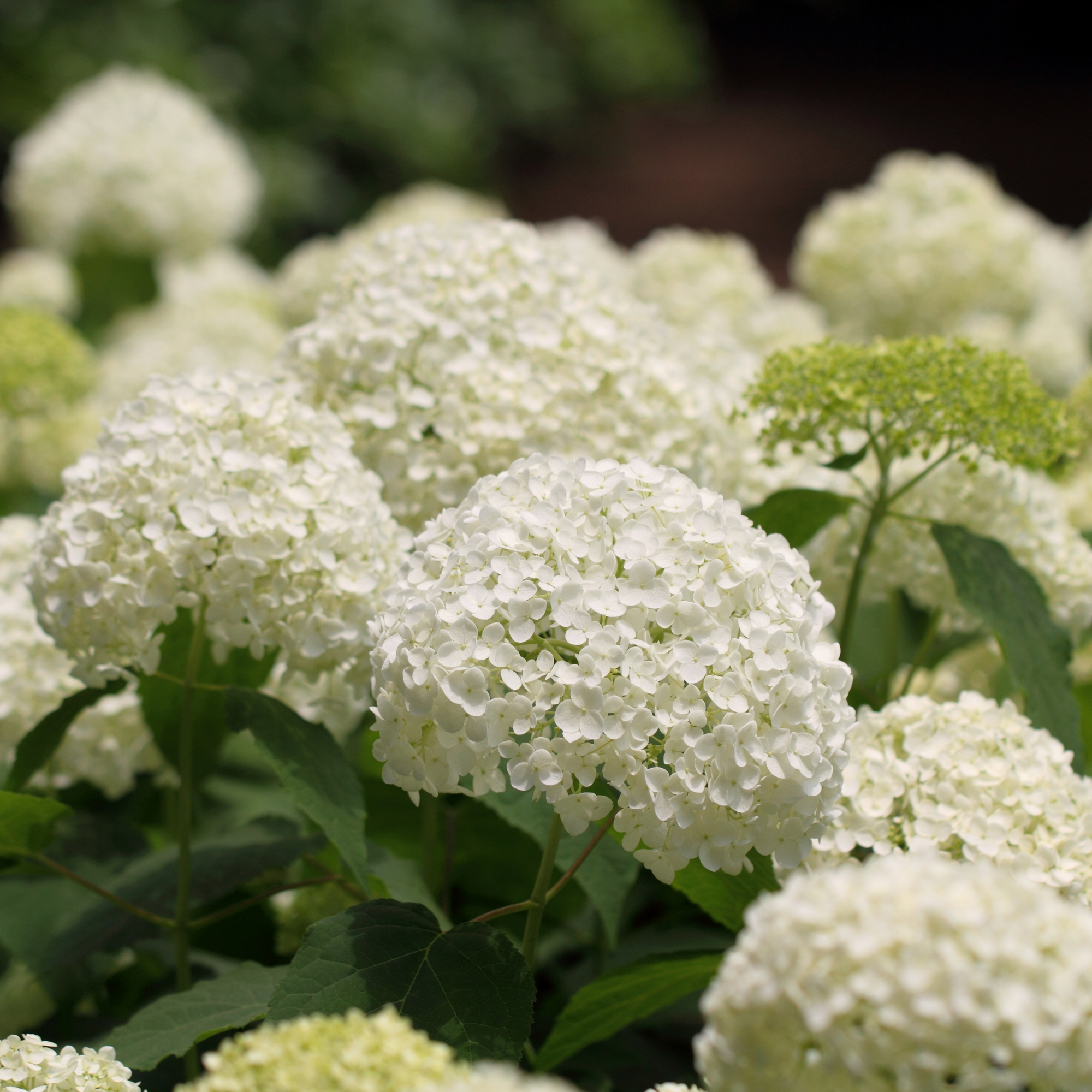
Annabelle smooth hydrangea

Hydrangea arborescens 'Annabelle'

Annabelle smooth hydrangea is a very hardy shrub producing enormous creamy white, spherical flower heads in summer. Its rounded habit, dark green foliage and ability to bloom on new wood make it a dependable choice for Canadian gardens.

Format

Share
Exposure Full sun to partial shade; moist soil required in sun
Hardiness Zones 3 to 9
Difficulty level Low to moderate

Discover the plant

Family Hydrangeaceae
Type Deciduous ornamental shrub

Annabelle smooth hydrangea (Hydrangea arborescens 'Annabelle') is an iconic deciduous shrub with a rounded, dense and gently arching habit. In summer, its stems carry impressive spherical white flower heads that may reach approximately 20 to 30 cm across. The blooms emerge soft green, mature to creamy white and gradually return to green as they age. Broadly oval, dark green leaves with lightly toothed edges create a lush background that highlights the flowers. Hardy to Zone 3, this smooth hydrangea blooms on new wood, helping it flower reliably even after harsh Canadian winters. Its abundant display and classic colouring provide strong ornamental interest through summer and into fall.

Annabelle hydrangea grows in full sun or partial shade, although morning light with protection from intense late-afternoon sun is especially suitable. In full sun, the soil must remain consistently moist and watering will need to be more regular. Rich, loose, organically amended and well-drained soil supports its fast growth and oversized blooms. Water deeply during dry periods and apply mulch to conserve soil moisture. Pruning in early spring removes weak, damaged or crossing stems because the shrub flowers on the current season's growth. Moderate pruning generally helps maintain a stronger framework, while cutting every stem extremely low may encourage larger flower heads on softer stems.

In the garden, this white hydrangea suits shaded beds, mixed borders, low informal hedges and foundation plantings near patios or walkways. It creates a dramatic effect when planted in groups with enough spacing for healthy air circulation. Pair it with hostas, ferns, astilbes, coral bells or moisture-tolerant ornamental grasses to build rich contrasts in foliage and texture. The large blooms are excellent for fresh arrangements and dried bouquets, while flower heads left standing add structure during fall and winter. Some pollinating insects may visit the small fertile flowers, although the conspicuous decorative florets are primarily sterile. Plant it where its arching stems have room to display naturally.

Annabelle Smooth Hydrangea – Hydrangea arborescens 'Annabelle'

Planting guide

From plantingto establishment.

Best planting time Spring or early fall
Spacing / density Space 1.2 to 1.5 m apart
Propagation Softwood stem cuttings or division of suckers
Growing method
Plant in a hole approximately twice as wide as the root ball without burying the crown. Loosen the soil, incorporate compost when needed, water thoroughly and add organic mulch. Maintain even moisture throughout the first growing season. Allow enough room for its rounded habit and gently arching stems carrying large flower heads.

Soil and care

The rightconditions.

Exposure Full sun to partial shade; moist soil required in sun
Soil Rich, moist, loose and well-drained
Soil pH Acidic to neutral, approximately 5.5 to 7
Watering Moderate to regular; water deeply during dry periods
Fertilization Compost or balanced shrub fertilizer in spring
Care level Low to moderate
Seasonal care
In early spring, remove dead, weak or damaged wood before active growth begins. Since Annabelle hydrangea blooms on new wood, stems may be shortened to renew the shrub, although moderate pruning often preserves a stronger framework. Add compost in spring and refresh the mulch without covering the crown. During summer, monitor moisture carefully, especially in sunny locations, and water deeply whenever the soil begins to dry. Heavy flower heads may bend the stems after rain, so discreet support can be helpful. In fall, leave the dried blooms for winter structure or harvest them for arrangements. Avoid fall pruning so the standing stems and flowers can provide seasonal interest.

Container growing

A controlledenvironment.

Recommended pot sizeAt least 50 to 60 cm wide
Container growing is possible in a large, frost-resistant pot with ample drainage holes. Select a container at least 50 to 60 cm wide and use a rich growing medium that retains moisture without becoming waterlogged. Water frequently during hot weather because containers dry faster than garden soil. Add compost or a balanced fertilizer in spring. In very cold regions, insulate the container, move it to a sheltered location or overwinter it in an unheated cold space to protect the roots. Check moisture occasionally during winter whenever the growing medium is not frozen.
Annabelle Smooth Hydrangea – Hydrangea arborescens 'Annabelle'

Bloom and dimensions

The completeprofile.

Bloom periodSummer, generally from June to September
Flower colorSoft green, then creamy white and pale green
Foliage colorDark green
Foliage typeDeciduous
FruitingSmall, inconspicuous dry capsules
Maximum height1.5 m in most gardens
Maximum width1.8 m in favourable conditions
Growth rateFast
Hardiness zoneZones 3 to 9
Minimum temperatureApproximately -40°C
Annabelle Smooth Hydrangea – Hydrangea arborescens 'Annabelle'

Garden associations

What to plantwith it.

Good companionsHostas, ferns, astilbes, coral bells and moisture-tolerant grasses
Avoid planting withPlants requiring dry soil or intense heat
Beds, low hedges, borders, specimen planting and cut flowers

Frequently asked questions

Everything toknow.

Prune it in early spring before new growth begins. Since Hydrangea arborescens 'Annabelle' blooms on new wood, spring pruning does not remove flower buds formed the previous year. Remove dead or weak stems first, then shorten the remaining stems moderately to encourage a strong framework.
It can grow in full sun when the soil stays moist and watering is consistent. In Canadian gardens, morning sun or partial shade reduces water stress and wilting. Avoid extremely hot, dry locations exposed to intense late-afternoon sunlight, especially where irrigation is limited.
The oversized flower heads become heavy after rain and may bend the naturally flexible stems. Moderate spring pruning, rather than cutting every stem extremely low, helps preserve a sturdier framework. A wind-sheltered location, neighbouring plants or discreet supports can also help hold the blooms upright.
Allow approximately 1.2 to 1.5 m between plants so their rounded habit can develop with healthy air circulation. For a denser informal hedge, spacing may be reduced slightly, although the branches will intermingle more as the shrubs mature.
No. Hydrangea plant parts are not considered safe for dogs, cats or other pets to ingest. Place the shrub beyond the reach of animals that chew plants, and contact a veterinarian or animal poison service promptly whenever ingestion is suspected.

Its strengths, naturally.

Not recommended for pets

Pets

Pollinators
Attracts or supports pollinating insects

Pollinators

Butterflies
Plants that attract butterflies

Butterflies