Sale
Sold out

Dwarf kale with deeply curled leaves
Brassicaceae
Organic stem vegetable seeds
Organic 'Dwarf Green Curled' kale
Brassica oleracea, Group Acephala
Product code : BIOVO-0026
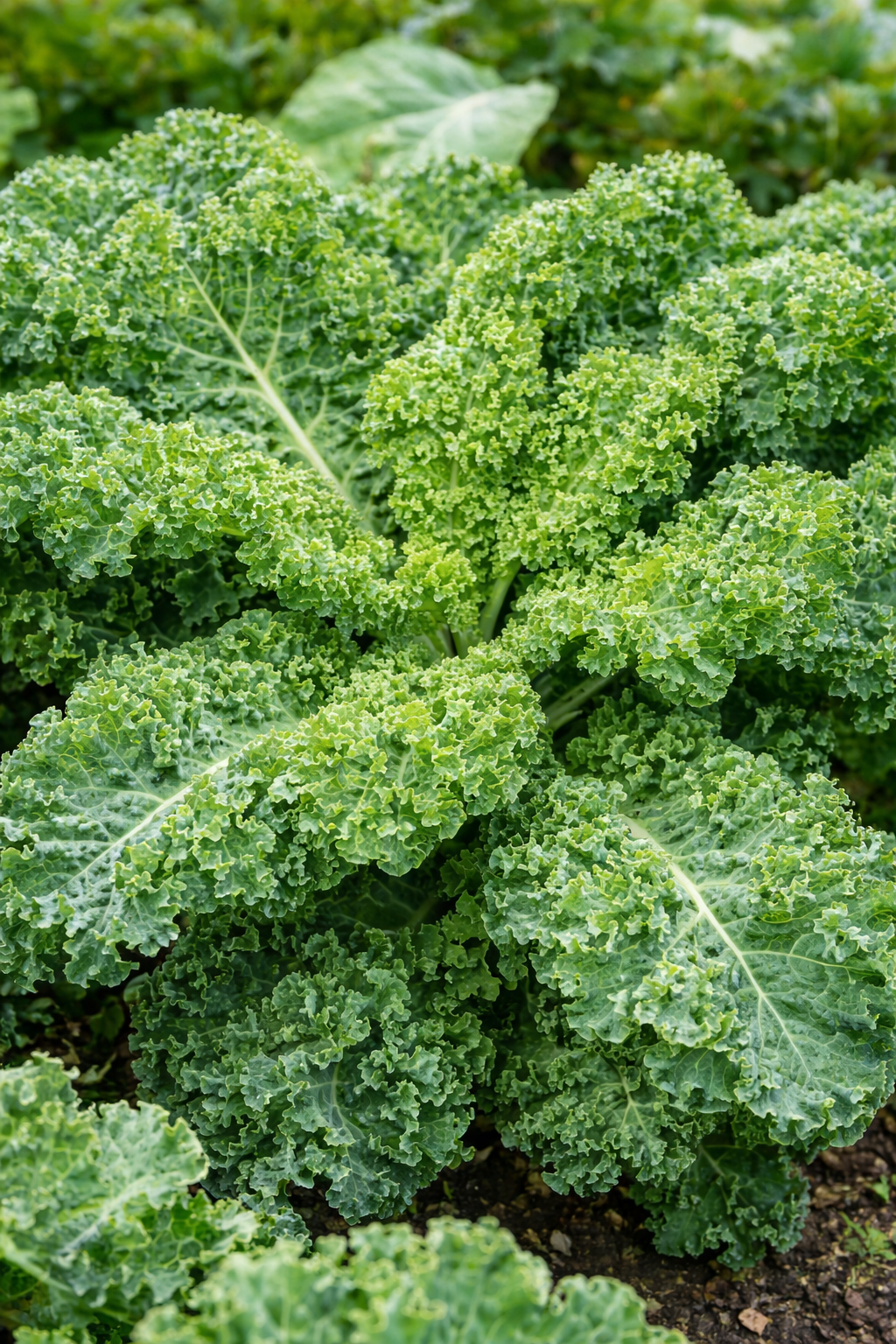
'Dwarf Green Curled' is compact kale producing a broad rosette of deep to yellowish-green, heavily wrinkled, finely curled leaves. Plants reach approximately 30–38 cm tall and nearly 60 cm wide, suiting small beds and large containers. Baby leaves may be cut at approximately 30 days, while mature foliage is generally ready in 50–65 days. Its low rosette withstands wind and fits edible borders without heavily shading neighbouring crops. Harvest outer leaves first while preserving the centre, maintain steady moisture, and protect the curls with insect netting where flea beetles or cabbage butterflies are active. Light frost often improves sweetness. Naturally.
- Exposure
- Full sun to partial shade
- Life cycle
- Biennial grown as an annual
Discover the plant
Common nameDwarf curled Scotch kale
FamilyBrassicaceae
GenusBrassica
Speciesoleracea, Group Acephala
CultivarDwarf Green Curled
TypeDwarf kale with deeply curled leaves
Botanical nameBrassica oleracea, Group Acephala
Reproducible seedsYes
Organic 'Dwarf Green Curled' kale (Brassica oleracea, Group Acephala) is a compact variety also known as 'Dwarf Curled Scotch', 'Bloomsdale', or 'Jamaica'. It forms a low rosette of deep to yellowish-green, heavily wrinkled, finely curled leaves. Plants generally reach 30–38 cm tall and may spread 60 cm when fully developed. Dense texture suits soup, sautéing, braising, kale chips, and baby-leaf harvest. Low growth also fits readily beneath insect netting supported on hoops and withstands exposed garden sites better than tall kale. Harvested leaves hold sauces well after cooking.
Direct-sow as soon as soil can be worked or start plants four to six weeks before transplanting. For fall harvest, sow again from late June into early August according to region. Place in full sun or light partial shade in fertile, mature-compost-enriched, moisture-retentive, well-drained soil. Space plants 30–45 cm apart for mature leaves, wider when preserving the full rosette width. Maintain steady moisture and protect from emergence with insect netting where flea beetles and cabbage butterflies are active. Water transplants immediately and weed shallowly to protect their developing roots. Mulch only after soil warms and seedlings establish.
Maturity generally ranges from 50 to 65 days; Baby leaves may be harvested from approximately 30 days. Take outer leaves while leaving the central growing point intact so plants continue producing. Low habit withstands wind well and particularly suits small gardens and containers, but leaves must be lifted to inspect for caterpillars hidden in the centre. Light frost often improves sweetness; still rotate Brassicas for three to four years and remove diseased debris. Wash the tightly curled leaves carefully, refrigerate harvest promptly, and discard every slimy or mouldy portion. Keep the basket shaded until it reaches the kitchen.

Sowing guide
It all startswith a seed.
Sowing depth
Approximately 1 to 2 cm (3/8 to 3/4 in)
Spacing / density
Thin to approximately 10 to 15 cm (4 to 6 in), with 30 to 45 cm (12 to 18 in) between rows
Germination temperature
Approximately 10 to 24 °C (50 to 75.2 °F)
Germination time
Approximately 7 to 10 days; cool soil may place emergence near the slower end of the range.
Sowing period
Early spring as soon as soil can be worked; late summer for an autumn harvest
Propagation
Direct sowing or indoor sowing three to four weeks before transplanting
Growing method
How to grow kale from seed indoors: 'Dwarf Green Curled' kale. Sow approximately 0.5–1 cm deep in fine soil or mix kept moist. Sow 'Dwarf Green Curled' in cool, finely prepared soil and keep the shallow seed zone evenly moist. Place 'Dwarf Green Curled' before late-season crowding develops, keeping its mature habit in mind: low compact broadly spreading rosette. Use successive small sowings instead of one crowded stand, pausing during unsuitable heat. Lay out the crop at thin to approximately 10 to 15 cm (4 to 6 in), with 30 to 45 cm (12 to 18 in) between rows, then keep paths open instead of filling gaps with another mature crop. Feed moderately; soft, overfed leaves are harder to cool and store. This leafy crop needs full sun to partial shade; nearby walls or taller crops should not compromise it. Thin or transplant gently to preserve airflow around the developing low compact broadly spreading rosette. Leave enough access around the rosette to inspect and cleanly harvest heavily wrinkled, finely curled, densely folded leaves. Water at soil level before the shallow root zone dries deeply, but do not leave it saturated. Harvest after dew dries, shade the leaves promptly, and remove bolting plants before the next succession. Harvest the planting at the leaf, rosette, or head stage described for the product. Cut with a clean tool after dew dries, shade the harvest immediately, and remove bolting or diseased plants before they affect the next succession.
Soil and care
The right care,at the right time.
Soil pH
Approximately 6.0 to 6.8
Care level
Easy
Watering
Steady moisture helps 'Dwarf Green Curled' kale maintain tender leaves and continue producing after selective harvests. Water 'Dwarf Green Curled' kale gently at soil level, let the surface begin drying before the next irrigation, and never leave its crown in standing water. Direct 'Dwarf Green Curled' kale's water beside the rosette so it does not remain trapped in the forming head. Check container-grown 'Dwarf Green Curled' kale daily in warm wind, but empty its saucer promptly.
Soil type
Give 'Dwarf Green Curled' kale loose, fertile soil with enough organic matter to hold moisture while surplus rain drains away. For 'Dwarf Green Curled' kale, blend mature compost through the upper root zone, level the surface, and remove hard clods before planting. Use approximately 6.0 to 6.8 as 'Dwarf Green Curled' kale's supplied pH target, testing before attempting to change it. Keep 'Dwarf Green Curled' kale's crown at soil level, avoiding a low pocket where water could collect inside the heavily wrinkled, finely curled, densely folded leaves. For container-grown 'Dwarf Green Curled' kale, use the recommended soil volume, fresh vegetable mix, and open drainage holes.
Fertilization
Prepare 'Dwarf Green Curled' with finished compost and moderate fertility before sowing. When tending 'Dwarf Green Curled', in an already fertile bed, one light balanced application is more useful than repeated feeding while the heavily wrinkled, finely curled, densely folded leaves develops. Apply only the labelled rate to moist soil and water granular product into the root zone. For 'Dwarf Green Curled' kale, heavy or late nitrogen can produce soft leaves that are harder to cool after harvest. In containers, divide necessary feeding into smaller applications because drainage removes nutrients. Stop or reduce feeding when 'Dwarf Green Curled' already shows balanced growth.
Moisture
Evenly moist soil without saturation
Seasonal care
Seasonal care for 'Dwarf Green Curled' kale. Use 'Dwarf Green Curled' kale’s stated sowing window as a frost-relative cue, not a universal date: early spring as soon as soil can be worked; late summer for an autumn harvest. Label the tray or row after sowing approximately 1 to 2 cm deep; seed generally emerges in 7 to 10 days at approximately 10 to 24 °C (50 to 75.2 °F), and slower seeds should not be disturbed. Raise seedlings in bright light or sow directly into a loose, fertile bed once cool-season conditions suit the crop. Thin or transplant to the stated spacing, setting the crown at soil level and firming soil gently around the roots. Keep moisture steady as leaves and stems expand, while preserving drainage and airflow after rain or overhead irrigation. For container-grown 'Dwarf Green Curled' kale, use the supplied guidance—at least 25 to 30 cm (10 to 12 in) deep and approximately 5 to 7 L per plant—and check drainage before growth hides the surface. Inspect leaves frequently for flea beetles, caterpillars, and slugs, especially while the edible centre is still small. A light cover can protect young plants from insects or cool wind, but remove or vent it before heat builds around the foliage. Plan harvest from the supplied guidance—baby leaves from approximately 30 days; mature leaves in 50 to 65 days—then use actual size and tenderness rather than forcing an exact calendar date. Cut before open flowers reduce culinary quality, leaving productive side shoots only where the crop naturally supplies them. If summer heat ends the crop, clear bolted stems; where autumns are long enough, start a separate late sowing as temperatures moderate.
Container growing
A garden,within reach.
Recommended pot size
At least 25 to 30 cm (10 to 12 in) deep and approximately 5 to 7 L per plant
Growing 'Dwarf Green Curled' kale in containers. For 'Dwarf Green Curled', choose a container matching this guide: at least 25 to 30 cm (10 to 12 in) deep and approximately 5 to 7 L per plant. Keep several drainage holes unobstructed. Sow 'Dwarf Green Curled' thinly or transplant a sturdy seedling without burying the crown. This leafy crop develops the expected harvest form: heavily wrinkled, finely curled, densely folded leaves. Use visible changes in the crop rather than the calendar alone to judge harvest. Thin plants for airflow and use removed sound seedlings promptly rather than leaving debris. Leave the crop open to light, airflow, and watering at soil level. Its growth is low compact broadly spreading rosette. Use fresh, fine potting mix that holds steady moisture while allowing surplus water to escape. Match the planting to full sun to partial shade and observe the actual hours of unobstructed light at the site. Place the container in sun during cool weather and use light afternoon shade as heat increases. Space the rosette thin to approximately 10 to 15 cm (4 to 6 in), with 30 to 45 cm (12 to 18 in) between rows to preserve access for watering, inspection, and harvest. For this leafy crop, harvest clean outer leaves while preserving the centre, or cut the whole plant at its intended stage with a clean knife. Cut clean leaves before bolting, cool them promptly, and remove diseased potting debris from reuse. Succession-sow another labelled container instead of keeping bolting the crop. Remove diseased mix from reuse, wash the pot, and cool every edible harvest promptly.

Bloom and dimensions
Its place,in your garden.
Mature height
Approximately 30 to 38 cm (12 to 15 in)
Width / spread
Approximately 60 to 64 cm (24 to 25 in)
Flower color
Yellow
Foliage color
Deep to yellowish green
Foliage type
Broad blue-green leaves borne on long petioles
Growth rate
Moderate
Growth habit
Low compact broadly spreading rosette
Fragrance
Mild cabbage flavour with a turnip-like crisp texture
Bloom period
'Dwarf Green Curled' flowers only after shifting from harvest growth into reproduction. A taller seed stalk rises beyond the established low compact broadly spreading rosette. In the 'Dwarf Green Curled' planting, water at soil level so open blossoms remain dry. For 'Dwarf Green Curled' kale, as bloom advances, quality of the heavily wrinkled, finely curled, densely folded leaves declines and energy moves toward seed. When tending Dwarf curled Scotch kale, remove bolting plants when leaves or roots are the goal, or retain a clearly labelled specimen for insects or seed observation. Do not let unwanted seed scatter, and remember that nearby related plants may affect seed purity.
Fruiting
Dwarf Green Curled kale is a leaf crop rather than a fruiting vegetable. Repeated picking focuses on healthy outer leaves while the growing point remains intact. As a plant eventually enters its reproductive phase, stems elongate and flowers develop, followed by seed pods. Keep any deliberate seed plants separate from the main leaf harvest, since their space needs and kitchen quality change as the flowering stalk grows.
Days to maturity
Baby leaves from approximately 30 days; mature leaves in 50 to 65 days
Harvest
Cut baby Dwarf Green Curled leaves from about 30 days, or wait 50–65 days for mature foliage. Work from the outside inward and leave the central bud intact so the plant keeps producing. Do not strip more than roughly one-third of the leaves at once. Choose firm unblemished growth, cool it promptly, and taste after light frost because flavour may become sweeter.
Garden associations
In goodcompany.
Companion plants
Dwarf Green Curled kale can anchor a leafy bed while shorter crops occupy clearly separated rows. Use an early radish or lettuce sowing where it can be removed before the kale needs its full spread. Do not interpret the word dwarf as permission to crowd plants tightly for mature leaves. Other brassicas nearby share some pest pressures, so inspect the whole group and rotate the family between seasons. Flowering plants can be kept along the bed edge, where they remain accessible without interfering with kale picking or protective netting.
Plants to avoid
Strawberry, tomato, cauliflower
Recipe idea
From the gardento your plate.
Edible parts
Leaves and tender young stems, always washed well; older stems are best removed or cooked longer
'Dwarf Green Curled' kale in the kitchen. 'Dwarf Green Curled' sautéed kale — Strip the leaves from the thick central ribs of one large bunch, rinse in several changes of water, and tear into bite-sized pieces. Slice tender ribs thinly if you want to use them. Warm 15 mL olive oil in a wide skillet, add the sliced ribs and 30 mL water, cover, and cook for three minutes. Add one minced garlic clove, the damp leaves, and a pinch of salt. Toss over medium heat until the kale is tender but still green, adding another spoonful of water if the pan dries. Finish with 15 mL lemon juice, black pepper, and toasted sunflower seeds. Stir in cooked white beans and serve on toast or over polenta for a simple meal. Remove yellow, slimy, or insect-damaged sections before cooking. Keep soil-covered leaves separate from clean utensils during washing. Cool leftovers promptly in a shallow container, refrigerate within two hours, and reheat only the portion needed.
Frequently asked questions
Your questions,answered.
How large does 'Dwarf Green Curled' become?
Compact plants reach approximately 30–38 cm tall and 60–64 cm wide. Rosettes remain low but may become much broader than they appear when young. For well-aired mature foliage, allow at least 45 cm between plants and more in rich soil. Closer spacing suits only baby-leaf harvest or progressive thinning. Plan final spacing at planting so leaves do not overlap excessively. A clear path simplifies base watering, inspection of the centre, and harvest without compacting soil around roots. In a container, allow one plant per usable volume and rotate the pot for even light. Wide spacing also improves airflow after rain.
When should 'Dwarf Green Curled' leaves be harvested?
Harvest baby leaves at approximately 30 days when they measure about 8–12 cm, or wait 50–65 days for mature foliage. Pick outer leaves while firm, well coloured, and still tender. Always leave the central cluster intact and remove no more than one-third of foliage at once. Harvest after dew dries and cool the leaves promptly. Wash the curls carefully, dry leaves, and refrigerate promptly in a ventilated container. Use slightly marked foliage first and discard every slimy, mouldy, or abnormal-smelling portion. Continue watering after harvest so the centre can produce new leaves. Pick after dew dries, keep the basket shaded, and continue watering regularly after harvest.
Why must deeply curled leaves be washed carefully?
Folds may hold soil, sand, small insects, or eggs less visible than on flat leaves. Separate foliage, inspect both surfaces, swish in a large bowl of cold water, then rinse under clean running water. Repeat if sand remains at the bottom and dry before storage. Discard every slimy, mouldy, heavily spotted, or abnormal-smelling leaf. Keep harvested leaves shaded, replace wash water when sand accumulates, and clean the sink after preparation. Refrigerate promptly and never store a slimy leaf with the rest of the harvest. Inspect the dense centre outdoors before bringing foliage into the kitchen. Use clean utensils and wash hands before preparation.
How can leaves be protected without insecticide?
Protect Dwarf Green Curled kale with exclusion first. Cover the bed with fine insect mesh or lightweight row cover immediately after sowing or transplanting, seal every edge, and keep the fabric lifted above the foliage. Inspect leaf undersides before covering so pests are not trapped inside. Hand-pick visible caterpillars or eggs, remove badly damaged leaves, and clean tools after diseased plants. Maintain the listed spacing so air can move through the dense curled rosettes. Rotate Brassica crops rather than planting kale repeatedly in the same place, and remove crop debris after harvest. Check the cover for holes after wind and open it only for weeding or harvest. A barrier works best before damage begins; it cannot repair leaves that pests have already eaten.
Can 'Dwarf Green Curled' be grown in a pot?
Dwarf Green Curled kale can grow in a pot at least 25 to 30 cm deep, with approximately 5–7 L of mix for one plant. Choose a wide container because the low rosette can spread 60 to 64 cm even though it reaches only about 30 to 38 cm high. Ensure free drainage and keep the root zone evenly moist. Place the pot for cool-season sun, adding light shade during unusual heat. Baby leaves can be harvested from about 30 days and mature leaves around 50 to 65 days. Take outer leaves while leaving the central growing point intact. Inspect the heavily curled undersides for pests and cover the pot with insect mesh when needed. Wash leaves and tender stems thoroughly before use, removing older tough stems or cooking them longer.
Wildlife and pets
Life,around your plants.
Supporting wildlife
Dwarf Green Curled kale contributes flowers only if plants are allowed to reach their reproductive stage, generally after overwintering. Leaf crops picked during their first season provide little floral forage. A dedicated seed plant can be useful in a mixed garden, but keep it separate from the young leaves intended for regular kitchen harvests.
For a great start to your seeds
The right extras.Right here.
Seed Starting Soil
Shop the collectionSeed starting supplies
Shop the collection