Sale
Sold out

Vegetable
Poaceae
Organic seeds
Organic 'Golden Bantam' corn
Maize
Product code : JAREC-0134
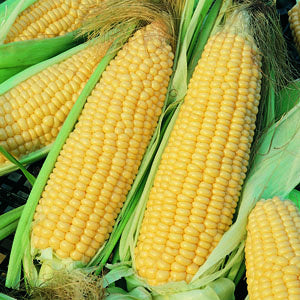
In the vegetable garden, its vigorous stalks create a beautiful summer architecture and that evocative sight of abundant late-summer harvests. Its golden yellow cobs, well-filled with tender and juicy kernels, offer a clean, sweet, and generous flavor, particularly remarkable when eaten straight after picking. It thrives in rich, well-drained soils and full sun exposure, where it develops steady growth and good production. Easy to integrate into home gardens, it rewards consistent care with flavorful and well-formed cobs. Classic, productive, and deliciously sweet, 'Golden Bantam' remains a reliable choice for rediscovering the full richness of summer corn.
- Quantity
- About 60 seeds
- Exposure
- Sun
- Life cycle
- Annual
Discover the plant
Common name'Golden Bantam' Corn
FamilyPoaceae
GenusZea
SpeciesMay
CultivarGolden Bantam
TypeVegetable
Botanical nameMaize
Reproducible seedsYes
Heirloom varietyYes
'Golden Bantam' Corn (Zea mays). In the vegetable garden, its vigorous stalks create a beautiful summer architecture and that nourishing scenery so evocative of abundant late-summer harvests. Its golden yellow ears, well-filled with tender and juicy kernels, offer a distinct, sweet, and generous flavor, particularly remarkable when consumed right after picking. It appreciates rich, well-drained soils and full sun exposures, where it develops steady growth and good production. Easy to integrate into home gardens, it rewards consistent care with flavorful and well-formed ears.
Recommended sowing period: May to June. The depth to respect is 2.5 to 4 cm (1 to 1.5 in). Emergence generally takes 7 to 14 days. For germination, maintain the potting mix at 18 to 30 °C (64 to 86 °F). Sow corn in blocks of several rows rather than in a single long line, to promote pollen circulation between plants. Identify corn types and their sowing dates. Regular emergence results in a more uniform planting. Avoid disturbing young roots once plants are established and maintain sufficient moisture during their establishment.
Corn forms a significant vertical volume in the vegetable garden. Position the growing block to limit shade on sun-loving vegetables. Maintain a pathway around the rows to observe the ears and water at the base. Avoid relying on a very isolated planting for well-filled ears: the proximity of several plants promotes wind pollination. In the vegetable garden, its vigorous stalks create a beautiful summer architecture and that nourishing scenery so evocative of abundant late-summer harvests.

Sowing guide
It all startswith a seed.
Sowing depth
1 to 1.5 in (2.5 to 4 cm)
Germination temperature
18 to 30 °C (64 to 86 °F)
Germination time
7 to 14 days
Sowing period
May to June
Propagation
Sowing
Growing method
Recommended sowing period: May to June. The recommended depth is 2.5 to 4 cm (1 to 1.5 in). Germination usually takes 7 to 14 days. For germination, keep the potting soil at 18 to 30 °C (64 to 86 °F). Sow corn in blocks of several rows rather than in a single long line, to encourage pollen circulation between plants. Identify the types of corn and their sowing dates. Regular emergence leads to a more uniform plantation. Avoid disturbing young roots once plants are established and maintain sufficient moisture during their establishment. Observe the silks of the cobs to monitor their development, then check the kernels before harvesting for fresh consumption. Sweet corn is picked at the tender stage, while types intended for drying remain on the plant longer. Support the stalk when picking so as not to knock it over. Heat accelerates the development of the cobs: intensify observations as harvest approaches. Leafy vegetables require a harvest adjusted to the type of plant. Picking from the outside preserves the heart when you want to continue production.
Soil and care
The right care,at the right time.
Care level
Regular during establishment, then adapted to growing conditions
Watering
Regular
Soil type
Rich and well-drained
Fertilization
Fertilization supports growth and takes into account nutrients already present in the soil or potting mix. Use mature compost or a fertilizer suitable for the crop, following the dosage instructions. Avoid using multiple products, especially in a container where roots occupy a limited volume. Water as needed after application and observe leaf development before re-fertilizing.
Moisture
Keep the soil moist during germination, avoiding standing water; then adjust according to the crop
Seasonal care
In the vegetable garden, its vigorous stalks create a beautiful summer architecture and that nourishing backdrop so evocative of abundant late-summer harvests. Sow corn in blocks of several rows rather than in a single long line, to encourage pollen circulation between plants. Identify corn types and their sowing dates. Consistent germination results in a more uniform crop. Avoid disturbing young roots once plants are established and maintain sufficient moisture during their establishment. Observe the silks on the ears to monitor their development, then check the kernels before harvesting for fresh consumption. Sweet corn is picked at the tender stage, while types intended for drying remain on the plant longer. Support the stalk during picking to avoid knocking it over. Heat accelerates ear development: increase observation frequency as harvest approaches. Leafy greens require harvesting adjusted to the plant type. Outer leaf picking preserves the heart when continued production is desired. Very old leaves do not offer the same tenderness as young shoots. Rinse produce just before use or dry thoroughly before a short stay in the refrigerator. Its golden-yellow ears, well-filled with tender, juicy kernels, offer a clean, sweet, and generous flavor, particularly remarkable when eaten immediately after picking. Recommended sowing period: May to June.
Container growing
A garden,within reach.
Suitable for containers
Yes
Recommended pot size
Stable, perforated container, wide enough for the plant to spread out and deep enough for the roots
Choose this exposure: full sun. Reserve this spread around the plant: 30 to 45 cm (12 to 18 in). Corn requires sufficiently close planting for pollination. An isolated container with a single plant is not suitable for this purpose. If you grow it in containers, plan for several plants close together in the arrangement while giving each one its root space. Tall stalks increase wind resistance: choose stable containers and maintain regular moisture during ear formation. In the vegetable garden, its vigorous stalks create a beautiful summer architecture and that evocative nourishing backdrop of abundant late-summer harvests. Its golden yellow ears, well-filled with tender and juicy kernels, offer a frank, sweet, and generous flavor, particularly remarkable when eaten just after harvesting. It appreciates rich, well-drained soils and full sun exposures, where it develops steady growth and good production. Easy to integrate into family gardens, it rewards consistent care with flavorful and well-formed ears. Classic, productive, and deliciously sweet, 'Golden Bantam' remains a reliable choice to rediscover all the richness of summer corn.

Bloom and dimensions
Its place,in your garden.
Mature height
4.9 ft (1.5 m)
Width / spread
30 to 45 cm (12 to 18 in)
Foliage type
Seasonal foliage
Growth habit
Dressed
Bloom period
July to August
Fruiting
In the vegetable garden, its vigorous stalks create a beautiful summer architecture and that nourishing backdrop so evocative of abundant late-summer harvests. Its golden-yellow ears, well-filled with tender, juicy kernels, offer a forthright, sweet, and generous flavor, particularly remarkable when eaten straight after picking. Classic, productive, and deliciously sweet, 'Golden Bantam' remains a reliable choice for experiencing the full richness of summer corn.
Harvest
85 days after sowing
Garden associations
In goodcompany.
Companion plants
Beans, squash, cucumbers
Recipe idea
From the gardento your plate.
Edible parts
Grains
Recipe idea with 'Golden Bantam' Corn: sweet corn for four servings. Husk four freshly picked ears of corn and remove the silks. Plunge them into a pot of boiling water and cook until tender, usually five to eight minutes depending on the size and maturity of the kernels. Drain and brush with 15g of butter mixed with 5ml of lime juice. Salt lightly. For a salad presentation, let cool slightly, then remove the kernels with a knife held against the cob on a stable cutting board. Prepare ingredients with clean utensils and adjust the cut to the size of your harvest. This recipe highlights freshly picked parts: remove any damaged pieces before preparation. If doubling the quantities, ensure there is enough space in the dish for even mixing or cooking. Promptly refrigerate leftovers in a sealed container and consume within two days. For a meal for two, simply halve all quantities.
Frequently asked questions
Your questions,answered.
How to successfully sow 'Golden Bantam' Corn?
Recommended sowing period: May to June. The required depth is 2.5 to 4 cm (1 to 1.5 in). Germination usually takes 7 to 14 days. For germination, keep the soil at 18 to 30 °C (64 to 86 °F). Sow corn in blocks of several rows rather than in a single long line, to encourage pollen circulation between plants. Identify the types of corn and their sowing dates. Regular emergence results in a more uniform planting. Avoid disturbing young roots once plants are established and maintain sufficient moisture during their establishment.
Can 'Golden Bantam' corn be grown in pots?
Choose this exposure: full sun. Reserve this spread around the plant: 30 to 45 cm (12 to 18 in). Corn requires sufficiently close planting for pollination. An isolated container with a single plant is not suitable for this purpose. If you are growing it in containers, plan for several closely spaced plants in the arrangement while giving each one its root space. Tall stalks increase wind resistance: choose stable containers and maintain regular moisture during ear formation. In the vegetable garden, its vigorous stalks create beautiful summer architecture and evoke that nourishing setting so reminiscent of abundant late-summer harvests.
When to harvest 'Golden Bantam' sweetcorn?
In the vegetable garden, its vigorous stalks create a beautiful summer architecture and that nourishing decor so evocative of abundant late-summer harvests. Its golden yellow ears, well-filled with tender, juicy kernels, offer a clean, sweet, and generous flavor, particularly remarkable when eaten immediately after picking. Classic, productive, and deliciously sweet, 'Golden Bantam' remains a sure choice for rediscovering all the richness of summer corn. Leafy greens require harvesting adjusted to the type of plant. Picking from the outside preserves the heart when you want to continue production. Very old leaves do not have the same tenderness as young shoots.
What makes 'Golden Bantam' corn stand out in the garden?
In the vegetable patch, its vigorous stalks create a beautiful summer architecture and that nourishing scenery so evocative of abundant late-summer harvests. Its golden yellow ears, well-filled with tender, juicy kernels, offer a clean, sweet, and generous flavor, particularly remarkable when eaten straight after picking. It thrives in rich, well-drained soils and full sun, where it develops steady growth and good production. Easy to integrate into family gardens, it rewards consistent care with tasty and well-formed ears. Classic, productive, and deliciously sweet, 'Golden Bantam' remains a reliable choice for experiencing the full richness of summer corn.
How to plant 'Golden Bantam' corn?
Corn forms a significant vertical volume in the vegetable garden. Place the corn patch to limit shade on sun-loving vegetables. Keep a path around the rows to observe the ears and water at the base. Avoid relying on a very isolated planting for full ears: the proximity of several plants promotes wind pollination. Observe the silks of the ears to monitor their development, then check the kernels before harvesting for fresh consumption. Sweet corn is picked at the tender stage, while types intended for drying remain on the plant longer.
For a great start to your seeds
The right extras.Right here.
Seed Starting Soil
Shop the collectionSeed starting supplies
Shop the collection