Sale
Sold out

Fruit
Cucurbitaceae
'Sweet Siberian' Watermelon (Citrullus lanatus)
Product code : JAREC-0145
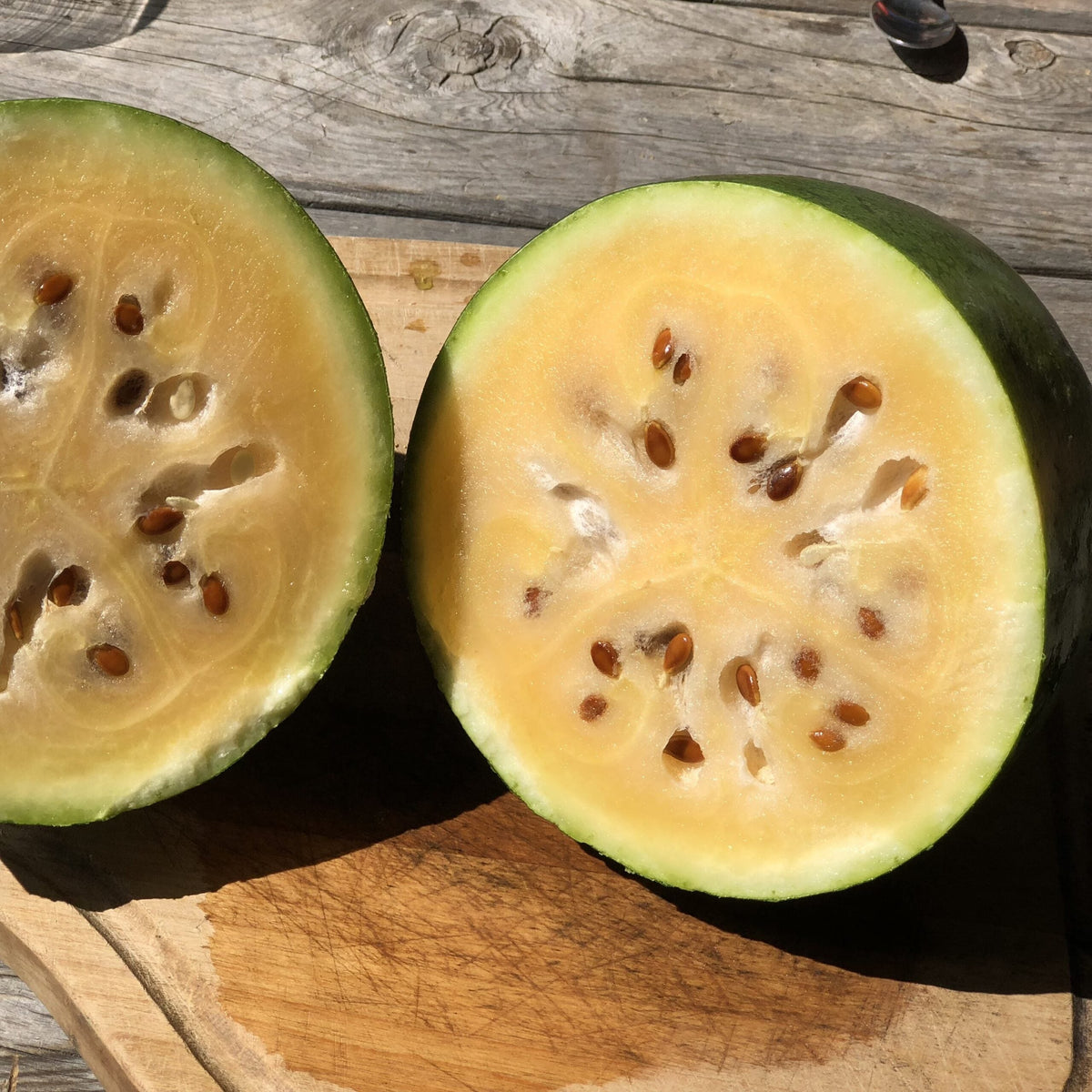
The Sweet Siberian watermelon is distinguished by its orange-yellow flesh under a green rind. This watermelon brings a different color to summer plates. Warm soil, good exposure, and harvesting at the right stage remain essential to enjoy its sweetness. These organic seeds from Jardins de l’écoumène allow you to prepare your own seedlings and follow their development from sowing. Reserve a sunny part of the garden for the watermelon where the vines can occupy the soil without smothering neighboring rows. A side path facilitates fruit observation and watering. Place the fruits on a clean surface if the soil remains damp, keeping them in their natural position.
- Quantity
- About 25 seeds
- Exposure
- Sun
- Life cycle
- Annual
Discover the plant
Common nameWatermelon 'Sweet Siberian'; pastèque Sweet Siberian
FamilyCucurbitaceae
GenusWatermelon
Specieswoolly
CultivarSweet Siberian
TypeFruit
Botanical nameCitrullus lanatus
Reproducible seedsYes
Heirloom varietyYes
'Sweet Siberian' Watermelon (Citrullus lanatus). The Sweet Siberian watermelon stands out with its orange-yellow flesh under a green rind. This watermelon brings a different color to summer plates. Warm soil, good sun exposure, and harvesting at the right stage are essential to enjoy its sweetness. These organic seeds from Jardins de l’écoumène allow you to prepare your own plants and follow their development from sowing. Reserve a sunny part of the vegetable garden for the watermelon where the vines can spread without smothering neighboring rows.
Recommended sowing period: May to June. The recommended planting depth is 1.5 to 2.5 cm (0.6 to 1 in). Germination usually takes 7 to 14 days. For germination, maintain the potting soil at 24 to 30 °C (75 to 86 °F). Watermelons require a warm season and stress-free root establishment. If starting plants indoors, use individual containers and transplant before roots become crowded. Keep the root ball intact and acclimate the foliage to the sun. Transplant into warmed soil.
Its rapid maturation gives the gardener the rare pleasure of harvesting a refined melon without having to rely on a very long season. Reserve a sunny part of the vegetable garden for the melon where the vines can spread without smothering neighboring rows. A side path makes it easier to observe the fruits and water them. Place the fruits on a clean surface if the soil remains wet, keeping their natural position. For vertical cultivation adapted to the type of melon, also support the fruits with a device that distributes their weight. Leafy greens require harvesting adjusted to the type of plant.

Sowing guide
It all startswith a seed.
Sowing depth
1.5 to 2.5 cm (0.6 to 1 in.)
Germination temperature
24 to 30 °C (75 to 86 °F)
Germination time
7 to 14 days
Sowing period
May to June
Propagation
Sowing
Growing method
Recommended sowing period: May to June. The recommended sowing depth is 1.5 to 2.5 cm (0.6 to 1 in). Germination usually takes 7 to 14 days. For germination, maintain the soil at 24 to 30 °C (75 to 86 °F). Melons require a warm season and stress-free root establishment. If starting plants indoors, use individual containers and transplant before the roots become pot-bound. Keep the root ball intact and acclimate the foliage to the sun. Plant in warmed soil. A young plant exposed to cold too early loses growth time that subsequent warmth does not always compensate for. While the melons are growing, maintain consistent moisture at the base and allow the leaves to capture sunlight. Avoid frequently moving the vines or twisting the peduncles. The stage of ripeness is judged according to the type of melon: observe color changes, the appearance of the peduncle, and the specific indicators for the variety. Harvest with care to avoid bruising already ripe flesh. Leafy vegetables require harvesting adjusted to the type of plant.
Soil and care
The right care,at the right time.
Care level
Regular during establishment, then adapted to growing conditions
Watering
Regular
Soil type
Rich and well-drained
Fertilization
Fertilisation supports growth and takes into account nutrients already present in the soil or potting mix. Use mature compost or a fertilizer suited to the crop, following the dosage instructions. Avoid using multiple products, especially in a container where the roots occupy a limited volume. Water as needed after application and observe foliage development before re-fertilizing.
Moisture
Keep the potting mix moist during germination, without standing water; then adjust according to the plant's needs.
Seasonal care
Its rapid maturation gives the gardener the rare pleasure of harvesting a refined melon without having to rely on a very long season. Melons require a warm season and stress-free root recovery. If starting plants indoors, use individual containers and transplant before the roots become crowded. Keep the root ball intact and acclimate the foliage to the sun. Planting should be done in warmed soil. A young plant exposed to cold too early loses growth time that subsequent warmth does not always make up for. While melons are growing, maintain consistent moisture at the base and allow the leaves to capture sunlight. Avoid frequently moving the vines or twisting the stems. The stage of ripeness is judged according to the type of melon: observe changes in color, the appearance of the stem, and the specific indicators for the variety. Harvest with caution to avoid bruising already ripe flesh. Leafy vegetables require harvesting adjusted to the type of plant. Outer harvesting preserves the heart when you wish to continue production. Very old leaves do not offer the same tenderness as young shoots. Rinse the harvest just before use or dry it carefully before a short stay in the refrigerator. The Sweet Siberian watermelon is distinguished by its orange-yellow flesh under a green rind. This watermelon brings a different color to summer plates. Warm soil, good sun exposure, and harvesting at the right stage remain essential to enjoy its sweetness.
Container growing
A garden,within reach.
Suitable for containers
Yes
Recommended pot size
Pierced and sturdy container, wide enough for the plant to spread out and deep enough for the roots
Choose this exposure: sun. Reserve this spread around the plant: 1 to 2 m (3 to 6.5 ft). Growing a melon in a container requires a good amount of potting soil and ample space for the foliage. Choose a warm and sheltered location before planting. If the stems are trained on a support, check its stability and support the fruits as they grow. Monitor watering closely: the root ball of a pot exposed to the sun can dry out long before garden soil. The Sweet Siberian watermelon is distinguished by its orange-yellow flesh under a green rind. This watermelon adds a different color to summer plates. Soil warmth, good exposure, and harvesting at the right stage remain essential to enjoy its sweetness. While the melons are growing, maintain consistent moisture at the base and allow the leaves to capture light. Avoid frequently moving the vines or twisting the stems. The ripeness stage is judged according to the type of melon: observe the changes in color, the appearance of the stem, and the specific cues for the variety. Harvest carefully so as not to bruise an already ripe flesh.

Bloom and dimensions
Its place,in your garden.
Mature height
12 to 20 in. (30 to 50 cm)
Width / spread
1 to 2 m (3 to 6.5 ft)
Foliage type
Seasonal foliage
Growth habit
Creeping
Bloom period
July to August
Fruiting
Leafy vegetables require harvesting adjusted to the type of plant. Picking from the outside preserves the heart when you want to continue production. Very old leaves do not have the same tenderness as young shoots. Rinse your harvest just before use or dry it thoroughly before a short stay in the refrigerator. While melons are growing, maintain regular moisture at the base and let the leaves capture light.
Harvest
80 to 90 days after sowing
Garden associations
In goodcompany.
Companion plants
Corn, beans, sunflower
Recipe idea
From the gardento your plate.
Edible parts
Ripe fruits
Recipe idea with 'Sweet Siberian' Watermelon: melon salad for four servings. Prepare 600 g of ripe, skinless, and seedless flesh, and cut it into cubes. Add 10 ml of lime juice and six chopped mint leaves. Mix gently, then refrigerate until serving. For a simple presentation, divide the cubes into four small bowls. Work on a clean cutting board after washing the rind of the whole fruit, to limit the transfer of dirt during cutting. Prepare ingredients with clean utensils and adapt the cutting to the size of your harvest. This recipe highlights freshly picked parts: remove damaged pieces before preparation. If you double the quantities, leave enough space in the dish to mix or cook evenly. Quickly place leftovers in the refrigerator in a closed container and consume them within two days. For a meal for two people, simply divide all quantities by two.
Frequently asked questions
Your questions,answered.
How to successfully sow 'Sweet Siberian' Watermelon?
Recommended sowing period: May to June. The depth should be 1.5 to 2.5 cm (0.6 to 1 in). Germination usually takes 7 to 14 days. For germination, keep the potting mix at 24 to 30 °C (75 to 86 °F). Melons require a warm season and stress-free transplanting. If starting plants indoors, use individual containers and transplant before the roots become pot-bound. Keep the root ball intact and acclimate the foliage to the sun. Plant in warmed soil. A young plant exposed to cold too early loses growth time that subsequent warmth does not always make up for.
Can you grow Watermelon 'Sweet Siberian' in pots?
Choose this exposure: full sun. Allow this spacing around the plant: 1 to 2 m (3 to 6.5 ft). Growing a melon in a container requires a good amount of potting mix and real space for the foliage. Choose a warm, sheltered location before planting. If the stems are trained on a support, check its anchorage and support the fruits as they grow. Monitor watering closely: the root ball in a sun-exposed pot can dry out much faster than garden soil. The Sweet Siberian watermelon is distinguished by its orange-yellow flesh under a green rind.
When to harvest 'Sweet Siberian' Watermelon?
Leafy vegetables require harvesting adjusted to the type of plant. Picking from the outside preserves the heart when you want to continue production. Very old leaves do not have the same tenderness as young shoots. Rinse the harvest just before use or dry it thoroughly before a short stay in the refrigerator. While melons are growing, maintain regular humidity at the base and allow the leaves to capture light. Avoid frequently moving the vines or twisting the stems. The stage of maturity is judged according to the type of melon: observe changes in color, the appearance of the stem, and the specific characteristics of the variety.
What distinguishes 'Sweet Siberian' watermelon in the garden?
The Sweet Siberian watermelon is distinguished by its orange-yellow flesh under a green rind. This watermelon brings a different color to summer plates. Warm soil, good sun exposure, and harvesting at the right stage are essential to enjoy its sweetness. Reserve a sunny part of the vegetable garden for the watermelon where the vines can spread out without smothering neighboring rows. A side path makes it easier to observe the fruits and water them. Place the fruits on a clean surface if the soil remains damp, keeping them in their natural position. For vertical cultivation adapted to the type of melon, also support the fruits with a device that distributes their weight.
How to organize a 'Sweet Siberian' Watermelon planting?
Reserve a sunny part of the garden for melons where the stems can spread without smothering neighbouring rows. A side path makes it easier to observe the fruits and water them. Place the fruits on a clean surface if the soil remains damp, keeping their natural position. For vertical cultivation adapted to the type of melon, also support the fruits with a device that distributes their weight. While the melons are growing, maintain regular moisture at the base and allow the leaves to capture light. Avoid moving the vines often or twisting the stems. The stage of maturity is judged according to the type of melon: observe changes in color, the appearance of the stem, and specific markers for the variety.
For a great start to your seeds
The right extras.Right here.
Seed Starting Soil
Shop the collectionSeed starting supplies
Shop the collection