


Sale
Sold out

Organic
Fabaceae
Organic seeds
Sprouts Red lentils
Lentil
Product code : NOR-GR01
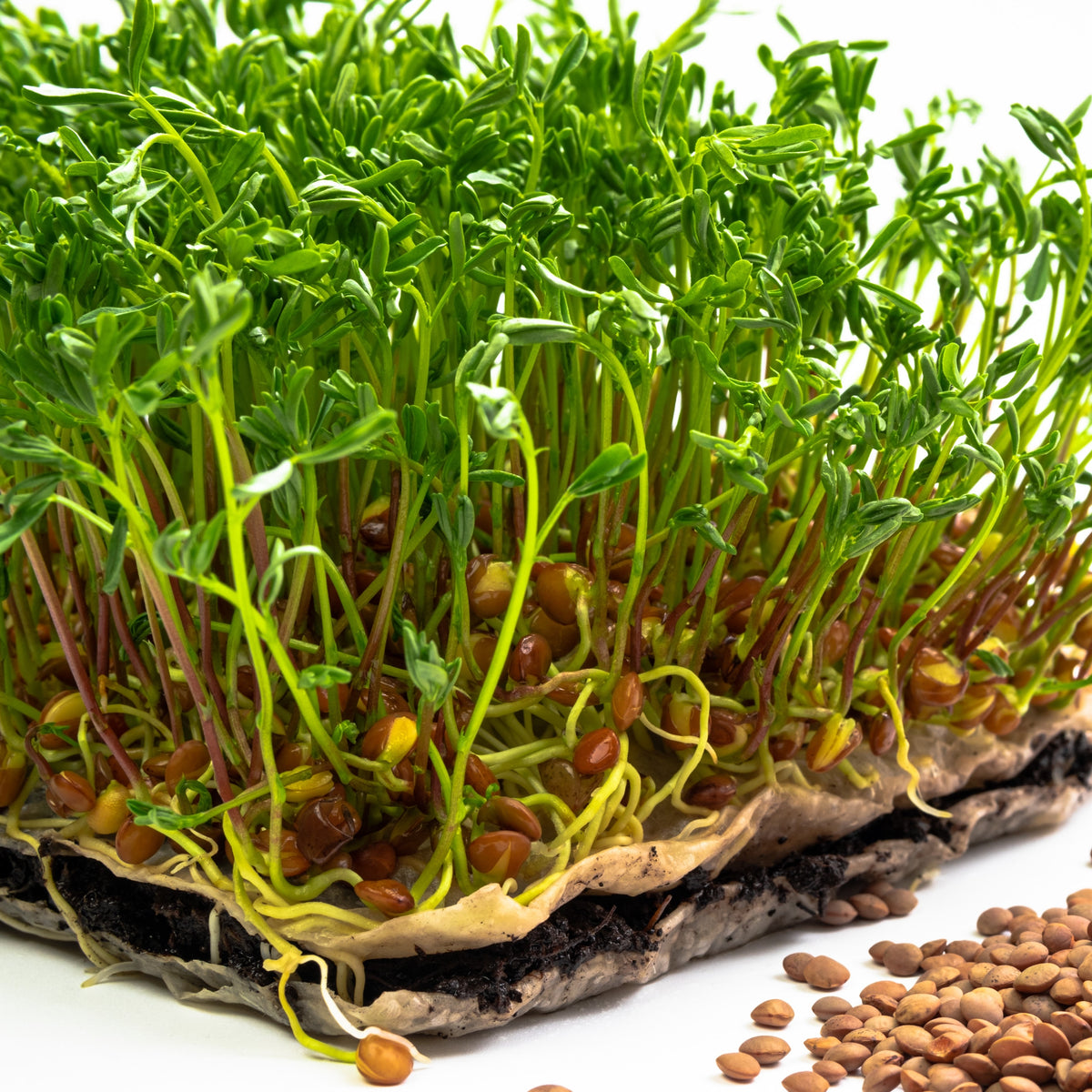
Small red lentils are versatile seeds that germinate quickly and adapt to all your culinary desires! With their rich, meaty texture and slight nutty taste, they can be eaten as is, in salads, or cooked in stews. The packet contains 50g to start your planting. Microgreens allow for cultivation on a small indoor surface, with easy access to water and light. Place the tray at a height that allows you to observe the growing medium and harvest without spilling the shoots. Prepare several small, separate productions to distinguish between species and sowing dates.
- Quantity
- 50 g
- Exposure
- Bright light after breakthrough
Discover the plant
Common nameOrganic red lentil microgreens
FamilyFabaceae
GenusLens
SpeciesCulinary
TypeOrganic
Botanical nameLentil
Organic Red Lentil Microgreens (Lens culinaris). Small red lentils are versatile seeds that sprout quickly and adapt to all your culinary desires! With their rich, fleshy texture and slight nutty flavor, they can be eaten as is, in salads, or cooked in stews. The packet contains 50g to start your planting. Microgreens allow for cultivation in a small indoor area, with easy access to water and light. Place the tray at a height that allows you to observe the growing medium and harvest without knocking over the sprouts.
The sowing calendar for this variety is as follows: indoors, all year round. Prepare a small production of sprouts or microgreens that you can observe daily. Clean equipment before sowing and use potable water. Spread the seeds without forming overly thick layers. Germination conditions depend on the type of seed: a sprouter and a microgreen tray are not used in the same way. Keep the packet label near your production to maintain this distinction. To set up this variety, first choose a location corresponding to its exposure: bright light after emergence.
Microgreens allow for cultivation in a small indoor area, with easy access to water and light. Place the tray at a height that allows you to observe the growing medium and harvest without knocking over the sprouts. Prepare several small, separate productions to distinguish between species and sowing dates. This organization facilitates harvesting at the right stage and cleaning between two crops. The packet contains 50g to start your planting. Place the container of this variety in this exposure: bright light after emergence, checking the light received throughout the day.

Sowing guide
It all startswith a seed.
Sowing period
Indoors, all year round
Propagation
Sowing
Growing method
Red lentil sprouts and/or microgreens, offered by the seed company WH Perron. Small red lentils are versatile seeds that germinate quickly and adapt to all your culinary desires! Drain them carefully, then place them in a sprouting jar or suitable container. The sprouts will be ready to eat in 2 to 3 days, once they have reached a size of 1 to 3 cm. If you wish to cook them, you can use them as soon as the first sprouts appear. The sowing calendar for this variety is as follows: indoors, all year round. To set up this variety, first choose a location corresponding to its exposure: bright light after emergence. Rinse and drain 2 to 3 times a day to maintain optimal humidity while avoiding mold. Prepare a small production of sprouts or microgreens that you can observe daily. Clean equipment before sowing and use potable water. Spread the seeds without forming overly thick layers. Germination conditions depend on the type of seed: a sprouting jar and a microgreen tray are not used in the same way.
Soil and care
The right care,at the right time.
Watering
Rinse and drain 2 to 3 times a day to maintain optimal humidity while preventing mold. To grow this variety, first choose a location corresponding to its exposure: bright light after sprouting. The sprouts will be ready to eat in 2 to 3 days, once they have reached a size of 1 to 3 cm.
Soil type
To plant this variety, first choose a location that matches its light requirements: bright light after sprouting. Rinse and drain 2 to 3 times a day to maintain optimal humidity while preventing mold. Microgreens can be grown in a small indoor area, with easy access to water and light. Place the tray at a height that allows you to observe the growing medium and harvest without spilling the sprouts.
Seasonal care
The sprouts will be ready to eat in 2 to 3 days, once they reach a size of 1 to 3 cm. The sowing schedule for this variety is as follows: indoors, all year round. Red lentil sprouts and/or microgreens, offered by seed producer WH Perron. Small red lentils are versatile seeds that germinate quickly and adapt to all your culinary desires! Drain them carefully, then place them in a sprout jar or suitable container. If you wish to cook them, you can use them as soon as the first sprouts appear. Rinse and drain 2 to 3 times a day to maintain optimal humidity while preventing mold. The humidity necessary for germination requires daily attention. Allow excess water to drain and maintain air circulation around the young shoots. Remove detached hulls when easily done. A production that shows mold, an abnormal odor, or a viscous texture must be discarded. Do not mix a questionable harvest with a healthy production and clean the equipment before starting again. Prepare a small production of sprouts or microgreens that you can observe daily. Clean the equipment before sowing and use potable water. Spread the seeds without forming layers that are too thick. Germination conditions depend on the type of seed: a sprout jar and a microgreen tray are not used in the same way.
Container growing
A garden,within reach.
Recommended pot size
Shallow, drained tray for microgreens
Drain them carefully, then place them in a sprouter or suitable container. Place the container of this variety in the following exposure: bright light after sprouting, checking the light received throughout the day. The sowing calendar for this variety is prepared as follows: indoors, all year round. To plant this variety, first choose a location corresponding to its exposure: bright light after sprouting. The packet contains 50g to start your planting. Red lentil sprouts and/or microgreens, offered by seed company WH Perron. Small red lentils are versatile seeds that sprout quickly and adapt to all your culinary desires! The sprouts will be ready to eat in 2 to 3 days, once they have reached a size of 1 to 3 cm. If you want to cook them, you can use them as soon as the first sprouts appear. Rinse and drain 2 to 3 times a day to maintain optimal humidity while avoiding mold. Use a microgreen tray or a seed sprouter, depending on the chosen crop. The container must be able to be cleaned completely and allow water to drain.
Bloom and dimensions
Its place,in your garden.
Harvest
Cut the microgreens with clean scissors just above the growing medium. Harvest the amount needed for your meal and keep the rest of the crop clean and well-aerated.
Recipe idea
From the gardento your plate.
Edible parts
Germs or young shoots depending on the use of the variety
Recipe idea using your organic red lentil microgreens. Add the microgreens to a bowl of rice and cooked vegetables. Cook the rice, then sauté carrots and mushrooms in a pan. Distribute them into bowls with a pre-cooked protein source, such as lentils or tofu. Gently rinse the harvested microgreens and drain them. Add them to the pan at the end of cooking to warm them through before placing them on the bowl. Mix lemon juice with a little soy sauce and a spoonful of oil, then drizzle this dressing over the dish. Finish with some toasted sesame seeds. Use the harvested microgreens, never the seeds sold for planting. For lots intended for edible sprouting, use only seeds specifically meant for this purpose. Flavor varies by species: a radish sprout should be added in a smaller quantity than a sweet pea sprout.
Frequently asked questions
Your questions,answered.
When to start organic red lentil microgreens seeds?
The sowing calendar for this variety is as follows: indoors, all year round. Prepare a small production of sprouts or microgreens that you can observe daily. Clean equipment before sowing and use potable water. Spread seeds without forming layers that are too thick. Germination conditions depend on the type of seed: a sprouter and a microgreen tray are not used in the same way. Keep the packet label near the production to maintain this distinction. The humidity required for germination demands daily attention. Allow excess water to drain and maintain air circulation around the young shoots.
Which location is suitable for organic red lentil microgreens?
To install this variety, first choose a location that matches its light requirements: bright light after sprouting. Place the container for this variety in a location with bright light after sprouting, checking the light received throughout the day. Microgreens allow for cultivation on a small indoor surface, with easy access to water and light. Place the tray at a height that allows you to observe the growing medium and harvest without overturning the sprouts. Prepare several small, separate productions to distinguish between species and sowing dates. This organization facilitates harvesting at the right stage and cleaning between two crops.
How to water organic red lentil microgreens while they are growing?
To plant this variety, first choose a location that matches its light requirements: bright light after sprouting. The humidity needed for germination requires daily attention. Allow excess water to drain and maintain air circulation around the young shoots. Remove detached hulls when easily done. Any produce showing mold, an abnormal odor, or a slimy texture should be discarded. Do not mix questionable produce with healthy produce and clean equipment before starting again. Use a tray suitable for microgreens or a germinator appropriate for the seeds, depending on the crop chosen. The container must be able to be cleaned completely and allow water to drain.
What care should be given to organic red lentil microgreens throughout the season?
The sowing calendar for this variety is as follows: indoors, all year round. The humidity required for germination needs daily attention. Allow excess water to drain and maintain air circulation around the young shoots. Remove loose husks when easily done. Any production showing mold, an abnormal odor, or a viscous texture should be discarded. Do not mix questionable produce with healthy produce and clean equipment before starting again. Prepare a small batch of sprouts or microgreens that you can observe daily. Clean equipment before sowing and use potable water.
How to use the harvest of organic red lentil microgreens?
The packet contains 50 g to start your planting. The moisture required for germination needs daily attention. Allow excess water to drain and maintain air circulation around the young shoots. Remove detached hulls when easily done. Any production showing mold, an abnormal odor, or a slimy texture must be discarded. Do not mix a questionable harvest with healthy production and clean the equipment before starting again. Microgreens allow for cultivation in a small indoor area, with easy access to water and light. Place the tray at a height that allows for observing the medium and harvesting without spilling the shoots.
For a great start to your seeds
The right extras.Right here.
Seed Starting Soil
Shop the collectionSeed starting supplies
Shop the collection





