


Sale
Sold out

Fruit
Nightshades
Organic seeds
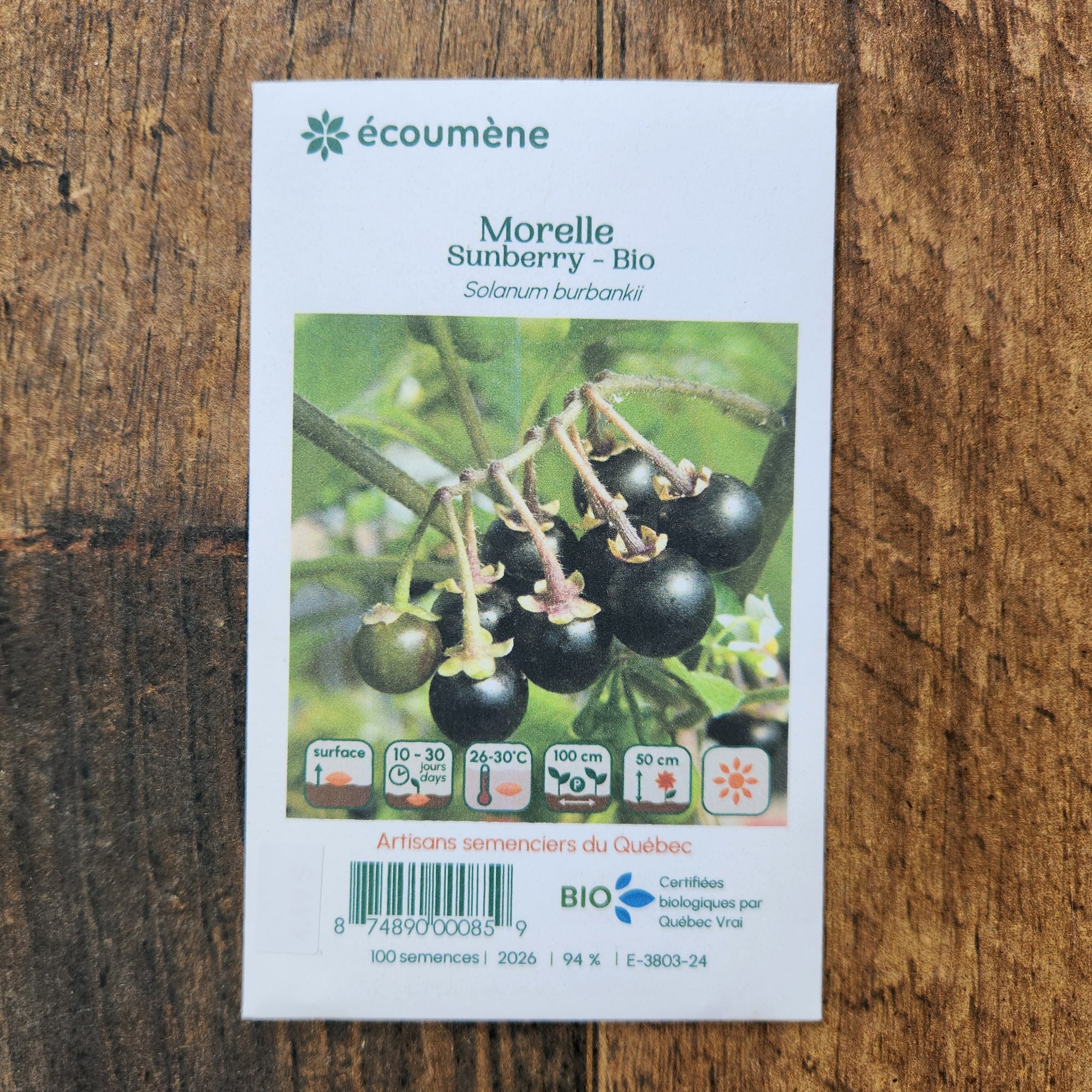
Sunberry (Solanum retroflexum)
Product code : JAREC-0153
With its bushy, compact habit, Solanum retroflexum easily finds its place among summer crops, where it adds an unusual touch with both its foliage and its abundant fruit production. Its clusters of matte berries discreetly evolve throughout the season, offering the curious gardener a unique harvest to transform into homemade treats. Easy to grow, it thrives in various soil types, provided it receives good sunlight and adequate drainage. Its rapid growth and good adaptability make it an interesting plant for beginner gardeners as well as for those who appreciate old or little-known varieties.
- Quantity
- About 100 seeds
- Exposure
- Sun
- Life cycle
- Annual
Discover the plant
Common nameSunberry Nightshade
FamilyNightshades
GenusNightshade
Speciesbent backwards
TypeFruit
Botanical nameSolanum retroflexum
Reproducible seedsYes
Heirloom varietyYes
Sunberry Nightshade (Solanum retroflexum). With its bushy, compact habit, Solanum retroflexum easily finds its place among summer crops, where it brings an uncommon touch both with its foliage and its abundant fruiting. Its clusters of matte berries discretely evolve throughout the season, offering the curious gardener a unique harvest to transform into homemade treats. Easy to grow, it thrives in various soil types, provided it receives good sunlight and adequate drainage. Its rapid growth and good adaptability make it an interesting plant for both beginner gardeners and enthusiasts of old or little-known varieties.
Recommended sowing period: March to April. The depth to respect is 0.5 cm (0.2 in). Emergence generally takes 7 to 14 days. For germination, keep the potting soil at 20 to 25 °C (68 to 77 °F). Handle young fruit plants without crushing their collar. Give them enough light so that the leaves remain well developed and the stems do not stretch unnecessarily. Gradually increase the duration of outdoor exposure before outdoor planting. Install the root balls in prepared soil and water around the roots to ensure contact with the soil.
Reserve an accessible location for harvesting the small fruits. Neighboring plants should not cover the foliage or hide the fruits at harvest time. Leave an aisle or one side of the bed free to work without walking near the roots. A clearly visible planting allows you to monitor the color and quickly remove damaged fruits after rain. Place supports before the stems need them. Its clusters of matte berries discretely evolve throughout the season, offering the curious gardener a unique harvest to transform into homemade treats.

Sowing guide
It all startswith a seed.
Sowing depth
0.2 in (0.5 cm)
Germination temperature
20 to 25 °C (68 to 77 °F)
Germination time
7 to 14 days
Sowing period
March to April
Propagation
Sowing
Growing method
Recommended sowing period: March to April. The depth to respect is 0.5 cm (0.2 in). Germination generally takes 7 to 14 days. For germination, maintain the potting soil at 20 to 25 °C (68 to 77 °F). Handle young fruit plants without crushing their collar. Give them enough light so that the leaves remain well developed and the stems do not lengthen unnecessarily. Gradually increase the duration of outdoor exposure before outdoor planting. Install the root balls in prepared soil and water around the roots to ensure contact with the soil. Wait for the foliage to recover before multiplying interventions. Observe the flowers then the young fruits to follow the progress of the harvest. Pick when ripe and remove damaged fruits to keep the others clean. Avoid leaving harvested parts for a long time in a hot container in the sun. In the garden, protection under the fruits limits contact with damp soil. Keep healthy leaves that feed the plant and facilitate access to successive harvests. Leafy vegetables require a harvest adjusted to the type of plant. An external harvest preserves the heart when you want to continue production.
Soil and care
The right care,at the right time.
Care level
Regular during establishment, then adapted to growing conditions
Watering
Moderate
Soil type
Well drained
Fertilization
Fertilization supports growth and takes into account the nutrients already present in the soil or potting mix. Use mature compost or a fertilizer suitable for the crop, following the dosage instructions. Avoid using multiple products, especially in a container where roots occupy a limited volume. Water as needed after application and observe leaf development before re-fertilizing.
Moisture
Moist potting soil during germination, with no standing water; then adjust according to the crop.
Seasonal care
With its bushy, compact habit, Solanum retroflexum easily finds its place among summer crops, where it brings an unusual touch with both its foliage and abundant fruiting. Handle young fruit plants without crushing their collar. Give them enough light so that the leaves remain well developed and the stems do not lengthen unnecessarily. Gradually increase the duration of outdoor exposure before planting outside. Install the root balls in prepared soil and water around the roots to ensure contact with the soil. Wait for the foliage to resume before increasing interventions. Observe the flowers then the young fruits to follow the progress of the harvest. Pick at maturity and remove damaged fruits to keep the others clean. Avoid leaving harvested parts in a hot container in the sun for long periods. In the garden, protection under the fruits limits contact with damp soil. Preserve healthy leaves that feed the plant and facilitate access to successive harvests. Leafy vegetables require harvesting adjusted to the type of plant. An outer harvest preserves the heart when you want to continue production. Very old leaves do not have the same tenderness as young shoots. Rinse the harvest just before use or dry it thoroughly before a short stay in the refrigerator. Its clusters of matte berries evolve discreetly throughout the season, offering the curious gardener a unique harvest to transform into homemade treats.
Container growing
A garden,within reach.
Suitable for containers
Yes
Recommended pot size
A sturdy container with drainage holes, wide enough for the plant to spread and deep enough for the roots
Choose this exposure: full sun. Reserve this spacing around the plant: 50 to 60 cm (20 to 24 in). A fruit container must remain stable as the foliage and harvest grow. Choose a well-rooted root ball and a pot that allows room for its development. Check drainage before planting, then monitor moisture during flowering and fruit enlargement. Pots near an entrance make small harvests easier. Rotate them only if the support and stems can withstand the movement without damage. With its bushy, compact habit, Solanum retroflexum easily finds its place among summer crops, where it brings an unusual touch with both its foliage and abundant fruiting. Its clusters of matte berries evolve discreetly throughout the season, offering the curious gardener a unique harvest to transform into homemade treats. Easy to grow, it thrives in various soil types, provided it receives good sunshine and adequate drainage. Its rapid growth and good adaptability make it an interesting plant for both beginner gardeners and enthusiasts of heirloom or lesser-known varieties.
Bloom and dimensions
Its place,in your garden.
Mature height
50 cm (20 in)
Width / spread
50 to 60 cm (20 to 24 in)
Foliage type
Seasonal foliage
Growth habit
Bushy, Compact
Bloom period
June to August
Fruiting
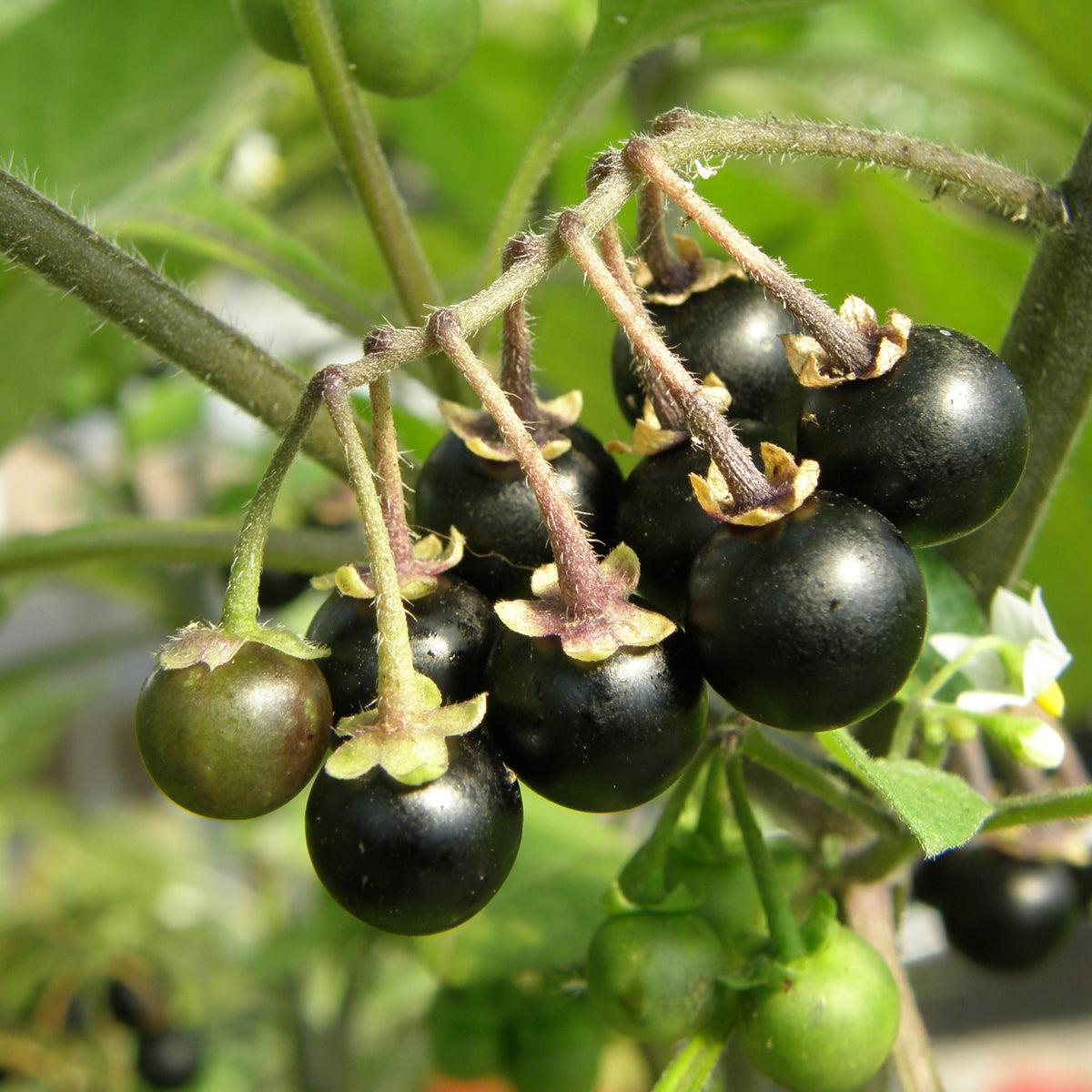
Its clusters of matte berries evolve discreetly throughout the season, offering the curious gardener a unique harvest to transform into homemade treats. Its edible fruits, once fully ripe and preferably cooked, are particularly popular in jams, tarts, and other sweet preparations. Leafy vegetables require harvesting adjusted to the type of plant. Picking from the outside preserves the heart when you want to continue production.
Harvest
August to September
Garden associations
In goodcompany.
Companion plants
Tomatoes, peppers, eggplants
Recipe idea
From the gardento your plate.
Edible parts
Fully ripe fruit only, free from calyx, stem, and foliage
Sunberry culinary idea: Berry Compote for four servings. Prepare 400g of perfectly ripe fruit, stemmed and husked, 30g of sugar, and 30ml of water. Gently heat in a saucepan for ten to fifteen minutes, stirring, until the fruit softens. Taste and adjust the sugar according to the acidity of the harvest. Let cool, then serve with plain yogurt. For ground cherries and edible nightshades, discard green fruits and all vegetative parts. Prepare ingredients with clean utensils and adjust cutting to the size of your harvest. This recipe highlights freshly picked parts: remove damaged pieces before preparation. If doubling the quantities, ensure enough space in the dish for even mixing or cooking. Promptly refrigerate leftovers in a sealed container and consume within two days. For a meal for two people, simply divide all quantities by two.
Frequently asked questions
Your questions,answered.
How to successfully sow Sunberry Nightshade?
Recommended sowing period: March to April. The depth to respect is 0.5 cm (0.2 in). Emergence generally takes 7 to 14 days. For germination, keep the potting soil at 20 to 25 °C (68 to 77 °F). Handle young fruit plants without crushing their collar. Give them enough light so that the leaves remain well developed and the stems do not lengthen unnecessarily. Gradually increase the duration of outdoor exposure before planting outside. Install the root balls in prepared soil and water around the roots to ensure contact with the soil. Wait for the foliage to recover before increasing interventions.
Can Sunberry Nightshade be grown in pots?
Choose this exposure: sun. Reserve this spread around the plant: 50 to 60 cm (20 to 24 in). A fruit container must remain stable as the foliage and harvest grow. Choose a well-rooted root ball and a pot that allows room for its development. Check drainage before planting, then monitor moisture during flowering and fruit enlargement. Pots near an entrance make small harvests easier. Turn them only if the support and stems can handle the movement without damage. With its bushy and compact habit, Solanum retroflexum easily finds its place among summer crops, where it brings an unusual touch both with its foliage and its abundant fruiting.
When to harvest Sunberry Nightshade?
Its clusters of dull berries discreetly evolve throughout the season, offering the curious gardener a unique harvest to transform into homemade treats. Its edible fruits, once fully ripe and preferably cooked, are particularly enjoyed in jams, pies, and other sweet preparations. Leafy vegetables require harvesting adjusted to the type of plant. Outer leaves should be picked to preserve the heart if continued production is desired. Very old leaves do not offer the same tenderness as young shoots. Rinse the harvest just before use or dry it carefully before a short stay in the refrigerator. Observe the flowers and then the young fruits to track the progression of the harvest.
What makes Sunberry nightshade stand out in the garden?
With its bushy and compact habit, Solanum retroflexum easily finds its place among summer crops, where it brings an unusual touch both through its foliage and its abundant fruiting. Its clusters of matte berries evolve discreetly throughout the season, offering the curious gardener a unique harvest to transform into homemade sweets. Easy to grow, it thrives in various soil types, provided it receives good sunlight and adequate drainage. Its rapid growth and good adaptability make it an interesting plant for beginner gardeners as well as for enthusiasts of ancient or little-known varieties.
How to organize a Sunberry nightshade planting?
Reserve an accessible spot for harvesting berries. Neighboring plants should not cover the foliage or hide the fruits at harvest time. Leave a pathway or one side of the bed free so you can work without stepping near the roots. A highly visible planting allows you to monitor color and quickly remove damaged fruits after rain. Install supports before the stems need them. Observe the flowers then the young fruits to track harvest progression. Pick when ripe and remove damaged fruits to keep the others clean.
For a great start to your seeds
The right extras.Right here.
Seed Starting Soil
Shop the collectionSeed starting supplies
Shop the collection





