Sale
Sold out

Vegetable
Polygonaceae
Organic seeds
Garden Sorrel (Rumex acetosa var. hortensis)
Product code : JAREC-0169
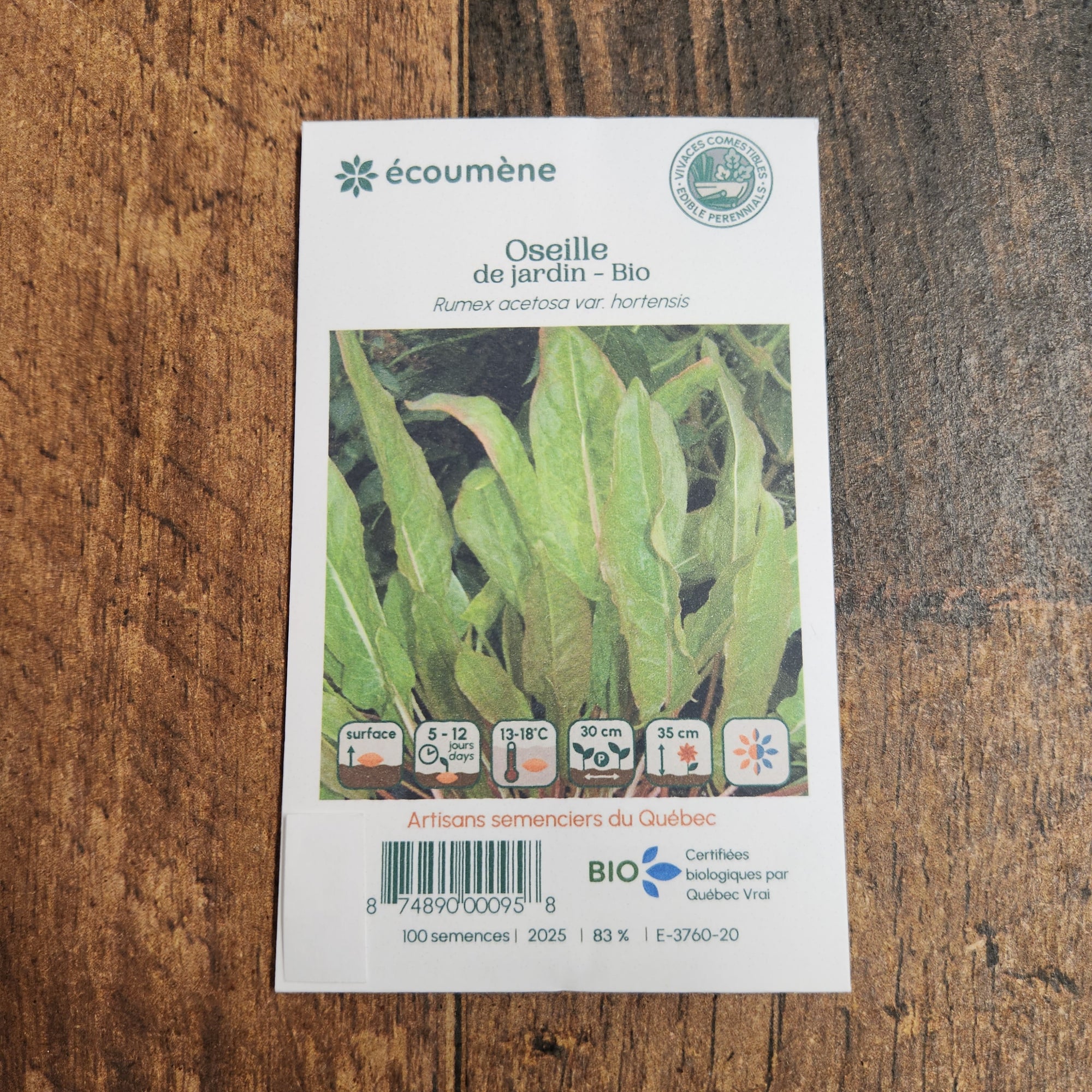
Garden sorrel, Rumex acetosa var. hortensis, is a hardy and prolific perennial that finds its place naturally in productive vegetable gardens and herb gardens alike. As soon as the warmer weather returns, it produces an abundance of bright green leaves with a tangy, lemony taste, capable of instantly enlivening salads, soups, sauces, and even sandwiches. Its flexible and elegant silhouette adds a beautiful green presence to the garden, while offering repeated harvests over a long period. Easy to grow, it adapts well to both sunny and partially shaded locations, making it valuable for various garden spots.
- Quantity
- 100 seeds
- Exposure
- Sun to partial shade
- Life cycle
- Perennial
Discover the plant
Common nameGarden Sorrel
FamilyPolygonaceae
GenusDock
Speciessorrel
TypeVegetable
Botanical nameRumex acetosa var. hortensis
Reproducible seedsYes
Garden Sorrel (Rumex acetosa var. hortensis). Garden sorrel (Rumex acetosa var. hortensis) is a hardy and prolific perennial that finds its natural place in both kitchen gardens and herb gardens. As soon as warmer weather returns, it produces an abundance of bright green leaves with a tangy, lemony taste, capable of instantly enlivening salads, soups, sauces, and even sandwiches. Its flexible and elegant silhouette brings a beautiful green presence to the garden, while offering repeated harvests over a long period.
Recommended sowing period: April to June or August to September. The recommended depth is 1 cm (3/8 in). Germination usually takes 7 to 14 days. For germination, keep the potting mix at 15 to 20 °C (59 to 68 °F). Distribute leafy vegetable seeds evenly to avoid an overly dense carpet of seedlings. Thin out or transplant according to the type of crop, keeping vigorous specimens. Staggered sowing allows for harvesting leaves at different stages. Identify the dates to monitor growth.
Very hardy, it faithfully returns year after year, gradually becoming a familiar companion for daily harvests. Leafy vegetables benefit from being placed near a path, as they are often harvested in small quantities. Organize short rows or identified groups to choose ready plants without treading on the soil. Leave room for the heart or head depending on the type cultivated. In a kitchen garden composition, different colored foliage allows for identifying varieties and preparing varied salads. As soon as warmer weather returns, it produces an abundance of bright green leaves with a tangy, lemony taste, capable of instantly enlivening salads, soups, sauces, and even sandwiches.

Sowing guide
It all startswith a seed.
Sowing depth
1 cm (3/8 in)
Germination temperature
15 to 20 °C (59 to 68 °F)
Germination time
7 to 14 days
Sowing period
April to June or August to September
Propagation
Sowing
Growing method
Recommended sowing period: April to June or August to September. Sow at a depth of 1 cm (3/8 in). Germination usually takes 7 to 14 days. For germination, keep the potting mix at 15 to 20 °C (59 to 68 °F). Distribute leafy vegetable seeds evenly to avoid overcrowding. Thin or transplant according to the type of crop, keeping the most vigorous plants. Staggered sowings allow for harvesting leaves at different stages. Identify the dates to track growth. During hot periods, monitor the surface of the seedbed: it may dry out before the roots reach a cooler layer. For leaf-by-leaf harvests, start with the outer leaves and preserve the center of the plant. Headed types can also be harvested whole when the heart is well-formed. A young leaf is generally more tender than a leaf left too long. Rinse the harvest before preparation and avoid crushing the remaining foliage. Observe the elongation of the central stem to detect the beginning of bolting. Leafy vegetables require harvesting adjusted to the type of plant.
Soil and care
The right care,at the right time.
Care level
Regular during establishment, then adapted to growing conditions
Watering
Moderate
Soil type
Rich and well-drained
Fertilization
Fertilization supports growth and takes into account nutrients already present in the soil or potting mix. Use mature compost or a fertilizer suitable for the crop, following the dosage instructions. Avoid using multiple products, especially in a container where roots occupy a limited volume. Water as needed after application and observe foliage development before re-fertilizing.
Moisture
Keep the soil moist during germination, avoiding standing water; then adjust according to the crop.
Seasonal care
Its supple and elegant silhouette brings a beautiful green presence to the garden, while offering repeated harvests over a long period. Distribute leafy vegetable seeds evenly to avoid an overly dense carpet of seedlings. Thin out or transplant depending on the type of crop, keeping the vigorous plants. Staggered sowing allows for harvesting leaves at different stages. Identify the dates to monitor growth. During hot periods, monitor the surface of the sowing: it can dry out before the roots have reached a cooler layer. For leaf-by-leaf harvesting, start with the outer leaves and preserve the center of the plant. Headed types can also be harvested whole when the heart is well formed. A young leaf is generally more tender than a leaf left for too long. Rinse the harvest before preparation and avoid crushing the remaining foliage. Observe the lengthening of the central stem to identify the beginning of bolting. Leafy vegetables require harvesting adjusted to the type of plant. An outer harvest preserves the heart when you want to continue production. Very old leaves do not have the same tenderness as young shoots. Rinse the harvest just before use or dry it carefully before a short stay in the refrigerator. As soon as warmer days return, it produces an abundance of bright green leaves with a tangy and lemony taste, capable of instantly enlivening salads, soups, sauces, and even sandwiches.
Container growing
A garden,within reach.
Suitable for containers
Yes
Recommended pot size
A stable container with drainage holes, wide enough for the plant to spread out and deep enough for its roots.
Choose this exposure: sun to partial shade. Reserve this spread around the plant: 30 to 45 cm (12 to 18 in). A leafy vegetable planter allows you to keep a harvest close to the kitchen. Use all available space without crowding plants against the edge. Headed types require more space than leaves harvested very young. Check moisture regularly and water under the foliage as much as possible. Harvest with clean scissors and remove damaged leaves to keep the heart accessible and aerated. Garden sorrel, Rumex acetosa var. hortensis, is a hardy and generous perennial that naturally finds its place in food gardens as well as in herb gardens. As soon as warmer days return, it produces an abundance of bright green leaves with a tangy and lemony taste, capable of instantly enlivening salads, soups, sauces, and even sandwiches. Its flexible and elegant silhouette brings a beautiful vegetal presence to the garden, while offering repeated harvests over a long period. Easy to grow, it adapts well to both sunny and partial shade locations, making it valuable for various corners of the garden.
Bloom and dimensions
Its place,in your garden.
Mature height
60 to 90 cm (24 to 35 in)
Width / spread
30 to 45 cm (12 to 18 in)
Growth habit
In a rosette
Bloom period
June to August
Fruiting
As soon as warmer weather returns, it produces an abundance of bright green leaves with a tangy, lemony taste, capable of instantly enlivening salads, soups, sauces, and even sandwiches. Its flexible and elegant silhouette brings a beautiful green presence to the garden, while offering repeated harvests over a long period. We love to pick a few young leaves as we pass by to add a lively note to daily dishes, like a simple little luxury within reach.
Harvest
As needed from May to October

Garden associations
In goodcompany.
Companion plants
In a diverse plantation, you can dedicate neighboring sections to these plants: strawberries, asparagus, chives. Here, the combination serves to organize space and harvests. Respect each plant's height, light, and water needs, without overcrowding the foliage. Maintain a path for watering and picking, then remove finished crops to free up space. This organization simplifies maintenance but does not guarantee pest protection. Leafy greens benefit from being placed near a path, as they are often harvested in small quantities.
Recipe idea
From the gardento your plate.
Edible parts
Leaves
Garden Sorrel recipe idea: garden salad for four servings. Wash and spin dry 200 g of tender leaves, then tear the larger ones. Add one grated carrot and four thinly sliced radishes. Mix 20 ml of olive oil, 10 ml of apple cider vinegar, and 5 ml of mustard. Pour over the vegetables at the last minute and stir gently. For tougher leaves, mix a small handful with a base of mild lettuce. Serve immediately to preserve their texture. Prepare ingredients with clean utensils and adjust the cut to the size of your harvest. This recipe highlights freshly picked parts: remove damaged pieces before preparation. If you double the quantities, leave enough space in the dish to mix or cook evenly. Quickly refrigerate leftovers in a sealed container and consume them within two days. For a meal for two, simply divide all quantities by two.
Frequently asked questions
Your questions,answered.
How to successfully sow Garden Sorrel?
Recommended sowing period: April to June or August to September. Sow at a depth of 1 cm (3/8 in). Germination usually takes 7 to 14 days. For germination, maintain the soil temperature at 15 to 20 °C (59 to 68 °F). Distribute leafy vegetable seeds evenly to avoid overcrowding of seedlings. Thin out or transplant according to the cultivation type, keeping the vigorous plants. Sowing seeds at different times allows for harvesting leaves at various stages. Label dates to track growth. During hot periods, monitor the surface of the seedbed: it can dry out before the roots have reached a cooler layer.
Can garden sorrel be grown in a pot?
Choose this exposure: sun to partial shade. Allow this much space around the plant: 30 to 45 cm (12 to 18 in). A leafy vegetable planter keeps a harvest close to the kitchen. Use all available surface area without pressing the plants against the edge. Headed varieties require more space than leaves harvested very young. Check moisture regularly and water under the foliage as much as possible. Harvest with clean scissors and remove damaged leaves to keep the core accessible and aerated. Garden sorrel Rumex acetosa var. hortensis is a hardy and generous perennial that naturally finds its place in vegetable gardens as well as herb gardens.
When to harvest Garden Sorrel?
As soon as the good weather returns, it produces an abundance of bright green leaves with a tangy, lemony taste, capable of instantly enlivening salads, soups, sauces, and even sandwiches. Its supple and elegant silhouette brings a beautiful green presence to the garden, while offering repeated harvests over a long period. We love to pick a few young leaves on the go to add a lively note to the day's dishes, like a small, simple luxury within reach. Leafy vegetables require harvesting adjusted to the type of plant. Picking from the outside preserves the heart when you want to continue production.
What sets Garden Sorrel apart in the garden?
Garden sorrel, *Rumex acetosa var. hortensis*, is a hardy and prolific perennial that finds its natural place in both kitchen gardens and herb gardens. As soon as warmer weather returns, it produces an abundance of bright green leaves with a tangy, lemony taste, capable of instantly enlivening salads, soups, sauces, and even sandwiches. Its flexible and elegant silhouette brings a beautiful green presence to the garden, while offering repeated harvests over a long period. Easy to grow, it adapts equally well to sunny and partially shaded locations, making it a valuable addition to various corners of the garden.
How to organize a Garden Sorrel plantation?
Leafy vegetables benefit from being planted near a path, as they are often harvested in small quantities. Organize short rows or identified groups to pick ready plants without trampling the soil. Leave room for the heart or head depending on the type grown. In a vegetable garden composition, different colored foliage allows you to identify varieties and prepare varied salads. For leaf-by-leaf harvesting, start with the outer leaves and preserve the center of the plant. Headed types can also be harvested whole when the heart is well formed. A young leaf is generally more tender than a leaf left for too long.
For a great start to your seeds
The right extras.Right here.
Seed Starting Soil
Shop the collectionSeed starting supplies
Shop the collection