Sale
Sold out

Open-pollinated seeds
Violaceae
perennial flower
Wild pansy from POC
Viola tricolor
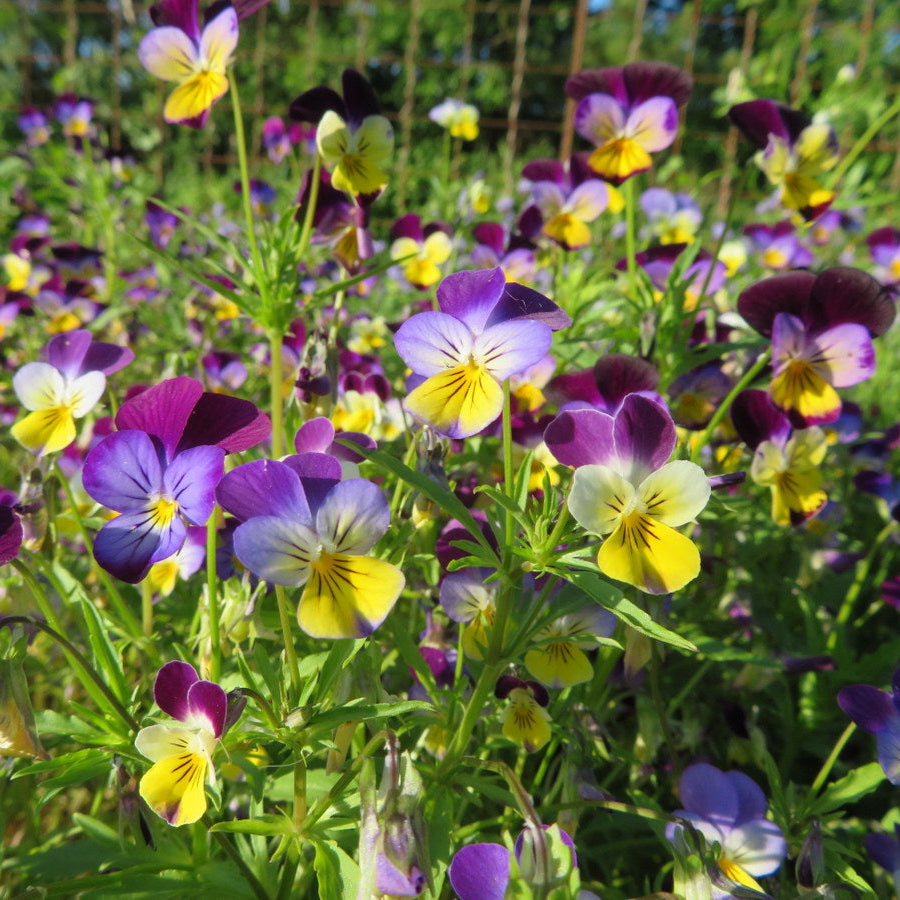
Wild pansy from POC has the following characteristics: small flowers in varied colours, with two or three colours per bloom; yellow, white, lilac and mauve. The plant height stated for this selection is 40 cm (15.7 in) when grown under suitable conditions. The confirmed botanical name, Viola tricolor, helps identify the plant precisely. The recommended exposure is full sun to partial shade. Sow seeds directly outdoors in May or June. Sow 6 mm (0.2 in) deep. Allow 15 cm (5.9 in) between plants. The harvest schedule varies with the weather and sowing date. Harvesting at the right stage lets you make full use of its culinary qualities. These flower seeds are suitable for a gardening project in Quebec or elsewhere in Canada.
- Quantity
- ±500 seeds
- Exposure
- Full sun to part shade
- Life cycle
- Perennial
Discover the plant
Common nameWild pansy
FamilyViolaceae
GenusViola
Speciestricolor
TypeOpen-pollinated seeds
Botanical nameViola tricolor
Wild pansy from POC belongs to Viola tricolor. This plant is a perennial. The plant bears small flowers in varied colours, with two or three colours per bloom. Yellow, white, lilac, purple. The flowers and leaves are edible. The plant reaches 40 cm (15.7 in) in height. Self-sown seedlings may appear around the plant. The supplier lists hardiness in zone 2. These characteristics help you choose its position in the garden and compare this selection with other cultivars in the same group. Plan its location around its growth, leaving enough room to observe and care for the plant.
Choose sun or partial shade. Prepare a growing area with soil that allows excess water to drain away freely. Sow directly in May or June. For flowering in the first year, sow seeds indoors 6 to 8 weeks before the last frost. Sow the seeds at a depth of 6 mm (0.2 in). Leave 15 cm (5.9 in) between plants. In Quebec, adjust the timing of planting to the frost risks in your particular area and to the life cycle of the plant. Keep the growing mix slightly moist during emergence without saturating it, and provide light as soon as seedlings appear.
Position the plants where their flowers will remain clearly visible, taking their expected height and spread into account when arranging the planting. Leave access for watering at the base, following buds as they open and removing damaged stems. Group plants with similar requirements for light exposure and soil moisture, while avoiding crowding young plants together simply to create an immediate visual effect. Leave enough room for the foliage as it continues to grow and develop through the season. For this perennial, watch for new foliage before removing dry stems in spring. Keep labels in place to recognize each variety, even after the flowers have faded. Keep these flower seeds dry until the next sowing.

Sowing guide
It all startswith a seed.
Sowing depth
6 mm (0.24 in)
Spacing / density
15 cm (5.9 in)
Sowing period
Direct sow in May and June.
Propagation
Seed sowing
Growing method
Wild pansy from POC. Before opening the packet, prepare the seed-starting supplies and this crop's future growing site. A clean surface, suitable soil and a label prevent unnecessary handling once the seeds are in place. Keep the packet dry so that the instructions specific to the seed lot remain available. This plant is a perennial. The plant bears small flowers in varied colours, bicoloured or tricoloured. Yellow, white, lilac, purple. The blooms feature edible flowers and leaves. The height stated for the plant is 40 cm (15.7 in), measured as its expected growing height. This plant can produce seedlings of its own by self-seeding. The stated hardiness for this selection is zone 2. Choose a location in full sun or partial shade. Prepare a growing area with soil that allows excess water to drain away freely. Plan to sow the seeds directly outdoors in May or June. For flowering in the first year, sow seeds indoors 6 to 8 weeks before the last frost. The stated sowing depth is 6 mm (0.2 in). Prepare to sow flower seeds according to the depth and schedule specific to the species. Keep the surface moist with gentle watering to avoid displacing the seeds. Good light at emergence reduces stretching in seedlings.
Soil and care
The right care,at the right time.
Care level
Moderate
Watering
Wild pansy from POC. Check moisture in the root zone before deciding whether to water. Rain, wind and the container's exposure affect watering frequency. Prepare a growing area with soil that allows excess water to drain away freely. During establishment, check moisture near the roots and water gently at the base. A plant in a planter does not always receive as much rain as a garden bed, especially under an eave. Drainage remains necessary to avoid prolonged waterlogging.
Soil type
Wild pansy from POC. The soil must allow roots to receive water and then let excess water drain away. Prepare the soil without working it when it is waterlogged, and address compaction or standing water first. Prepare well-drained soil. During establishment, check moisture near the roots and water gently at the base. A plant in a planter does not always receive as much rain as a garden bed, especially under an eave.
Fertilization
Wild pansy from POC. Adjust feeding to the actual fertility of the soil or the nutrients already in the growing mix. Soil that is already fertile does not automatically require another application. Follow the chosen fertilizer's instructions, and avoid feeding more when roots are struggling with poor drainage. Prepare a growing area with soil that allows excess water to drain away freely. During establishment, check moisture near the roots and water gently at the base. A plant in a planter does not always receive as much rain as a garden bed, especially under an eave.
Moisture
Even moisture without saturation
Seasonal care
Wild pansy from POC. Early in the growing period, check emergence and the condition of young roots before changing care. Carry out thinning, transplanting and the installation of supports while the plants are still at a stage that allows careful handling. Throughout the growing season, observe the plant after rainfall, during windy periods and following episodes of hot weather. Remove genuinely diseased parts and keep tools clean. At the end of the growing period, sort the debris, clean containers and store remaining seeds in a dry place. This plant is a perennial. The plant bears small flowers in varied colours, bicoloured or tricoloured. Yellow, white, lilac, purple. The blooms feature edible flowers and leaves. The height stated for the plant is 40 cm (15.7 in), measured as its expected growing height. This plant can produce seedlings of its own by self-seeding. The stated hardiness for this selection is zone 2. Choose a location in full sun or partial shade. Prepare a growing area with soil that allows excess water to drain away freely. Plan to sow the seeds directly outdoors in May or June. For flowering in the first year, sow seeds indoors 6 to 8 weeks before the last frost. The stated sowing depth is 6 mm (0.2 in). Prepare to sow flower seeds according to the depth and schedule specific to the species. Keep the surface moist with gentle watering to avoid displacing the seeds. Good light at emergence reduces stretching in seedlings.
Container growing
A garden,within reach.
Wild pansy from POC. When growing in a container, consider the available root space, the drainage and the access to light as a whole. Choose a stable pot with clear drainage holes and a growing mix intended for containers. A decorative planter without a drainage outlet should hold an inner pot with drainage holes. Keep the container accessible so that you can check the growing medium rather than watering without inspection. This plant is a perennial. The plant bears small flowers in varied colours, bicoloured or tricoloured. Yellow, white, lilac, purple. The blooms feature edible flowers and leaves. The height stated for the plant is 40 cm (15.7 in), measured as its expected growing height. This plant can produce seedlings of its own by self-seeding. The stated hardiness for this selection is zone 2. Choose a location in full sun or partial shade. Prepare a growing area with soil that allows excess water to drain away freely. Plan to sow the seeds directly outdoors in May or June. For flowering in the first year, sow seeds indoors 6 to 8 weeks before the last frost. The stated sowing depth is 6 mm (0.2 in). The plant's growth habit should guide its position in the bed. A tall species can hide a low border, while a trailing plant needs open space around its planter.

Bloom and dimensions
Its place,in your garden.
Mature height
40 cm (15.7 in)
Bloom period
Wild pansy from POC. Watch for buds and opening flowers, taking the plant's life cycle into account. Light and establishment conditions influence how this stage progresses. This plant is a perennial. The plant bears small flowers in varied colours, bicoloured or tricoloured. Yellow, white, lilac, purple. The blooms feature edible flowers and leaves. The height stated for the plant is 40 cm (15.7 in), measured as its expected growing height.
Harvest
The timing of the harvest varies with the weather conditions and the date on which the seeds were sown. Harvest Wild pansy from POC when the edible parts have the size, colour or texture expected for the variety. Harvest with clean hands and use a clean tool when stems resist. Harvesting regularly often helps you enjoy a crop with more consistent quality from one picking to the next. Discard damaged parts and promptly use the most delicate harvests.
Garden associations
In goodcompany.
Companion plants
Wild pansy from POC. Here, companion plants are chosen to share a growing site and simplify care. Position tall plants where they will not deprive their neighbours of the light they need. No arrangement of companion plants can, on its own, guarantee that the crop will be protected from pests. This plant is a perennial. The plant bears small flowers in varied colours, bicoloured or tricoloured. Yellow, white, lilac, purple. The blooms feature edible flowers and leaves. The height stated for the plant is 40 cm (15.7 in), measured as its expected growing height.
Recipe idea
From the gardento your plate.
Edible parts
Flowers and leaves
Wild pansy from POC. Prepare a salad or vegetable dish with this plant's leaves and flowers, after picking healthy parts and washing them thoroughly. Keep the cultivar identified and use only confirmed culinary parts. Cut or chop the harvest according to the desired texture. Add it gradually to the preparation and taste before adding more. Tender portions are prepared differently from older leaves. For a cooked version, incorporate the appropriate parts into a base of onions and vegetables, then cook to the desired tenderness. Harvest only the amount needed from young plants so they retain the ability to regrow. Use fresh harvests promptly, and keep dried portions clean, dry and clearly labelled. Refrigerate prepared leftovers without delay. A seasoning plant should not be replaced by a similar-looking species or decorative flowers whose food use has not been established. A small first preparation will let you adjust the seasoning to your taste.
Frequently asked questions
Your questions,answered.
How do you sow Wild pansy from POC seeds?
Wild pansy from POC. Prepare for sowing according to the instructions for the plant and seed lot. A label showing the name and date helps you track emergence without confusing cultivars. This plant is a perennial. The plant bears small flowers in varied colours, bicoloured or tricoloured. Yellow, white, lilac, purple. The blooms feature edible flowers and leaves. The height stated for the plant is 40 cm (15.7 in), measured as its expected growing height. The plant self-seeds. The stated hardiness for this selection is zone 2. Choose a location in full sun or partial shade. Prepare a growing area with soil that allows excess water to drain away freely. Plan to sow the seeds directly outdoors in May or June.
How much space should you allow for Wild pansy from POC?
Wild pansy from POC. The available space should match the plant's growth, light needs and the access required for care. Account for the shade cast by neighbouring plants once their foliage has developed. This plant is a perennial. The plant bears small flowers in varied colours, bicoloured or tricoloured. Yellow, white, lilac, purple. The blooms feature edible flowers and leaves. The height stated for the plant is 40 cm (15.7 in), measured as its expected growing height. This plant can produce seedlings of its own by self-seeding. The stated hardiness for this selection is zone 2. The plant's growth habit should guide its position in the bed. A tall species can hide a low border, while a trailing plant needs open space around its planter.
How should you adjust watering for Wild pansy from POC?
Wild pansy from POC. Decide whether to water after checking moisture near the roots. The surface of the growing mix may look dry while the root ball remains moist. This plant is a perennial. The plant bears small flowers in varied colours, bicoloured or tricoloured. Yellow, white, lilac, purple. The blooms feature edible flowers and leaves. The height stated for the plant is 40 cm (15.7 in), measured as its expected growing height. This plant can produce seedlings of its own by self-seeding. The stated hardiness for this selection is zone 2. During establishment, check moisture near the roots and water gently at the base. A plant in a planter does not always receive as much rain as a garden bed, especially under an eave.
What precautions should you take when growing Wild pansy from POC in a container?
Wild pansy from POC. Container growing requires a stable container with drainage and easy access for care. A planter should not remain saturated after rain or after every watering. This plant is a perennial. The plant bears small flowers in varied colours, bicoloured or tricoloured. Yellow, white, lilac, purple. The blooms feature edible flowers and leaves. The height stated for the plant is 40 cm (15.7 in), measured as its expected growing height. This plant can produce seedlings of its own by self-seeding. The stated hardiness for this selection is zone 2. The plant's growth habit should guide its position in the bed. A tall species can hide a low border, while a trailing plant needs open space around its planter.
What signs should you look for when harvesting Wild pansy from POC?
Wild pansy from POC. Assess the right moment using the signs specific to the plant and its intended use. Follow several harvests or flowering periods to recognize the stage that suits your garden. This plant is a perennial. The plant bears small flowers in varied colours, bicoloured or tricoloured. Yellow, white, lilac, purple. The blooms feature edible flowers and leaves. The height stated for the plant is 40 cm (15.7 in), measured as its expected growing height. This plant can produce seedlings of its own by self-seeding. The stated hardiness for this selection is zone 2. Watch flowers open to follow their colour and how well they hold up. If the plant is intended for bouquets, choose healthy stems and cut with a clean tool.
For a great start to your seeds
The right extras.Right here.
Seed Starting Soil
Shop the collectionSeed starting supplies
Shop the collection