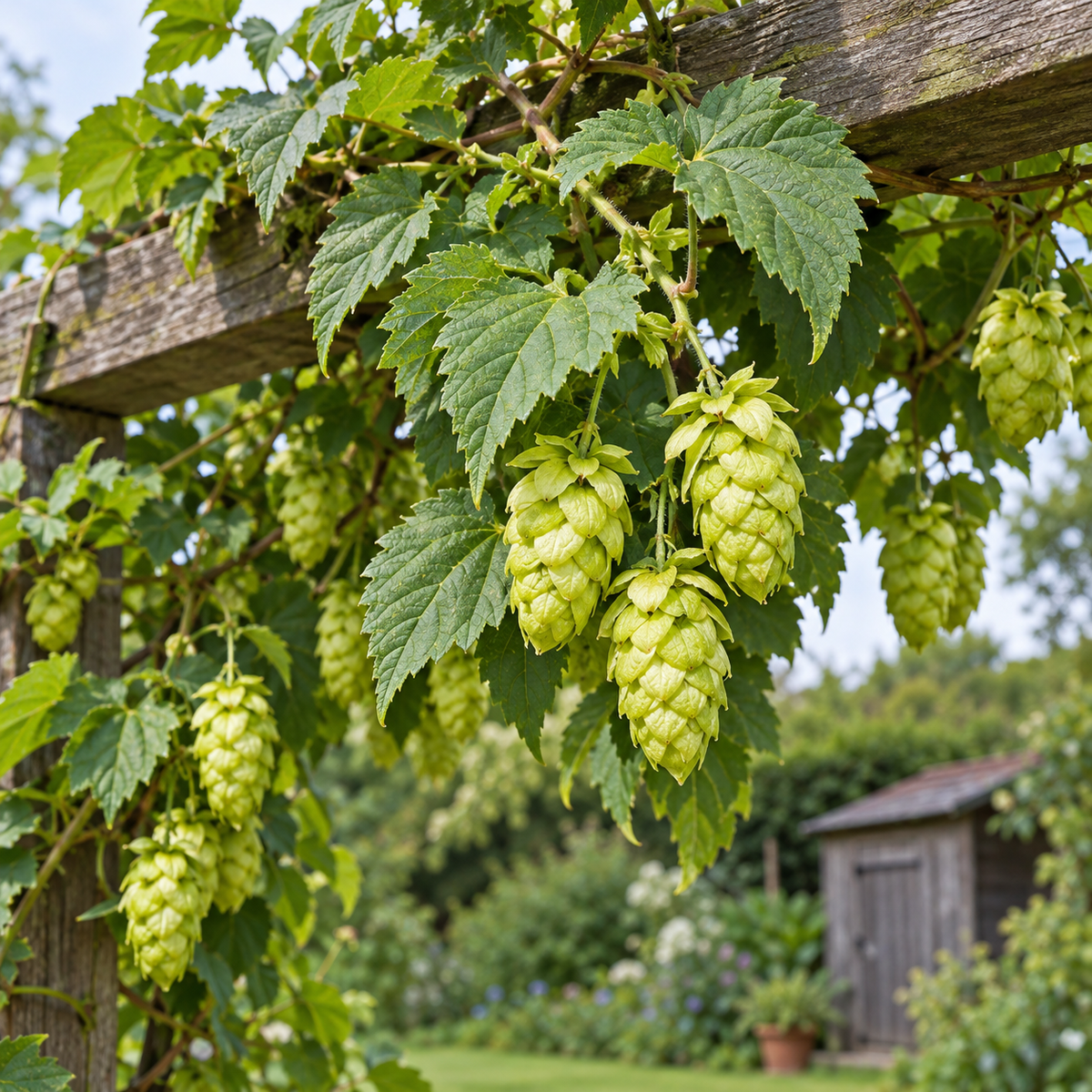
‘Cascade’ Hop (Humulus lupulus ‘Cascade’)

‘Cascade’ Hop (<em>Humulus lupulus</em> ‘Cascade’)
PÉPINIÈRE.CA

‘Cascade’ Hop (<em>Humulus lupulus</em> ‘Cascade’)

BACK-IN-STOCK ALERT

Don’t miss its return.

Leave your email and receive an alert when this product is available again.

An alert for this product only. No newsletter signup. Privacy

Edible and brewing perennial vines

Pépinière.ca

Sold out

Delivery and pickup: view conditions

Product information
Advice adapted to Canada
Secure payment
Share
Common name‘Cascade’ hop
FamilyCannabaceae
GenusHumulus
Specieslupulus
CultivarCascade
Plant typeClimbing plant
Botanical nameHumulus lupulus ‘Cascade’

‘Cascade’ Hop (Humulus lupulus ‘Cascade’) is a female aroma cultivar developed through the USDA breeding program in Oregon and released in 1972. Extremely vigorous twining bines normally reach 4.5 to 6 m in one season when a suitable support is available. Medium- to dark-green deciduous foliage quickly forms a dense screen. In late summer, female flowers develop into papery cones rich in lupulin. Their characteristic profile combines citrus, grapefruit, floral and spicy notes valued by home brewers and recognized throughout American craft beer. Cascade is a productive, easy-to-grow aroma hop rather than a yellow-foliaged ornamental selection.

Plant ‘Cascade’ in full sun and humus-rich, fertile, well-drained soil with a pH around 6.0 to 7.0. Install a very sturdy 4.5-to-6-m trellis, ropes or wires before growth begins. Water deeply and regularly during rapid development without allowing water to stand around the crown. In spring, select several strong bines and wind them clockwise around their supports. Maintain a weed-free area around the plant and good air circulation to reduce aphids, spider mites and foliar diseases. Balanced spring nutrition supports the large annual framework, although excessive nitrogen may delay cone maturity and encourage soft growth.

Harvest cones from late August into early September when they feel light, dry, springy and strongly aromatic. Dry them promptly before brewing or storage, then protect them from heat, oxygen and light. After frost, allow foliage to yellow and cut every bine close to the ground; the perennial crown returns in spring. This hop is generally hardy in Zones 3 to 8. Keep cones, leaves, stems and brewing residue away from dogs because ingestion can cause life-threatening hyperthermia. Cascade’s rapid annual renewal makes an effective summer screen, but its brewing harvest requires a tall accessible structure and careful handling.

In the garden

Exposure
Sun to partial shade
Life cycle
Vivace

Planting guide

Planting & establishment

Planting period

Spring after the soil thaws

Propagation

Rhizome division or vegetative cutting

Growing method

Préparez l’emplacement de Houblon Cascade avant d’installer une plante enracinée dans la plate-bande. Choisissez une exposition soleil et un sol fertile retenant une humidité utile mais bien drainé. Gardez les racines régulièrement fraîches en croissance active sans saturation prolongée. Arrosez au pied et vérifiez après chaleur, vent ou pluie. Installez l’appui avant que les pousses s’entremêlent aux voisines. Portez des gants pour manipuler et gardez fleurs et déchets végétaux hors d’accès des chiens. Évitez un terrain gelé ou saturé et réservez du temps pour arroser après les travaux. Examinez la motte avant de la sortir du contenant; humidifiez-la si elle a séché. Préparez le sol voisin pour offrir aux racines un milieu de croissance utilisable, puis retirez délicatement le pot et placez le collet au niveau précédent. Comblez autour de la motte sans enfouir le centre de croissance ni compacter le sol au point de bloquer l’eau. Arrosez lentement pour mettre les racines en contact avec le terrain et gardez la surface dégagée pour les inspections. Pendant la première saison, observez la motte d’origine et le sol voisin, surtout après la chaleur ou le vent. Retirez à la main les mauvaises herbes près du collet. Guidez les tiges dans le sens horaire autour d’un appui solide. Gardez le feuillage utile pendant l’établissement et rabattez les tiges saisonnières après chute des feuilles et dépérissement. Guidez l’entretien suivant avec les nouvelles pousses et l’humidité réelle au lieu d’un calendrier qui ignore les conditions de plantation.

Soil and care

Soil & care

Watering

Regular

Soil type

Rich, moist, well-drained

Fertilization

In spring, incorporate mature compost and apply balanced fertilizer according to soil-test results. Hops use substantial nitrogen while building long bines, then benefit from balanced nutrition during cone development. Avoid excessive rates because they encourage soft foliage, delay maturity and increase certain problems. Distribute applications rather than concentrating fertilizer beside the crown and water afterwards. Stop heavy late-season feeding so the plant can mature naturally before frost.

Seasonal care

In early spring, remove last year’s bines and inspect anchors, wires and ropes before rapid growth begins. Add compost around the crown and weed without injuring young buds. When shoots reach approximately 60 to 90 cm, retain three or four vigorous bines per string and wind them clockwise. Remove weak stems and growth moving away from the support. During summer, water deeply, keep the base clear and inspect leaf undersides for aphids and spider mites. Good air circulation also helps reduce powdery and downy mildew. In late August or early September, check cones frequently. Harvest when they become light, papery, springy and strongly aromatic with visible yellow lupulin. Dry them promptly and store them cold in packaging that limits oxygen and light. After a hard frost, allow leaves to yellow and cut every bine close to the ground. Clean up debris completely and prevent dogs from reaching fresh, dried or brewing-spent cones. Check the permanent structure once more before winter weather arrives. For best results, guide young bines onto a very tall support and maintain consistent moisture without saturating the soil. Good air circulation, regular weeding and frequent inspection reduce problems during this exceptionally rapid seasonal growth. The perennial crown overwinters below ground and produces vigorous new bines each spring for vertical training. Mature female cones become light, papery and aromatic before their late-summer to early-fall harvest.

Container growing

Container growing

Choose a very large container holding at least 75 litres with generous drainage holes and position it below a 4.5-to-6-m support. Fill it with rich, airy potting mix amended with compost. Keep the root ball at its original level and water thoroughly. A sunny pot dries rapidly beneath the large foliage, so check moisture daily during hot periods. Use controlled-release fertilizer according to its label and supplement carefully if vigour declines. Select several main bines and train them onto firmly anchored strings. Do not position the container where growth can reach a gutter or tree. Harvest and dry cones as for an in-ground plant. After frost, cut top growth back. In cold climates, insulate the pot or move it to an unheated sheltered site while maintaining drainage. Divide or repot when rhizomes completely crowd the container. Keep every fresh or dried part away from dogs. For best results, guide young bines onto a very tall support and maintain consistent moisture without saturating the soil. Good air circulation, regular weeding and frequent inspection reduce problems during this exceptionally rapid seasonal growth. The perennial crown overwinters below ground and produces vigorous new bines each spring for vertical training.
‘Cascade’ Hop (Humulus lupulus ‘Cascade’)

Size, flowering & harvest

Foliage type

Deciduous, lobed

Growth habit

Climbing, twining and very vigorous

Fragrance

Citrus, grapefruit, floral and spicy

Edible parts

Mature female cones, mainly for brewing; toxic to dogs

Bloom period

‘Cascade’ is a female cultivar producing summer flowers that develop into strobiles, commonly called cones. Pale green cones form on lateral shoots and usually mature from late August into early September. Yellow lupulin glands supply the oils and resins responsible for aroma and bitterness. A male plant is unnecessary, and nearby pollen can create unwanted seed in cones intended for brewing. Full sun and a long support help expose productive lateral growth to light and air.

Fruiting

Pale green female cones rich in lupulin
‘Cascade’ Hop (Humulus lupulus ‘Cascade’)

Garden associations

Companion plants & uses

Companion plants

Pair ‘Cascade’ with low plants that appreciate sun and moist soil without competing strongly with its crown. Chives, calendulas, nasturtiums and selected nectar-rich perennials add flowers in the foreground. Preserve a weed-free area around the base and enough space for irrigation, harvest and air movement. Avoid other large vines and redirect any bine beginning to wrap around a neighbouring shrub. Companion flowers support pollinators, although the hop cones themselves remain the principal productive feature. For best results, guide young bines onto a very tall support and maintain consistent moisture without saturating the soil.

Garden use

Place ‘Cascade’ on the north side or at the back of a garden so its great height does not unnecessarily shade lower crops. A 4.5-to-6-m system of poles and strings lets bines climb while keeping cones accessible for harvest. A very sturdy pergola can also become a dense summer screen, but plan a safe method for lowering or cutting bines at harvest. Preserve at least 90 to 120 cm around the crown for weeding, watering and air movement. Avoid trees, gutters and shrubs that twining growth could wrap around. Low flowering perennials can occupy the foreground when they do not hide the base or compete strongly for moisture. Restrained mulch helps conserve water. The structure remains visible in winter after complete cutting back. In a family garden, choose an area inaccessible to dogs and collect every cone or clipping after harvest and pruning. When brewing is planned, provide a clean path beside the support where harvest baskets can be placed without mixing cones with leaves or soil. For best results, guide young bines onto a very tall support and maintain consistent moisture without saturating the soil. Good air circulation, regular weeding and frequent inspection reduce problems during this exceptionally rapid seasonal growth.

Garden inspiration

Create a brewing screen by training ‘Cascade’ onto three vertical strings attached to a 5-to-6-m beam. Position the crown in sun on the north side of the vegetable garden within compost-enriched soil. In front, add a low border of chives, calendulas and salvias that leaves clear access to the base. During spring, guide one strong bine onto each string and green foliage will quickly cover the structure. In late summer, pale green cones provide generous texture and a citrus fragrance. Prepare a clean basket for harvest and a ventilated space for drying. After frost, cut every bine back to reveal the graphic strings through winter. A small label can record the harvest date, cultivar and estimated alpha-acid range. Keep the entire area inaccessible to dogs and dispose of brewing residue carefully. This practical arrangement links productive gardening with strong seasonal design. For best results, guide young bines onto a very tall support and maintain consistent moisture without saturating the soil.

Recipe idea

From garden to table

Use dried mature cones in a proven beer recipe. Typical alpha-acid content is approximately 4.5 to 7 percent but varies by crop. Keep cones and spent brewing material away from dogs.

Frequently asked questions

Frequently asked questions

How tall does ‘Cascade’ hop grow?
‘Cascade’ normally reaches 4.5 to 6 m in one season and may grow higher when climate, fertility and support are favourable. Install firmly anchored strings, wires or a very tall trellis from the beginning. A short support requires constant cutting and reduces the productive lateral growth where cones develop. In spring, select several vigorous bines and wind them clockwise around their strings. Above-ground growth dies after frost, while the perennial crown produces fresh shoots the following spring. Allow approximately 90 to 120 cm around each crown for access, watering and air circulation. For best results, guide young bines onto a very tall support and maintain consistent moisture without saturating the soil.
When should ‘Cascade’ hop cones be harvested?
Harvest generally occurs from late August into early September, although cone condition is more reliable than a fixed date. A mature cone feels light, dry and papery, springs back after gentle pressure and releases a clear citrus and grapefruit aroma. Yellow lupulin inside is abundant and fragrant without a raw grassy smell. Harvest during dry weather, place cones in a clean container and dry them promptly with good air circulation. Afterwards, protect the crop from oxygen, light and heat. Check different areas of the plant because cones exposed to varying light may not mature at exactly the same time. For best results, guide young bines onto a very tall support and maintain consistent moisture without saturating the soil.
What flavour does ‘Cascade’ hop contribute to beer?
‘Cascade’ is a classic aroma hop known for citrus, especially grapefruit, accompanied by floral and spicy notes. Typical alpha-acid content is approximately 4.5 to 7 percent, although every homegrown crop can vary with climate, maturity, drying and storage. It can contribute aroma and balanced bitterness to several beer styles. For a more predictable result, follow a proven recipe, weigh fully dried cones and record the harvest date and growing conditions. Protect stored hops from oxygen, warmth and light because poor storage quickly reduces aromatic quality and bittering potential. For best results, guide young bines onto a very tall support and maintain consistent moisture without saturating the soil.
Is ‘Cascade’ hop dangerous to dogs?
Yes. Every form of hop must remain away from dogs, including fresh or dried cones, pellets, leaves, stems and brewing-spent material. Ingestion can cause intense panting, rapid heart rate, vomiting, seizures and a life-threatening rise in body temperature. Symptoms may develop quickly. If exposure is suspected, contact a veterinarian or animal poison-control service immediately; do not wait and do not attempt a home remedy. Collect all debris after pruning and harvest, and never place spent hops in compost accessible to animals. Explain that the product is Humulus lupulus when requesting urgent guidance. For best results, guide young bines onto a very tall support and maintain consistent moisture without saturating the soil.
How should ‘Cascade’ be maintained after harvest?
After harvest, allow healthy foliage to continue feeding the crown until frost. When leaves yellow and bines dry, cut all top growth close to the ground using a clean tool. Collect forgotten cones, leaves and stems, especially where dogs visit the garden. Inspect the trellis, ropes and anchors before winter. In spring, add compost, weed the root zone and wait for fresh shoots. Select the strongest bines, guide them clockwise and remove weak or poorly placed growth. Maintain winter drainage around the crown and avoid burying it under a deep wet layer of mulch that could encourage rot. For best results, guide young bines onto a very tall support and maintain consistent moisture without saturating the soil.

Wildlife and pets

Wildlife & precautions

Reported toxicity

Yes

Supporting wildlife

Flowers and cones may interest certain insects, but ‘Cascade’ is grown mainly for brewing and vertical coverage. This plant is not a major resource for birds, hummingbirds or butterflies. Nectar-rich companion flowers provide more consistent support for pollinators without interfering with cone harvest or access to the crown.

Complete your purchase

Click a product to build your selection.

Your selection

Total