Sale
Sold out

Evergreen rosette-forming perennial
Asparagaceae
Architectural perennials for dry gardens
Adam’s needle yucca
Yucca filamentosa
Yucca filamentosa is a highly architectural broadleaf evergreen perennial that forms a rosette of rigid pointed green leaves edged with curly white filaments. The foliage clump generally measures 60 to 90 cm, while a 1.5 to 2.4 m stalk carries creamy white flowers from late spring into early summer. Hardy from Zone 4 to 10, this species prefers full sun and impeccable drainage. Once established, it tolerates drought, heat, sand, rocky soil and salt spray. Flowers attract butterflies, hummingbirds and specialized yucca moths. Sharp leaves and toxicity to pets require thoughtful placement away from paths and play areas.
- Quantity
- 1 gallon / root ball
- Exposure
- Full sun
- Life cycle
- Evergreen perennials
- Hardiness
- Zone 4 to 10
Discover the plant
Common nameAdam’s needle yucca
FamilyAsparagaceae
GenusYucca
Speciesfilamentosa
CultivarBotanical species
TypeEvergreen rosette-forming perennial
Botanical nameYucca filamentosa
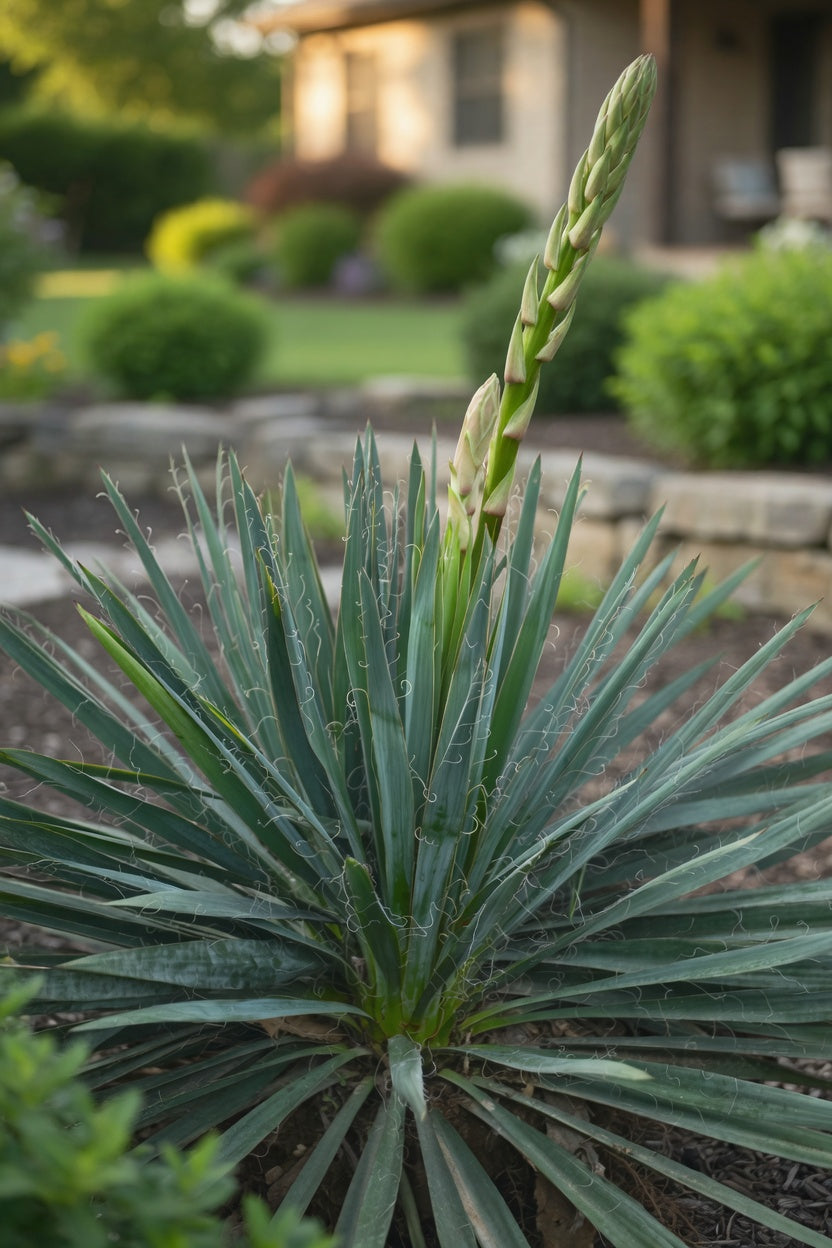
Adam’s needle yucca (Yucca filamentosa) is an architectural broadleaf evergreen perennial native to the southeastern United States. It forms a dense rosette of rigid green sword-shaped leaves ending in sharp points. Long curly white threads naturally peel from the margins, giving the species its filamentous name. The foliage clump generally reaches 60 to 90 cm high and wide. From late spring into early summer, a dramatic flower stalk rises 1.5 to 2.4 m and carries a large panicle of waxy, nodding, bell-shaped creamy white flowers above the persistent foliage.
For best results, grow this yucca in full sun and light, lean to moderately fertile soil with excellent drainage. Once firmly established, it tolerates heat, drought, sand, rocky ground, salt spray and urban conditions. Light partial shade is possible, although flowering is usually more generous in sun. Hardy from Zone 4 to 10, it suits rock gardens, dry gardens, slopes, architectural borders and large containers. Avoid any position where water collects during winter because poor drainage encourages leaf spotting, crown rot and gradual decline. Leave enough room for the clump to widen through offsets over time.
Adam’s needle requires little routine care. Water deeply during establishment, then space applications once roots have developed. Cut the finished flower stalk at the base and remove only dry or damaged leaves while wearing thick gloves. Rosettes gradually produce offsets that can form a colony and may be divided in spring. Flowers support butterflies, hummingbirds and specialized yucca moths, while fruiting stalks may interest birds. Sharp leaf tips require placement away from walkways and play areas. Yuccas contain saponins that are toxic to dogs, cats and horses, so choose the planting location accordingly.

Planting guide
From planting to establishment.
Spacing / density
90 to 120 cm (36 to 48 in)
Best planting time
Spring or early fall
Propagation
Division of offsets or root cuttings
Growing method
For best results, plant Yucca filamentosa in spring where it receives at least six hours of direct sun. Choose light sandy, gravelly or rocky soil that releases water quickly. Dig a hole slightly wider than the root ball but keep the crown at the same depth it occupied in the pot. If soil is heavy, create a mound or select a raised position instead of adding only sand to the planting hole. Space plants 90 to 120 cm apart so rosettes and offsets can develop. Water deeply after planting, then regularly during the first season whenever the soil becomes dry. Once established, reduce irrigation substantially. Avoid rich compost and excessive nitrogen, which produce softer growth. Keep mineral or organic mulch away from the crown. Position the rosette far from paths, play areas and places frequently used by pets. Wear thick gloves and eye protection when working near sharp tips. Monitor winter drainage closely because persistent cold moisture is the main risk in Canadian gardens. Remove weeds by hand before their roots become tangled through the expanding clump. Stable support is unnecessary because the flowering stalk rises naturally from the established crown.
Soil and care
The right care,at the right time.
Soil pH
Neutral, approximately 6.0 to 8.0
Care level
Easy
Drought tolerance
Yes
Watering
Water deeply after planting to moisten the entire root ball, then let the soil dry before the next application. During the first season, check moisture regularly to support establishment. Once rooted, Yucca filamentosa tolerates drought extremely well and needs only occasional irrigation during prolonged heat. Direct water toward the soil, avoid filling the centre of the rosette and never allow a saucer or low spot to hold water around the crown, especially during cool weather.
Soil type
Yucca filamentosa prefers light, lean to moderately fertile soil with excellent drainage. Sand, gravel, rocky ground and many loams are suitable when water moves away quickly. Neutral pH is ideal. The plant also tolerates salt spray and moderate compaction but performs poorly in standing moisture. In clay soil, place it on a mound or in a raised bed to keep the crown dry through winter thaws and repeated freeze-thaw cycles.
Fertilization
Yucca filamentosa performs well in lean soil and needs little fertilizer. In spring, a thin layer of mature compost or a very light dose of balanced slow-release fertilizer is sufficient if growth appears weak. Avoid nitrogen-rich feeding because it can produce softer, less resilient leaves. In containers, feed lightly once as growth begins and stop well before fall so firm tissue develops before winter. Never place concentrated fertilizer directly against the crown or offsets.
Moisture
Low to average
Seasonal care
In spring, inspect the rosette after freeze-thaw cycles. Remove only leaves that are completely dry, broken or spotted, cutting them near the base with a clean tool. Wear thick gloves, long sleeves and eye protection because the tips are sharp. Confirm that soil has not settled around the crown and move wet mulch away. Fertilizer is generally unnecessary; a small amount of compost is sufficient in extremely lean soil. During summer, water young plants when the soil is dry, then reduce irrigation after establishment. After flowering, cut the stalk at the base once blooms fade unless decorative capsules are being retained for wildlife. Watch for leaf spots mainly when moisture persists. In fall, do not cut down green foliage because it remains ornamental and naturally protects the rosette. Instead, confirm that water drains freely. Raise containers, shelter them from wind and remove any saucer that holds water. Divide offsets in spring if the colony exceeds its allotted space, resetting them at the same depth in dry, draining soil. Throughout the year, keep sharp tips away from paths and plant material beyond the reach of animals likely to chew it. This simple routine preserves the strong evergreen form while preventing the moisture problems most likely to damage the crown in cold gardens. Also inspect sharp leaf tips after severe storms or heavy snow.
Container growing
A garden,within reach.
Recommended pot size
At least 45 to 50 cm (18 to 20 in) in diameter and depth
Yucca filamentosa can live in a large container when drainage is exceptional. Choose a frost-resistant pot at least 45 to 50 cm in diameter and depth with several large openings. Fill it with an airy mineral-rich mix intended for xeric plants and keep the crown level with the surface. Place the pot in full sun away from walkways and locations where sharp tips could reach a face or paw. Water thoroughly after planting, let all excess moisture escape, then wait until the mix dries before watering again. One light application of balanced fertilizer in spring is sufficient. Rotate the container if the rosette leans toward light and remove the finished stalk while wearing thick gloves. For Canadian winter, move the pot beside a sheltered wall without bringing it into a heated room. Raise it so drainage remains open, remove the saucer and protect the sides against rapid temperature swings. Keep the mix nearly dry during dormancy without allowing the entire root ball to desiccate through a long snow-free interval. Divide offsets when the container becomes crowded and reset vigorous sections at the original depth. Keep the crown visible in every season.

Bloom and dimensions
Its place,in your garden.
Mature height
Rosette 60 to 90 cm; flower stalk 1.5 to 2.4 m
Width / spread
Approximately 60 to 90 cm; the colony widens through offsets
Flower color
Creamy white
Foliage color
Green
Foliage type
Evergreen
Growth rate
Moderate
Growth habit
Evergreen, upright and clumping rosette
Fragrance
Light fragrance, especially in the evening
Bloom period
From late spring into early summer, a tall 1.5 to 2.4 m stalk rises above the rosette with a large panicle of creamy white flowers. Waxy nodding bells open successively and attract specialized pollinating yucca moths along with butterflies and hummingbirds. After flowering, green capsules that mature brown may contain numerous black seeds. Removing the spent stalk tidies the plant, while retaining it temporarily can provide architectural and wildlife interest.
Fruiting
Green capsules maturing brown with black seeds
Harvest
Collect capsules when they turn brown and begin opening, while wearing thick gloves.
Garden associations
In goodcompany.
Companion plants
Pair Yucca filamentosa with plants that enjoy full sun and dry soil, including sedums, coneflowers, black-eyed Susans, catmint, yarrow, hardy lavender and ornamental grasses. Their softer shapes contrast with rigid sword-like leaves. Choose companions with modest water needs and preserve an open area around the crown. Avoid vigorous plants that trap moisture, very dense groundcovers and species requiring frequent irrigation because these conditions increase winter rot risk. Keep neighbouring stems clear of sharp tips during routine maintenance. Maintain safe working access.
Plants to avoid
Avoid plants requiring constantly moist soil, dense groundcovers that cover the crown and vigorous neighbours that hide the rosette.
From the gardento inspiration.
Flowers are documented as edible for humans, but nursery plants may have received treatments not intended for food crops. Consume only correctly identified flowers from a source grown specifically for eating. Other plant parts contain saponins, and yucca is toxic to dogs, cats and horses.
Frequently asked questions
Your questions,answered.
How tall does Yucca filamentosa grow?
The foliage rosette generally reaches 60 to 90 cm high with a similar width. During flowering, a much taller stalk emerges from the centre and usually reaches 1.5 to 2.4 m. This difference explains why some references provide a modest foliage height while others list a much greater total height. Allow sufficient vertical room and avoid placing the plant beneath a low window or branch. The clump also widens gradually through basal offsets. These may remain to form a colony or be separated in spring to preserve one architectural rosette. Flower stalk height can vary with age, moisture and site conditions. This plant is also widely called adam's needle yucca.
Is Yucca filamentosa hardy in cold Canadian winters?
Yes. The species is generally hardy from Zone 4, approximately -34 °C, when the soil drains exceptionally well. Dry cold is easier for the plant than saturated soil during winter thaws. Choose a sunny location, avoid low spots and never cover the crown with wet mulch. In clay, a mound or raised bed reduces rot risk. Retain green foliage through winter and remove only damaged leaves in spring. In a container, protect the sides, shelter the pot from wind and keep every drainage opening clear without moving the dormant plant into a heated space. Snow cover can provide useful insulation when drainage remains free below it.
How often should Adam’s needle yucca be watered?
Water deeply after planting, then whenever the soil becomes dry during the first season. The goal is to moisten the entire root ball without keeping the crown wet. Once roots are well developed, Adam’s needle tolerates long dry periods and needs only occasional irrigation during prolonged heat. Always check the soil before watering. In a container, the root ball dries more quickly, but excess water must escape completely. Avoid frequent shallow applications, full saucers and automatic irrigation designed for thirstier perennials. Soft or spotted foliage can indicate excessive moisture rather than drought. Established plants in the ground often need no supplemental water during ordinary weather.
How can Yucca filamentosa be trimmed safely?
Wear thick gloves, long sleeves and eye protection before approaching the rosette because leaves end in sharp points. In spring, remove only foliage that is completely dry, broken or diseased using a clean tool. Cut near the base without damaging the centre or young offsets. After flowering, wait until the bells have faded, then cut the stalk at its base unless capsules are being retained. Never cut down the entire green rosette. Work from the outside, keep children and pets away, and collect sharp pieces immediately so they are not left on the ground. Long-handled tools can provide additional distance from the leaf tips.
Is Yucca filamentosa edible or toxic?
Both statements require a clear distinction. North Carolina State Extension documents Yucca filamentosa flowers as edible for humans after correct identification and preparation. However, the ASPCA classifies yuccas as toxic to dogs, cats and horses because of saponins. A plant sold for ornamental use may also have received treatments unsuitable for food crops. Do not consume a nursery plant unless it was specifically grown and labelled for that purpose. Position yucca beyond the reach of animals likely to chew it, and contact a veterinarian if ingestion causes symptoms. Sharp leaf tips present a separate physical hazard even when no plant material is swallowed.
Wildlife and pets
Life,around your plants.
Attracts birds
Yes
Reported toxicity
Yes
Supporting wildlife
Flowers support specialized pollinating yucca moths along with butterflies and hummingbirds. Capsules and seeds may also interest certain birds and small mammals. This ecological value is strongest when the stalk remains accessible and broad-spectrum insecticides are avoided during flowering. Some developing moth larvae consume seeds, while other viable seeds remain within the capsule.
For your planting projects
The right extras.Right here.
Hand Tools
Shop the collection