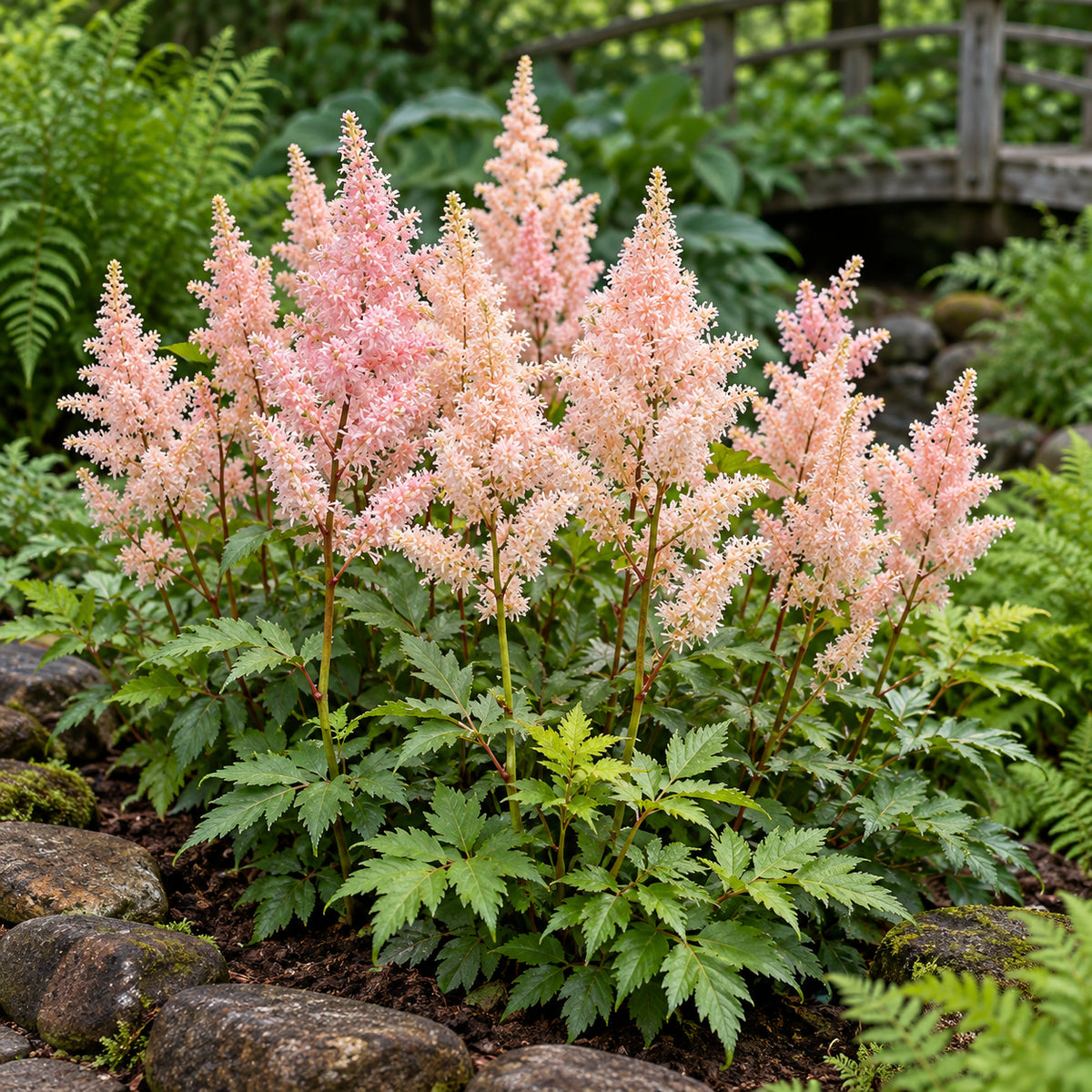
Astilbe 'Peach Blossom'

Astilbe Peach Blossom aux panicules rose pêche pâle, dressées au-dessus du feuillage denté.
PÉPINIÈRE.CA

Astilbe 'Peach Blossom'

BACK-IN-STOCK ALERT

Don’t miss its return.

Leave your email and receive an alert when this product is available again.

An alert for this product only. No newsletter signup. Privacy

Herbaceous perennials

Pépinière.ca

Astilbe × rosea

Format

Sold out

Delivery and pickup: view conditions

Product information
Advice adapted to Canada
Secure payment
Share
Common nameAstilbe
FamilySaxifragaceae
GenusAstilbe
Species× rosea
CultivarPeach Blossom
Plant typePerennial
Botanical nameAstilbe × rosea

Astilbe 'Peach Blossom'. Peach Blossom presents delicate peach flowers touched with pink in full plumes with a frothy appearance. Glossy green foliage provides a defined base beneath this soft mass. Place the clump within a moist, partially shaded composition with rich, damp soil and simpler neighbouring leaves that reveal the plume texture as the early-summer display develops within the perennial border. Its botanical name is Astilbe × rosea 'Peach Blossom'. The genus belongs to the Saxifragaceae family. The plant reaches 61 cm (24 in) in height. Astilbes do not all bloom at the same time. Consider the scene before, during and after flowering. Treat the flowering period as a seasonal reference rather than a guaranteed date.

Choose an exposure of partial shade for this selection. Prepare ground rich in organic matter that holds regular moisture. Shade does not replace this water reserve: beneath a tree, roots can dry the planting area. Reserve the clump’s mature width and keep smaller selections away from neighbours that will cover them. During establishment, the original root ball can dry out even when surrounding soil looks moist. Fertility supports a clump able to carry its plumes with sufficient resources. Mulch can reduce weeds and moderate moisture changes, but it does not replace checking the soil. For a nursery plant already growing in a container, moisten the root ball before removing the pot.

Keep a label near clumps when several astilbes share a border. Use plumes as a transition between broad leaves and finer stems. Astilbe brings a plume-like texture to containers that can be viewed at eye level. The flowers attract bees. To watch these garden visits, keep a clear and unobstructed view of the flowers from an accessible path. Place plant accents where they can be appreciated, then arrange surrounding volumes around them. Plan the planting around mature spread rather than the small size of the purchased plant. Choose companions by exposure, moisture, drainage and mature spread, then check those requirements for the particular varieties selected.

In the garden

Exposure
Sun to partial shade
Life cycle
Perennial
Hardiness
Zone 4–9 (USDA, American system)

Planting guide

Planting & establishment

Spacing / density

Set spacing according to mature growth and site conditions; leave access for maintenance.

Planting period

Spring in thawed, workable soil; early autumn only when enough time remains for rooting before cold weather.

Propagation

Division: spring

Growing method

For astilbe planting, prepare the site first and position the nursery root ball with care. Reserve the clump’s mature width and keep smaller selections away from neighbours that will cover them. Position the root ball at its growing level and water to settle the soil around it. A moist, accessible place allows soil checks as foliage gradually hides the base and fills the space between plants. Choose an exposure of partial shade for this selection. For a nursery plant already growing in a container, moisten the root ball before removing the pot. Prepare a hole wide enough to accommodate the roots without compressing them. Return the plant to its previous growing level unless its genus requires a specific adjustment, then settle soil around the root ball. Water to bring roots and soil into contact, and subsequently check moisture within the root ball itself. During establishment, the original root ball can dry out even when surrounding soil looks moist. Check both areas, especially after light rain or windy weather. Water slowly enough for moisture to enter the soil rather than run off its surface. As roots explore the surrounding ground, adjust watering to actual moisture and weather conditions. Mulch can reduce weeds and moderate moisture changes, but it does not replace checking the soil. Adapt mulch to the planting site and the genus’s requirements. The watering interval should change with root development instead of following a fixed calendar.

Soil and care

Soil & care

Soil pH

Acidic or neutral

Moisture

Average to moist soil

Care level

Easy

Watering

For Astilbe ‘Peach Blossom’, regularly check the soil around the root ball: it must remain moist. Water at the base when the surface begins to dry and adjust watering based on rainfall; this exposure (sun to partial shade) does not eliminate the need for water.

Soil type

Kept moist, Clayey

Fertilization

Approach astilbe fertilization through soil needs and plant growth rather than repeatedly adding products without checking the garden. Fertility supports a clump able to carry its plumes with sufficient resources. In already rich ground, assess needs before adding more fertilizer. Maintain moisture too: a dried plant does not regain quality through feeding alone, even when extra nutrients are available around its roots. Assess soil fertility before adding fertilizer. Appropriate feeding in late spring, before flowering, supports growth. Abundant, soft foliage does not necessarily lead to a better floral display or stronger stems in the garden.

Seasonal care

Organize astilbe seasonal care around the plant, its root zone and the changing conditions of the garden. After flowering, dry panicles can extend the border’s texture. Retain healthy leaves and let older foliage protect the base through winter where the position permits. Before spring growth resumes, cut away dead material. Check whether the crown has risen and gently restore soil around it without burying the emerging growth beneath wet debris. In spring, locate renewed growth before working close to the crown. Remove debris that obstructs new shoots while respecting the genus’s care requirements. Inspect drainage after snowmelt, and check the crown and roots if growth appears abnormal. Weed carefully: deep cultivation around an established perennial can damage roots that already extend through the bed. Let actual growth and soil conditions guide the timing of maintenance. During summer, observe how foliage responds to heat and check moisture before intervening. Newly planted specimens deserve particular attention. Retain healthy leaves that are still supporting growth. In autumn, adapt cleanup to plant health and the way the plant grows. Green leaves should not be removed simply because flowering has ended. Diseased foliage needs different handling from healthy stems retained for their silhouette. Mark crowns before above-ground growth disappears, and avoid soil work that could damage them during dormancy. The appropriate cleanup date follows plant development and local conditions rather than a fixed calendar. Through winter, avoid water accumulating around the crown and unnecessary work on frozen or saturated ground. For a Canadian garden, compare the indicated hardiness rating with the rating system used locally and with the actual planting conditions. American USDA ratings are not automatically equivalent to Canadian zones.

Container growing

Container growing

For astilbe container care, assess the growing medium and roots alongside the site and drainage. Astilbe brings a plume-like texture to containers that can be viewed at eye level. Monitor its water reserve closely: a small pot often dries before a neighbouring border. Choose companions that also enjoy regular moisture and prepare container wintering by protecting roots while allowing excess water to drain from the container. Choose a stable container with drainage openings and enough room to accommodate the root ball without compressing it. The openings must allow water to escape freely. Use a growing medium suited to the required drainage and moisture, and keep the root ball accessible for routine checks. Leave room for foliage to develop without blocking access, and adjust the container when the roots become too tightly confined. In a pot, the water and nutrient reserve is limited to the volume of growing medium. Check moisture more often during heat and wind without assuming that daily watering is appropriate. Water should moisten the root ball and then drain freely. Adjust feeding to observed needs and the directions for the product being used. Also check that any other plants sharing the container accept the same exposure and watering regime. Prepare for winter before any prolonged ground freezing. Roots in a container standing above ground are more exposed to cold than roots planted in the garden. That protection does not make a tender plant hardy. Choose shelter with suitable conditions when a selection cannot overwinter outdoors in your local climate.
Astilbe 'Peach Blossom'. De fins groupes floraux ramifiés montent sur les tiges et dessinent un contour plumeux. Les pétales rose pâle ont des plis doux visibles dans la lumière. De petites fleurs bordent les fines branches et donnent à chaque groupe une texture légère. Des feuilles vertes apparaissent autour des fleurs et entre les tiges de la photo. Plusieurs fleurs occupent le cadre, certaines de face et d'autres tournées de côté.

Size, flowering & harvest

Mature height

23.62 inches

Width / spread

50 cm

Flower color

Peach touched with pink

Foliage color

Glossy green

Growth rate

Moderate

Fragrance

Fragrant flowers

Bloom period

Observe astilbe bloom time together with plant growth, remembering that site conditions affect the flowering calendar seen in the garden. The flowers are peach touched with pink. Flowering occurs during early summer; its timing varies with the weather and the stage of plant establishment. Astilbes do not all bloom at the same time. Combine early, middle and later selections to spread the plume display through the season. Form matters too: a narrow panicle draws a sharper line than a broad, arching plume. Leave enough space around stems to see that silhouette clearly as neighbouring foliage develops.

Harvest

Cut flowering stems for bouquets; decorative use.
Astilbe Peach Blossom aux panicules rose pêche pâle, dressées au-dessus du feuillage denté.

Garden associations

Companion plants & uses

Companion plants

Choose astilbe companion plants for compatible site conditions and available space, rather than flower colour alone. Broad hosta leaves and fern fronds can accompany the plumes when their needs suit the position. Choose an appropriate scale: a small astilbe easily disappears beneath an imposing clump. In a moist border, alternate textures and retain access for watering without crushing young growth or pressing neighbouring leaves against the flowering stems. Choose companions by exposure, moisture, drainage and mature spread, then check those requirements for the particular varieties selected. Give each specimen the space it needs and retain watering access. Consider the scene before, during and after flowering. Leaves hidden in spring may become visually dominant later, and this seasonal change deserves as much attention as the colour of an individual flower.

Garden use

In astilbe garden design, give the plant a visible role and keep enough access for maintenance. Use plumes as a transition between broad leaves and finer stems. A low selection can brighten the foreground, while a taller astilbe introduces a level within the border. Bronze or silver foliage, where part of the selection, extends contrast after flowers fade and gives the clump a role beyond its flowering period. Astilbe 'Peach Blossom': Peach Blossom presents delicate peach flowers touched with pink in full plumes with a frothy appearance. Glossy green foliage provides a defined base beneath this soft mass. Place the clump within a moist, partially shaded composition with rich, damp soil and simpler neighbouring leaves that reveal the plume texture as the early-summer display develops within the perennial border. Plan the planting around mature spread rather than the small size of the purchased plant. Leave access to reach specimens in the middle of the bed. Compare foliage textures as carefully as flower colours. Consider the scene before, during and after flowering. Observe the planting from its main viewpoints before moving a specimen. Observe the planting’s development before adding further plants; open space around a young specimen also allows care without walking over its roots or breaking its stems. Retain some visible space between groups so the composition remains legible once plants develop, rather than filling every gap immediately with additional specimens. Leaves hidden in spring may become visually dominant later, and this seasonal change deserves as much attention as the colour of an individual flower.

Garden inspiration

When planning astilbe winter care in Canada, distinguish roots planted in garden soil from roots that remain exposed in containers. Use plumes as a transition between broad leaves and finer stems. A low selection can brighten the foreground, while a taller astilbe introduces a level within the border. Bronze or silver foliage, where part of the selection, extends contrast after flowers fade and gives the clump a role beyond its flowering period. Early-summer flowering brings soft, warm shades into compositions of green foliage. Place plant accents where they can be appreciated, then arrange surrounding volumes around them. Repeating one selection can connect different sections of a border, while an individual specimen can provide a visual focal point. Compare foliage textures as carefully as flower colours. Retain some visible space between groups so the composition remains legible once plants develop, rather than filling every gap immediately with additional specimens. Consider the scene before, during and after flowering. Leave access to reach specimens in the middle of the bed. Leaves hidden in spring may become visually dominant later, and this seasonal change deserves as much attention as the colour of an individual flower. Allow foliage to develop without being pressed against edging or buried beneath a more vigorous neighbour.

Frequently asked questions

Frequently asked questions

How to grow Peach Blossom astilbe in Canada?
Choose an exposure of partial shade for this selection. Prepare ground rich in organic matter that holds regular moisture. Shade does not replace this water reserve: beneath a tree, roots can dry the planting area. Choose a moist position and watch places that dry quickly in summer, particularly as leaves and plumes expand and the surrounding plants also draw water. Observe the proposed planting site at different times of day before digging. Light changes with trees, buildings and the season. A position that looks attractive from the patio also needs to stay accessible when neighbouring plants reach their mature size. Plan the planting around mature spread rather than the small size of the purchased plant. Leave access to reach specimens in the middle of the bed. Allow foliage to develop without being pressed against edging or buried beneath a more vigorous neighbour.
How should I water Peach Blossom astilbe?
Water becomes especially important as leaves and panicles develop. Dry ground can produce brown, brittle margins; check the root ball before foliage quality declines. Sunny positions need closer monitoring. Water to moisten roots rather than only the visible surface, and reassess soil moisture during prolonged rainless periods or unusually warm weather. Direct water towards the root zone rather than over flowers and leaves. Check soil moisture before adding more: wilted foliage alone cannot distinguish drought from a root problem. Account for the rain that actually reaches the planting, along with heat and wind. During establishment, the original root ball can dry out even when surrounding soil looks moist. Check both areas, especially after light rain or windy weather. Water slowly enough for moisture to enter the soil rather than run off its surface. The watering interval should change with root development instead of following a fixed calendar.
How should I care for Peach Blossom astilbe during flowering?
The flowers are peach touched with pink. Flowering occurs during early summer; its timing varies with the weather and the stage of plant establishment. Astilbes do not all bloom at the same time. Combine early, middle and later selections to spread the plume display through the season. Form matters too: a narrow panicle draws a sharper line than a broad, arching plume. Leave enough space around stems to see that silhouette clearly as neighbouring foliage develops. Treat the flowering period as a seasonal reference rather than a guaranteed date. Weather, exposure and the stage of establishment can shift the start or duration of the display. Watch developing buds and open flowers when deciding how to maintain the plant. When the plant’s appearance changes, examine its growing environment first. A buried crown, dry root ball and saturated soil call for different responses.
Can I grow Peach Blossom astilbe in a container?
Astilbe brings a plume-like texture to containers that can be viewed at eye level. Monitor its water reserve closely: a small pot often dries before a neighbouring border. Choose companions that also enjoy regular moisture and prepare container wintering by protecting roots while allowing excess water to drain from the container. Choose a stable container with drainage openings and enough room to accommodate the root ball without compressing it. The openings must allow water to escape freely. Use a growing medium suited to the required drainage and moisture, and keep the root ball accessible for routine checks. Prepare for winter before any prolonged ground freezing. Roots in a container standing above ground are more exposed to cold than roots planted in the garden. For a plant already hardy in your region, temporarily sinking the container into well-drained ground can protect the root ball. That protection does not make a tender plant hardy.
How should I plan Peach Blossom astilbe winter care in Canada?
Through winter, avoid water accumulating around the crown and unnecessary work on frozen or saturated ground. American USDA ratings are not automatically equivalent to Canadian zones. Snow cover, wind, drainage and site exposure all contribute to assessing whether a planting position and its winter protection are suitable. Prepare for winter before any prolonged ground freezing. Roots in a container standing above ground are more exposed to cold than roots planted in the garden. That protection does not make a tender plant hardy. Choose shelter with suitable conditions when a selection cannot overwinter outdoors in your local climate. After flowering, dry panicles can extend the border’s texture. Retain healthy leaves and let older foliage protect the base through winter where the position permits. Before spring growth resumes, cut away dead material. Check whether the crown has risen and gently restore soil around it without burying the emerging growth beneath wet debris.

Wildlife and pets

Wildlife & precautions

Supporting wildlife

The flowers attract bees. To watch these garden visits, keep a clear and unobstructed view of the flowers from an accessible path. Sightings change with weather, the progress of flowering and the activity of animals already present. Follow the flowers as they open, leaving room to observe them without stepping on the plant’s roots.

Complete your purchase

Click a product to build your selection.

Your selection

Total