Sale
Sold out

Perennial climbing plants
Ranunculaceae
Compact white clematis for patios
Guernsey Flute clematis
Clematis ‘EviGsy153’
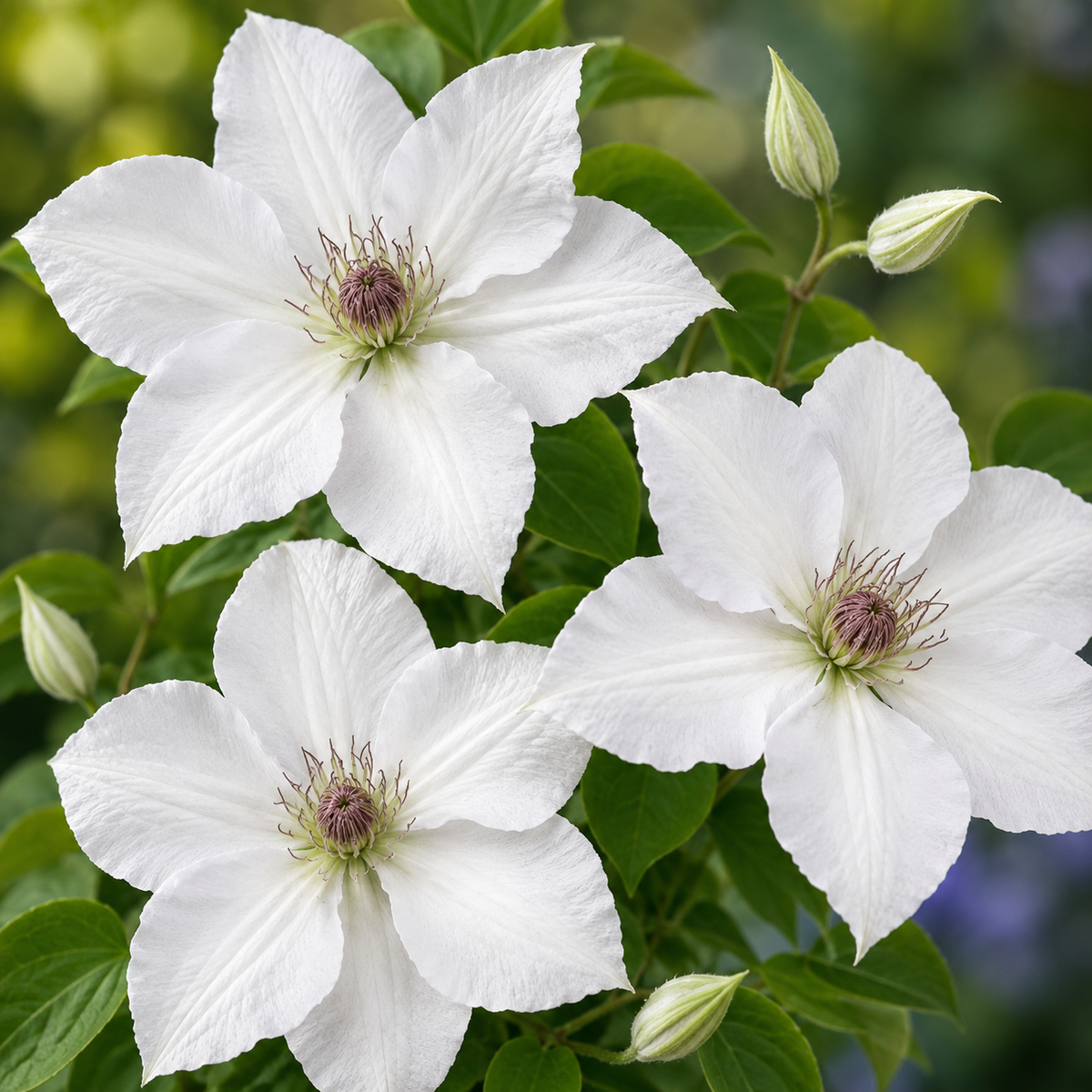
Guernsey Flute™ is a compact clematis with large 12 to 14 cm white flowers. Its buds remain elegantly partly open like champagne flutes before unfolding pure white to ivory star-shaped sepals around brown-red anthers. Flowers cover the plant from base to stem tips from May through July, then return in September. Its usual height of 90 to 120 cm suits patios, smaller gardens, borders and large containers. Stable support, fertile moisture-retentive soil and annual pruning to approximately 15 cm promote a dense display that remains easy to appreciate. The white display reads clearly against dark supports and foliage from nearby seating areas.
- Exposure
- Any aspect; full sun to partial shade
- Hardiness
- Zone 4 to 9
Discover the plant
Common nameGuernsey Flute clematis
FamilyRanunculaceae
GenusClematis
SpeciesGarden hybrids
CultivarEviGsy153 (Guernsey Flute)
TypePerennial climbing plants
Botanical nameClematis ‘EviGsy153’
Guernsey Flute™ Clematis (Clematis ‘EviGsy153’) is a compact climber from Raymond Evison’s Guernsey breeding programme, introduced in 2024 to celebrate the nursery’s 40th anniversary. Its white buds remain partly open like champagne flutes for an extended period before becoming robust 12 to 14 cm star-shaped flowers. Pure white to ivory sepals, sometimes showing the faintest lilac tint under certain conditions, end in pointed tips around brown-red anthers. Flowers cover the plant from base to stem tips, creating a bright display over its full height and through several weeks of changing flower form.
Guernsey Flute generally reaches 90 to 120 cm tall and spreads approximately 50 to 100 cm, making it ideal for a large container, smaller trellis, patio obelisk or the front of a border. It prefers full sun or partial shade in fertile, moisture-retentive yet well-drained soil. Set the crown 5 to 8 cm below the surface and install support at planting so leaf stalks can grasp it. Light mulch helps keep roots cool without covering the crown, while a sheltered position protects the broad sepals from harsh drying winds outdoors.
The first flowering period runs from May through July, followed by reliable repeat bloom in September. In late winter or early spring, cut every stem back to approximately 15 cm above soil level to renew the compact framework and encourage flowers close to the base. Water deeply when the soil surface begins to dry and feed moderately in spring. Like every clematis, this plant is toxic when eaten and its sap may irritate sensitive skin; wear gloves during pruning and keep debris out of reach after every seasonal maintenance session.

Planting guide
From planting to establishment.
Spacing / density
Approximately 50 to 100 cm (20 to 39 in) between crowns
Best planting time
Spring or early fall
Propagation
Semi-ripe cuttings or layering; commercial propagation may be restricted
Soil and care
The right care,at the right time.
Soil pH
Acid to alkaline
Minimum temperature
-34 °C (-29 °F)
Care level
Intermediate
Watering
Water deeply and regularly during establishment so the root ball stays evenly moist without becoming saturated. In hot weather, check containers and plants growing beside walls more often because these sites dry quickly. Direct water toward the base instead of wetting foliage. Established clematis still perform best with consistent moisture and should not be treated as highly drought tolerant, especially while actively extending and flowering.
Soil type
Fertile, organic-rich soil that holds moisture yet drains well suits Guernsey Flute™. Loam, clay, sand or chalk-based soil can work when excess water drains effectively. Mature compost improves moisture retention without leaving the crown waterlogged. Avoid sites where winter water collects, and keep the root zone cool during summer. Beside a wall, position the crown far enough from the foundation for rainfall to reach the roots instead of disappearing beneath an overhang.
Fertilization
In spring, add mature compost or apply a balanced fertilizer according to label directions. A second light feeding after the first flush can support Guernsey Flute™ repeat bloom. Avoid excessive nitrogen, which encourages foliage at the expense of flowers. Water before and after feeding, then stop fertilizing early enough for stems to mature before winter. In containers, use smaller applications when needed because nutrients leach more quickly with frequent watering.
Moisture
Moist soil without standing water
Seasonal care
In late winter or early spring, cut every Guernsey Flute™ stem back to approximately 15 cm above soil level, just above vigorous buds. Wear gloves and use clean pruners because clematis sap may irritate skin. Remove debris, inspect the support and replace worn ties before growth resumes. In spring, add mature compost and renew light mulch without covering the crown. Fan out new shoots while they remain flexible. Water deeply whenever the surface dries, especially in containers. Moderate balanced feeding supports flowering, whereas excessive nitrogen mainly produces foliage. After the first flush, keep soil consistently moist to encourage repeat bloom. Watch for slugs, aphids and sudden wilting. Stop feeding in fall and leave several feathery seed heads for texture. In cold regions, insulate containers and prevent winter water from collecting around the crown. During prolonged rain, inspect drainage and remove diseased leaves that have fallen onto the soil. After windy weather, redirect loose shoots before they break. If growth becomes excessively dense, thin several weak stems instead of shortening the entire plant while buds are forming. Spent flowers may be removed for a tidier appearance, but leave several if feathery seed heads are desired. Check moisture beneath mulch rather than judging only its dry surface. As spring returns, resume watering gradually and protect tender shoots from slugs and severe late frost. Container plants may warm and begin growth earlier than garden plants, so continue monitoring exposed stems during rapid temperature changes. Rotate the pot occasionally for balanced light and confirm that drainage remains open after every extended wet period.
Container growing
A garden,within reach.
Recommended pot size
At least 50 cm (20 in) deep and wide
Guernsey Flute™ is especially well suited to containers because it remains 90 to 120 cm tall. Use a frost-resistant pot at least 50 cm deep and wide with several drainage holes. Install a stable obelisk before planting, then fill the container with rich potting mix that holds moisture without remaining waterlogged. Set the crown slightly deeper than it grew in the production pot. Water slowly until excess drains freely, then check moisture daily during hot weather. A thin mulch layer limits evaporation without trapping water against stems. Feed moderately in spring and after the first flush. Before winter, move the pot to a sheltered location, insulate its sides and raise it so drainage remains open. In spring, replace the upper layer of mix and confirm that the support remains stable before new shoots lengthen. Rotate the pot periodically so all shoots receive balanced light. Never leave the container standing in a water-filled saucer, and check that drainage holes remain open after prolonged rain. During summer, water preferably in the morning and direct moisture toward the potting mix rather than foliage. A thin layer of compost in spring renews organic matter without reducing watering space. Loosen ties that begin marking stems, and remove any suddenly wilted shoot promptly with disinfected tools. Shelter large flowers from severe wind, and keep the crown visible so new spring growth can be monitored easily.

Bloom and dimensions
Its place,in your garden.
Mature height
Approximately 90 to 120 cm (3 to 4 ft)
Width / spread
Approximately 50 to 100 cm (20 to 39 in)
Flower color
Pure white to ivory with brown-red anthers
Foliage color
Vibrant green, deciduous
Foliage type
Deciduous
Growth rate
Moderate to fast
Growth habit
Compact, dense and bushy climber
Fragrance
Not fragrant
Bloom period
Guernsey Flute™ white buds remain partly open like champagne flutes before becoming robust 12 to 14 cm star-shaped flowers. Pure white to ivory sepals surround brown-red anthers. Blooms cover the plant from base to stem tips from May through July, followed by reliable repeat flowering in September. Short pruning in late winter encourages a dense display close to the base.
Fruiting
Achenes with decorative feathery styles late in the season
Garden associations
In goodcompany.
Companion plants
Pair Guernsey Flute™ with low perennials that shade the soil lightly without invading the crown, such as coral bells, hardy geraniums, catmints or small ornamental grasses. Plum, dark-green or silver foliage emphasizes ivory-white flowers and brown-red anthers. Blue or pale-pink annuals in neighbouring containers extend the palette. Keep clear space around the base for watering, air circulation and pruning. Avoid vigorous plants or aggressive roots that could reduce available moisture or hide emerging clematis shoots in spring. Choose companions with similar light needs.
Plants to avoid
Avoid highly invasive plants or aggressive roots immediately around the crowns
Frequently asked questions
Your questions,answered.
How should Guernsey Flute clematis be pruned?
In late winter or early spring, before active growth resumes, cut every Guernsey Flute™ stem back to approximately 15 cm above soil level, just above healthy buds. This short pruning renews the compact habit and stimulates flowering shoots from the base. Use clean pruners, wear gloves and collect debris because clematis sap may irritate skin. Inspect the smaller trellis or obelisk afterward and replace worn ties. When new stems appear, spread them in a fan and tie them loosely before they intertwine. Add light mulch without covering the crown, then resume consistent watering as growth accelerates and flowering shoots begin covering the support.
What flower form does Guernsey Flute clematis have?
Guernsey Flute™ white buds remain partly open like champagne flutes for an extended period. They then open into robust 12 to 14 cm star-shaped flowers made of pointed pure white to ivory sepals around brown-red anthers. The faintest lilac tint may occasionally appear depending on light and growing conditions. Fan out young stems to display the different opening stages from the base to the top of the support. A dark support and neighbouring plum or silver foliage make the closed bud and fully open flower easy to distinguish. The changing forms remain especially visible near a patio, entrance or frequently used garden path.
Does Guernsey Flute clematis suit containers?
Yes. Guernsey Flute™ suits a large frost-resistant container at least 50 cm deep and wide, fitted with several drainage holes and a stable obelisk. Its usual height of 90 to 120 cm creates a strong vertical display on a terrace or beside an entrance. Use rich potting mix that retains moisture without remaining waterlogged. Set the crown slightly deeper than it grew in the production pot, then water until excess drains freely. Check moisture daily during hot weather. In winter, shelter the container from wind, insulate its sides and raise it to prevent standing water and repeated freeze-thaw cycles around the roots.
What site suits Guernsey Flute clematis?
Choose full sun or partial shade, favouring good light for abundant white flowering. Guernsey Flute™ accepts different aspects, although the faintest lilac tint may sometimes appear depending on growing conditions. Soil should be fertile, moisture-retentive yet well drained. Position the crown 30 to 60 cm away from a foundation so rainfall reaches the roots. Light mulch or a low companion keeps the root zone cool without covering the crown. Install a trellis, arch or obelisk before planting and preserve easy access to the base for watering and annual pruning. Good air circulation helps foliage dry after rain. Maintain open airflow. Check regularly.
Is Guernsey Flute clematis toxic?
Yes. Like other clematis, Guernsey Flute™ contains protoanemonin and is toxic to dogs, cats and horses when eaten. Ingestion can cause salivation, vomiting and diarrhea. In people, plant material may cause severe mouth irritation, while sap can irritate sensitive skin. Wear gloves for pruning, wash exposed skin and never present any part as edible. Position the plant away from young children and pets that chew garden plants, and collect cut stems promptly after maintenance. If ingestion occurs or symptoms appear, contact an appropriate medical professional or veterinarian promptly. Do not attempt home treatment unless a qualified professional provides specific instructions for the situation.
Wildlife and pets
Life,around your plants.
Reported toxicity
Yes
Supporting wildlife
Clematis flowers can be visited by bees and other insects seeking pollen, and some also supply nectar. The specific wildlife value of Guernsey Flute™ may vary by region and the availability of other flowers. It is therefore presented as useful to pollinating insects without promising special attraction for butterflies or hummingbirds. Avoid spraying open flowers when pollinators are active.
For your climbing plants
The right extras.Right here.
Trellis, Garden Stakes & Plant Ties
Shop the collection
Pruning Shears
Shop the collection