Pinks PRETTY POPPERS 'Appleblossom Burst'

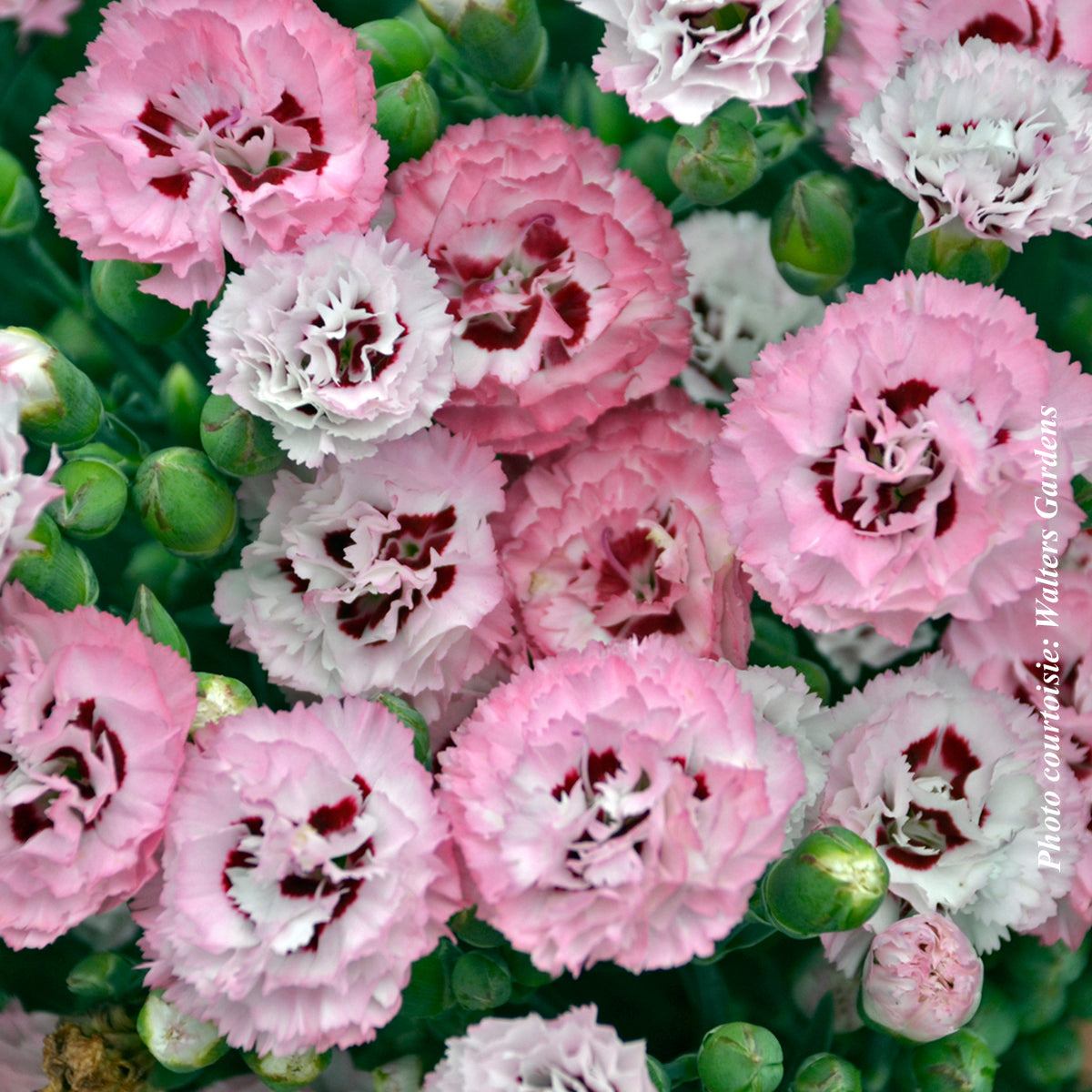
Œillet 'Pretty Poppers Appleblossom Burst'. Les couches de pétales aux bords courbes donnent à la fleur son contour arrondi. Des tons blancs et roses se partagent les pétales, avec des changements nets sur chaque fleur. Des marques rouge foncé sont visibles vers le milieu des pétales des fleurs ouvertes. Des feuilles vertes apparaissent autour des fleurs et entre les tiges de la photo. La vue large montre un groupe dense de fleurs répétées à travers la photo.
PÉPINIÈRE.CA

Pinks PRETTY POPPERS 'Appleblossom Burst'

BACK-IN-STOCK ALERT

Don’t miss its return.

Leave your email and receive an alert when this product is available again.

An alert for this product only. No newsletter signup. Privacy

Herbaceous perennials

Pépinière.ca

Dianthus

Format

Sold out

Delivery and pickup: view conditions

Product information
Advice adapted to Canada
Secure payment
Share
Common namePinks
FamilyCaryophyllaceae
GenusDianthus
CultivarAppleblossom Burst
Plant typePerennial
Botanical nameDianthus

Pinks PRETTY POPPERS 'Appleblossom Burst'. Semi-double flowers range from white to stronger pink blush, creating a delicate mixture above blue-green foliage. Appleblossom Burst forms a base considerably wider than tall. This volume suits edging where flowers can spread laterally without being squeezed between plants of similar width as neighbouring clumps fill their reserved spaces. Its botanical name is Dianthus 'Appleblossom Burst'. The genus belongs to the Caryophyllaceae family. The plant reaches 20.3–25.4 cm (8–10 in) in height. Petal number and edging also vary. Consider the scene before, during and after flowering. Treat the flowering period as a seasonal reference rather than a guaranteed date.

Choose an exposure of full sun to partial shade for this selection. Drainage deserves particular attention with pinks. Plant pinks where their eventual spread has room to develop. During establishment, the original root ball can dry out even when surrounding soil looks moist. Check both areas, especially after light rain or windy weather. Mulch can reduce weeds and moderate moisture changes, but it does not replace checking the soil. Adapt mulch to the planting site and the genus’s requirements. For a nursery plant already growing in a container, moisten the root ball before removing the pot. Prepare a hole wide enough to accommodate the roots without compressing them.

Wear gloves if your skin reacts during trimming and cleanup, and keep removed leaves and flower stems away from pets that investigate garden debris. A low pink can outline a path, while a more upright selection adds punctuation among perennials. Use blue or grey foliage where present as part of the composition too. The flowers attract bees and butterflies. Place plant accents where they can be appreciated, then arrange surrounding volumes around them. Plan the planting around mature spread rather than the small size of the purchased plant. Leave access to reach specimens in the middle of the bed. Choose companions by exposure, moisture, drainage and mature spread, then check those requirements for the particular varieties selected.

In the garden

Exposure
Sun
Life cycle
Perennial
Hardiness
Zone 4–9 (USDA, American system)

Planting guide

Planting & establishment

Spacing / density

Set spacing according to mature growth and site conditions; leave access for maintenance.

Planting period

Spring in thawed, workable soil; early autumn only when enough time remains for rooting before cold weather.

Growing method

For dianthus planting, prepare the site first and position the nursery root ball with care. Plant pinks where their eventual spread has room to develop. Overcrowded edging eventually hides leaves and holds moisture between clumps. Retain the root ball’s growing level, water after planting and avoid filling gaps with neighbours that will quickly cover small cushions or shade the flowering stems as they develop. Choose an exposure of full sun to partial shade for this selection. For a nursery plant already growing in a container, moisten the root ball before removing the pot. Prepare a hole wide enough to accommodate the roots without compressing them. Return the plant to its previous growing level unless its genus requires a specific adjustment, then settle soil around the root ball. Water to bring roots and soil into contact, and subsequently check moisture within the root ball itself. During establishment, the original root ball can dry out even when surrounding soil looks moist. Check both areas, especially after light rain or windy weather. Water slowly enough for moisture to enter the soil rather than run off its surface. As roots explore the surrounding ground, adjust watering to actual moisture and weather conditions. Mulch can reduce weeds and moderate moisture changes, but it does not replace checking the soil. Adapt mulch to the planting site and the genus’s requirements. The watering interval should change with root development instead of following a fixed calendar.

Soil and care

Soil & care

Soil pH

Neutral or alkaline

Moisture

Low to average water needs

Care level

Easy

Drought tolerance

Yes

Watering

Moderate

Soil type

Well drained, Limestone

Fertilization

Approach dianthus fertilization through soil needs and plant growth rather than repeatedly adding products without checking the garden. Balanced growth keeps flowers and foliage well proportioned. Assess fertility before adding fertilizer and follow product directions. Containers lose nutrient reserves faster than garden ground; divide applications when needed while maintaining drainage that protects the plant’s base. Feeding supports active growth but cannot correct a persistently waterlogged root ball. Assess soil fertility before adding fertilizer. Ground that receives organic matter regularly may need less feeding than impoverished soil.

Seasonal care

Organize dianthus seasonal care around the plant, its root zone and the changing conditions of the garden. Remove faded flowers for a tidy appearance. In reblooming pinks, a light trim after the first flush can encourage new stems; retain healthy leaves. In spring, inspect the base after snowmelt and carefully remove dead material without pulling apart the living cushion. Adjust trimming to the selection’s flowering habit. In spring, locate renewed growth before working close to the crown. Remove debris that obstructs new shoots while respecting the genus’s care requirements. Inspect drainage after snowmelt, and check the crown and roots if growth appears abnormal. Weed carefully: deep cultivation around an established perennial can damage roots that already extend through the bed. Let actual growth and soil conditions guide the timing of maintenance. During summer, observe how foliage responds to heat and check moisture before intervening. Newly planted specimens deserve particular attention. Retain healthy leaves that are still supporting growth. In autumn, adapt cleanup to plant health and the way the plant grows. Green leaves should not be removed simply because flowering has ended. Diseased foliage needs different handling from healthy stems retained for their silhouette. Mark crowns before above-ground growth disappears, and avoid soil work that could damage them during dormancy. The appropriate cleanup date follows plant development and local conditions rather than a fixed calendar. Through winter, avoid water accumulating around the crown and unnecessary work on frozen or saturated ground. For a Canadian garden, compare the indicated hardiness rating with the rating system used locally and with the actual planting conditions. American USDA ratings are not automatically equivalent to Canadian zones.

Container growing

Container growing

Recommended pot size

Use a free-draining container slightly larger than the rootball; increase its size as the roots develop.
For dianthus container care, assess the growing medium and roots alongside the site and drainage. Containers bring flower edges and fragrance, where present, within easy reach. Choose a pot with drainage holes and neighbouring plants with compatible needs. Before local frost, prepare container wintering: roots above ground can experience more cold than those planted in garden soil. Keep winter drainage effective throughout the dormant period. Choose a stable container with drainage openings and enough room to accommodate the root ball without compressing it. The openings must allow water to escape freely. Use a growing medium suited to the required drainage and moisture, and keep the root ball accessible for routine checks. Leave room for foliage to develop without blocking access, and adjust the container when the roots become too tightly confined. In a pot, the water and nutrient reserve is limited to the volume of growing medium. Check moisture more often during heat and wind without assuming that daily watering is appropriate. Water should moisten the root ball and then drain freely. Adjust feeding to observed needs and the directions for the product being used. Prepare for winter before any prolonged ground freezing. Roots in a container standing above ground are more exposed to cold than roots planted in the garden. For a plant already hardy in your region, temporarily sinking the container into well-drained ground can protect the root ball. That protection does not make a tender plant hardy. Choose shelter with suitable conditions when a selection cannot overwinter outdoors in your local climate.
Œillet 'Pretty Poppers Appleblossom Burst'. Les couches de pétales aux bords courbes donnent à la fleur son contour arrondi. Des tons blancs et roses se partagent les pétales, avec des changements nets sur chaque fleur. Des marques rouge foncé sont visibles vers le milieu des pétales des fleurs ouvertes. Des feuilles vertes apparaissent autour des fleurs et entre les tiges de la photo. La vue large montre un groupe dense de fleurs répétées à travers la photo.

Size, flowering & harvest

Mature height

10 inches (25.5 cm)

Width / spread

20 inches (51 cm)

Flower color

White to pink blush

Foliage color

Blue-green

Foliage type

Semi-evergreen

Growth rate

Moderate

Fragrance

Fragrant flowers

Bloom period

Observe dianthus bloom time together with plant growth, remembering that site conditions affect the flowering calendar seen in the garden. The flowers are white to pink blush. Flowering occurs during early summer and early fall; its timing varies with the weather and the stage of plant establishment. Petal number and edging also vary. Treat the flowering period as a seasonal reference rather than a guaranteed date. Weather, exposure and the stage of establishment can shift the start or duration of the display. Watch developing buds and open flowers when deciding how to maintain the plant.

Harvest

Cut flowering stems for bouquets; decorative use.
Œillet 'Pretty Poppers Appleblossom Burst'. Les couches de pétales aux bords courbes donnent à la fleur son contour arrondi. Des tons blancs et roses se partagent les pétales, avec des changements nets sur chaque fleur. Des marques rouge foncé sont visibles vers le milieu des pétales des fleurs ouvertes. Des feuilles vertes apparaissent autour des fleurs et entre les tiges de la photo. La vue large montre un groupe dense de fleurs répétées à travers la photo.

Garden associations

Companion plants & uses

Companion plants

Choose dianthus companion plants for compatible site conditions and available space, rather than flower colour alone. Combine small pinks with plants suited to sun and good drainage, choosing each variety by its vigour. Fine texture or silver foliage can accompany the petals without hiding them. Leave taller selections more open space above and avoid competition that would bury their lower leaves beneath a rapidly expanding neighbouring plant. Choose companions by exposure, moisture, drainage and mature spread, then check those requirements for the particular varieties selected. Contrasting leaves or flowers can improve a composition without automatically making either plant more resistant. Give each specimen the space it needs and retain watering access. Consider the scene before, during and after flowering.

Garden use

In dianthus garden design, give the plant a visible role and keep enough access for maintenance. A low pink can outline a path, while a more upright selection adds punctuation among perennials. Use blue or grey foliage where present as part of the composition too. Give flowers with contrasting eyes a position viewed closely, and keep surrounding vegetation simpler so that petal details remain easy to see. Pinks PRETTY POPPERS 'Appleblossom Burst': Semi-double flowers range from white to stronger pink blush, creating a delicate mixture above blue-green foliage. Appleblossom Burst forms a base considerably wider than tall. This volume suits edging where flowers can spread laterally without being squeezed between plants of similar width as neighbouring clumps fill their reserved spaces. Plan the planting around mature spread rather than the small size of the purchased plant. Leave access to reach specimens in the middle of the bed. Place plant accents where they can be appreciated, then arrange surrounding volumes around them. Repeating one selection can connect different sections of a border, while an individual specimen can provide a visual focal point. Compare foliage textures as carefully as flower colours. Consider the scene before, during and after flowering. Neighbouring plants can extend the border’s interest through foliage or a different flowering season, provided their growing requirements are compatible. Observe the planting from its main viewpoints before moving a specimen.

Garden inspiration

When planning dianthus winter care in Canada, distinguish roots planted in garden soil from roots that remain exposed in containers. A low pink can outline a path, while a more upright selection adds punctuation among perennials. Use blue or grey foliage where present as part of the composition too. Give flowers with contrasting eyes a position viewed closely, and keep surrounding vegetation simpler so that petal details remain easy to see. In a greenhouse, flowers can appear almost white; outdoor presentation can bring out more pink blush. Place plant accents where they can be appreciated, then arrange surrounding volumes around them. Compare foliage textures as carefully as flower colours. Consider the scene before, during and after flowering. Observe the planting from its main viewpoints before moving a specimen. Leave access to reach specimens in the middle of the bed. Leaves hidden in spring may become visually dominant later, and this seasonal change deserves as much attention as the colour of an individual flower. Allow foliage to develop without being pressed against edging or buried beneath a more vigorous neighbour. Observe the planting’s development before adding further plants; open space around a young specimen also allows care without walking over its roots or breaking its stems.

Frequently asked questions

Frequently asked questions

How to grow Appleblossom Burst dianthus in Canada?
Choose an exposure of full sun to partial shade for this selection. Drainage deserves particular attention with pinks. A sunny position can remain too wet when water collects around the base, especially after snowmelt. Prepare ground that releases excess water and keep the crown clear rather than burying it beneath damp mulch that remains pressed against the foliage and stems. Observe the proposed planting site at different times of day before digging. Light changes with trees, buildings and the season. A position that looks attractive from the patio also needs to stay accessible when neighbouring plants reach their mature size. Plan the planting around mature spread rather than the small size of the purchased plant. Leave access to reach specimens in the middle of the bed. Allow foliage to develop without being pressed against edging or buried beneath a more vigorous neighbour.
How should I water Appleblossom Burst dianthus?
Water the root ball when planting and monitor moisture while roots establish. Afterwards, adjust watering to soil, rainfall and cultivar: many pinks tolerate some dryness once settled. In pots, check beneath the leaves because a dry surface does not always reveal the moisture surrounding roots deeper inside the container. Direct water towards the root zone rather than over flowers and leaves. Check soil moisture before adding more: wilted foliage alone cannot distinguish drought from a root problem. Account for the rain that actually reaches the planting, along with heat and wind. During establishment, the original root ball can dry out even when surrounding soil looks moist. Check both areas, especially after light rain or windy weather. Water slowly enough for moisture to enter the soil rather than run off its surface. The watering interval should change with root development instead of following a fixed calendar.
How should I care for Appleblossom Burst dianthus during flowering?
The flowers are white to pink blush. Flowering occurs during early summer and early fall; its timing varies with the weather and the stage of plant establishment. Flowering varies between series: some concentrate their display in late spring, while others return through summer or autumn. Petal number and edging also vary. Treat the flowering period as a seasonal reference rather than a guaranteed date. Weather, exposure and the stage of establishment can shift the start or duration of the display. Watch developing buds and open flowers when deciding how to maintain the plant. When the plant’s appearance changes, examine its growing environment first. A buried crown, dry root ball and saturated soil call for different responses. Note when the problem appears and inspect foliage, stems and soil before adding treatments.
Can I grow Appleblossom Burst dianthus in a container?
Containers bring flower edges and fragrance, where present, within easy reach. Choose a pot with drainage holes and neighbouring plants with compatible needs. Before local frost, prepare container wintering: roots above ground can experience more cold than those planted in garden soil. Keep winter drainage effective throughout the dormant period. Choose a stable container with drainage openings and enough room to accommodate the root ball without compressing it. The openings must allow water to escape freely. Use a growing medium suited to the required drainage and moisture, and keep the root ball accessible for routine checks. Prepare for winter before any prolonged ground freezing. Roots in a container standing above ground are more exposed to cold than roots planted in the garden. For a plant already hardy in your region, temporarily sinking the container into well-drained ground can protect the root ball. That protection does not make a tender plant hardy.
How should I plan Appleblossom Burst dianthus winter care in Canada?
Through winter, avoid water accumulating around the crown and unnecessary work on frozen or saturated ground. American USDA ratings are not automatically equivalent to Canadian zones. Snow cover, wind, drainage and site exposure all contribute to assessing whether a planting position and its winter protection are suitable. Prepare for winter before any prolonged ground freezing. Roots in a container standing above ground are more exposed to cold than roots planted in the garden. That protection does not make a tender plant hardy. Choose shelter with suitable conditions when a selection cannot overwinter outdoors in your local climate. Remove faded flowers for a tidy appearance. In reblooming pinks, a light trim after the first flush can encourage new stems; retain healthy leaves. In spring, inspect the base after snowmelt and carefully remove dead material without pulling apart the living cushion. Adjust trimming to the selection’s flowering habit.

Wildlife and pets

Wildlife & precautions

Reported toxicity

Yes

Supporting wildlife

The flowers attract bees and butterflies. To watch these garden visits, keep a clear and unobstructed view of the flowers from an accessible path. Sightings change with weather, the progress of flowering and the activity of animals already present. Follow the flowers as they open, leaving room to observe them without stepping on the plant’s roots.

Complete your purchase

Click a product to build your selection.

Your selection

Total