

 Bionik marine and forest compost 0.6-1.8-0.13$9.99
SaleSold out

Lamiaceae
Fine Herbs
Spanish lavender
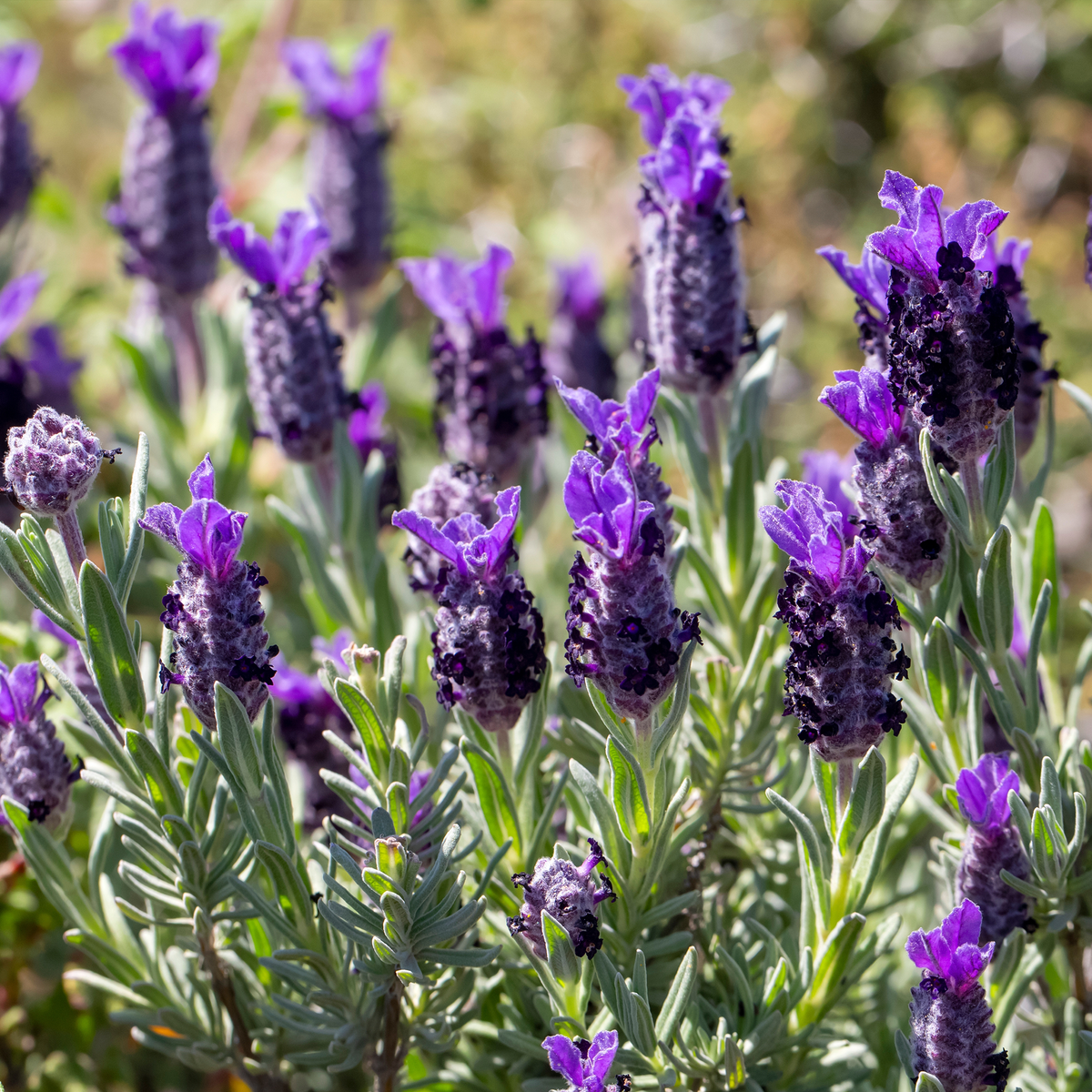
Spanish lavender with aromatic gray-green foliage and purple flowers topped with decorative bracts, perfect in pots, sunny borders or Mediterranean gardens.
Pair it with
Bionik marine and forest compost 0.6-1.8-0.13$9.99Choose the essentials to add to your selection.
Format
$3.99
Each store has its own inventory.
Products and available quantities may vary between Brossard and Laval. To check a store’s inventory, please contact us directly.
Even better: visit us in store to discover the full selection available!
- Exposure
- Sun
- Hardiness
- Zone 7
Discover the plant
Common nameSpanish lavender
FamilyLamiaceae
TypePerennial
Botanical nameButterfly lavender
Spanish lavender is a highly decorative aromatic plant, cherished for its unique floral spikes topped with small, colorful bracts, often purple, violet, or pinkish. Its fragrant grey-green foliage, compact habit, and distinctive blooms bring a Mediterranean touch to patio pots, planters, sunny borders, and naturalistic designs. It easily stands out with its more exotic appearance compared to classic lavender, making it an excellent choice for adding fragrance, color, and character to the garden.
Easy to grow during the warm season, Spanish lavender prefers a full-sun, warm, and well-ventilated location, in light, poor to moderately fertile, and very well-drained soil. It tolerates heat and drier conditions well once established but does not tolerate excess water and heavy soils. In containers, it's important to choose a draining potting mix and allow the soil to dry slightly between waterings. Light pruning after flowering helps maintain a denser, more compact, and decorative plant.
Both fragrant, pollinator-friendly, and highly ornamental, Spanish lavender attracts bees, butterflies, and other pollinators while beautifying outdoor spaces. It pairs very well with santolinas, sages, grasses, rosemary, euphorbias, and other full-sun plants. Less hardy than some traditional lavenders, it is often grown as an annual in our climate or protected from the cold in pots.

Planting guide
From planting to establishment.
Propagation
Cuttings or seedlings
Soil and care
The right care,at the right time.
Soil pH
Neutral to alkaline
Minimum temperature
-10°C
Care level
Easy
Watering
Moderate; allow the soil surface to dry out completely between waterings
Soil type
Poor to medium, dry, light and very well-drained soil
Fertilization
Light compost in spring; avoid excessive fertilizer
Moisture
Low humidity; prefers dry conditions
Seasonal care
Remove faded flowers to prolong blooming; prune lightly after flowering; overwinter in a frost-free environment in cold climates
Container growing
A garden,within reach.
Excellent in pots in a very well-drained container

Bloom and dimensions
Its place,in your garden.
Mature height
45 to 60 cm (18 to 24 inches)
Width / spread
45 to 60 cm (18 to 24 inches)
Flower color
Violet to purplish-mauve
Foliage color
Grayish green
Foliage type
Persistent in mild climates
Growth rate
Average growth
Bloom period
Spring to summer
Harvest
Spring to Summer Flowers
Garden associations
In goodcompany.
Companion plants
Rosemary, thyme, sage, cotton lavender
Plants to avoid
Plants that require moist, heavy, or consistently cool soil
Wildlife and pets
Life,around your plants.
Supporting wildlife
Attracts pollinators