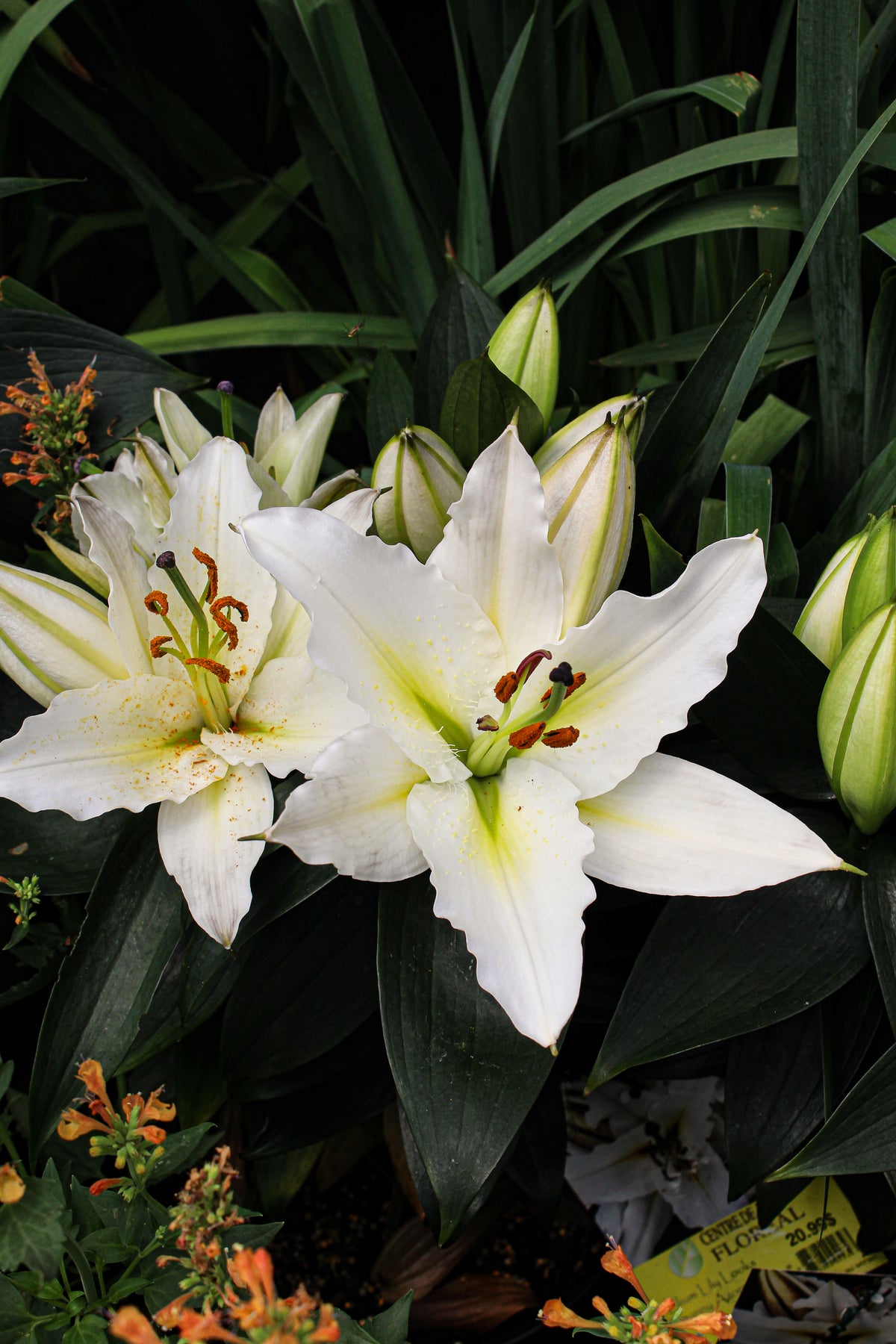
Lily 'Sunny Azores'

Lis 'Sunny Azores'. Les larges pétales pointus partent du cœur, avec des pointes courbes ou retroussées. Les pétales blancs captent la lumière, avec de douces ombres grises entre leurs plis. De longues étamines traversent la fleur, avec des extrémités foncées bien visibles. Les longues feuilles vertes étroites se trouvent près des fleurs et de leurs tiges. Plusieurs fleurs occupent le cadre, certaines de face et d’autres tournées de côté.
PÉPINIÈRE.CA

Lily 'Sunny Azores'

BACK-IN-STOCK ALERT

Don’t miss its return.

Leave your email and receive an alert when this product is available again.

An alert for this product only. No newsletter signup. Privacy

Ornamental perennial plants

Pépinière.ca

Lilium

Format

Sold out

Delivery and pickup: view conditions

Product information
Advice adapted to Canada
Secure payment
Share
Common nameLily
FamilyLiliaceae
GenusLilium
CultivarSunny Azores
Plant typePerennial
Botanical nameLilium

Lily 'Sunny Azores'. The white flowers with yellow centres on this compact Oriental lily create a pale composition within the fragrant Sunny series, carried above the plant's leafy stems. Keep stems visible between neighbours and retain leaves after flowering. Accessible planting makes watering at ground level and checking the root ball straightforward during the growing season. Its botanical name is Lilium 'Sunny Azores'. The genus belongs to the Liliaceae family. Buds on one stem open in succession, allowing you to follow changes in the plant over several days. Consider the scene before, during and after flowering. Treat the flowering period as a seasonal reference rather than a guaranteed date.

Choose fertile, well-drained soil that retains steady moisture during growth. Avoid ground that stays saturated, where the bulbs can rot. For a lily already growing in a nursery container, move the root ball without separating the bulb from its active roots. Maintain its previous growing level and prepare loose soil around it. During establishment, the original root ball can dry out even when surrounding soil looks moist. Lilies benefit from appropriate nutrition during active growth. Mulch can reduce weeds and moderate moisture changes, but it does not replace checking the soil. For a nursery plant already growing in a container, moisten the root ball before removing the pot.

Lilies in the genus Lilium and daylilies in the genus Hemerocallis are dangerous to cats. Lilies can punctuate a border with flowers carried above their leaves. Choose a pot deep enough for the root ball and stable beneath the weight of flowering stems. Drainage holes must remain clear, without water collecting in a saucer. Place plant accents where they can be appreciated, then arrange surrounding volumes around them. Plan the planting around mature spread rather than the small size of the purchased plant. Leave access to reach specimens in the middle of the bed. Choose companions by exposure, moisture, drainage and mature spread, then check those requirements for the particular varieties selected.

In the garden

Life cycle
Perennial

Planting guide

Planting & establishment

Spacing / density

Allow room for mature foliage and stems according to site conditions; retain access to the base and around the plant for maintenance.

Planting period

Spring in thawed, workable soil; early autumn only when enough time remains for rooting before cold weather.

Growing method

For lily planting, prepare the site first and position the nursery root ball with care. For a lily already growing in a nursery container, move the root ball without separating the bulb from its active roots. Maintain its previous growing level and prepare loose soil around it. Install any necessary support early, avoiding damage to roots once the stem is already carrying open flowers. For a nursery plant already growing in a container, moisten the root ball before removing the pot. Prepare a hole wide enough to accommodate the roots without compressing them. Return the plant to its previous growing level unless its genus requires a specific adjustment, then settle soil around the root ball. Water to bring roots and soil into contact, and subsequently check moisture within the root ball itself. During establishment, the original root ball can dry out even when surrounding soil looks moist. Check both areas, especially after light rain or windy weather. Water slowly enough for moisture to enter the soil rather than run off its surface. As roots explore the surrounding ground, adjust watering to actual moisture and weather conditions. The watering interval should change with root development instead of following a fixed calendar. Mulch can reduce weeds and moderate moisture changes, but it does not replace checking the soil. Leave an open space around the crown: piling material against it can encourage rot problems. Adapt mulch to the planting site and the genus’s requirements.

Soil and care

Soil & care

Watering

Moderate

Soil type

Well drained, Acidic

Fertilization

Approach lily fertilization through soil needs and plant growth rather than repeatedly adding products without checking the garden. Lilies benefit from appropriate nutrition during active growth. First check soil fertility or the fertilizer already included in the container's growing medium. Follow product directions without overlapping several feeding programmes. Assess soil fertility before adding fertilizer. Follow the directions for the chosen fertilizer rather than increasing the dose to force faster growth. Keep healthy leaves after flowering, as they contribute to restoring the bulb's reserves for the next stage of its growth.

Seasonal care

Organize lily seasonal care around the plant, its root zone and the changing conditions of the garden. Remove spent flowers, but retain leafy stems while they remain green. Clear dead parts once the plant finishes its season. Early observation helps you respond before a substantial amount of foliage is lost from the growing plant. In spring, locate renewed growth before working close to the crown. Remove debris that obstructs new shoots while respecting the genus’s care requirements. Inspect drainage after snowmelt, and check the crown and roots if growth appears abnormal. Weed carefully: deep cultivation around an established perennial can damage roots that already extend through the bed. Let actual growth and soil conditions guide the timing of maintenance. During summer, observe how foliage responds to heat and check moisture before intervening. Newly planted specimens deserve particular attention. Remove damaged material or faded flowers only when that action suits the genus and the intended result. Retain healthy leaves that are still supporting growth. In autumn, adapt cleanup to plant health and the way the plant grows. Green leaves should not be removed simply because flowering has ended. Diseased foliage needs different handling from healthy stems retained for their silhouette. Mark crowns before above-ground growth disappears, and avoid soil work that could damage them during dormancy. The appropriate cleanup date follows plant development and local conditions rather than a fixed calendar. Through winter, avoid water accumulating around the crown and unnecessary work on frozen or saturated ground. For a Canadian garden, compare the indicated hardiness rating with the rating system used locally and with the actual planting conditions. American USDA ratings are not automatically equivalent to Canadian zones.

Container growing

Container growing

Recommended pot size

Deep, free-draining pot 20–23 cm (8–9 in) in diameter for one bulb 10–12 cm (4–5 in) in diameter; for an established nursery plant, size the container to its rootball.
For lily container care, assess the growing medium and roots alongside the site and drainage. Choose a pot deep enough for the root ball and stable beneath the weight of flowering stems. Drainage holes must remain clear, without water collecting in a saucer. For potted bulbs, plan cool, protected overwintering; a heated living room is not their usual winter resting environment. Choose a stable container with drainage openings and enough room to accommodate the root ball without compressing it. The openings must allow water to escape freely. Use a growing medium suited to the required drainage and moisture, and keep the root ball accessible for routine checks. Leave room for foliage to develop without blocking access, and adjust the container when the roots become too tightly confined. In a pot, the water and nutrient reserve is limited to the volume of growing medium. Check moisture more often during heat and wind without assuming that daily watering is appropriate. Water should moisten the root ball and then drain freely. Adjust feeding to observed needs and the directions for the product being used. Also check that any other plants sharing the container accept the same exposure and watering regime. Prepare for winter before any prolonged ground freezing. Roots in a container standing above ground are more exposed to cold than roots planted in the garden. For a plant already hardy in your region, temporarily sinking the container into well-drained ground can protect the root ball. That protection does not make a tender plant hardy.
Lis 'Sunny Azores'. Les larges pétales pointus partent du cœur, avec des pointes courbes ou retroussées. Les pétales blancs captent la lumière, avec de douces ombres grises entre leurs plis. De longues étamines traversent la fleur, avec des extrémités foncées bien visibles. Les longues feuilles vertes étroites se trouvent près des fleurs et de leurs tiges. Plusieurs fleurs occupent le cadre, certaines de face et d’autres tournées de côté.

Size, flowering & harvest

Flower color

White with a yellow centre

Growth habit

Compact with upright stems

Fragrance

Fragrant

Bloom period

Observe lily bloom time together with plant growth, remembering that site conditions affect the flowering calendar seen in the garden. The flowers are white with a yellow centre. Buds on one stem open in succession, allowing you to follow changes in the plant over several days. Remove a faded flower without needlessly shortening the stem. Treat the flowering period as a seasonal reference rather than a guaranteed date. Timing depends on the lily group, exposure and weather; a plant purchased in full bloom may have been brought forward during nursery production.
Lis 'Sunny Azores'. Les larges pétales pointus partent du cœur, avec des pointes courbes ou retroussées. Les pétales blancs captent la lumière, avec de douces ombres grises entre leurs plis. De longues étamines traversent la fleur, avec des extrémités foncées bien visibles. Les longues feuilles vertes étroites se trouvent près des fleurs et de leurs tiges. Plusieurs fleurs occupent le cadre, certaines de face et d’autres tournées de côté.

Garden associations

Companion plants & uses

Companion plants

Choose lily companion plants for compatible site conditions and available space, rather than flower colour alone. Choose lower plants that accompany the stems without covering leaves or flower buds. Hardy geraniums or smaller grasses can provide contrast when their light and moisture requirements are compatible. Keep the bulbs accessible for maintenance, and avoid vigorous companions that rapidly occupy all the available root space within one container. Choose companions by exposure, moisture, drainage and mature spread, then check those requirements for the particular varieties selected. Give each specimen the space it needs and retain watering access. Consider the scene before, during and after flowering. Assess the combination across the seasons: neighbours must remain compatible when their roots and foliage actually occupy the bed, not just when small pots are first arranged.

Garden use

In lily garden design, give the plant a visible role and keep enough access for maintenance. Lilies can punctuate a border with flowers carried above their leaves. Keep stems visible from the path and avoid neighbours that collapse across the buds. In pots, repeat one selection for a coherent display, or group separate containers to compare colours without pressing the plants' roots into one crowded space. Lily 'Sunny Azores'. The white flowers with yellow centres on this compact Oriental lily create a pale composition within the fragrant Sunny series, carried above the plant's leafy stems. Keep stems visible between neighbours and retain leaves after flowering. Accessible planting makes watering at ground level and checking the root ball straightforward during the growing season. Plan the planting around mature spread rather than the small size of the purchased plant. Leave access to reach specimens in the middle of the bed. Allow foliage to develop without being pressed against edging or buried beneath a more vigorous neighbour. Place plant accents where they can be appreciated, then arrange surrounding volumes around them. Compare foliage textures as carefully as flower colours. Observe the planting’s development before adding further plants; open space around a young specimen also allows care without walking over its roots or breaking its stems. Retain some visible space between groups so the composition remains legible once plants develop, rather than filling every gap immediately with additional specimens. Leaves hidden in spring may become visually dominant later, and this seasonal change deserves as much attention as the colour of an individual flower.

Garden inspiration

When planning lily winter care in Canada, distinguish roots planted in garden soil from roots that remain exposed in containers. Lilies can punctuate a border with flowers carried above their leaves. Keep stems visible from the path and avoid neighbours that collapse across the buds. In pots, repeat one selection for a coherent display, or group separate containers to compare colours without pressing the plants' roots into one crowded space. The yellow centre brings a subtle accent to white petals; a nearby display lets it be appreciated while foliage continues contributing to the composition. The arrangement should keep leaves and buds clear of neighbouring plants. Preserve stems while still green after flowering to support the restoration of reserves within the bulb beneath the growing plant. Compare foliage textures as carefully as flower colours. Consider the scene before, during and after flowering. Retain some visible space between groups so the composition remains legible once plants develop, rather than filling every gap immediately with additional specimens. Observe the planting from its main viewpoints before moving a specimen. Leaves hidden in spring may become visually dominant later, and this seasonal change deserves as much attention as the colour of an individual flower. Allow foliage to develop without being pressed against edging or buried beneath a more vigorous neighbour.

Frequently asked questions

Frequently asked questions

How to grow Sunny Azores lily in Canada?
Choose fertile, well-drained soil that retains steady moisture during growth. Avoid ground that stays saturated, where the bulbs can rot. Keep the root zone cool and check moisture around the root ball after planting. Observe the proposed planting site at different times of day before digging. Light changes with trees, buildings and the season. Position the plant where its required exposure can be maintained throughout active growth, and check that watering and border maintenance remain practical. A position that looks attractive from the patio also needs to stay accessible when neighbouring plants reach their mature size. Plan the planting around mature spread rather than the small size of the purchased plant. Leave access to reach specimens in the middle of the bed. Allow foliage to develop without being pressed against edging or buried beneath a more vigorous neighbour.
How should I water Sunny Azores lily?
Check moisture around the root ball as stems lengthen and flower buds develop. Water at ground level without filling a sealed decorative outer pot. Let surplus water escape, then check the growing medium again before watering. Containers exposed to wind can dry more quickly than the nearby planted garden border. Direct water towards the root zone rather than over flowers and leaves. Check soil moisture before adding more: wilted foliage alone cannot distinguish drought from a root problem. Account for the rain that actually reaches the planting, along with heat and wind. During establishment, the original root ball can dry out even when surrounding soil looks moist. Check both areas, especially after light rain or windy weather. Water slowly enough for moisture to enter the soil rather than run off its surface. The watering interval should change with root development instead of following a fixed calendar.
How should I care for Sunny Azores lily during flowering?
The flowers are white with a yellow centre. Buds on one stem open in succession, allowing you to follow changes in the plant over several days. Remove a faded flower without needlessly shortening the stem. Timing depends on the lily group, exposure and weather; a plant purchased in full bloom may have been brought forward during nursery production. Treat the flowering period as a seasonal reference rather than a guaranteed date. Weather, exposure and the stage of establishment can shift the start or duration of the display. Watch developing buds and open flowers when deciding how to maintain the plant. When the plant’s appearance changes, examine its growing environment first. A buried crown, dry root ball and saturated soil call for different responses. Note when the problem appears and inspect foliage, stems and soil before adding treatments.
Can I grow Sunny Azores lily in a container?
Choose a pot deep enough for the root ball and stable beneath the weight of flowering stems. Drainage holes must remain clear, without water collecting in a saucer. For potted bulbs, plan cool, protected overwintering; a heated living room is not their usual winter resting environment. Choose a stable container with drainage openings and enough room to accommodate the root ball without compressing it. The openings must allow water to escape freely. Use a growing medium suited to the required drainage and moisture, and keep the root ball accessible for routine checks. Prepare for winter before any prolonged ground freezing. Roots in a container standing above ground are more exposed to cold than roots planted in the garden. For a plant already hardy in your region, temporarily sinking the container into well-drained ground can protect the root ball. That protection does not make a tender plant hardy.
How should I plan Sunny Azores lily winter care in Canada?
Through winter, avoid water accumulating around the crown and unnecessary work on frozen or saturated ground. American USDA ratings are not automatically equivalent to Canadian zones. Snow cover, wind, drainage and site exposure all contribute to assessing whether a planting position and its winter protection are suitable. Prepare for winter before any prolonged ground freezing. Roots in a container standing above ground are more exposed to cold than roots planted in the garden. That protection does not make a tender plant hardy. Choose shelter with suitable conditions when a selection cannot overwinter outdoors in your local climate. Remove spent flowers, but retain leafy stems while they remain green. Clear dead parts once the plant finishes its season. Examine leaves and buds regularly for damage, including injury from lily beetles. Early observation helps you respond before a substantial amount of foliage is lost from the growing plant.

Wildlife and pets

Wildlife & precautions

Reported toxicity

Yes

Complete your purchase

Click a product to build your selection.

Your selection

Total