Sale
Sold out

Biennial culinary herb with edible curly foliage
Apiaceae
Organic culinary herb seeds
Organic curly parsley
Petroselinum crispum
Product code : BIOVO-0062
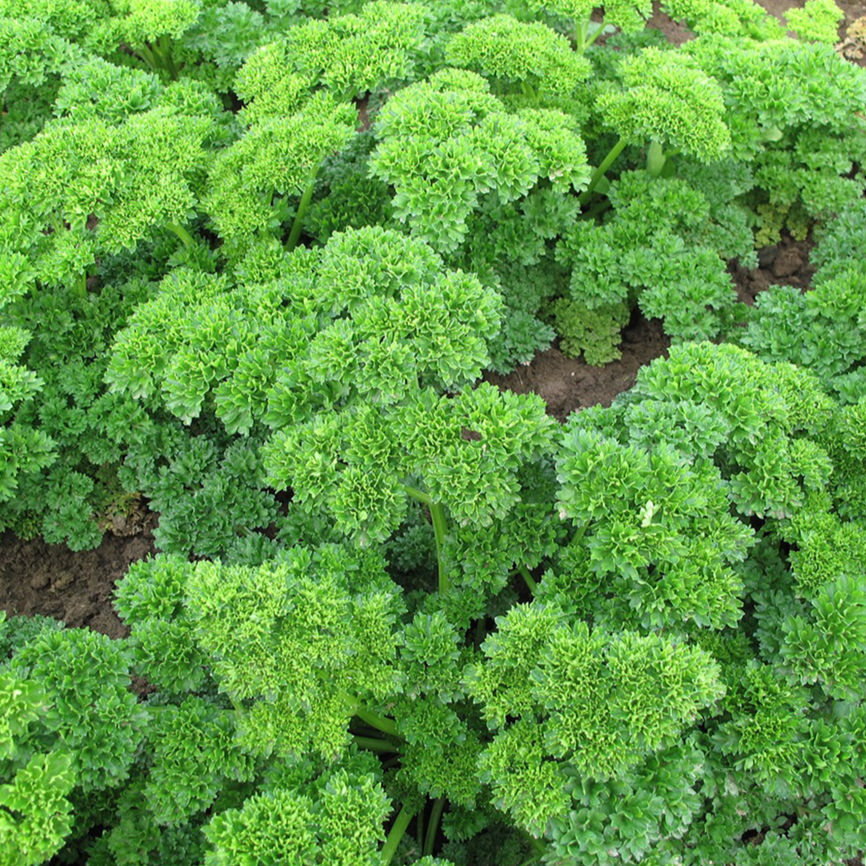
Organic curly parsley is a biennial herb generally grown as an annual for its dense, tightly curled dark-green foliage. Its compact clump brings decorative texture to borders, vegetable gardens, and containers near the kitchen. Fresh leaves brighten sauces, salads, soups, potatoes, vegetables, fish, and garnishes. Sow shallowly in sun or partial shade in rich, cool, well-drained soil. Germination is naturally slow, so maintain consistent moisture and remain patient. Harvest outer stalks near the base while leaving the centre intact to encourage new leaves. Freshly picked parsley offers its best colour, texture, and mild green flavour. Compact growth makes it particularly useful in small spaces.
- Exposure
- Sun to partial shade
- Life cycle
- Biennial, generally grown as an annual for foliage
Discover the plant
Common nameCurly parsley
FamilyApiaceae
GenusPetroselinum
Speciescrispum
TypeBiennial culinary herb with edible curly foliage
Botanical namePetroselinum crispum
Reproducible seedsYes
Organic curly parsley (Petroselinum crispum) is a biennial herb grown mainly for dark-green dense finely divided tightly curled foliage. It forms a compact ornamental clump suited to vegetable gardens, edible borders, or containers near the kitchen. Fresh green mildly peppery flavour brightens sauces, salads, tabbouleh, soups, potatoes, vegetables, fish, and garnishes. Leaves are best used fresh or frozen; adding them near the end of cooking preserves more colour and aroma while adding a crisp decorative texture in everyday meals and seasonal garnishes prepared directly from the garden harvest.
Sow April through June directly in the garden or in containers approximately 0.5 to 1 cm deep. Germination is naturally slow and irregular, often requiring 14 to 30 days; keep the seedbed evenly moist without saturation. Soaking seed in lukewarm water for several hours may help even water uptake without guaranteeing faster emergence. Set plants in sun or partial shade in rich cool fertile well-drained soil. Thin to approximately 15 to 20 cm for airy clumps that are easy to harvest throughout the growing season without disturbing the central growth.
Water at soil level before the ground dries deeply, mulch lightly, and add mature compost without excess nitrogen. Harvest outer stalks first by cutting near the base; always leave the centre intact for regrowth. In its second year the plant may form greenish-yellow umbels that attract hoverflies, bees, and other beneficial insects. Remove flower stalks to prolong foliage or let several plants bloom for biodiversity and seed. Wash leaves thoroughly and discard anything slimy, mouldy, heavily yellowed, or abnormal-smelling. Refrigerate clean harvest promptly for best quality, colour, and fresh flavour.

Sowing guide
It all startswith a seed.
Sowing depth
Approximately 0.5 to 1 cm (1/4 to 3/8 in)
Spacing / density
Thin to approximately 15 to 20 cm between plants; leave 30 to 45 cm between rows for harvest access and airflow.
Germination temperature
Approximately 15 to 24 °C (59 to 75 °F)
Germination time
Approximately 14 to 30 days; emergence is naturally slow and sometimes irregular
Sowing period
April through June in the garden; indoor starting possible before setting out Adjust these dates to your local frost dates and soil conditions; Canadian growing seasons vary by region.
Propagation
Direct sowing or container starting with careful transplanting
Growing method
Growing parsley from seed. Sow 0.5–1 cm deep directly in the garden or in containers. Parsley germination is naturally slow and may require two to five weeks; keep the surface evenly moist without saturation. Soaking seed in lukewarm water for several hours may encourage even water uptake. Once seedlings are large enough, thin to approximately 15 to 20 cm to form airy clumps. Choose sun or partial shade and rich, organic, cool, well-drained soil. Transplant carefully to avoid damaging the taproot. Water at soil level before the ground dries deeply, then add light mulch. Weed shallowly around young plants. When the clump carries several strong stalks, cut the outer ones near the base with clean scissors. Always leave the centre and several active leaves to support regrowth. Make small sowings on different dates to extend harvest. In the second year, remove flower stalks to retain foliage temporarily, or let several umbels feed beneficial insects and produce seed. Chill harvested leaves promptly and discard anything slimy, mouldy, or abnormal-smelling. Mark slow-germinating rows so emerging seedlings are not accidentally removed during early weeding. During hot periods, monitor moisture more frequently and harvest in the morning after dew dries, before leaves soften under strong afternoon heat.
Soil and care
The right care,at the right time.
Soil pH
Slightly acidic to neutral, approximately 6.0 to 7.0
Minimum temperature
-20 °C (-4 °F)
Care level
Easy
Watering
Keep soil evenly moist during germination, which may require several weeks, then water deeply at soil level when the surface begins to dry. Avoid both extended drought, which toughens leaves and reduces regrowth, and constantly saturated soil, which deprives roots of air. Light mulch helps stabilize moisture. In containers check the mix daily during hot weather and never leave standing water in the saucer.
Soil type
Curly parsley prefers moderately rich, loose soil with mature compost and reliable drainage. Prepare the bed before sowing or transplanting rather than disturbing established roots. In the Curly parsley planting, an airy loam should retain useful moisture for the tightly curled finely divided dark-green leaves on long stalks without remaining waterlogged. Avoid fresh manure, compact clay, concentrated fertilizer pockets, and saucers holding water. Choose fresh herb mix and several clear drainage holes for potted Curly parsley. Rotate away from related crops where soil-borne problems have occurred.
Fertilization
Incorporate mature compost before sowing to support steady growth. Once clumps are established, a light surface application of compost or diluted balanced fertilizer according to label directions may support repeated harvest. Avoid excess nitrogen: it produces soft vulnerable foliage without necessarily improving flavour. In containers feed more lightly but regularly, always on moist mix, and stop if salts accumulate or roots show stress.
Moisture
Consistently cool soil without saturation; adequately spaced foliage able to dry after rain or dew
Seasonal care
Seasonal care for parsley. In late winter, prepare containers and mark planned dates for several small sowings. In spring, sow as soon as soil can be worked and maintain consistent moisture during germination, which may take two to five weeks. Thin seedlings without abruptly pulling neighbouring roots and weed shallowly. Add mature compost around established clumps without covering the centre. In early summer, water deeply at soil level, mulch lightly, and harvest outer stalks regularly. Avoid removing all foliage at once. As days become very hot, monitor moisture more closely and provide light partial shade where possible. Remove heavily yellowed or diseased leaves to preserve airflow within the clump. In fall, continue harvesting after the first cool nights and use light protection to extend the season. Mulch plants selected for an overwintering attempt without assuming survival. The following spring, in its second year, parsley often develops flower stalks and tougher foliage. Cut stalks to prolong leaves temporarily, or let several plants bloom for beneficial insects and seed. Gather umbels only when dry and mature. Clean tools, discard diseased residue, and begin fresh sowings every year to maintain a tender harvest. Record emergence and first-cut dates to adapt timing to the garden. Before moving containers indoors, inspect leaf undersides for pests and keep plants in a bright, cool location. Refrigerate clean harvested stalks promptly and freeze well-dried chopped leaves when fresh use cannot keep pace.
Container growing
A garden,within reach.
Recommended pot size
25 to 30 cm (10 to 12 in)
Growing parsley in containers. Choose a stable container deep enough for the taproot and fitted with several drainage holes. Fill it with rich, airy potting mix amended with mature compost that holds consistent moisture without remaining saturated. Sow 0.5–1 cm deep, then keep the surface moist through the long germination period. Set the pot in sun during cool weather or light partial shade as days become warm. Thin seedlings so every clump receives light and air. Water slowly when the surface begins to dry and always empty the saucer. Fine mulch reduces evaporation. Once plants are established, cut outer stalks near the base without touching the centre. Rotate the container occasionally for balanced light. Feed lightly according to the chosen product label, always on moist mix, and avoid excessive nitrogen. Inspect leaves after rain or watering and remove severely damaged parts. To extend availability, sow a second pot several weeks later. In fall, move the container to a bright, cool location to prolong harvest temporarily, then check carefully for pests before bringing it indoors. Keep foliage away from hot glass and harvest regularly so the compact clump remains open and productive. Refrigerate clean harvested stalks promptly.
Bloom and dimensions
Its place,in your garden.
Mature height
Approximately 20 to 30 cm (7.9 to 11.8 in) for the foliage; taller flower stalks in the second year
Width / spread
Approximately 20 to 30 cm (7.9 to 11.8 in)
Flower color
Greenish yellow
Foliage color
Dark green
Foliage type
Deciduous
Growth rate
Moderate; naturally slow germination
Growth habit
Compact rosette clump in the first year, followed by upright flower stalks in the second
Fragrance
Fresh green mildly peppery flavour, more delicate than flat-leaf parsley
Bloom period
Curly parsley flowers only after shifting from harvest growth into reproduction. When tending Curly parsley, a taller seed stalk rises beyond the established compact rosette clump in the first year, followed by upright flower stalks in the second. Water at soil level so open blossoms remain dry. For curly parsley, as bloom advances, quality of the tightly curled finely divided dark-green leaves on long stalks declines and energy moves toward seed. When tending Curly parsley, remove bolting plants when leaves or roots are the goal, or retain a clearly labelled specimen for insects or seed observation.
Fruiting
After second-year flowering, pollinated umbels form small dry fruits containing seed. Let them mature on healthy plants until light brown and dry, then cut heads in dry weather over a bag. Finish drying under cover before separating and labelling seed. Keep it in a dry, cool, dark container. Discard any harvest that is damp, mouldy, or abnormal-smelling. Label the harvest with its year and identity.
Days to maturity
Approximately 70 to 90 days for a well-established clump
Harvest
Begin once clumps are well established, generally around 70 to 90 days depending on conditions. Cut outer stalks near the base with clean scissors and always leave the centre intact for regrowth. Harvest in the morning after dew dries, rinse thoroughly, and refrigerate promptly. For freezing chop clean well-drained leaves. Discard any slimy, mouldy, heavily yellowed, or abnormal-smelling leaf.
Garden associations
In goodcompany.
Companion plants
Around Curly parsley, maintain an uncluttered base around the compact rosette clump in the first year, followed by upright flower stalks in the second for inspection. Use Curly parsley in a mixed herb-and-vegetable bed, but give every crop its own root space. A companion does not guarantee control of insects or disease, so inspect every crop separately. Companion planting around curly parsley does not replace weed control, correct pest identification, or sensible rotation. Match irrigation to each root zone instead of watering the entire combination by habit. When arranging neighbours for curly parsley, leave a clean approach to the tightly curled finely divided dark-green leaves on long stalks so stems can be cut without crushing nearby plants. Reassess the arrangement around Curly parsley as both crops approach mature size.
Plants to avoid
Lettuce and mint can compete for water and nutrients in confined spaces. Good planting planning reduces this risk.
Recipe idea
From the gardento your plate.
Edible parts
Leaves and young stalks
Parsley in the kitchen. Curly parsley and lemon butter — Rinse 30 g curly parsley in cold water, shake it well, and dry thoroughly so water does not spatter in the pan. Remove coarse stems and chop the leaves finely. Soften 100 g unsalted butter, or use a firm plant-based alternative, and mix it with the parsley, 10 mL lemon juice, finely grated lemon zest, one small grated garlic clove, black pepper, and a pinch of salt. Spoon the mixture onto parchment, roll it into a log, and chill until firm. Slice a small round over hot potatoes, steamed carrots, cooked beans, fish, or grilled mushrooms, allowing the heat of the food to melt it. For immediate use, stir a spoonful directly into warm vegetables off the heat. Keep the finished butter refrigerated in a clean covered container and use clean utensils. It is a fresh flavoured fat, not a room-temperature preserve. Discard parsley that is slimy, yellowed, or mouldy, and keep washed herbs separate from soil-covered garden produce and raw animal foods.
Frequently asked questions
Your questions,answered.
Why does curly parsley take a long time to germinate?
Parsley germination is naturally slow and irregular, often requiring 14 to 30 days. Sow fresh seed shallowly, maintain moderate temperature, and keep the seedbed continuously moist without saturation. Soaking for several hours in lukewarm water may even water uptake but does not guarantee rapid emergence. Do not abandon the sowing too early and prevent a dry crust from forming at the surface. Mark the row so it is not forgotten during the wait. Mix that dries even briefly may reduce or further stagger emergence. After seedlings appear, provide steady light and thin without disturbing neighbouring roots. Continue gentle watering after emergence so young roots establish evenly.
How can parsley be harvested without exhausting the plant?
Wait until the clump carries several strong stalks, then cut the outermost ones near the base with clean scissors. Never remove all foliage at once and leave the centre plus several active leaves to support regrowth. Harvest regularly rather than severely. After cutting maintain even moisture and add a small amount of mature compost around the plant when needed. A morning cut after dew dries provides fresh leaves. Chill the harvest promptly and wait until the plant forms several new stalks before another substantial cutting. Disinfect scissors between plants whenever disease symptoms appear, and remove damaged foliage without stripping the whole clump.
Does curly parsley return the following year?
Parsley is biennial: it produces mainly leaves in its first year, may survive winter depending on conditions, then flowers and sets seed in its second year. Mulch and light protection improve its chances without guaranteeing survival after a difficult winter. Leaf quality generally declines as flower stalks form. Sow every year for continuous harvest and let only several plants bloom. Second-year umbels can feed small beneficial insects. Begin fresh sowings in spring nevertheless, because leaves on older plants often become tougher once flower stalks develop. Harvest the final tender leaves before flowering dominates growth, and keep several umbels only when seed or wildlife value is desired.
Can curly parsley be grown in a pot?
Yes. Select a pot that will not tip, gives the taproot ample depth, and releases excess water freely. Fill it with rich, airy mix that stays cool without saturation. Sow 0.5–1 cm deep and keep the surface moist through slow germination. Place in sun or partial shade, then thin seedlings. Water when the surface begins to dry and empty the saucer. Harvest outer stalks near the base while leaving the centre intact. During hot weather, check moisture daily and provide light shade if foliage wilts rapidly. Sow a second pot later to extend harvest. Keep the pot in a bright, cool position and harvest regularly to maintain an open clump.
How should curly parsley be stored after harvest?
Cool curly parsley promptly after harvest. Remove yellowed or damaged stalks, but do not wash the entire batch until use if excess surface moisture would remain trapped. For short storage, wrap or place the leaves in a ventilated refrigerator container that limits wilting without allowing condensation to pool. Alternatively, stand freshly cut stalk ends in a small amount of clean water in the refrigerator, keeping leaves above the water and changing it regularly. Label the harvest date and inspect it often. Discard slimy, mouldy, or foul-smelling parsley. For longer keeping, chop and freeze clean, dry leaves in portions; frozen parsley is best used in cooked dishes. Keep the edible leaves and young stalks separate from second-year flower stems, which are not the intended leafy harvest.
Wildlife and pets
Life,around your plants.
Supporting wildlife
In the second year, greenish-yellow umbels provide pollen and nectar to small beneficial insects including hoverflies, bees, and parasitoid wasps. Let several plants bloom when leaf production is no longer the priority, but avoid insecticides during visits. Foliage may also feed black swallowtail caterpillars, a visitor that can be observed or carefully relocated rather than treated automatically.
For a great start to your seeds
The right extras.Right here.
Seed Starting Soil
Shop the collectionSeed starting supplies
Shop the collection