


Sale
Sold out

Fruity organic aji-type hot pepper
Solanaceae
Organic hot pepper seeds
Organic 'Aji Habanero' hot pepper
Capsicum baccatum
Product code : BIOVO-0065
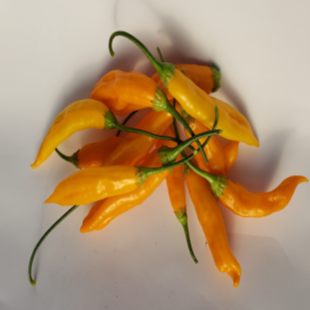
'Aji Habanero' is a vigorous productive organic Capsicum baccatum with slender fruit ripening orange-yellow. Complex fruity flavour accompanies sustained heat; the exact Scoville rating is not specified. The selection contains approximately 25 seeds. Plants reach 75–90 cm tall and spread 40 cm, then are harvested around 75 days after transplanting. A 15–20 L container suits this crop. Despite its name, it is not a classic Capsicum chinense habanero. Start seeds early, maintain warmth, and transplant only once nights remain mild. Handle fruit carefully, wear gloves during cutting, label every hot preparation, and keep peppers away from children, pets, eyes, and sensitive skin.
- Quantity
- Approximately 25 seeds per packet
- Exposure
- Full sun
- Life cycle
- Annual vegetable in Canadian gardens
Discover the plant
Common nameAji Habanero hot pepper
FamilySolanaceae
GenusCapsicum
Speciesbaccatum
CultivarAji Habanero
TypeFruity organic aji-type hot pepper
Botanical nameCapsicum baccatum
Organic 'Aji Habanero' hot pepper (Capsicum baccatum) is a vigorous productive organic pepper bearing numerous slender fruit that ripen bright orange-yellow. Despite its name, the product sold is identified as Capsicum baccatum rather than a classic C. chinense habanero. Fruity complex flavour accompanies sustained heat suited to sauces, marinades, ferments, stir-fries, and dried preparations. The selection contains approximately 25 organic seeds, allowing several plants to be started while retaining the strongest seedlings for transplanting. This botanical distinction also prevents confusion with classic habaneros in the home vegetable garden.
Sow indoors February through April, eight to ten weeks before last frost, 0.5–1 cm deep. Maintain 24–30°C until emergence, which may take 7–21 days, then provide very strong light. Transplant into a warm sheltered full-sun location only once nights remain above approximately 12°C. Rich fertile well-drained soil, steady moisture, and moderate feeding support flowering without excessive foliage. Harden plants gradually before exposing them to direct sun and wind, then mulch only after the root zone has warmed thoroughly. Label every seedling clearly from sowing onward and always retain the selection.
The selection contains approximately 25 seeds. Plants reach 75–90 cm tall and spread 40 cm; a 15–20 L container is suitable, and harvest begins around 75 days after transplanting. Pick fruit green for a more vegetal flavour or await final orange-yellow colour for the fullest fruity profile. Wear gloves when cutting and processing peppers, avoid eye contact, and keep away from children and pets. The exact Scoville rating is not specified, and heat may vary with fruit and growing conditions. Wash hands, tools, boards, and containers after handling, label every hot preparation clearly, and refrigerate fresh peppers promptly after harvest.

Sowing guide
It all startswith a seed.
Sowing depth
Approximately 0.5 to 1 cm (¼ to ⅜ in)
Spacing / density
Approximately 40 to 50 cm (16 to 20 in) between plants and 60 to 75 cm (24 to 30 in) between rows
Germination temperature
Approximately 24 to 30 °C (75 to 86 °F)
Germination time
Approximately 7 to 21 days
Sowing period
Indoors, 8 to 10 weeks before the last frost
Propagation
Seed
Growing method
Growing 'Aji Habanero' hot pepper from seed. Sow 0.5–1 cm deep in light mix eight to ten weeks before last frost. Use clean, lightly moist seed-starting mix and steady bottom warmth; never leave the tray saturated. For 'Aji Habanero', the expected harvest form—slender elongated fruit ripening from green to bright orange-yellow—helps confirm crop identity, while local warmth and plant health still influence maturity. A pepper seedling needs strong light, gentle airflow, and an evenly moist root zone without standing water. After emergence, move seedlings immediately under strong light with gentle airflow so stems remain sturdy. The spacing guidance for 'Aji Habanero' hot pepper is approximately 40 to 50 cm (16 to 20 in) between plants and 60 to 75 cm (24 to 30 in) between rows; use it when balancing airflow with the available growing area. Water at soil level when the upper root zone begins drying, maintaining even moisture through fruit development. Place the crop in full sun, while preserving drainage and airflow at root and leaf level. Choose full sun and warm, fertile, freely drained soil for the long ripening season. Because its habit is vigorous, upright, branched, and productive, the pepper plant needs enough room for routine care and neighbouring plants. Mulch only after the ground has warmed, and keep the material away from the stem. After late-season rain or wind, confirm drainage and support while preserving healthy foliage needed to finish ripening. Harvest this pepper at its intended colour stage rather than by an absolute date. Use suitable gloves, label the hot fruit clearly, and protect container plants before the first autumn frost only when useful light and warmth remain.
Soil and care
The right care,at the right time.
Soil pH
Approximately 6.0 to 6.8
Care level
Moderate
Watering
Keep seed-starting mix evenly moist during germination without saturating cells, then let the surface dry slightly between waterings once seedlings establish. After transplanting, water deeply at soil level once the top two or three centimetres begin to dry. Alternating drought and excess water causes blossom drop, stalled fruit, and uneven tissue. Mulch only once soil is warm, water in the morning, and avoid wetting foliage. In containers check daily during heat but never leave standing water in the saucer.
Soil type
'Aji Habanero' prefers warm, loose, fertile soil amended moderately with mature compost. Test the soil before making corrective mineral additions. In the 'Aji Habanero' planting, a loamy root zone should retain even moisture while releasing excess water around the developing slender elongated fruit ripening from green to bright orange-yellow. Avoid cold compacted ground, fresh manure, and any position where water remains after rain. Containers for 'Aji Habanero' need fresh airy vegetable mix rather than dense garden soil, with drainage inspected throughout the season. Mulch only after conditions suit the crop, keeping the crown uncovered.
Fertilization
Begin 'Aji Habanero' in soil amended with mature compost, then use a soil test to choose any balanced supplemental feed. When tending 'Aji Habanero', once buds and slender elongated fruit ripening from green to bright orange-yellow appear, steady growth matters more than high nitrogen. Apply only the labelled rate to moist soil and water granular product into the root zone. For 'Aji Habanero' hot pepper, excess nitrogen can delay flowering and ripening by pushing soft foliage. In containers, divide necessary feeding into smaller applications because drainage removes nutrients. Stop or reduce feeding when 'Aji Habanero' already shows balanced growth.
Moisture
Consistent soil moisture without saturation; good air circulation around the foliage.
Seasonal care
Seasonal care for 'Aji Habanero' hot pepper. Use 'Aji Habanero' hot pepper’s stated sowing window as a frost-relative cue, not a universal date: indoors, 8 to 10 weeks before the last frost. Sow approximately 0.5 to 1 cm deep at approximately 24 to 30 °C (75 to 86 °F); the working germination range is 7 to 21 days, with moisture held steady rather than saturated. After emergence, give 'Aji Habanero' seedlings bright light and gentle air movement; pot on before roots circle densely, without burying a weak stem in wet mix. Harden the plants gradually, then transplant only after frost risk has passed, the soil is warm, and nights remain consistently mild. Choose full sun and loose fertile soil, mixing in mature compost while preserving drainage around the crown. Judge irrigation by moisture below the surface, not by a weekly schedule, and keep late-day water off the foliage. If potted, follow this provision for 'Aji Habanero' hot pepper: 15 to 20 L (4 to 5 gal) per plant. Recheck root-zone moisture whenever heat or wind increases evaporation. During flowering, inspect 'Aji Habanero' foliage for pests, maintain airflow, and avoid excess nitrogen, which can favour leafy growth over flower set and fruit ripening. Follow the supplied harvest guidance—approximately 75 days after transplanting—while remembering that warmth and light still determine how quickly each fruit reaches its final stage. When 'Aji Habanero' fruit begins colouring, handle it with gloves until the actual heat is known and label green and fully ripe harvests separately. Before the first autumn frost, move portable pots under protection or collect sound developed fruit, then remove diseased debris from the growing area.
Container growing
A garden,within reach.
Recommended pot size
15 to 20 L (4 to 5 gal) per plant
Growing 'Aji Habanero' hot pepper in containers. For 'Aji Habanero', choose a container matching this guide: 15 to 20 L (4 to 5 gal) per plant. Keep several drainage holes unobstructed. Install a stake or cage at planting when support is needed, without later piercing the root ball. Plan around the way 'Aji Habanero' grows: vigorous, upright, branched, and productive. Keep access to the root zone for watering and inspection. Fill the container with fresh, airy vegetable potting mix amended modestly with mature compost, never dense garden soil. As the plant matures, use the expected harvest form—slender elongated fruit ripening from green to bright orange-yellow—to guide support, inspection, and careful picking. Set one established plant at an appropriate depth and keep the stem clear of the rim and mulch. At final planting, follow this layout for the pepper plant: approximately 40 to 50 cm (16 to 20 in) between plants and 60 to 75 cm (24 to 30 in) between rows. Mark positions before roots are placed. Place the pot in full sun where heat reflected from pavement will not overheat the roots. The crop needs full sun; nearby walls or taller crops should not compromise it. Position supports so branches remain accessible without rubbing the pot rim, then inspect blossoms and fruit from more than one side. As nights cool, let the rate of mix drying guide watering, and inspect leaf undersides before sheltering the container. Harvest the plant when colour and texture show the intended stage. Before frost, gather sound developed fruit; quarantine any plant moved under protection and inspect it for insects.
Bloom and dimensions
Its place,in your garden.
Mature height
Approximately 75 to 90 cm (30 to 36 in)
Width / spread
Approximately 40 cm (16 in)
Flower color
White to greenish white
Foliage color
Green
Foliage type
Simple herbaceous foliage
Growth rate
Fast
Growth habit
Vigorous upright branched productive plant
Fragrance
Complex fruity, sometimes citrus-like aroma with medium-to-high heat
Bloom period
Small white to greenish-white flowers appear during the warm season. Peppers can self-pollinate, while light movement and insect visits may support pollen transfer. Extreme heat, cold nights, water stress, or excessive nitrogen can cause blossom drop. Maintain steady growth, ventilate protected spaces, and avoid insecticides while blossoms are open and pollinators are active. Observe flowering regularly and support branches before fruit becomes heavy.
Fruiting
The plant bears numerous slender elongated fruits that ripen from green to bright orange-yellow. Flavour becomes fruitier with maturity, while heat may vary from one pepper to another. No exact Scoville rating is published. Harvest with gloves and clean scissors without pulling branches, then keep fruit cool and dry or dry it completely before storage. Label each harvest by colour and date.
Days to maturity
Approximately 75 days after transplanting
Harvest
Harvest with gloves once fruit reaches desired size. Green fruit has a more vegetal flavour; await uniform orange-yellow colour for the fullest fruity profile. Cut the stem with clean scissors without pulling branches, then harvest often to sustain production. Keep peppers cool and dry or dry completely before storage. Avoid eye, face, and sensitive-skin contact; wash tools and surfaces and clearly label every hot preparation.
Garden associations
In goodcompany.
Companion plants
Low flowers and herbs may occupy nearby space when they do not deprive the pepper of sun, water, airflow, or root room. Their blooms can support insects that also visit pepper flowers. Keep one clear path for watering and harvest, and avoid excessive density. This arrangement organizes the garden but does not guarantee protection from pests or diseases. Rotate away from related solanaceous crops when soil problems have occurred. Keep hot fruit away from crops harvested by children or pets.
Plants to avoid
Avoid close rotations with tomatoes, eggplants, potatoes, and other peppers where soil disease or heavy pest pressure has occurred.
Recipe idea
From the gardento your plate.
Edible parts
Fruit
'Aji Habanero' hot pepper in the kitchen. Fruity Aji Habanero sauce — Wear gloves. Carefully stem and chop 4 ripe peppers with 250 g mango, 100 ml apple cider vinegar, 60 ml water, 20 g sugar, and 5 g salt. Simmer 10 minutes, blend without inhaling steam, and refrigerate in a clean container. This is not a shelf-stable canning recipe. Label “very hot,” keep away from children, and discard every mouldy, swollen, or abnormal-smelling preparation. For a milder sauce, begin with one pepper, taste cautiously after cooking, and add more only when needed. Use a board and knife reserved for hot peppers, ventilate the room, and wash surfaces immediately. Do not touch your face during preparation. Serve a small amount with rice, grilled vegetables, or tacos, then refrigerate leftovers promptly in a closed labelled container. Never taste a preparation that is swollen, unintentionally fermented, or held under a bulging lid. Keep the finished sauce away from children and pets.
Frequently asked questions
Your questions,answered.
Is Aji Habanero a classic habanero?
No. The cultivar sold as 'Aji Habanero' is identified as Capsicum baccatum, while familiar habanero peppers generally belong to Capsicum chinense. The similar name does not make their fruit size, heat or growing schedule interchangeable. Follow the information for this particular selection when planning an indoor start and judging the ripe harvest. Its name should not be used to assign a Scoville figure borrowed from an unrelated habanero. Keep the original packet with your garden records, especially if several peppers are being grown together. Label harvested fruit before freezing or drying so an aromatic hot pepper cannot later be confused with a mild variety in the kitchen.
What is its Scoville rating?
The exact Scoville rating is not specified. 'Aji Habanero' provides medium-to-high heat, but intensity may vary with the fruit, ripeness, and growing conditions. Treat every fruit as very hot: wear gloves, avoid touching eyes, taste a tiny amount, and increase gradually. Do not infer its heat from another pepper with a similar name. Cooking does not necessarily remove capsaicin. Ventilate the room, avoid inhaling vapour, and keep every preparation clearly labelled and away from children and pets. Wash gloves, tools, boards, and containers after processing, or discard single-use gloves safely. Begin every recipe with a very small measured amount. Proceed cautiously.
Why start the seed so early?
The plant needs a long warm season before producing and colouring an abundant crop. Sowing eight to ten weeks before last frost gives sufficiently advanced plants once nights become safe. Starting much earlier may create root-bound tall stressed plants. Maintain 24–30°C until emergence, then use strong light and pot up as needed before hardening. Label every pot, maintain airflow, and avoid saturating warm growing mix. Compact sturdy plants recover better after transplanting than long fragile stems. Begin hardening gradually and pause when cold or strong wind returns. Transplant only after nights remain mild and soil has warmed. Do not rush this step.
When should fruit be harvested?
Green fruit may be cut once it reaches useful size but flavour remains more vegetal. For the fullest fruity profile, await uniform orange-yellow colour and firm flesh. Use clean scissors and gloves because pulling may break branches and capsaicin easily contaminates skin. Frequent harvest encourages new flowers while warmth and remaining season still allow fruit to ripen. Chill or process fruit promptly. For drying, continue until peppers are completely dry before storage. Discard any mouldy, rotten, or abnormal-smelling fruit. Label green and ripe batches separately, and keep every harvest away from children and pets. Clean scissors and contacted surfaces immediately after harvest.
Can Aji Habanero be grown in a container?
Yes, and this method suits Québec's climate well. Use one 15–20 L container per plant, rich but well-drained mix, and a location receiving six to eight hours of direct sun. Stake at planting, check water daily during heat, and feed moderately. The pot may be moved under protection once nights approach 12°C, helping the final fruit finish colouring. Use the documented container guidance—15 to 20 L (4 to 5 gal) per plant—as the starting point, then keep every drainage opening clear and check moisture below the surface before watering. Leave enough access to inspect Slender elongated fruit ripening from green to bright orange-yellow, and secure any trellis or support independently so moving the vessel does not twist loaded stems.
Wildlife and pets
Life,around your plants.
Supporting wildlife
Pepper flowers can self-pollinate, while bees and other small insects may visit blossoms and support pollen transfer. Low nearby flowers provide additional resources without making hot fruit accessible. Avoid insecticides on open blossoms, maintain airflow, and keep the plant and harvested peppers away from children and pets.
For a great start to your seeds
The right extras.Right here.
Seed Starting Soil
Shop the collectionSeed starting supplies
Shop the collection





